
Bacon Stuffing
When the bread cubes come out of the oven dry and crisp, they’re ready to soak up broth without collapsing into a heavy, wet layer. That’s the small bit of…

By Ava
•
•
Reading time: 9 min
Tip: save now, make later.
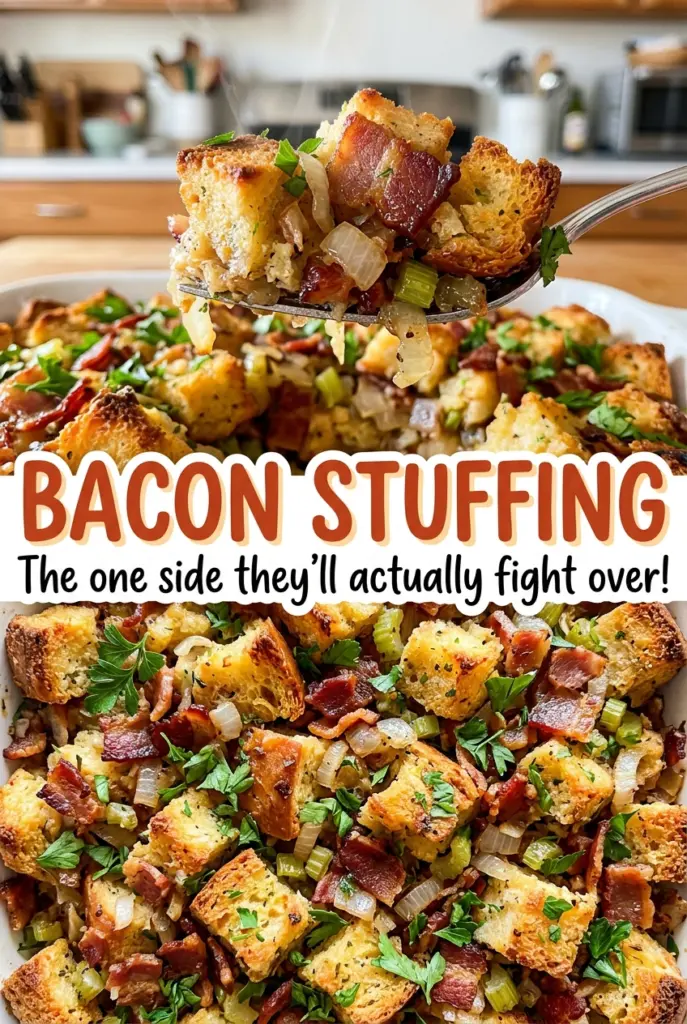
When the bread cubes come out of the oven dry and crisp, they’re ready to soak up broth without collapsing into a heavy, wet layer. That’s the small bit of planning that makes this Bacon Stuffing bake up with a tender center and a golden top instead of turning mushy.
I cook the bacon first, then use some of its drippings with butter to soften the onion and celery. Garlic and dried herbs go in at the end, just long enough to wake them up. Once that savory mixture meets the bread, broth, eggs, and parsley, every cube gets seasoned before it goes into the baking dish. The finished stuffing is rich from the bacon, fragrant with sage and thyme, and sturdy enough to serve in generous spoonfuls.
Kitchen Note
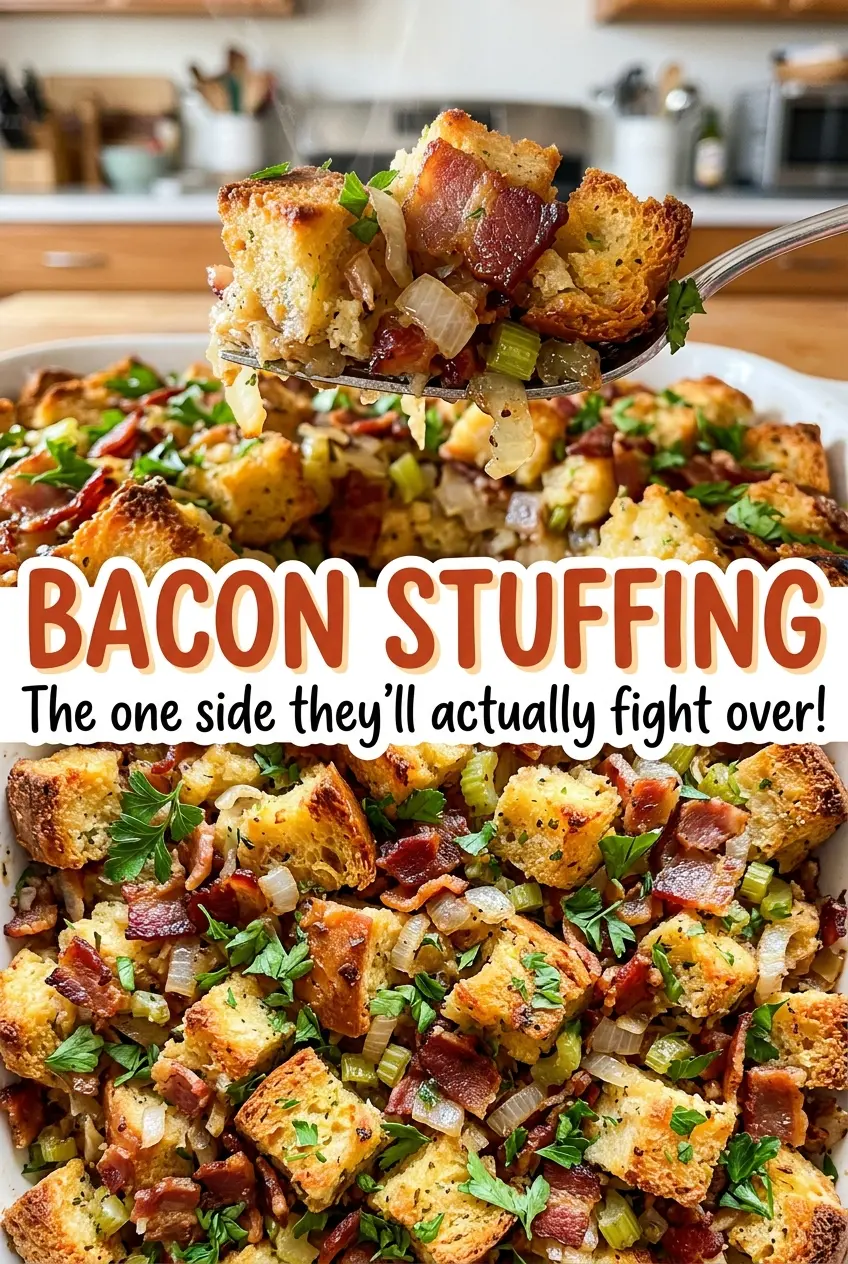
Give the stuffing its full 10-minute rest before serving. The center settles during that time, so the first scoop holds together instead of sliding apart while it’s piping hot.
Save this Bacon Stuffing for a holiday table or a cozy Sunday dinner—crisp bacon, savory herbs, and a golden top make it a classic worth keeping close.
The Dry Bread Is What Keeps Bacon Stuffing From Turning Heavy
Stuffing needs bread that can take on liquid and still hold its shape. Soft, fresh cubes start absorbing broth before they have much structure to spare; once the eggs set in the oven, that can leave you with a dense, almost pudding-like middle. Drying the cubes first gives them room to absorb the broth more evenly.
That texture depends on the bread itself, not on using less broth. Each piece should be dry and crisp before it meets the skillet mixture, so the onion, celery, bacon drippings, and herbs cling to the cubes rather than disappearing into soft bread. The eggs then help bind the moistened pieces as they bake. You want a stuffing that’s tender in the center, with enough definition to scoop cleanly and a browned top for contrast.
It’s worth spreading the cubes out on a large rimmed baking sheet rather than piling them into a deep layer. A crowded pan dries unevenly, leaving some pieces crisp while others stay soft. That difference shows up later: the crisp pieces absorb the broth, while the softer ones can turn pasty.
Why Country White Bread, Bacon, and Low-Sodium Broth Matter
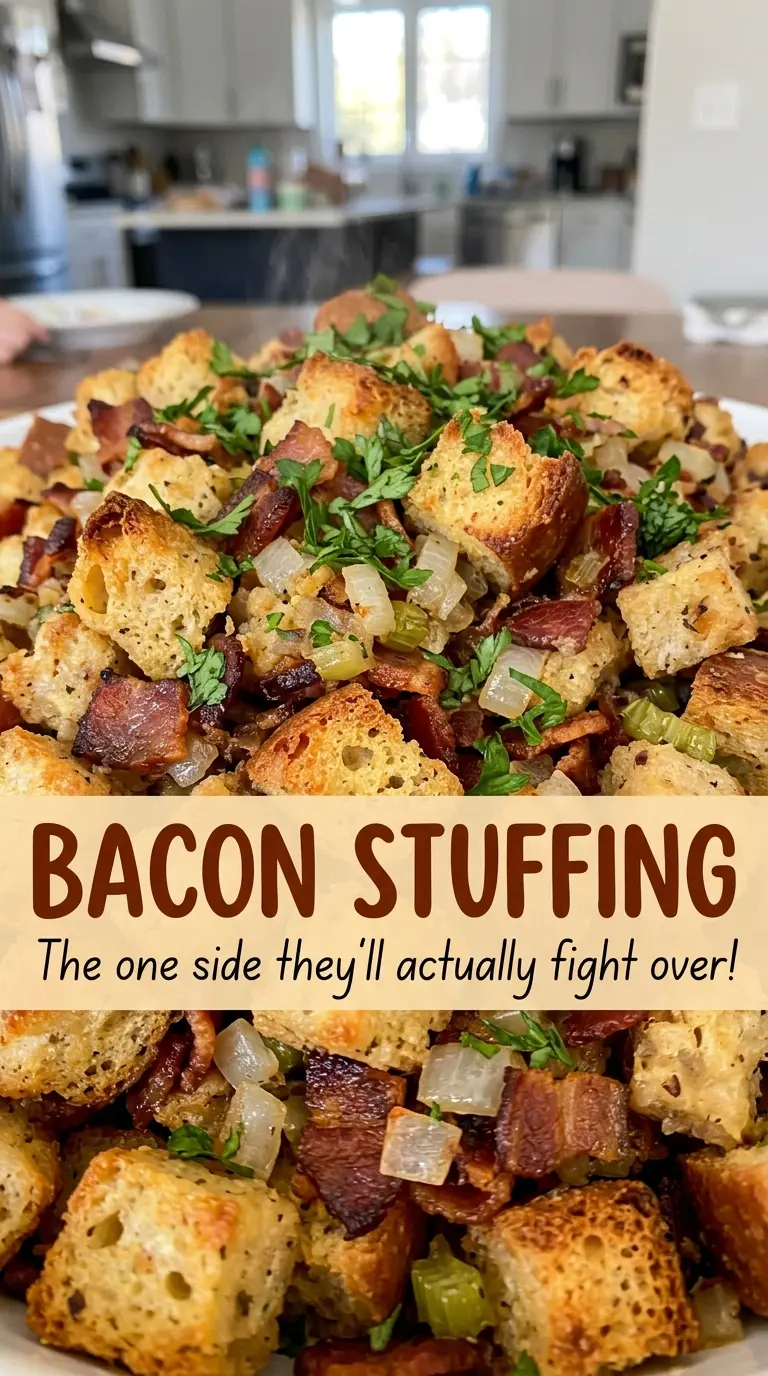
- Country white bread — Its mild flavor lets the bacon and herbs come through, and a loaf cut into even cubes gives you a consistent texture. A sturdy loaf is a good choice; there’s no need to seek out anything fancy because the oven-drying step builds the structure.
- Bacon — The cooked pieces bring salty, smoky flavor, while the drippings season the vegetables before they meet the bread. Regular bacon works well here; crisp it fully so it crumbles rather than bending into chewy strips.
- Unsalted butter — Butter rounds out the savory bacon drippings and carries the flavor of the onion, celery, and herbs. Unsalted butter keeps the seasoning easier to control alongside bacon and broth.
- Onion, celery, and garlic — These make the aromatic base, so cut the onion and celery into similar-sized pieces for even softening. Mince the garlic finely; larger pieces are more likely to stand out as sharp bites.
- Dried sage and thyme — Dried herbs bring an earthy, savory note that holds up through baking. Add them with the garlic near the end of cooking the vegetables, rather than at the beginning, so they warm in the fat without scorching.
- Low-sodium chicken broth and eggs — Low-sodium broth adds savory depth while leaving room to season the dish, and the eggs help the mixture set into a cohesive bake. Whisk them together before pouring so the liquid is distributed evenly.
- Fresh parsley — Chopped parsley adds a clean, green note against the bacon and dried herbs. Fold it in with the bread mixture so it stays scattered throughout the pan.
From Crisp Bacon to a Set, Golden Center
Dry the bread cubes evenly
Heat the oven to 300°F, spread the bread cubes on a large rimmed baking sheet, and bake for 25 to 30 minutes, stirring once. The cubes should feel dry and crisp rather than soft in the middle. If they’re still yielding when you press one, let the full drying time finish before moving on. Raise the oven temperature to 350°F and coat a 9×13-inch baking dish with nonstick cooking spray.
Render the bacon, then soften the vegetables
Cook the bacon in a 12-inch skillet over medium heat for 8 to 12 minutes, turning as needed, until crisp. Transfer it to a paper towel-lined plate and crumble it when cool, leaving 2 tablespoons of drippings in the skillet. Add the butter, onion, and celery and cook over medium heat for 6 to 8 minutes, stirring occasionally, until the vegetables are softened. Stir in the garlic, sage, thyme, salt, and pepper for 30 seconds; garlic can turn bitter if it stays over the heat too long.
Coat the bread before adding the liquid
Put the dried bread cubes in a large bowl and add the skillet mixture, crumbled bacon, and parsley. Toss until the fat and vegetables are spread through the bread, with bacon in more than just the top layer. Whisk the broth and eggs in a medium bowl, then pour them over the bread. Toss until the cubes look evenly moistened, with no dry pockets hiding at the bottom of the bowl.
Bake covered, then brown the top
Transfer the mixture to the prepared baking dish and cover it tightly with foil. Bake at 350°F for 30 minutes, then uncover and bake for 20 to 25 minutes more, until the top is golden and the center reaches 165°F. If the surface browns faster than the center heats through, cover it loosely with foil again. Rest the pan for 10 minutes before serving.
Three Swaps That Change Bacon Stuffing Without Losing Its Shape
Use sourdough for a tangier bake
Swap the country white loaf for a 1-pound loaf of sourdough and cut it into the same 3/4-inch cubes. The tangy flavor gives the stuffing a sharper edge, while the sturdy crumb keeps distinct pieces in the finished bake. Dry the cubes until crisp before adding the broth mixture.
Make a gluten-free pan
Use a 1-pound gluten-free country-style loaf, along with gluten-free chicken broth and bacon. Gluten-free bread brands vary in texture, so judge the cubes by whether they’re dry and crisp rather than relying only on the clock. The result keeps the same savory bacon-and-herb character, though the bread’s crumb may be a little more delicate.
Leave out the bacon for a vegetarian version
Omit the bacon and its drippings, and use low-sodium vegetable broth in place of chicken broth. Cook the onion and celery in the butter, then continue with the garlic and herbs. You’ll lose the smoky richness, but the vegetables, butter, sage, and thyme still make a savory stuffing.
Storage and Reheating
- Refrigerator: Refrigerate leftovers within 2 hours and keep them covered for 3 to 4 days. The bread softens as it sits, but the flavor stays savory.
- Freezer: Freeze the baked stuffing in an airtight container for up to 1 month for best quality. Thaw it in the refrigerator before reheating.
- Reheating: Cover and warm it in a 350°F oven until the center reaches 165°F. Reheating uncovered can dry the top before the middle is hot.
Questions That Come Up Before the Stuffing Goes in the Oven
Bacon Stuffing
Ingredients
Equipment
Method
- Heat the oven to 300°F, spread the bread cubes on a large rimmed baking sheet, and bake for 25 to 30 minutes, stirring once, until dry and crisp.
- Raise the oven temperature to 350°F and coat a 9x13-inch baking dish with nonstick cooking spray.
- Cook the bacon in a 12-inch skillet over medium heat for 8 to 12 minutes, turning as needed, until crisp.
- Transfer the bacon to a paper towel-lined plate, crumble it when cool, and leave 2 tablespoons of drippings in the skillet.
- Add the butter, onion, and celery to the skillet and cook over medium heat for 6 to 8 minutes, stirring occasionally, until softened.
- Add the garlic, sage, thyme, salt, and pepper and cook for 30 seconds.
- Put the dried bread cubes in a large bowl, add the skillet mixture, crumbled bacon, and parsley, and toss to combine.
- Whisk the broth and eggs in a medium bowl.
- Pour the broth mixture over the bread and toss until evenly moistened.
- Transfer the stuffing to the prepared baking dish, cover tightly with foil, and bake at 350°F for 30 minutes.
- Uncover and bake for 20 to 25 minutes more, until the top is golden and the center reaches 165°F.
- Rest the stuffing for 10 minutes before serving.