
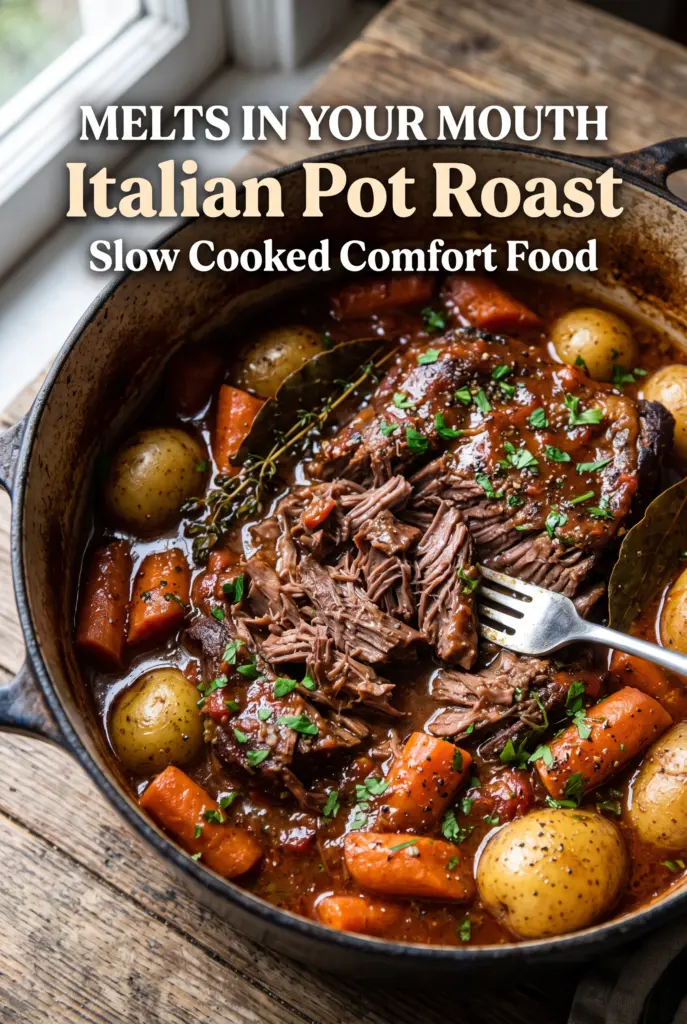
Italian Pot Roast with Tender Vegetables
Italian pot roast turns into something special when the beef has enough time to collapse into the sauce and the vegetables soften without turning to mush. The best versions don’t…

By Ava
•
•
Reading time: 10 min
Tip: save now, make later.
Italian pot roast turns into something special when the beef has enough time to collapse into the sauce and the vegetables soften without turning to mush. The best versions don’t just taste like seasoned roast beef; they taste like a full meal that’s been quietly building flavor in one pot all afternoon. This one lands right in that sweet spot, with a tomato-rich braising liquid, sweet carrots, soft potatoes, and beef that slices cleanly or pulls apart with a spoon.
What makes it work is the order of things. The roast gets a hard sear first, which gives the finished sauce a deeper, almost smoky base, and the tomato paste cooks briefly before the liquid goes in so it loses that raw, tinny edge. A little red wine adds depth, but the dish still works well with extra broth if that’s what you have. The long, covered bake does the rest, turning a sturdy chuck roast into something tender enough to fall apart at the touch of a fork.
Below, I’m walking through the part that matters most: how to build the braising liquid so it tastes rounded instead of flat, when to add the potatoes so they hold their shape, and what to do if you want to stretch this into leftovers that taste even better the next day.
The sauce simmered down into something rich and glossy, and the potatoes held their shape without getting waterlogged. My husband kept going back for more of the carrots and gravy.
Save this Italian Pot Roast with Tender Vegetables for a slow-braised dinner with rich tomato gravy and fork-tender beef.
The Reason Chuck Roast Turns Silky Instead of Stringy
Chuck roast needs time, but it also needs steady heat. If the oven runs too hot, the muscle fibers tighten before the collagen has a chance to soften, and you end up with beef that tastes cooked but not tender. A covered Dutch oven at 325°F gives the roast enough gentleness to slowly break down without drying out.
The other mistake is rushing the braise liquid. Tomato paste needs a minute in the hot pan to deepen and sweeten, and the wine needs to come up against the browned bits left from searing so those flavors move into the sauce instead of staying stuck to the pot. That’s the difference between a gravy that tastes flat and one that tastes like it’s been simmering all day.
- Low-and-slow heat keeps the roast juicy while the connective tissue breaks down.
- Searing first builds the browned foundation that makes the sauce taste deeper.
- Tomato paste cooked briefly loses its raw edge and gives the braise body.
- Covered baking holds moisture in the pot so the beef braises instead of roasting dry.
What the Beef, Wine, and Tomatoes Are Each Doing
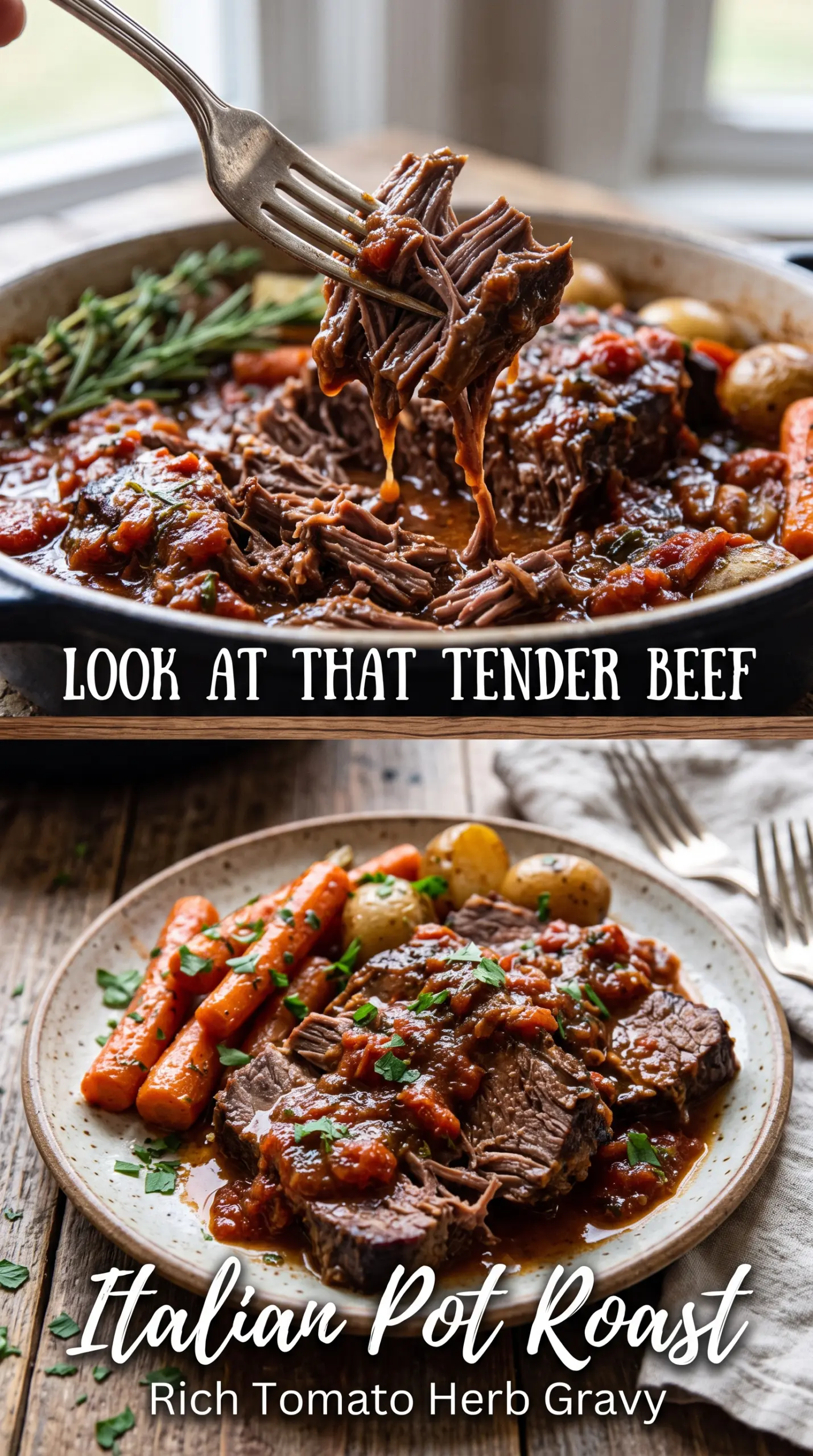
- Beef chuck roast is the right cut because it has enough connective tissue to turn tender during a long braise. A leaner roast won’t give you the same silky texture. If chuck is unavailable, brisket works, but it needs the same low, covered cook and may slice more than shred.
- Dry red wine adds depth and a slight edge that keeps the sauce from tasting one-note. You don’t need an expensive bottle; use something dry and drinkable, not sweet. If you skip it, replace it with more beef broth and add a teaspoon of red wine vinegar at the end to bring back some brightness.
- Crushed tomatoes and tomato paste create the body of the sauce. The paste gives thickness, while the crushed tomatoes keep it spoonable and rustic. Use a good canned tomato here if you can; this is where quality matters more than with the broth.
- Baby potatoes hold their shape better than larger potatoes cut into chunks because they’re less likely to fall apart after hours in the oven. If you only have Yukon golds, cut them into larger pieces so they survive the braise.
The Sear, the Braise, and the Part Where the Beef Finally Gives In
Getting the crust before the pot
Season the roast well, then sear it in hot oil until the surface is deeply browned on both sides. You’re looking for a crust that releases without tearing when it’s ready to turn. If the meat sticks hard, it needs another minute; forcing it too soon leaves flavor in the pan instead of on the roast. That browned layer is what gives the sauce its backbone.
Building the braising liquid
After the onions and carrots soften, stir in the garlic and tomato paste and cook them briefly so the garlic loses its raw bite and the paste darkens slightly. Add the tomatoes, broth, wine, seasonings, rosemary, and bay leaves, then scrape the bottom of the pot until every browned bit dissolves. The liquid should look red and glossy, not thin and watery. That’s the base the roast needs to braise properly.
Letting the oven do the work
Return the beef to the pot, tuck the potatoes around it, cover tightly, and bake until the meat yields easily when pressed with a fork. Start checking near the end of the time range, because chuck roast can go from firm to perfect to dry if you leave it too long after it has tenderized. When it’s ready, the beef will shred in thick pieces and the vegetables will be soft but still intact. Remove the bay leaves before serving and spoon the sauce over everything while it’s hot.
How to Make It Your Own Without Losing the Braised Texture
Skip the wine and keep the sauce balanced
Use extra beef broth instead of wine, then finish the pot with a small splash of red wine vinegar or lemon juice. That keeps the sauce from tasting heavy and gives it the same lift the wine would have brought.
Make it dairy-free and naturally gluten-free
This recipe already lands naturally dairy-free and gluten-free as written, as long as your broth is certified gluten-free. The finished pot roast gets its richness from the beef, tomatoes, and long braise, so nothing is missing.
Add mushrooms for a deeper, earthier pot
Brown sliced mushrooms with the onions and carrots before the liquid goes in. They soak up the tomato-wine sauce and add another layer of savoriness without changing the braise method.
Storage and Reheating
- Refrigerator: Store leftovers in an airtight container for up to 4 days. The sauce thickens as it chills, and the flavor gets deeper by day two.
- Freezer: This freezes well. Cool it completely, portion it into freezer-safe containers, and freeze for up to 3 months. The potatoes soften a bit after thawing, but the beef and sauce hold up nicely.
- Reheating: Warm it gently on the stove over low heat or in a covered dish in the oven. Add a splash of broth if the sauce has tightened up, and don’t blast it on high heat or the beef will dry out before the center is hot.
Answers to the Questions Worth Asking
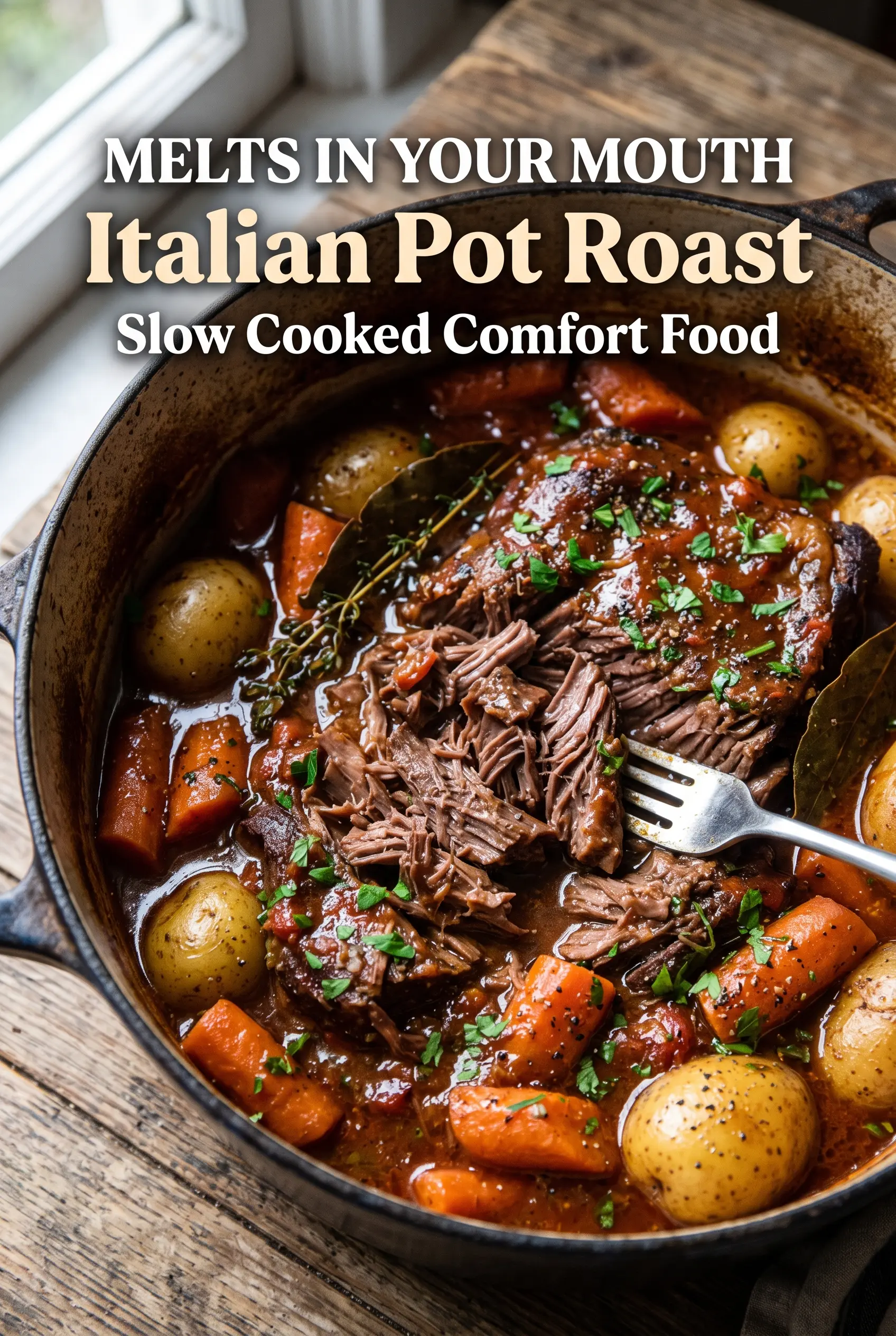
Italian Pot Roast with Tender Vegetables
Ingredients
Equipment
Method
- Season the chuck roast with kosher salt, black pepper, and garlic powder. Make sure the surface is evenly coated so it browns well.
- Heat olive oil in a Dutch oven over medium-high heat until shimmering. This helps the meat develop deep color quickly.
- Sear the roast for 4–5 minutes per side until browned. Keep it undisturbed during each side for better crust formation.
- Remove the roast from the pot and sauté onion and carrots for 5 minutes. Cook until the onion softens and the carrots begin to take on light color.
- Stir in garlic and tomato paste; cook for 1 minute. The paste should darken slightly and smell fragrant.
- Add crushed tomatoes, beef broth, dry red wine, Italian seasoning, fresh rosemary, and bay leaves. Scrape up any browned bits so they melt into the sauce.
- Return the roast to the pot and add baby potatoes. Keep the roast mostly submerged so it cooks evenly.
- Cover and cook at 325°F (163°C) for 3½–4 hours, or until fork tender. The meat should pull apart easily and the vegetables should be soft.
- Remove the bay leaves. Taste the sauce and skim off any excess fat if desired.
- Slice or shred the beef and spoon the rich sauce over the top. Let the meat rest in the hot sauce for 5 minutes before serving.
- Garnish with fresh parsley and grated Parmesan before serving. Add Parmesan at the end for the best flavor and texture.