
Ina Garten Indonesian Chicken Thighs
Sticky, caramelized chicken thighs with bronzed skin and a sweet-savory glaze are the kind of dinner that disappears fast, and this Indonesian-style version earns that reaction every time. The marinade…

By Ava
•
•
Reading time: 10 min
Tip: save now, make later.
Sticky, caramelized chicken thighs with bronzed skin and a sweet-savory glaze are the kind of dinner that disappears fast, and this Indonesian-style version earns that reaction every time. The marinade clings to the chicken instead of sliding off, so the skin roasts up with actual color, while the meat underneath stays juicy enough to pull cleanly from the bone.
What makes this version work is the balance. Soy sauce brings salt and depth, honey and brown sugar build that lacquered finish, and ginger, garlic, coriander, and cumin keep the flavor warm instead of flat. The trick is giving the chicken time to absorb the marinade and then finishing with high heat so the sugars caramelize without burning.
Below, I’ll walk you through the one step that matters most for getting the skin glossy instead of wet, plus a few smart swaps if you need to adjust for what’s in your kitchen.
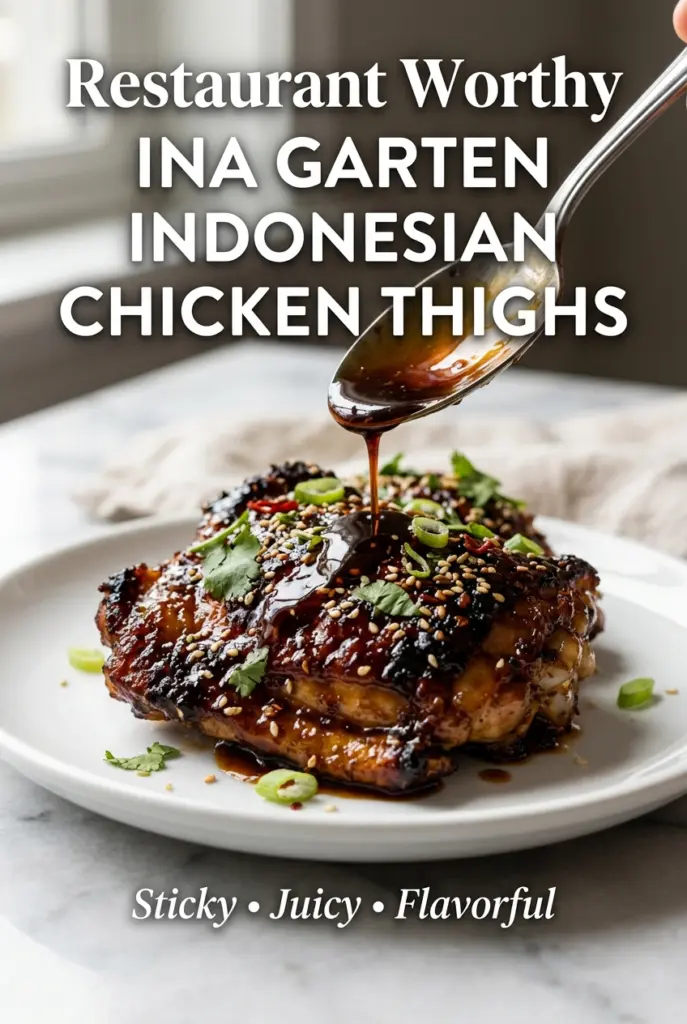
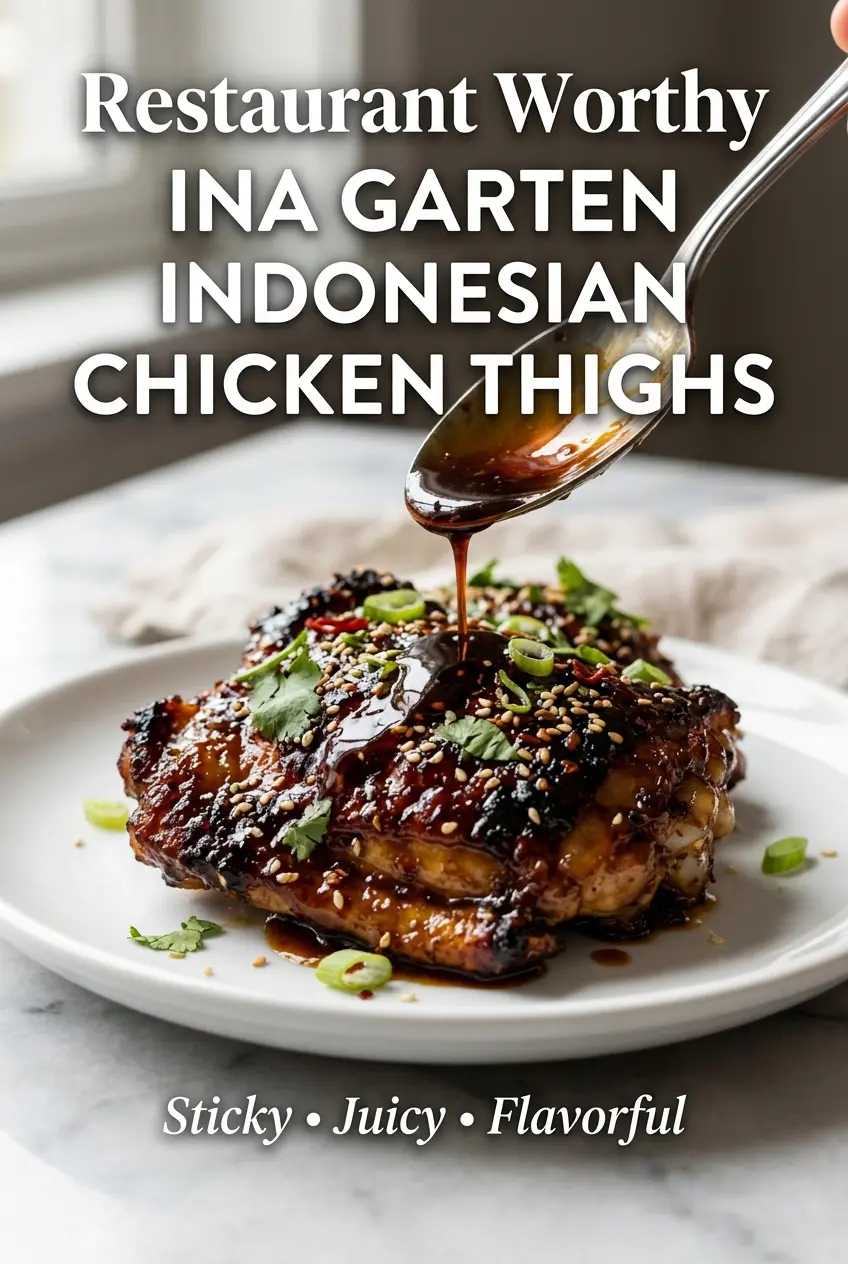
The marinade turned into this glossy, sticky glaze in the oven, and the chicken stayed juicy all the way to the bone. I broiled it for the last 2 minutes and the skin came out deeply caramelized without tasting burnt.
Love the sticky honey-soy glaze and caramelized skin on these Indonesian chicken thighs? Save this one for a no-fuss dinner with big flavor.
The Marinade Needs Time to Move Past the Surface
Chicken thighs can handle a bold marinade, but they still need time for the salt, sugar, and aromatics to work their way in. If you rush this dish, the flavor will sit mostly on the skin and the pan juices will taste one-note. Give it at least 4 hours so the soy sauce seasons the meat and the honey has time to mingle with the ginger and garlic instead of tasting separately sweet.
The other common mistake is treating the marinade like a sauce from the start. It isn’t. The raw marinade needs contact time first, then oven heat turns the sugars into a glossy coating. If you pour everything into a scorching pan too early, the honey can scorch before the chicken is cooked through.
What the Soy Sauce, Honey, and Ginger Are Each Doing Here

Chicken thighs — Bone-in, skin-on thighs are the right cut here because the skin protects the meat and the bone helps the chicken stay juicy during the longer roast. Boneless thighs will work in a pinch, but they cook faster and won’t give you the same caramelized finish.
Soy sauce — This is the backbone of the marinade. It brings salt, umami, and color all at once, which is why the glaze ends up deep and savory instead of tasting like sweet chicken with a little seasoning on top. Use a regular soy sauce, not low-sodium, unless you want the result noticeably milder.
Honey and dark brown sugar — The honey gives the glaze that sticky shine, while the brown sugar pushes the caramelization a little further and adds molasses depth. If you skip the sugar, the chicken still tastes good, but you lose some of the lacquered edge that makes this recipe stand out.
Fresh ginger and garlic — Fresh is worth it here. Powdered ginger and garlic won’t give the same sharp, fragrant lift, and this dish depends on that brightness to keep the glaze from feeling heavy. Grate the ginger finely so it disappears into the marinade instead of leaving fibrous bits on the finished chicken.
Coriander and cumin — These spices don’t dominate; they round the edges of the sauce and give it that warm, almost toasted background note. They’re subtle, but they matter. Without them, the marinade tastes flatter and more like a basic sweet-savory glaze.
The 15 Minutes at the End That Make the Skin Glossy
Mix the Marinade Until the Honey Disappears
Whisk the soy sauce, honey, oil, garlic, ginger, brown sugar, coriander, cumin, red pepper flakes if you’re using them, salt, and black pepper until the mixture looks smooth and glossy. If the honey stays streaky at the bottom of the bowl, it won’t coat the chicken evenly. This is the base that carries the whole dish, so take a moment to dissolve the sugar before the chicken goes in.
Let the Chicken Sit in the Marinade Long Enough to Season
Add the chicken and turn each piece until every bit of skin is coated. Refrigerate it for at least 4 hours, and overnight is even better if you want a deeper savory edge. The failure point here is impatience: a quick 30-minute soak gives surface flavor, but it won’t build the same rich, integrated taste.
Roast Skin-Side Up So the Glaze Can Set
Arrange the thighs skin-side up in a lightly greased baking dish and pour over the remaining marinade. Keep the chicken exposed on top rather than burying it under liquid, or the skin will steam instead of brown. After about 20 minutes, baste with the pan juices so the glaze builds in layers rather than drying out on the edges.
Broil Just Until the Edges Turn Deeply Caramelized
When the chicken is cooked through, move it under the broiler for 2 to 3 minutes and watch it closely. You’re looking for a dark amber sheen with a few blistered spots, not blackened sugar. If the pan is too close to the broiler or the glaze is pooling too thickly, it can go from glossy to burnt fast, so stay right there until it’s where you want it.
How to Tweak This Without Losing the Sticky Glaze
Make it gluten-free
Swap the soy sauce for a gluten-free tamari or coconut aminos. Tamari gives the closest flavor and color; coconut aminos are sweeter and lighter, so the glaze won’t taste quite as deep unless you reduce the honey slightly.
Turn down the sweetness
Cut the honey back by 2 tablespoons if you want a more savory finish. You’ll still get caramelization from the brown sugar and the natural browning of the chicken, but the glaze will read less candy-like and more balanced.
Use chicken breasts instead
Boneless, skinless chicken breasts work if that’s what you have, but they need less oven time and can dry out quickly. Start checking early and pull them as soon as the thickest part reaches 165°F. You’ll lose the crackly skin, but the marinade still gives the meat a good glaze.
Storage and Reheating
- Refrigerator: Store leftovers in an airtight container for up to 4 days. The skin softens as it sits, but the flavor gets even deeper.
- Freezer: This freezes well for up to 2 months. Wrap the chicken tightly and freeze with a little of the pan juices so the meat doesn’t dry out when thawed.
- Reheating: Reheat in a 350°F oven, covered loosely with foil, until warmed through. The biggest mistake is microwaving it hard and fast, which turns the skin rubbery and the glaze sticky in the wrong way.
The Questions That Come Up With Sticky Indonesian Chicken Thighs
Ina Garten Indonesian Chicken Thighs
Ingredients
Equipment
Method
- Whisk together the soy sauce, honey, vegetable oil, garlic, ginger, dark brown sugar, ground coriander, ground cumin, crushed red pepper flakes (optional), kosher salt, and black pepper in a large bowl until smooth and combined.
- Add the chicken thighs to the bowl and coat them thoroughly in the marinade so every surface is covered.
- Cover and refrigerate for at least 4 hours (preferably overnight) to let the flavors penetrate and start seasoning the meat.
- Preheat the oven to 400°F (200°C).
- Arrange the chicken thighs skin-side up in a lightly greased baking dish and pour the remaining marinade over the chicken.
- Bake for 40–45 minutes at 400°F (200°C), basting with the pan juices halfway through cooking for extra flavor and sheen.
- Broil for 2–3 minutes until the skin becomes deeply caramelized and glossy, watching closely to avoid burning.
- Garnish with chopped cilantro, sliced green onions, toasted sesame seeds, and lime wedges before serving.