
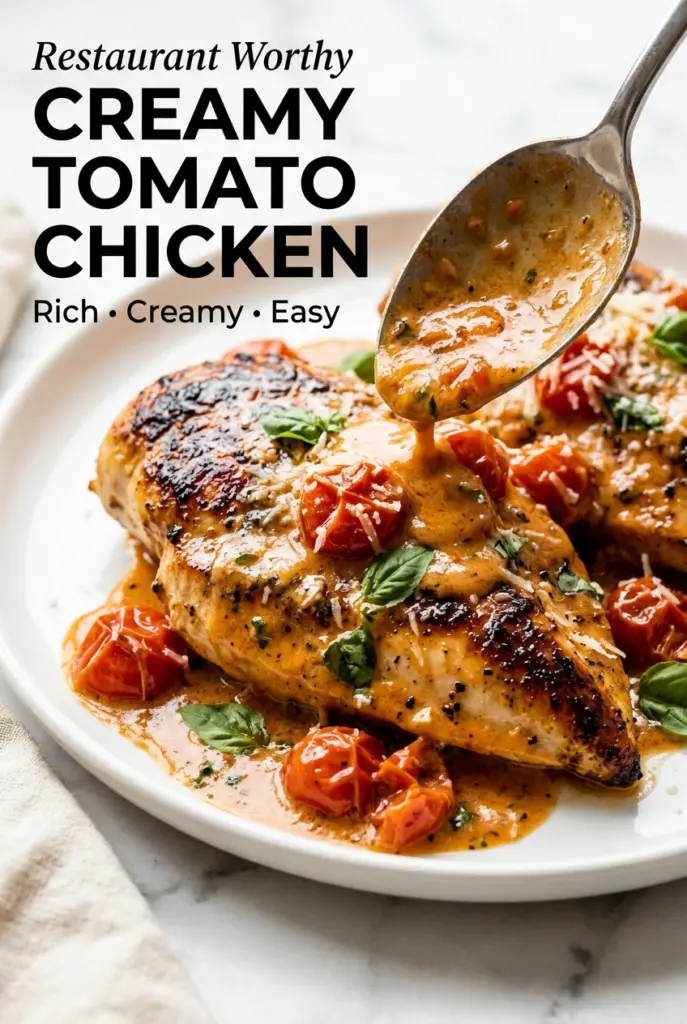
Creamy Tomato Chicken
Juicy chicken breasts, a garlicky tomato cream sauce, and a handful of fresh basil make this skillet dinner feel a lot more finished than the time it takes to cook.…

By Ava
•
•
Reading time: 10 min
Tip: save now, make later.
Juicy chicken breasts, a garlicky tomato cream sauce, and a handful of fresh basil make this skillet dinner feel a lot more finished than the time it takes to cook. The chicken sears first, which gives the sauce a savory base from the browned bits left in the pan, and the cherry tomatoes break down just enough to turn sweet and jammy without disappearing completely. What you get is a sauce that clings to the chicken instead of sliding off it.
The part that matters most is the heat. The chicken needs enough time in the pan to build color, but the cream and Parmesan need a lower flame so they thicken without turning grainy. I also like to cook the tomato paste for a full minute before adding the broth because that short step takes the edge off the raw tomato taste and deepens the whole sauce. Fresh basil at the end keeps the sauce bright, while dried basil in the pan gives it backbone.
Below, I’ve laid out the timing that keeps the chicken juicy, the one substitution that works if you only have canned tomatoes, and the best way to reheat leftovers without drying out the sauce.
The sauce thickened up beautifully and the tomatoes gave it this sweet little burst in every bite. I served it over mashed potatoes and my husband went back for seconds before I even sat down.
Creamy Tomato Chicken has a silky Parmesan sauce and those sweet burst tomatoes that make every bite worth saving for later.
The Reason the Sauce Stays Silky Instead of Breaking
The biggest mistake in a cream sauce like this is rushing the heat. Once the broth goes in, the pan needs to come down to medium-low before the cream and Parmesan hit the skillet. That gentle heat lets the cheese melt into the sauce instead of clumping, and it gives the cream time to thicken without separating.
The second trap is skipping the tomato paste step. Tomato paste needs a minute in the pan so it darkens slightly and loses that sharp, raw edge. If you stir it straight into liquid, the sauce tastes flatter and less rounded. That one minute changes the whole dish.
- Chicken browning: Gives the sauce its savory backbone. Those browned bits stay in the pan and become part of the sauce.
- Cherry tomatoes: They bring sweetness and body. As they burst, they help the sauce taste like it simmered longer than it actually did.
- Parmesan: Use freshly grated cheese here. Pre-shredded Parmesan often melts poorly because of the anti-caking coating.
- Heavy cream: This is what gives the sauce its plush texture. Half-and-half will work in a pinch, but the sauce will be thinner and less stable.
What Each Ingredient Is Actually Doing in This Dish
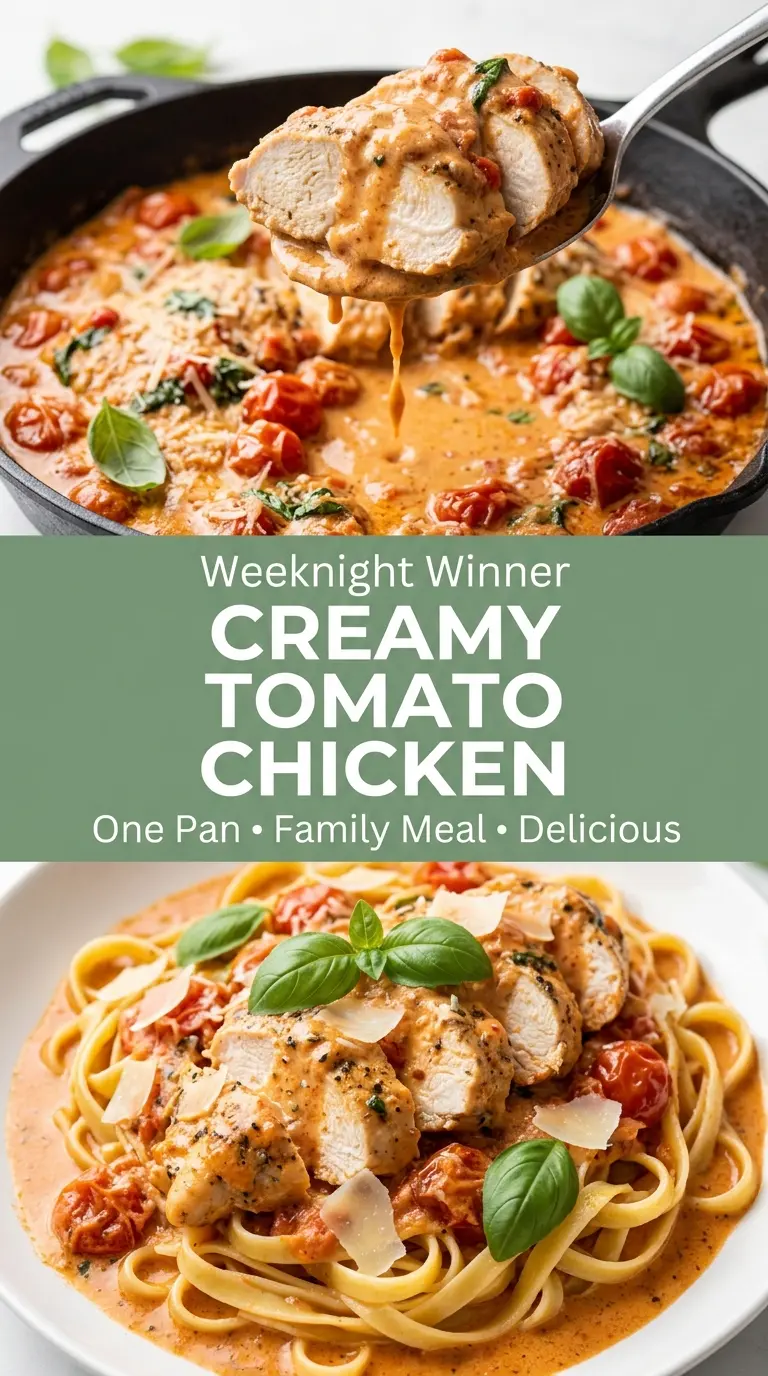
- Chicken breasts: Pound them to an even thickness if one end is much thicker than the other. That keeps the center from drying out while the outside finishes.
- Olive oil and butter: The oil helps the butter from burning too fast, and the butter gives the chicken better color and flavor. Using both gives you a cleaner sear than butter alone.
- Garlic, basil, and Italian seasoning: These build the herb layer before the sauce even starts. Fresh basil at the end matters because cooked basil and fresh basil don’t taste the same.
- Chicken broth: It loosens the browned bits and keeps the sauce from becoming too heavy. Low-sodium broth is the easiest swap if you want to control the salt level.
- Heavy cream and Parmesan: This is the creamy part of the recipe, and both ingredients need low heat. If the sauce ever looks grainy, the pan was too hot when the cheese went in.
- Crushed red pepper flakes: Optional, but a small pinch adds warmth that works well with the sweet tomatoes and rich sauce.
Building the Sauce Before the Chicken Goes Back In
Seasoning and Searing the Chicken
Season the chicken on both sides, then let it sit for a minute before it hits the pan. That quick pause helps the spices cling instead of falling off into the oil. Sear until the surface is deep golden and the chicken releases from the skillet without sticking; if it fights you, it needs another minute.
Softening the Tomatoes and Cooking Off the Raw Edge
Add the garlic for just 30 seconds, then get the tomatoes into the skillet. You want them to blister, split, and start collapsing at the edges. When the tomato paste goes in, keep stirring for a full minute so it darkens slightly and turns from sharp to mellow.
Finishing the Cream Sauce
Pour in the broth and scrape the pan well, then lower the heat before adding the cream and Parmesan. The sauce should move from thin and glossy to lightly thickened in a few minutes. If it looks too thin, give it time; if it starts bubbling hard, pull the skillet lower on the burner so the dairy stays smooth.
Returning the Chicken to the Skillet
Slide the chicken back into the sauce and spoon the tomatoes over the top. Let it simmer gently until the internal temperature reaches 165°F and the juices run clear when you cut into the thickest part. The sauce should coat the back of a spoon by the time the chicken is done.
Three Ways to Adjust This Without Losing the Good Part
Make It Dairy-Free Without Losing the Creamy Texture
Use full-fat coconut milk instead of heavy cream and skip the Parmesan or replace it with a dairy-free Parmesan-style cheese. The sauce won’t taste exactly the same, but it will still be rich and clingy. Keep the heat low, because coconut milk can separate if it boils hard.
Use Chicken Thighs for More Forgiveness
Boneless thighs work well if you want a juicier cut and a little more time window on the stove. They’ll stay tender even if they go a minute or two past the ideal point, and they bring a deeper chicken flavor to the sauce.
Make It Gluten-Free by Serving It Over the Right Base
The chicken itself is naturally gluten-free, so the main job is choosing a gluten-free side like rice, mashed potatoes, or gluten-free pasta. The sauce stays the same, which means you don’t have to compromise on texture to fit the meal to your table.
Stretch It for More Servings
Add an extra half cup of broth and another handful of cherry tomatoes if you want more sauce for pasta or rice. The dish will feel a little lighter, but it’ll feed more people without tasting diluted.
Storage and Reheating
- Refrigerator: Store in an airtight container for up to 4 days. The sauce will thicken as it chills.
- Freezer: It freezes, but the cream sauce may separate a little when thawed. Freeze in portions for up to 2 months and stir well after reheating.
- Reheating: Warm gently in a covered skillet over low heat with a splash of broth or cream. High heat is what dries out the chicken and makes the sauce look greasy.
Questions I Get Asked About This Recipe
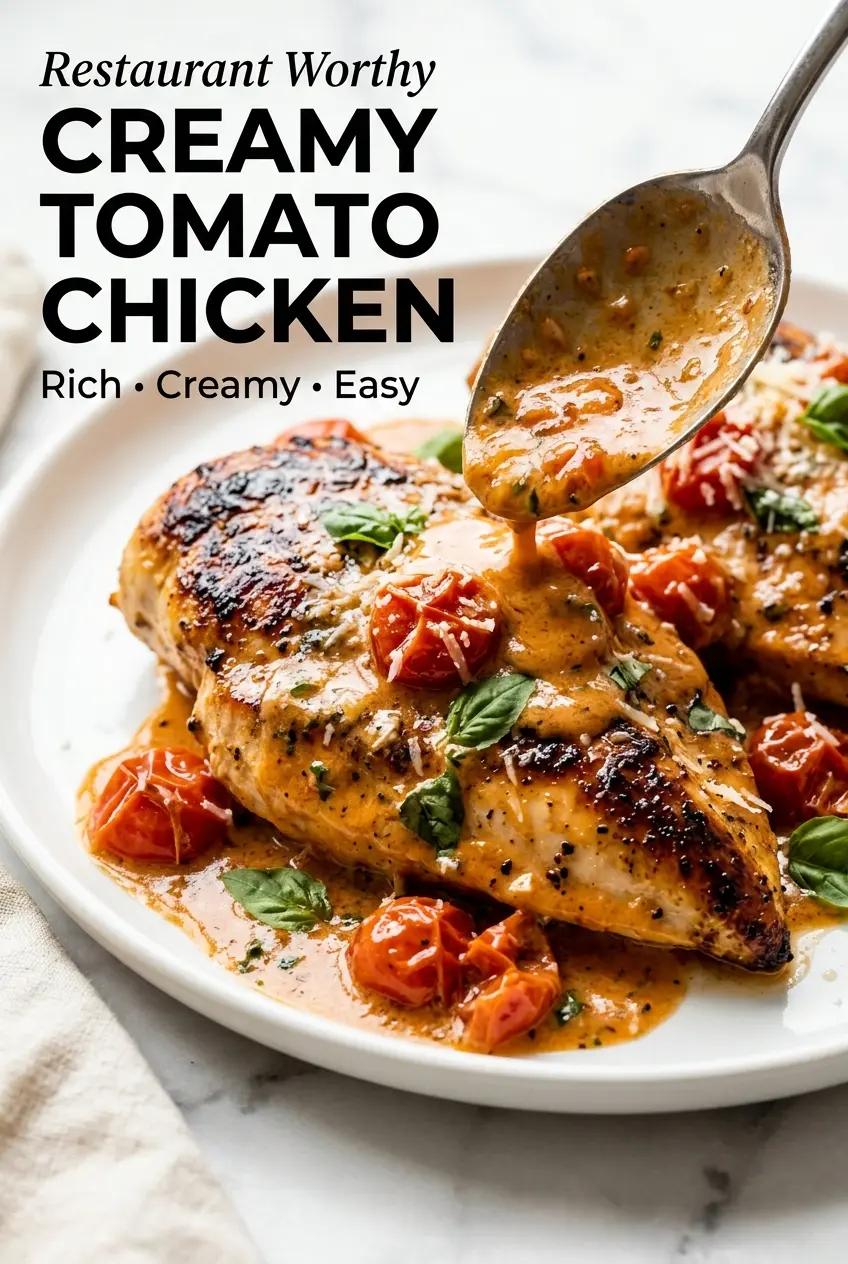
Creamy Tomato Chicken
Ingredients
Equipment
Method
- Season the chicken breasts with garlic powder, onion powder, Italian seasoning, smoked paprika, salt, and black pepper.
- Heat the olive oil and butter in a large skillet over medium-high heat.
- Sear the chicken for 5–6 minutes per side until golden brown, then transfer to a plate.
- Add the minced garlic to the skillet and cook for 30 seconds until fragrant.
- Stir in the cherry tomatoes and cook for 4–5 minutes until they begin to soften and burst.
- Mix in the tomato paste and cook for 1 minute.
- Pour in the chicken broth, scraping up any browned bits from the bottom of the skillet.
- Reduce the heat to medium-low and stir in the heavy cream, Parmesan cheese, dried basil, and crushed red pepper flakes, if using.
- Simmer for 3–4 minutes until the sauce thickens.
- Return the chicken to the skillet, spoon the creamy tomato sauce over the chicken, and simmer for 6–8 minutes until the chicken reaches an internal temperature of 165°F (74°C).
- Garnish with fresh basil and parsley, then serve immediately over pasta, mashed potatoes, or rice with plenty of extra sauce.