
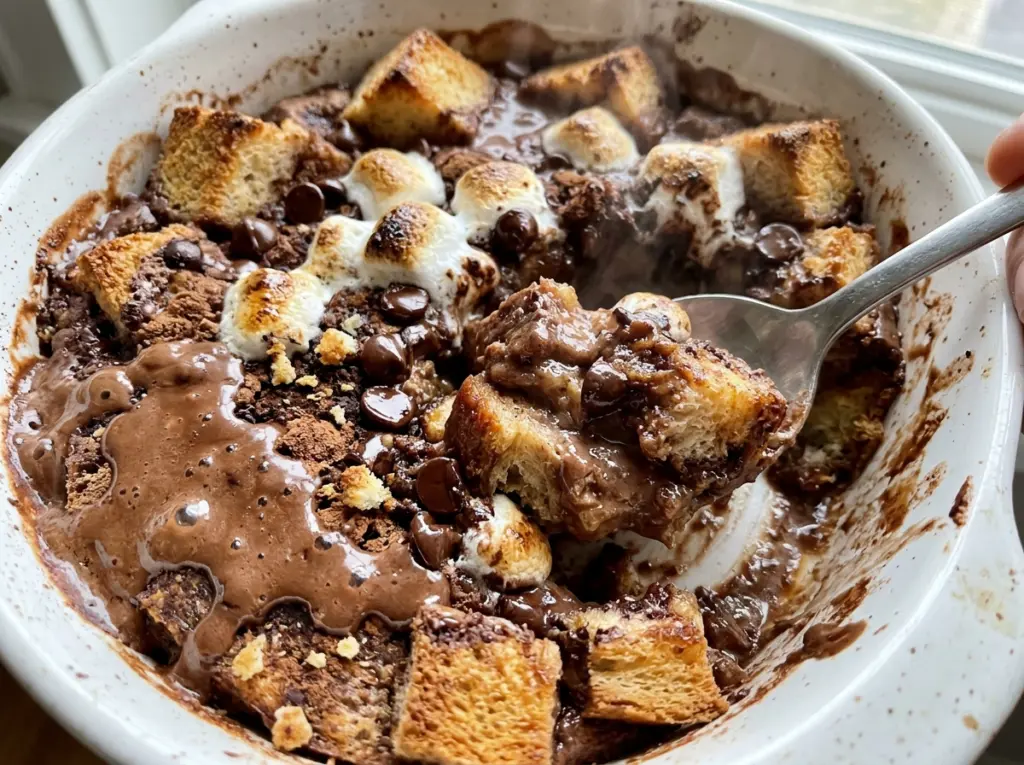
Hot Chocolate Bread Pudding
As cocoa hits warm milk, it first floats in soft brown clouds before the whisk pulls it into a smooth, dark chocolate base. That’s the moment I know this hot…

By Ava
•
•
Reading time: 9 min
Tip: save now, make later.
As cocoa hits warm milk, it first floats in soft brown clouds before the whisk pulls it into a smooth, dark chocolate base. That’s the moment I know this hot chocolate bread pudding is headed in the right direction: the custard should smell like a mug of cocoa, but it needs enough body to soak into bread and set in the oven.
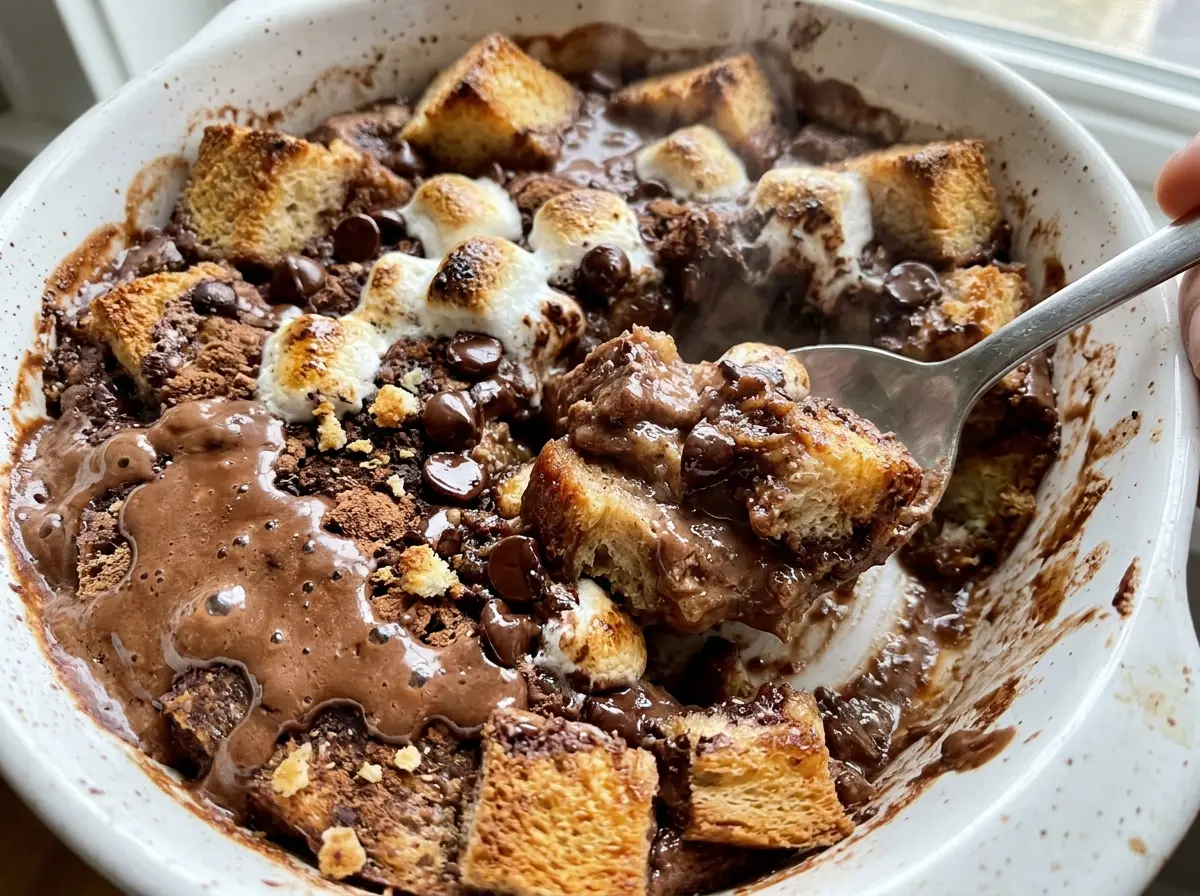
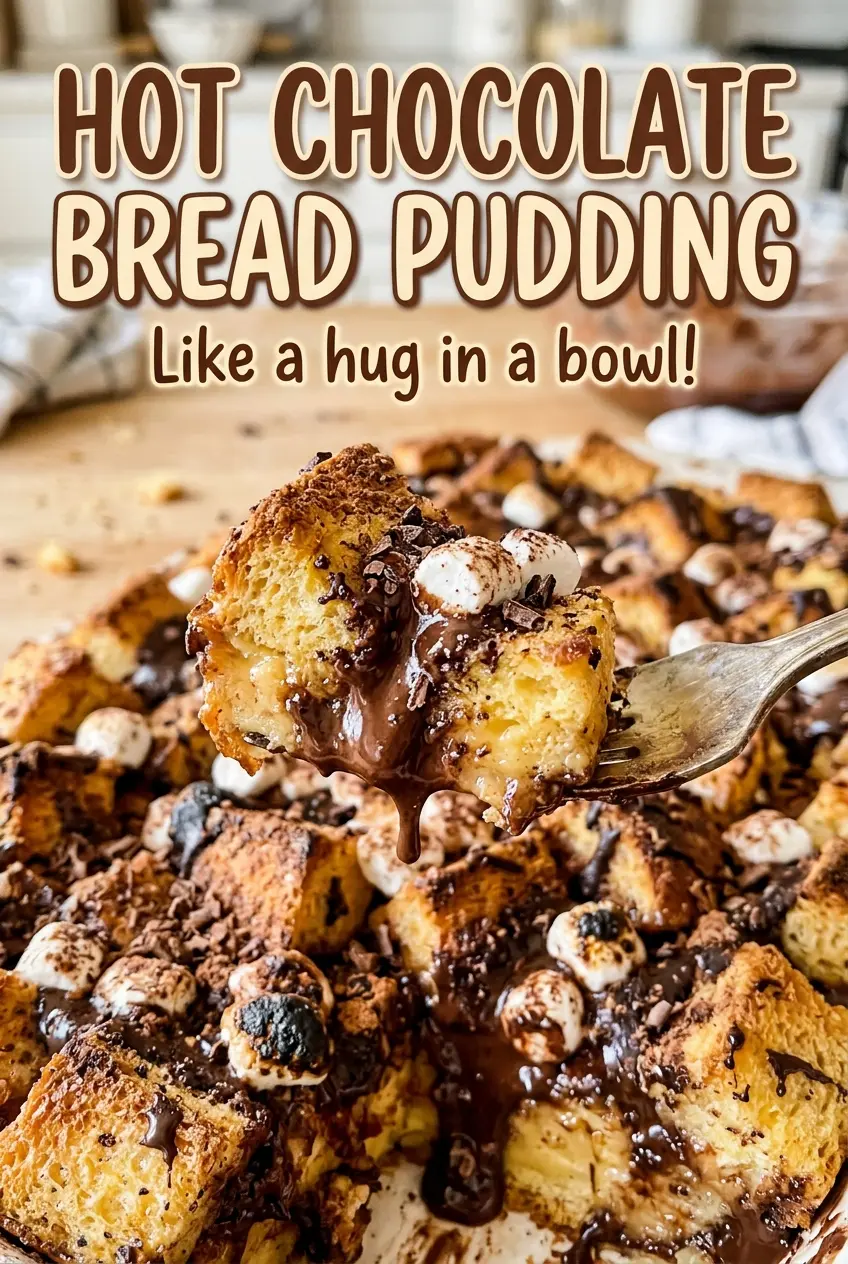
Day-old French bread gives the pudding a soft, custardy middle without disappearing into the liquid. After the bread has had time to soak, the oven does the rest; a quick turn under the broiler gives the marshmallows a golden top. Let the pudding rest before serving, and each scoop holds onto that contrast of tender bread and toasted marshmallow.
Kitchen Note
Use a large bowl for the eggs, vanilla, and salt. It gives you room to whisk continuously as the warm chocolate mixture goes in, instead of splashing custard over the sides.
Save this hot chocolate bread pudding for its chocolate-soaked center and golden marshmallow topping.
Why Day-Old French Bread Holds Its Shape in Chocolate Custard
Bread pudding needs bread that can take in plenty of liquid and still keep some structure. French bread that’s a day old is firm enough to absorb the cocoa custard without turning to paste. Fresh bread is softer to begin with, so it’s more likely to lose its shape as it sits in the dish and bakes.
The size of the cubes matters, too. One-inch pieces give the custard plenty of places to soak in, while evenly cut pieces bake at a similar pace. If some cubes are much larger than others, the small ones can become very soft before the larger centers have taken up enough custard. Scatter the cubes evenly in the dish so you don’t end up with a dense mound in the middle and dry edges.
This is meant to be tender, not dry like a loaf cake. The custard should reach through the bread, but the pieces should still be recognizable when you serve it. A sturdy, day-old loaf gives you that balance.
How Cocoa, Chocolate, and Bread Build the Hot Chocolate Flavor
- Day-old French bread — A firm loaf keeps the baked pudding from turning mushy. French bread is a good fit because its crust and open crumb hold custard well; a sturdy Italian loaf can work in its place. Skip soft sandwich bread, which won’t give the same substantial pieces.
- Whole milk — The fat gives the custard a rounded, creamy feel. Whole milk is worth using here, though 2% milk works if that’s what you have; the result will be a little less rich. I wouldn’t use a thin, non-dairy beverage unless you’re making the dairy-free adaptation below.
- Unsweetened cocoa and semisweet chocolate chips — Cocoa brings the familiar hot-cocoa taste, while melted chips add depth and body. A standard unsweetened cocoa powder works well; you don’t need a specialty brand. Use chips you like eating, since their flavor carries through the custard. Chopped semisweet chocolate can stand in for the chips.
- Eggs — Eggs are what turn the milk and chocolate into a custard that sets around the bread. Use large eggs for the right balance of liquid and structure; they aren’t an ingredient I’d replace in this version.
- Mini marshmallows — Their small size makes it easy to cover the pudding in an even layer, and they toast quickly under the broiler. Choose fresh marshmallows so they scatter easily rather than clumping together.
From Chocolate Custard to Toasted Marshmallow Top
Set Up the Bread and Baking Dish
Heat the oven to 350°F and grease a 9×13-inch baking dish with softened butter, including the corners. Cut the day-old French bread into one-inch cubes and spread them evenly across the dish. Keep the pieces in a loose, level layer rather than packing them down. That gives the custard a chance to reach the bread throughout the pan.
Make a Smooth Chocolate Base
Whisk the milk, cocoa powder, and sugar together in a medium saucepan before heating. Warm the mixture over medium heat, whisking often, until it’s steaming; it shouldn’t be boiling. Take the pan off the heat, add the semisweet chocolate chips, and whisk until the chocolate has melted and the mixture looks smooth. If cocoa clings to the sides of the pan, scrape it back in as you whisk.
Whisk the Custard and Soak the Bread
In a large bowl, whisk the eggs with the vanilla and salt until blended. Slowly whisk in the warm chocolate mixture so the eggs incorporate gradually instead of cooking in one spot. Pour the custard evenly over the bread, then let it soak for 20 minutes. Gently press the cubes into the custard once or twice; pressing hard can break up the bread.
Bake Until Set, Then Toast the Marshmallows
Bake for 45–55 minutes, until the center is set and registers 160°F. A deep wobble in the middle means it needs more time; check the center rather than judging the edges alone. Set the oven rack about 6 inches below the broiler, turn the broiler to high, and scatter the mini marshmallows over the pudding. Broil for 1–2 minutes, watching closely until they’re golden, then let the pudding rest for 15 minutes before serving.
Three Ways to Adapt the Chocolate and Bread
Make It Dairy-Free, but Keep the Custard
Use unsweetened, full-fat oat milk in place of the whole milk, plant-based butter to grease the dish, and dairy-free semisweet chocolate chips. The pudding will be a little less rich, but the cocoa still gives it a clear chocolate flavor. The eggs stay in this version, so it isn’t vegan.
Use a Gluten-Free Loaf
Replace the French bread with an equal weight of day-old gluten-free French-style bread, cut into the same size cubes. Gluten-free bread can soften more quickly, so keep the pieces intact when you press them into the custard. The finished pudding may be less springy, but it will still have a soft, chocolatey center.
Go Darker with Bittersweet Chocolate
Swap the semisweet chips for the same amount of bittersweet chocolate chips if you prefer a more pronounced cocoa taste and less sweetness. Keep the sugar as written; the pudding will still have the same custardy texture, with a deeper chocolate finish.
Storage and Reheating
- Refrigerator: Store covered in the refrigerator for 3–4 days. The marshmallow topping softens after chilling.
- Freezer: Freeze individual portions in airtight containers for up to 2 months. For the best topping, freeze the baked pudding before adding marshmallows; toasted marshmallows lose their airy texture after freezing.
- Reheating: Warm individual portions in the microwave in short bursts until heated through to 165°F. Avoid one long blast, which can make the bread rubbery before the center warms.
Questions That Come Up Before Baking This Bread Pudding
Hot Chocolate Bread Pudding
Ingredients
Equipment
Method
- Heat the oven to 350°F.
- Grease a 9x13-inch baking dish with the butter.
- Arrange the bread cubes evenly in the prepared dish.
- In a medium saucepan, whisk together the milk, cocoa powder, and sugar.
- Heat over medium heat until steaming, whisking often.
- Remove the saucepan from the heat.
- Add the chocolate chips and whisk until melted and smooth.
- In a large bowl, whisk the eggs, vanilla, and salt.
- Slowly whisk the warm chocolate mixture into the egg mixture.
- Pour the custard evenly over the bread.
- Let the bread soak for 20 minutes, gently pressing the cubes into the custard once or twice.
- Bake for 45–55 minutes, until the center is set and registers 160°F.
- Set the oven rack about 6 inches below the broiler.
- Turn the broiler to high.
- Scatter the marshmallows over the pudding.
- Broil for 1–2 minutes, watching closely, until golden.
- Let the pudding rest for 15 minutes before serving.