
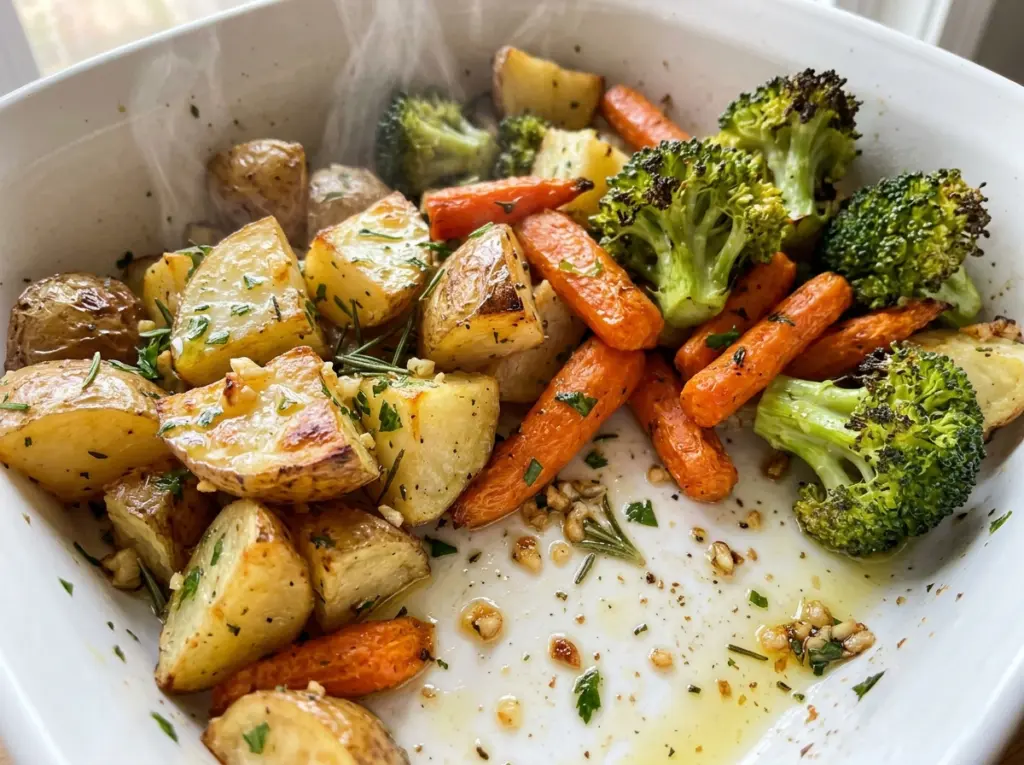
Garlic Herb Roasted Potatoes and Veggies
The potatoes come out of the oven with crisp-looking edges while the carrots are still sturdy enough to hold their shape, and the red pepper and zucchini bring a softer,…

By Ava
•
•
Reading time: 8 min
Tip: save now, make later.
The potatoes come out of the oven with crisp-looking edges while the carrots are still sturdy enough to hold their shape, and the red pepper and zucchini bring a softer, sweeter bite. That mix of textures is what I want from a pan of Garlic Herb Roasted Potatoes and Veggies, not a tray where every piece turns tender at the same time.
I cut the vegetables to different sizes on purpose: the denser potatoes get larger pieces, while the carrots and zucchini are smaller so they can catch up. Rosemary and thyme coat the potatoes and carrots first, then the quicker-cooking vegetables join them later. By the time the garlic goes in, the whole pan smells earthy and savory, with browned edges and tender centers.
It’s a generous side for six, and the two-pan setup gives the vegetables room to roast instead of steam. Bring the pans to the table while the garlic is still fragrant and the potatoes are warm.
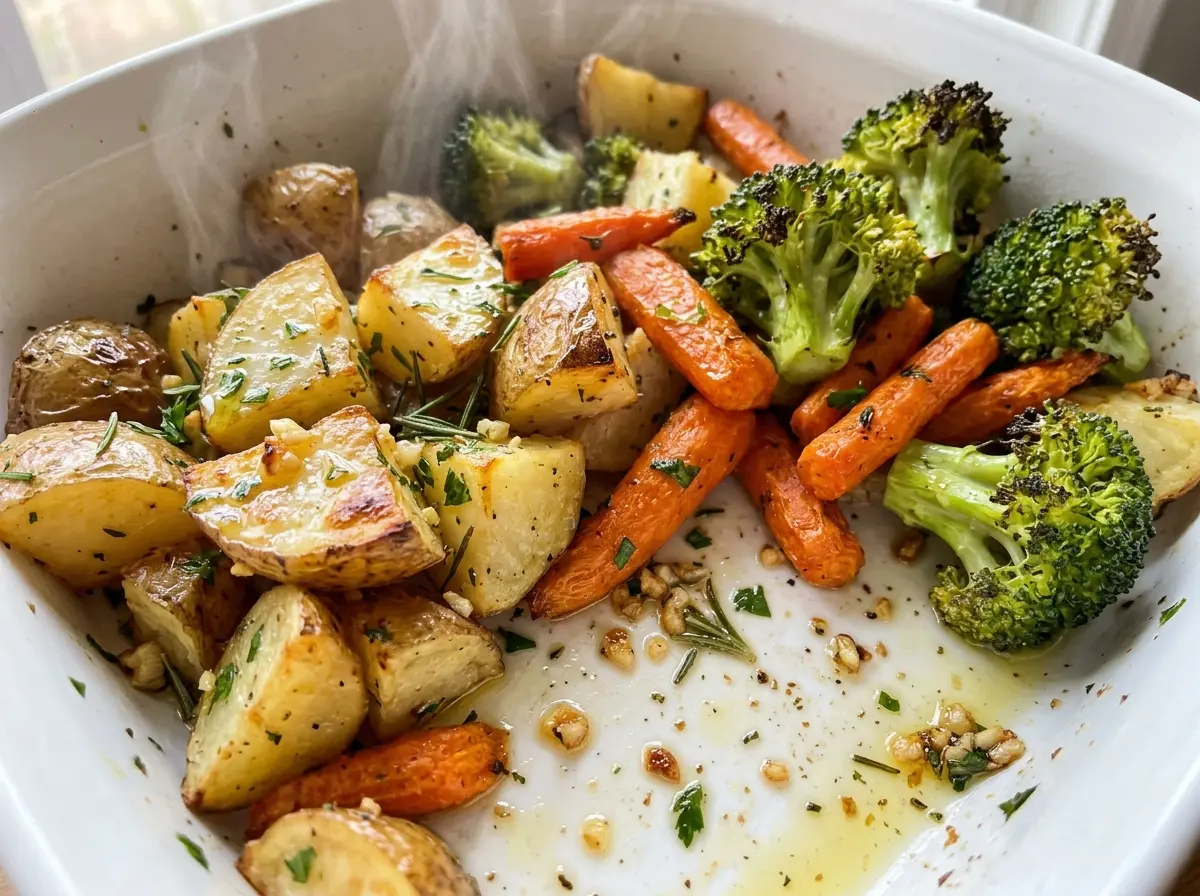
Kitchen Note
Garlic needs only the final stretch in the oven, so I add it after the other vegetables have started browning. Keep an eye on it during those last minutes; fragrant garlic with a little color is what you want, not dark, bitter bits.
Save these garlic herb roasted potatoes and veggies for a colorful, hands-off side with browned edges and tender centers.
Why the Zucchini Doesn’t Go in With the Potatoes
Potatoes and carrots need a longer roast than zucchini, red pepper, and onion. Put everything in together and you’ll be asking the zucchini to stay in the oven while the roots catch up. It softens quickly, and the extra moisture can leave the tray steamy before the potatoes have a chance to brown.
Giving the potatoes and carrots their own head start solves both problems. They roast in a hot oven with the dried herbs, so their surfaces begin to color before the quicker vegetables arrive. The onion, pepper, and zucchini then have enough time to soften and pick up browned edges without collapsing into the pan.
Room on the baking sheets matters, too. The vegetables should sit in a single layer rather than pile over one another; crowded pieces release moisture into the same small space. Two rimmed 18×13-inch pans make it easier to spread everything out, and switching the pans between oven racks helps them roast more evenly.
What the Yukon Golds, Carrots, and Dried Herbs Bring to the Pan
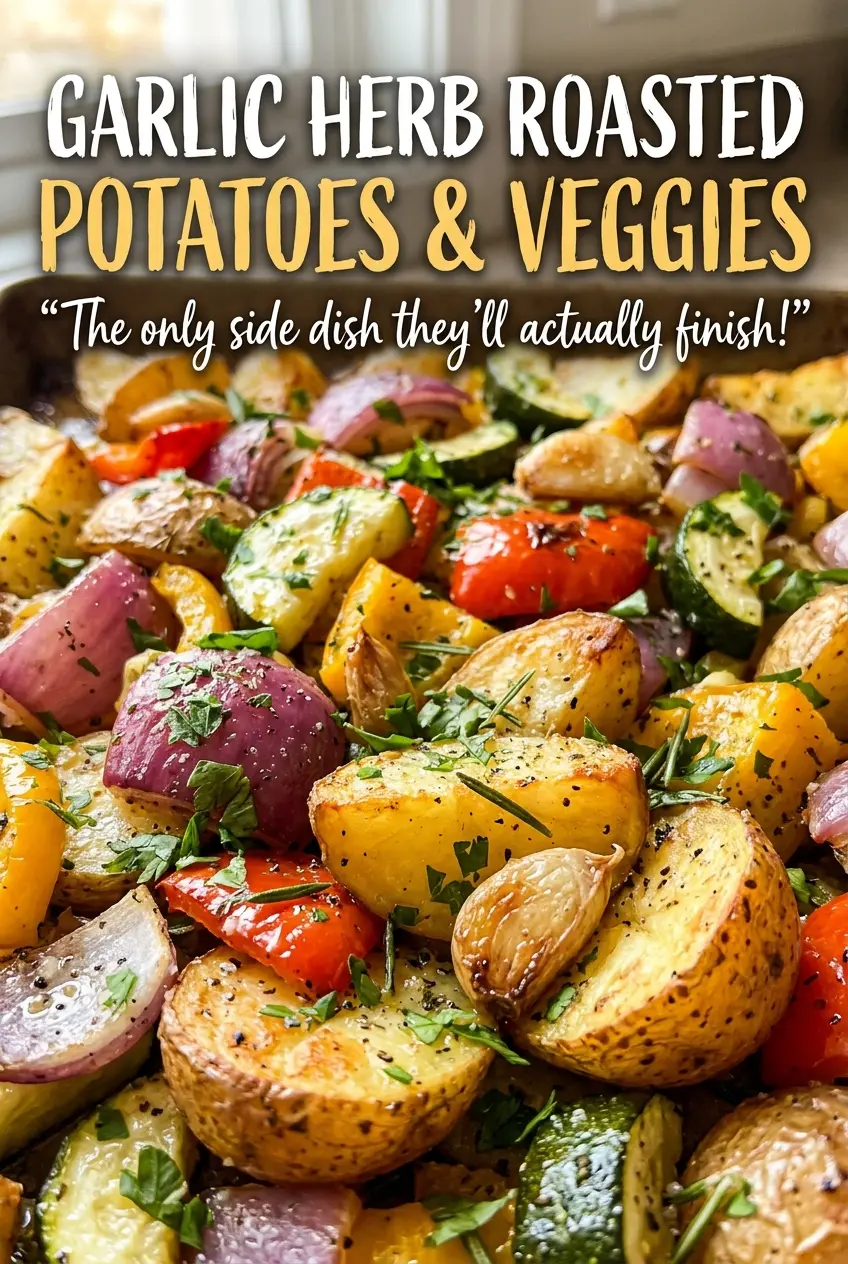
- Yukon Gold potatoes — Their creamy interior turns tender without becoming as fluffy or crumbly as a russet. Cut them into even 1-inch pieces so they roast at a steady pace. Red potatoes work in the same size; their flesh stays a little firmer.
- Carrots — Their sweetness balances the savory herbs, and 1/2-inch pieces let them soften on schedule alongside the potatoes. Parsnips are a useful swap cut to the same size, though they bring a more pronounced earthy sweetness.
- Rosemary and thyme — Dried herbs are a practical choice here because they hold up through a long roast and cling to the oiled potatoes and carrots. If you’re out of both, replace them with an equal total amount of dried oregano for a warmer, more oregano-forward tray.
- Red onion and red bell pepper — Both become sweeter as their edges brown, while the pepper adds a juicy, tender contrast. Yellow or orange bell pepper can replace the red one without changing the cut or method.
- Zucchini and garlic — Zucchini brings a soft, moist bite, so keep its half-moons consistent rather than slicing them thin. Freshly minced garlic gives the strongest aroma; jarred minced garlic has a milder, less lively taste and can brown quickly, so watch it closely near the end.
- Olive oil — It helps the seasonings coat the vegetables and encourages browning. A neutral oil such as avocado oil works in its place; choose a mild olive oil if you don’t want its flavor to stand out.
Roasting the Vegetables in Three Stages
Give the Potatoes and Carrots Their Head Start
Heat the oven to 425°F and line two rimmed 18×13-inch baking sheets with parchment. Toss the potatoes and carrots with 2 tablespoons of olive oil, the rosemary, thyme, half the salt, and half the pepper, then divide them between the pans in a single layer. Roast for 20 minutes, switching the pans between oven racks halfway through. If pieces are piled up, spread them out so the hot air can reach their surfaces.
Add the Vegetables That Cook Faster
After the first roast, add the onion, red bell pepper, and zucchini to the pans. Toss them with the remaining olive oil, salt, and pepper, then spread everything out again. Roast for 12 minutes. The onion and pepper should be starting to soften, while the zucchini should still hold its shape rather than look limp.
Finish with Garlic Until the Edges Brown
Add the minced garlic and toss the vegetables so it’s distributed across the pans. Roast for another 8 to 10 minutes, until the potatoes and carrots are tender and the vegetables have browned edges. Check a potato and carrot piece for tenderness rather than judging only by color. If the vegetables need the full 10 minutes, let them stay in until those dense pieces are cooked through.
Three Simple Ways to Change the Tray
Trade the Carrots for Parsnips
Cut parsnips into the same 1/2-inch pieces and roast them with the potatoes from the start. They bring a slightly earthier sweetness and make the tray feel a little less familiar without changing the staging.
Use Oregano Instead of Rosemary and Thyme
Replace the rosemary and thyme with 2 teaspoons of dried oregano. It gives the potatoes and carrots a more direct, savory herb flavor while keeping the same roasting method.
Make a Lower-Sodium Version
Use 1/4 teaspoon kosher salt with the potatoes and carrots, then another 1/4 teaspoon with the later vegetables. The herbs and garlic still give the tray plenty of savory character, though the vegetables will taste less seasoned than the original.
Storage and Reheating
- Refrigerator: Store leftovers in an airtight container for 3 to 4 days. The zucchini softens more as it sits, while the potatoes lose some of their roasted edges.
- Freezer: Freeze cooled vegetables in an airtight freezer-safe container for up to 2 months. They’ll be softer after thawing, especially the zucchini, so freezing is best when texture matters less than convenience.
- Reheating: Spread leftovers on a baking sheet and warm in a 400°F oven until hot, about 10 minutes, checking early if the portion is small. A microwave works for a quick serving, but it won’t bring back the browned edges.
Questions That Come Up Before the Pans Go in the Oven
Garlic Herb Roasted Potatoes and Veggies
Ingredients
Equipment
Method
- Heat the oven to 425°F.
- Line two rimmed 18x13-inch baking sheets with parchment paper.
- Toss the potatoes and carrots with 2 tablespoons olive oil, the rosemary, thyme, 1/2 teaspoon salt, and 1/4 teaspoon pepper.
- Divide the potato and carrot mixture between the baking sheets and spread it in a single layer.
- Roast for 20 minutes, switching the pans between oven racks halfway through.
- Add the onion, bell pepper, and zucchini to the pans with the remaining 1 tablespoon olive oil, 1/2 teaspoon salt, and 1/4 teaspoon pepper.
- Toss and spread everything in a single layer, then roast for 12 minutes.
- Add the garlic and toss the vegetables.
- Roast for 8 to 10 minutes, until the potatoes and carrots are tender and the vegetables are browned at the edges.