
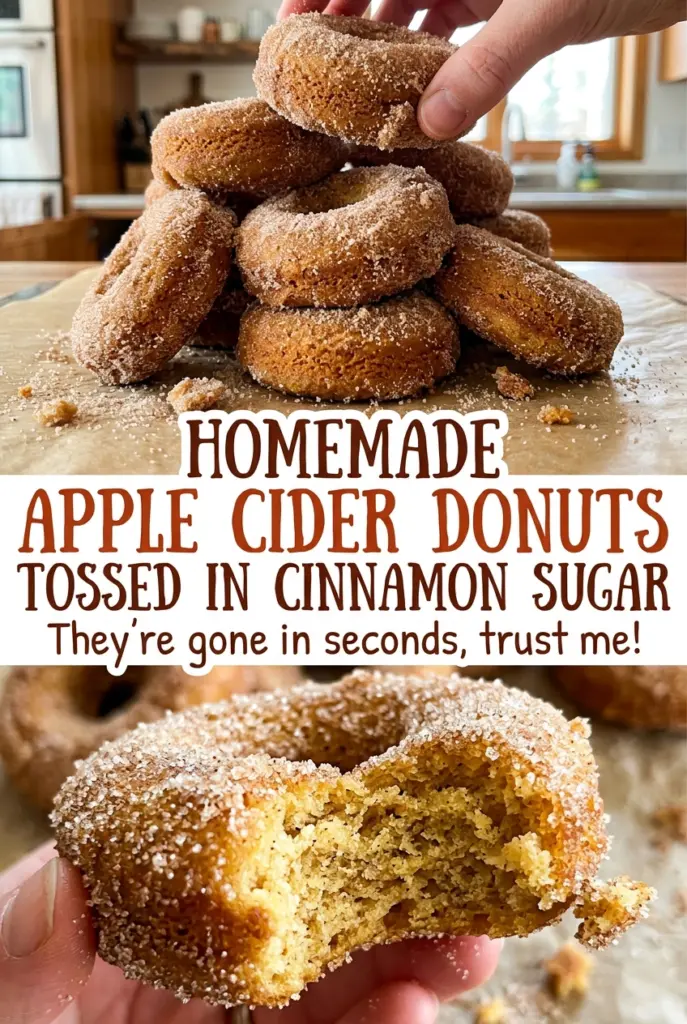
Homemade Apple Cider Donuts Tossed in Cinnamon Sugar
The first ring should puff gently as it meets the oil, then turn deep golden before the center has a chance to dry out. That’s the moment these homemade apple…

By Ava
•
•
Reading time: 9 min
Tip: save now, make later.
The first ring should puff gently as it meets the oil, then turn deep golden before the center has a chance to dry out. That’s the moment these homemade apple cider donuts start to smell like a cider mill: warm apple, nutmeg, and cinnamon sugar.
I reduce the cider before it goes anywhere near the dough, then let it cool completely. The dough is soft and sticky, so chilling it before rolling makes a big difference; it’s much easier to cut clean rings without working extra flour into the mixture. Fry the donuts in small batches, and you’ll get tender centers under a cinnamon-sugar crust.
These are at their best while the coating is still a little crisp and the inside is warm and soft.
Kitchen Note
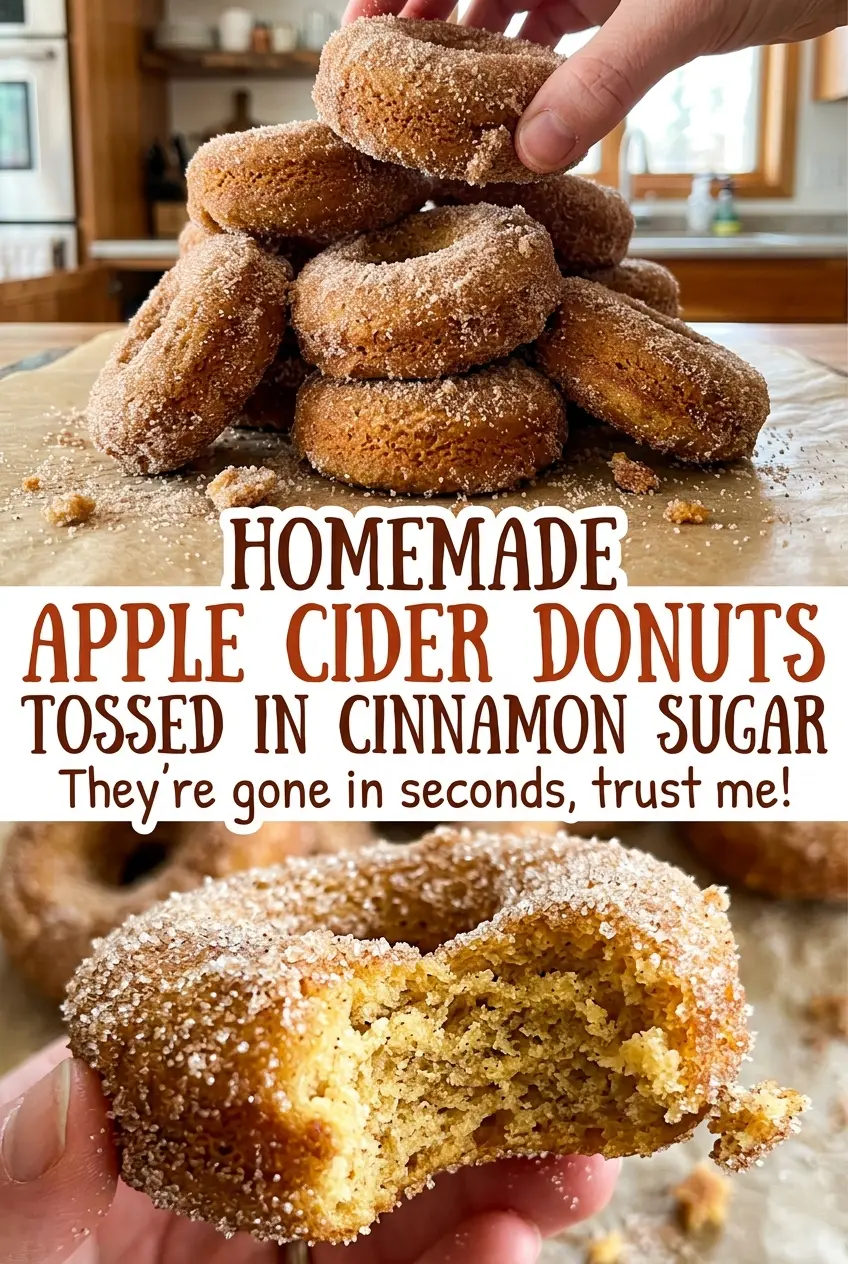
The dough is tacky, even after chilling. Roll it between parchment sheets rather than dusting the counter heavily; that keeps the rings easy to cut without adding extra flour that can make them dry.
Save these homemade apple cider donuts for a batch with tender centers and a crisp cinnamon-sugar finish.
Why Sticky Dough Makes Softer Apple Cider Donuts
It’s natural to think donut dough should feel firm and easy to handle, but this one starts out soft and sticky. Adding flour until it feels like bread dough seems like an easy fix; it also changes the balance of the mixture and can leave the fried donuts dense or dry. The dough needs just enough mixing for the last streaks of flour to disappear.
Chilling gives that soft dough time to firm up, so it can be rolled and cut without a heavy layer of extra flour. The cold dough also holds its shape as you move the rings to the baking sheet. If it still feels delicate, keep it between the parchment and work gently instead of kneading it into a firmer dough. You want clean cuts and a tender bite, not a stiff ball that’s easy to handle at any cost.
The cider reduction supports that texture, too: it brings concentrated apple flavor into the dough without pouring in extra liquid. That keeps the dough’s moisture in check while giving the donuts a clear cider character.
What Gives These Cider Donuts Their Tender Crumb

- Apple cider — Choose cider with a full apple aroma, since simmering concentrates its flavor. The reduction should be completely cool before it goes into the eggs and buttermilk; warm liquid can make the melted butter less predictable and affect the dough.
- All-purpose flour — Spoon it into the measuring cup and level the top rather than scooping straight from the bag. That small habit helps prevent an overly floury dough. A standard all-purpose flour is the right choice for these cut-and-fried rings.
- Light brown sugar and the leaveners — Brown sugar brings a little moisture and a mellow sweetness, while baking powder and baking soda help the donuts puff. Break up any brown-sugar lumps as you whisk the dry ingredients so they don’t turn into sweet pockets in the dough.
- Buttermilk, eggs, and butter — Buttermilk adds a gentle tang and tenderizes the crumb; the eggs help the soft dough hold together, and butter rounds it out. Let the melted butter cool before mixing it with the eggs so the ingredients combine smoothly.
- Nutmeg and cinnamon sugar — Nutmeg gives the dough its warm, bakery-style spice, while cinnamon sugar makes the outside fragrant and lightly crisp. Granulated sugar is a good choice for the coating because its crystals stay distinct instead of melting into a paste.
From Cider Reduction to Golden Rings
Simmer the Cider Until It’s Concentrated
Bring the cider to a simmer in a 2-quart saucepan over medium heat, then let it simmer for 15–20 minutes, stirring occasionally. It’s ready when the starting 2 cups have reduced to 1/2 cup. Pour it into a heatproof measuring cup and let it cool completely before mixing the dough; don’t rush this part by adding it warm.
Mix Gently, Then Chill the Dough
Whisk the flour, brown sugar, baking powder, baking soda, nutmeg, and salt in a large bowl, breaking up the brown-sugar lumps. In a separate bowl, whisk the eggs, buttermilk, cooled melted butter, and cooled cider reduction. Stir the wet mixture into the dry ingredients only until no dry flour remains; the dough will look soft and sticky, not smooth and elastic. Cover the bowl and refrigerate it for at least 1 hour.
Cut Even Rings Without Overworking the Scraps
Stir the granulated sugar and cinnamon together in a shallow bowl while the dough chills. Roll the cold dough between two sheets of parchment to 1/2 inch thick, then cut 3-inch donuts with 1-inch holes. Set the donuts and holes on a parchment-lined baking sheet, and reroll the scraps once; repeated rolling can make the last donuts tougher than the first.
Fry at a Steady Temperature and Coat While Warm
Heat the vegetable oil in a 5-quart Dutch oven over medium heat, using a deep-fry thermometer to bring it to 350°F. Fry 2 or 3 donuts at a time for 1–1 1/2 minutes per side, keeping the oil at 350°F, until they’re deep golden brown and cooked through. Fry the holes for 45–60 seconds, turning once. Drain everything briefly on a wire rack, then toss the donuts and holes in the cinnamon sugar while they’re still warm so the coating clings.
Two Easy Ways to Change the Cinnamon-Sugar Donuts
Add a Little Cardamom to the Coating
Stir a pinch of ground cardamom into the cinnamon sugar for a gently floral note alongside the apple and nutmeg. Keep cinnamon as the main spice so the coating still tastes familiar rather than perfumed.
Make the Donuts Dairy-Free
For a dairy-free batch, replace the buttermilk with 1/2 cup unsweetened soy milk stirred with 1 1/2 teaspoons lemon juice, and use 4 tablespoons dairy-free stick butter in place of the butter. Let the milk mixture sit for a few minutes before using it. The donuts keep their tender texture, though the flavor will be a little less buttery; this swap doesn’t make them egg-free.
Storage and Reheating
- Room temperature: Keep cooled donuts in an airtight container for up to 2 days. The cinnamon-sugar coating softens as they sit, so they’re best the day they’re fried.
- Freezer: Freeze the cooled donuts in a single layer until firm, then transfer them to an airtight freezer container for up to 1 month. The coating may lose some of its crispness after thawing.
- Reheating: Warm thawed donuts briefly in a 300°F oven until heated through. Avoid the microwave if you want to preserve the outside; it can make the coating damp and the dough chewy.
Questions That Come Up While Frying Apple Cider Donuts
Homemade Apple Cider Donuts Tossed in Cinnamon Sugar
Ingredients
Equipment
Method
- Pour the cider into a 2-quart saucepan and bring to a simmer over medium heat.
- Simmer for 15–20 minutes, stirring occasionally, until reduced to 1/2 cup.
- Transfer the reduction to a heatproof measuring cup and cool completely.
- Whisk the flour, brown sugar, baking powder, baking soda, nutmeg, and salt in a large bowl, breaking up any brown-sugar lumps.
- Whisk the eggs, buttermilk, melted butter, and cooled cider reduction in a separate bowl.
- Stir the egg mixture into the flour mixture just until no dry flour remains; the dough will be soft and sticky.
- Cover the bowl and refrigerate the dough for at least 1 hour.
- Stir the granulated sugar and cinnamon together in a shallow bowl.
- Roll the chilled dough between two sheets of parchment to 1/2 inch thick.
- Cut 3-inch donuts with 1-inch holes and place them and the donut holes on a parchment-lined baking sheet.
- Reroll the scraps once.
- Pour the oil into a 5-quart Dutch oven, attach a deep-fry thermometer, and heat over medium heat to 350°F.
- Fry 2 or 3 donuts at a time for 1–1 1/2 minutes per side, keeping the oil at 350°F, until deep golden brown and cooked through.
- Fry the holes for 45–60 seconds, turning once.
- Drain the donuts and holes briefly on a wire rack.
- Toss the donuts and holes in the cinnamon sugar while still warm.