
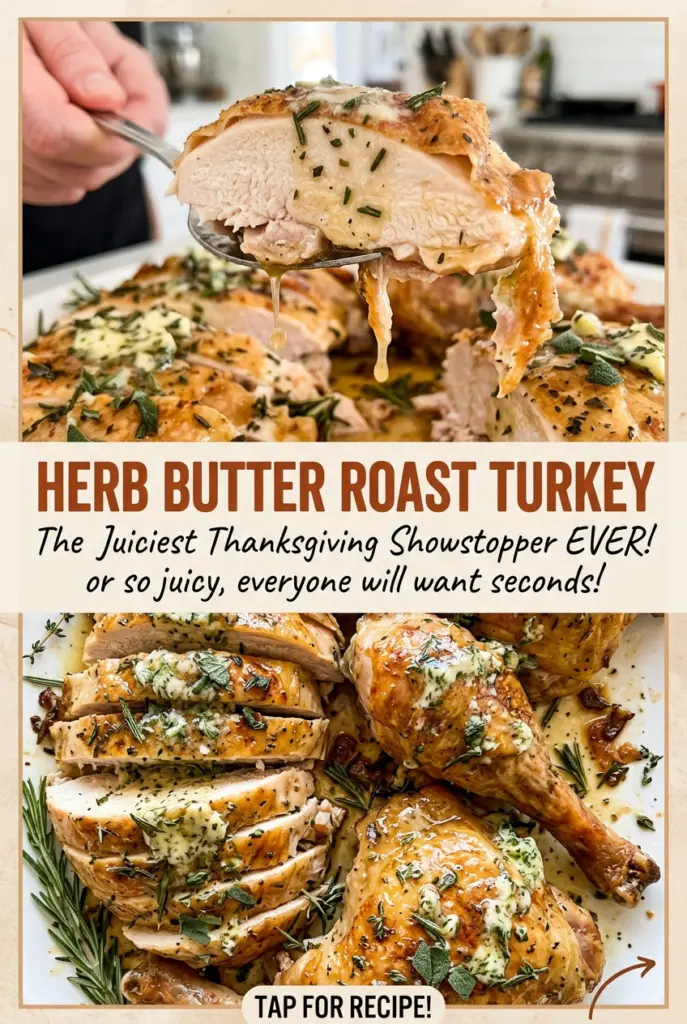
Herb Butter Roast Turkey
The breast skin starts turning bronze long before the thickest part of the thigh is ready, and that’s when it’s tempting to turn up the heat or cover the whole…

By Ava
•
•
Reading time: 9 min
Tip: save now, make later.
The breast skin starts turning bronze long before the thickest part of the thigh is ready, and that’s when it’s tempting to turn up the heat or cover the whole bird. I keep the oven steady instead. This herb butter roast turkey cooks at 325°F, and a loose foil tent over the breast is there if it starts browning too quickly.
For this 12-serving roast, the herbs and garlic go into softened butter, and most of that butter gets tucked beneath the skin. It seasons the meat directly, while the remaining butter coats the outside. The turkey rests before carving, which gives the juices time to settle instead of running across the board. The result is a fragrant roast with savory herb flavor in every slice.
Kitchen Note
Start with a fully thawed turkey with the neck and giblets removed. I check the cavity before I season the bird, so there’s no scrambling once the herb butter is ready.
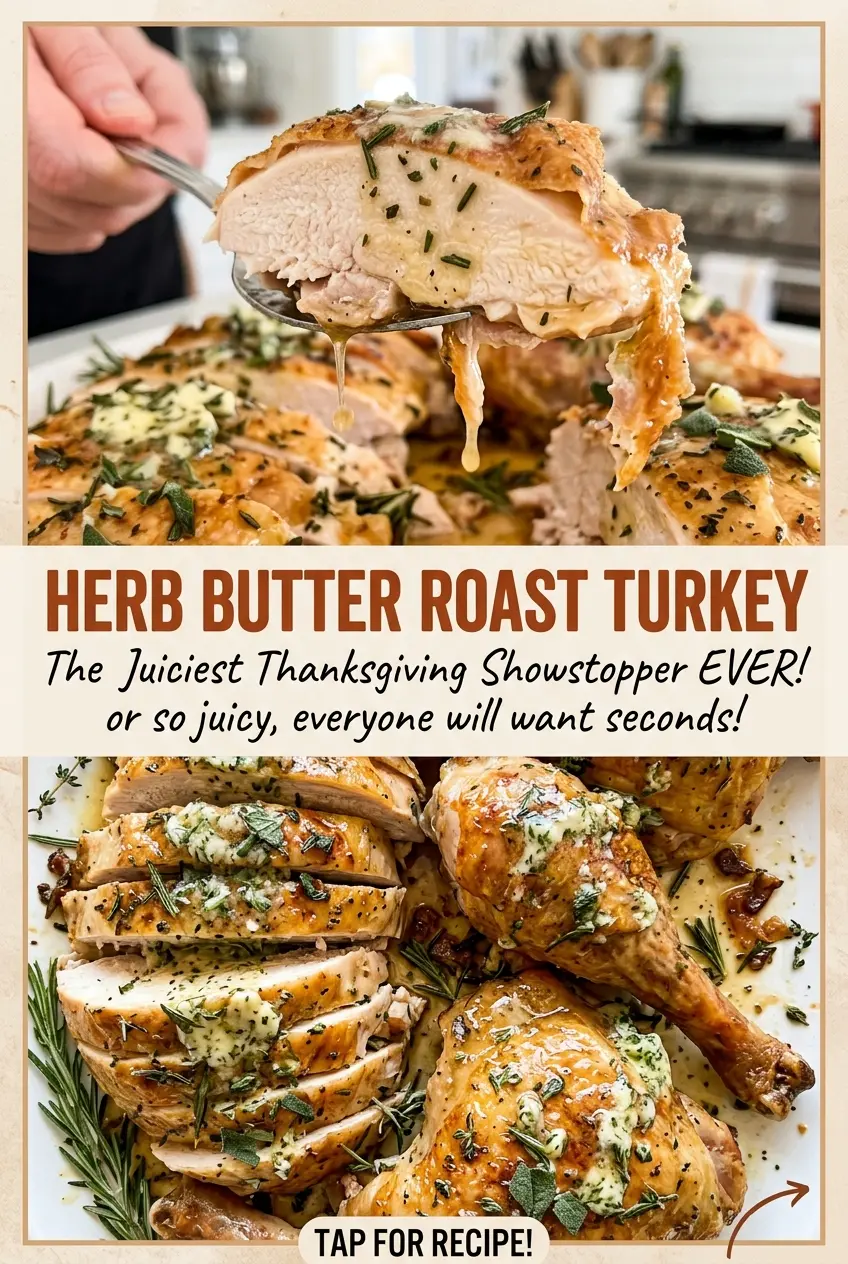
Save this herb butter roast turkey for a special dinner, with garlic, fresh herbs, and butter tucked right beneath the skin.
Why Herb Butter Belongs Under the Turkey Skin
Butter spread only over the outside has to work through the skin before it can season the meat. Tucking most of it underneath puts the parsley, rosemary, thyme, garlic, salt, and pepper right against the breast and thighs. That’s a useful distinction with a whole turkey: the breast and thighs are different shapes and don’t cook at exactly the same pace, so the seasoning shouldn’t depend on an exterior coating alone.
Loosening the skin gently gives you room to spread the butter without removing it. Keep the skin attached at the edges and work slowly; forcing your fingers through a tight spot can tear it. The butter under the skin seasons the meat, while the portion rubbed over the outside flavors the skin. Neither placement replaces using a thermometer in both the breast and thigh. Together, they give this straightforward roast its even herb-and-garlic character without adding a separate sauce or complicated technique.
Why Unsalted Butter and Fresh Herbs Matter in This Roast
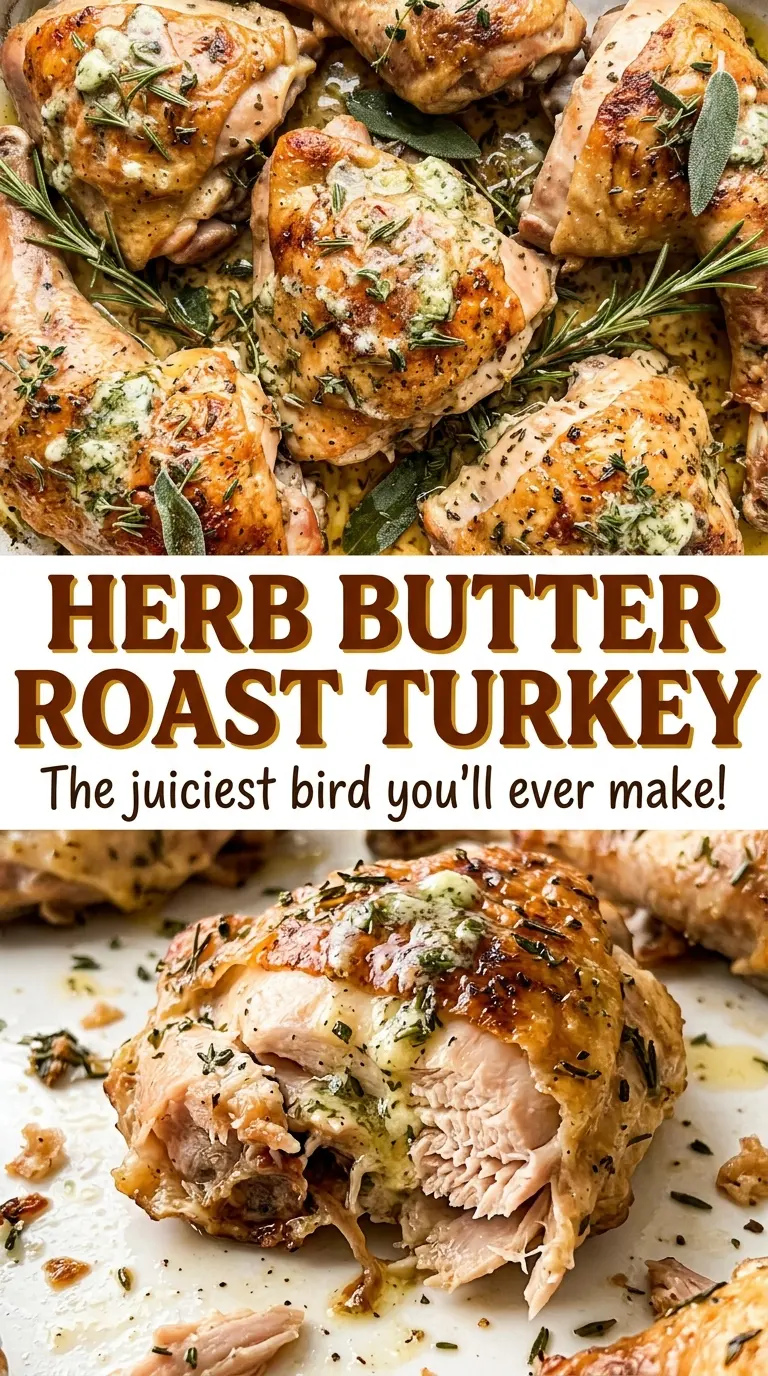
- Unsalted butter — It gives the kosher salt a clear, predictable role in the herb mixture. A standard grocery-store butter works well; the useful detail is that it should be softened enough to mash smoothly with the herbs rather than left hard and lumpy.
- Fresh parsley, rosemary, and thyme — These herbs make the butter taste green and aromatic instead of dusty. Flat-leaf parsley is easy to chop and blends neatly; rosemary and thyme bring the more assertive, woodsy notes. Use fresh herbs here, as dried herbs have a different concentration and texture and aren’t a direct one-for-one replacement in this mixture.
- Garlic — Minced garlic distributes through the butter so each portion carries some of its savory flavor. Mince it finely; large pieces are harder to spread evenly beneath the skin.
- Kosher salt and black pepper — The salt seasons the turkey along with the herbs, and the pepper gives the butter a gentle bite. Because the butter is unsalted, the seasoning remains easier to control than it would with salted butter.
- Onion, lemon, and celery — These go loosely in the cavity to add aromatic notes as the turkey roasts. A firm lemon and fresh celery are fine choices; there’s no need to seek out specialty produce for ingredients that will roast inside the bird.
- The turkey — Choose a whole bird in the 12- to 14-pound range, fully thawed, with the neck and giblets removed. The size matters because it’s the range paired with the roasting time and the 16×13-inch pan.
How to Season and Roast the Turkey Without Rushing the Finish
Mash the Herbs Into Soft Butter
Put the softened butter in a small bowl with the chopped parsley, rosemary, thyme, minced garlic, kosher salt, and black pepper. Mash until the mixture looks evenly speckled, with no large pockets of plain butter or clumps of seasoning. If the butter is too firm, it won’t combine smoothly or spread easily. Softened butter should yield under a fork but still hold its shape.
Prepare the Pan and Work Under the Skin
Heat the oven to 325°F with a rack in the lower third, then set a V-rack in a 16×13-inch roasting pan. Pat the turkey dry before seasoning; a wet surface makes the butter harder to spread neatly. Gently loosen the skin over the breast and thighs, then spread about two-thirds of the herb butter underneath. Rub the rest over the outside, taking care not to pull or tear the skin.
Fill the Cavity and Set the Bird on the Rack
Put the onion, lemon, and celery loosely inside the cavity rather than packing them tightly. Tuck the wing tips under the body, then tie the legs loosely with kitchen twine. Set the turkey breast side up on the V-rack. A loose tie holds the legs together without cinching them tight against the body.
Roast to Temperature, Then Rest
Roast for 3 to 3 3/4 hours, tenting the breast loosely with foil if it browns too quickly. Check the thickest part of the breast and the innermost part of the thigh with a thermometer, keeping the probe away from bone. Both readings should reach 165°F; the color of the skin alone can’t tell you whether the center is ready. Transfer the turkey to a carving board and let it rest for 30 minutes before carving.
Two Practical Ways to Adapt This Herb Butter Turkey
Make the Herb Butter Dairy-Free
Use a dairy-free butter alternative in the same measure as the unsalted butter, then mash it with the herbs and seasonings. Choose a firm, spreadable style rather than a pourable product so it can go under the skin. The flavor and browning may differ from butter, but the fresh herbs and garlic still season the turkey.
Roast Without the Cavity Aromatics
For a simpler roast, leave out the onion, lemon, and celery and cook the seasoned turkey without anything in the cavity. The bird will still roast normally, but you’ll lose the gentle aromatic notes those ingredients give the meat and pan area.
Storage and Reheating
- Refrigerator: Refrigerate leftover turkey within 2 hours and use it within 3 to 4 days. The meat may lose some moisture as it chills.
- Freezer: Freeze carved turkey in airtight packaging for up to 3 months for best quality. Thaw it in the refrigerator before reheating.
- Reheating: Reheat sliced portions covered in the microwave in short intervals until they reach 165°F. Avoid long blasts at high power, which can leave the edges dry before the middle is hot.
Questions That Come Up While Roasting This Turkey
Herb Butter Roast Turkey
Ingredients
Equipment
Method
- In a small bowl, mash the butter with the parsley, rosemary, thyme, garlic, salt, and pepper until evenly combined.
- Heat the oven to 325°F with a rack in the lower third.
- Set a V-rack in a 16x13-inch roasting pan.
- Pat the turkey dry.
- Gently loosen the skin over the breast and thighs.
- Spread about two-thirds of the herb butter under the skin and rub the rest over the outside.
- Put the onion, lemon, and celery loosely in the cavity.
- Tuck the wing tips under the body, and tie the legs loosely with kitchen twine.
- Set the turkey breast side up on the rack.
- Roast for 3 to 3 3/4 hours, tenting the breast loosely with foil if it browns too quickly, until a thermometer inserted into the thickest part of the breast and the innermost part of the thigh, away from bone, reads 165°F.
- Transfer the turkey to a carving board and rest for 30 minutes before carving.