
Cranberry Pecan Stuffing
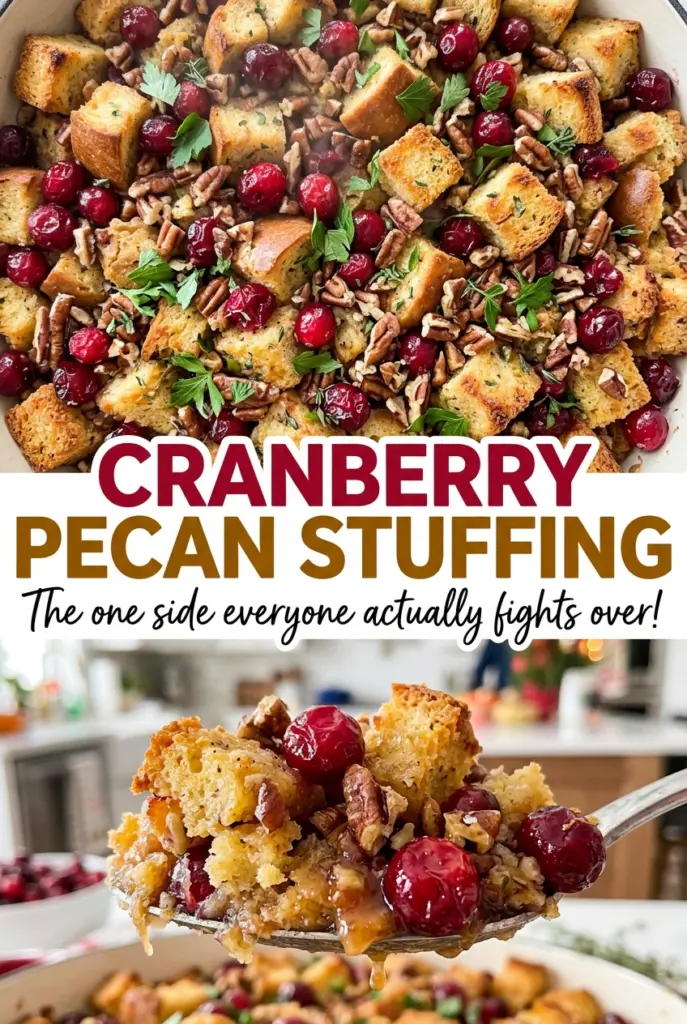
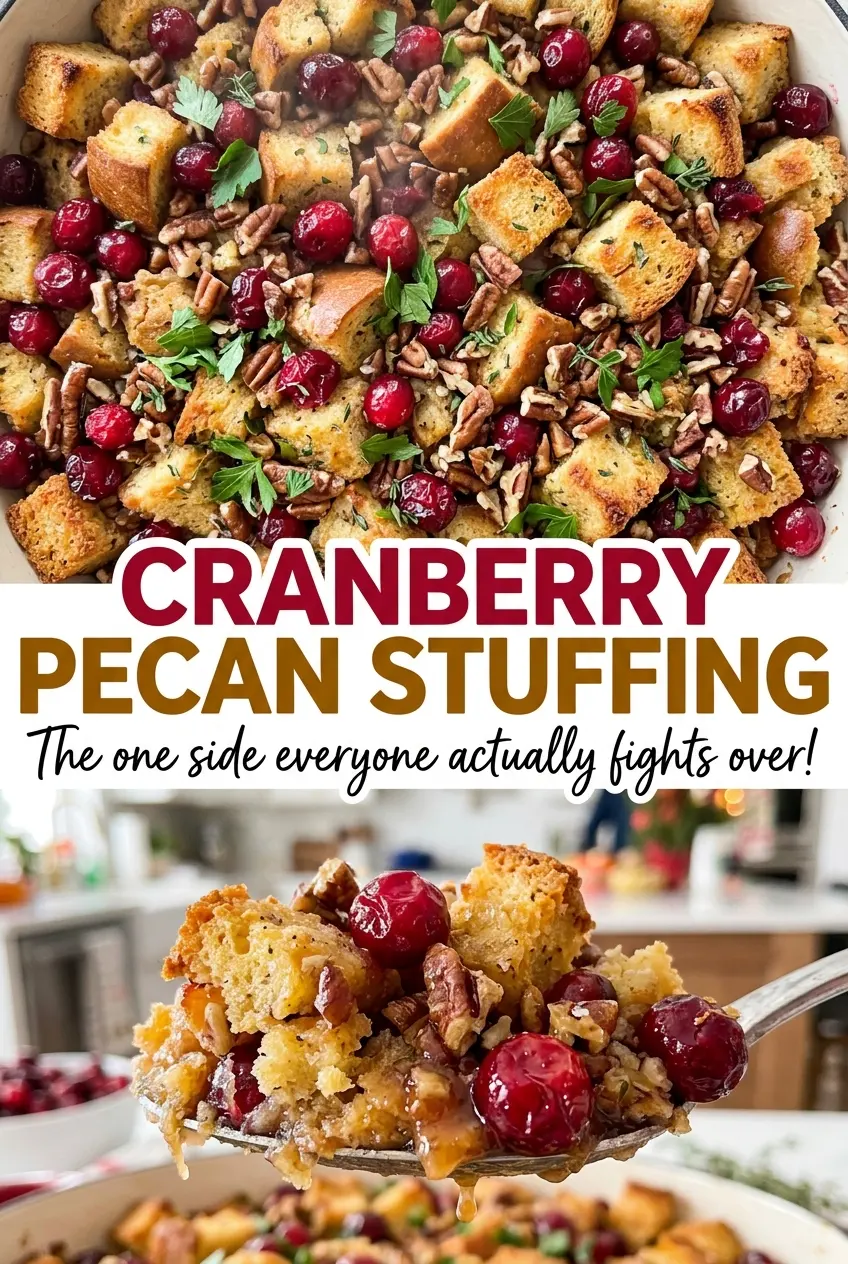
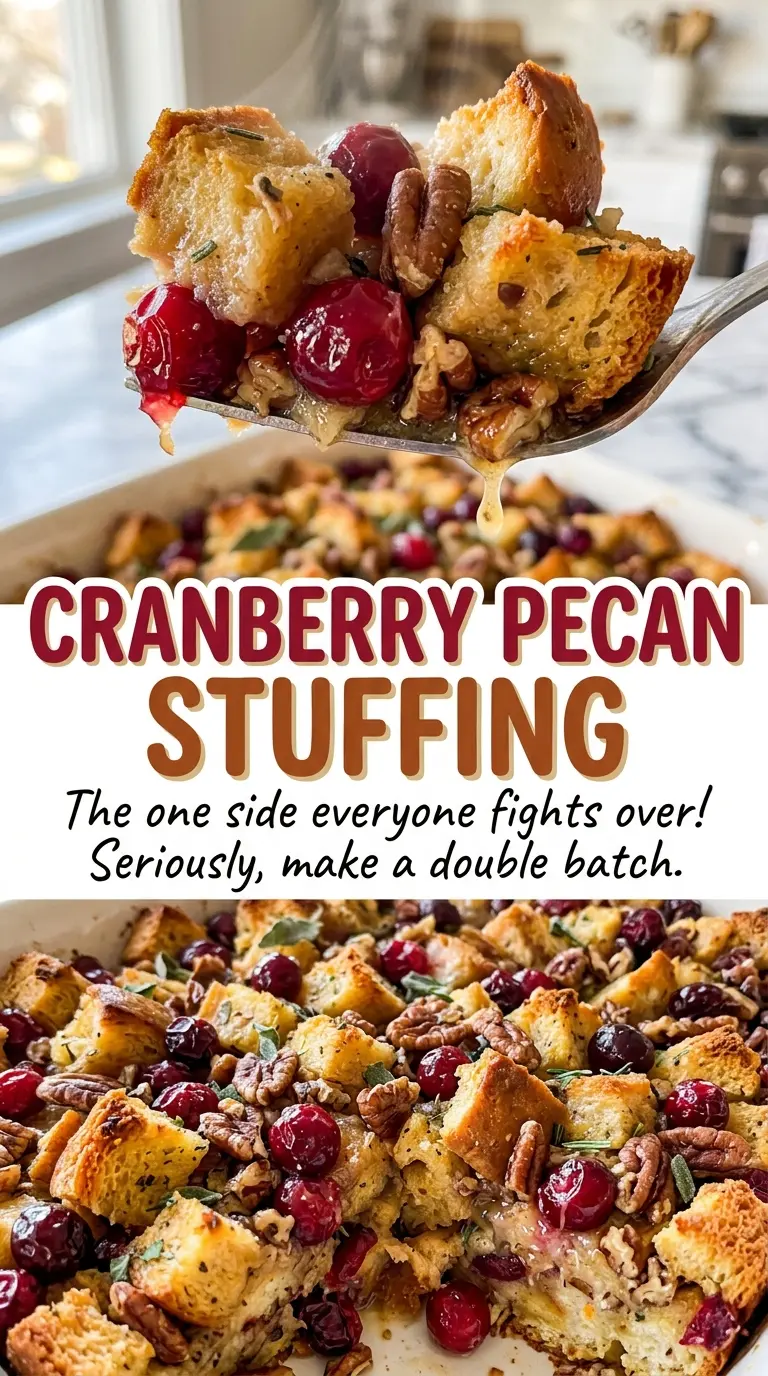
When the foil comes off, the top of the stuffing has started to turn golden, while the cranberries and pecans peek through the bread. I wanted each serving to have…

By Ava
•
•
Reading time: 9 min
Tip: save now, make later.
When the foil comes off, the top of the stuffing has started to turn golden, while the cranberries and pecans peek through the bread. I wanted each serving to have a little of everything: soft bread, chewy fruit, and a pecan in the occasional bite. That’s the balance I look for in this Cranberry Pecan Stuffing, and it makes a generous pan for 10.
Dried cranberries bring a tart-sweet note without taking the dish in a dessert direction. Dried sage, onion, and celery keep the flavor firmly savory, and the pecans add a rich contrast. Let the vegetables soften in butter before tossing them with the other ingredients; that gives the stuffing a flavorful base without leaving crunchy bits of onion or celery in the finished bake.
Kitchen Note
Once the broth and egg mixture goes in, toss just until the cubes are evenly moistened. If you keep stirring after that, the softened bread can break apart and the finished stuffing loses its distinct pieces.
Save this Cranberry Pecan Stuffing for a table-ready side with tart cranberries, tender bread, and plenty of pecan crunch.
Why Day-Old Bread Still Needs a Turn in the Oven
Day-old bread sounds dry enough, but the texture can vary from loaf to loaf. If the cubes still hold moisture, they soften quickly when the broth goes in and can bake up heavy rather than distinct. Drying them in the oven gives the bread a more even starting point, so the broth and eggs can moisten the cubes without leaving wet patches in the pan.
Look for bread that feels dry and crisp, not browned or toasted. That difference matters: browned cubes can bring a stronger toasted flavor, while evenly dried cubes are ready to absorb the savory mixture. If some pieces are much larger than others, they won’t take up moisture at the same rate, so cut the bread into even cubes before drying. Once everything is combined, the goal is an evenly moistened mixture—not broth pooling at the bottom of the bowl.
What Each Ingredient Brings to This Stuffing
- Day-old white bread — Its mild flavor lets the sage, cranberries, and pecans come through. Use bread that’s easy to cube evenly; the requested 3/4-inch pieces give each bite structure. The oven-drying step is useful even when the loaf is already a day old.
- Unsalted butter, onion, and celery — Butter carries the savory aromatics, while softened onion and celery add sweetness and a tender bite. Unsalted butter gives you more control over the seasoning. Chop the vegetables finely so they soften evenly in the skillet.
- Dried sage — Dried sage gives this stuffing its familiar savory backbone. It’s the ingredient to keep if you want the classic flavor; fresh sage won’t have the same concentration, so it isn’t a one-for-one swap.
- Dried cranberries — Their chewy texture and concentrated tart-sweet flavor stand up to the bread and broth. Choose soft, pliable berries rather than hard, dried-out ones; fresh cranberries aren’t a direct swap because they add moisture and a sharper flavor.
- Pecans — Roughly chopped pieces give you a little crunch without turning the stuffing into a nut layer. Fresh pecans taste sweeter and less stale, but there’s no need to buy a specialty variety. If you need a nut-free version, leave them out rather than replacing them with another nut.
- Low-sodium chicken broth and eggs — Broth adds moisture, and the eggs help the mixture hold together as it bakes. Low-sodium broth keeps the seasoning from becoming too salty once the kosher salt is added. Whisk the eggs into the broth before pouring it over the bread so they’re distributed throughout.
- Fresh parsley — Chopped parsley adds a light herbal note alongside the dried sage. Chop it shortly before you use it so it doesn’t wilt or darken while it sits.
Build the Stuffing in Four Stages
Dry the Bread Without Browning It
Heat the oven to 300°F and spread the bread cubes across a large baking sheet. Bake for 25 to 30 minutes, stirring once, until the cubes are dry and crisp. They should feel firm rather than bend when you press one gently. If the edges are browning, take them out as soon as they’re dry; the goal here is crispness, not toast.
Soften the Onion and Celery in Butter
Raise the oven temperature to 350°F, then melt the butter in a 12-inch skillet over medium heat. Add the finely chopped onion and celery and cook for 8 to 10 minutes, stirring occasionally, until softened. They should look tender and slightly translucent, not browned or crisp. Stir in the sage, salt, and pepper once the vegetables are soft.
Toss the Bread with the Savory Add-Ins
Put the bread in a large bowl with the skillet mixture, dried cranberries, pecans, and parsley, then toss to combine. In a separate medium bowl, whisk the broth and eggs together until blended. Pour that mixture over the bread and toss until the cubes are evenly moistened. If the liquid is all sitting at the bottom, keep tossing gently so it reaches the bread rather than leaving some pieces dry.
Bake Covered, Then Let the Top Turn Golden
Use 1 tablespoon of butter to grease a 9×13-inch baking dish, then transfer the stuffing into it. Cover tightly with foil and bake at 350°F for 30 minutes. Uncover and bake for 20 to 25 minutes more, until the top is golden and the center reaches 165°F. Let the pan rest for 10 minutes before serving so the baked stuffing can settle.
Three Practical Ways to Adapt the Pan
Make It Vegetarian with Vegetable Broth
Replace the low-sodium chicken broth with the same amount of low-sodium vegetable broth. The stuffing will have a gentler savory flavor, while the bread, eggs, and vegetables still give it a satisfying baked texture.
Use Gluten-Free White Bread
Swap in day-old gluten-free white bread and keep the same cube size. Gluten-free loaves can dry at a different rate, so judge the cubes by the dry, crisp texture rather than browning; the finished stuffing may be a little more delicate.
Leave Out the Pecans for a Nut-Free Pan
Omit the pecans and keep the rest of the ingredients and method the same. You’ll lose the nutty crunch, but the cranberries still add chewy texture and the stuffing stays savory and balanced.
Storage and Reheating
- Refrigerator: Refrigerate leftovers within 2 hours and keep them covered for 3 to 4 days. The top will soften as it sits.
- Freezer: Freeze cooled portions in an airtight container for up to 2 months for best quality. Thaw overnight in the refrigerator.
- Reheating: Cover with foil and warm in a 350°F oven until hot throughout. Uncover near the end to bring back some crispness; reheating uncovered from the start can dry the bread.
Questions That Come Up Before the Stuffing Goes in the Oven
Cranberry Pecan Stuffing
Ingredients
Equipment
Method
- Heat the oven to 300°F.
- Spread the bread cubes on a large baking sheet and bake for 25 to 30 minutes, stirring once, until dry and crisp.
- Raise the oven temperature to 350°F.
- Use 1 tablespoon of the butter to grease a 9x13-inch baking dish.
- Melt the remaining butter in a 12-inch skillet over medium heat.
- Add the onion and celery and cook for 8 to 10 minutes, stirring occasionally, until softened.
- Stir the sage, salt, and pepper into the skillet.
- Add the skillet mixture to a large bowl with the bread, cranberries, pecans, and parsley.
- Toss the bread mixture to combine.
- Whisk the broth and eggs in a medium bowl.
- Pour the broth mixture over the bread mixture.
- Toss until evenly moistened.
- Transfer the mixture to the prepared baking dish and cover tightly with foil.
- Bake for 30 minutes.
- Uncover and bake for 20 to 25 minutes more, until the top is golden and the center reaches 165°F.
- Let the stuffing rest for 10 minutes before serving.