
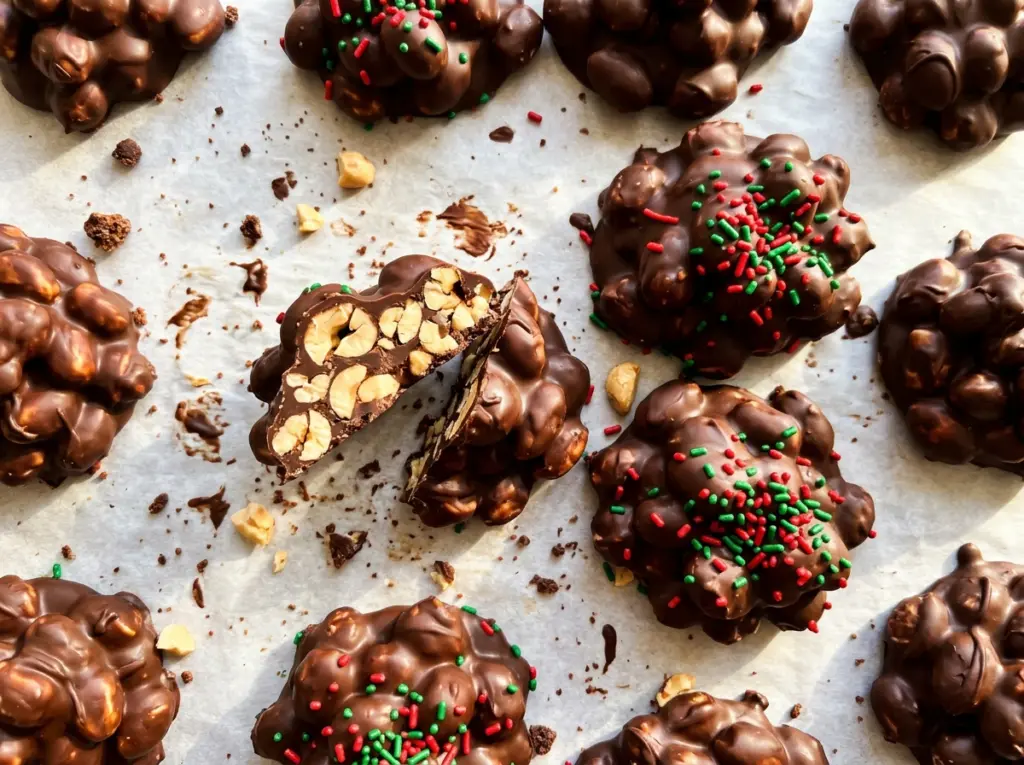
Grandma’s Christmas Candy
At first, the cocoa and milk look thin in the saucepan, but once the sugar dissolves and the mixture reaches a full boil, it starts behaving like candy rather than…

By Ava
•
•
Reading time: 9 min
Tip: save now, make later.
At first, the cocoa and milk look thin in the saucepan, but once the sugar dissolves and the mixture reaches a full boil, it starts behaving like candy rather than a drink. That shift is easy to miss if you’re watching the clock instead of the thermometer. Grandma’s Christmas Candy needs a steady hand through that boiling stage, then a little patience while it cools.
I like this old-fashioned chocolate fudge because the process is straightforward, but each temperature has a job. The syrup cooks to 234°F, rests undisturbed until it cools to 110°F, and only then gets beaten until thick and no longer glossy. Those cues matter more than rushing from one step to the next. Fold in the chopped pecans, spread the candy into its pan, and you’ll have firm, rich squares with a tender bite and a little crunch in every piece.
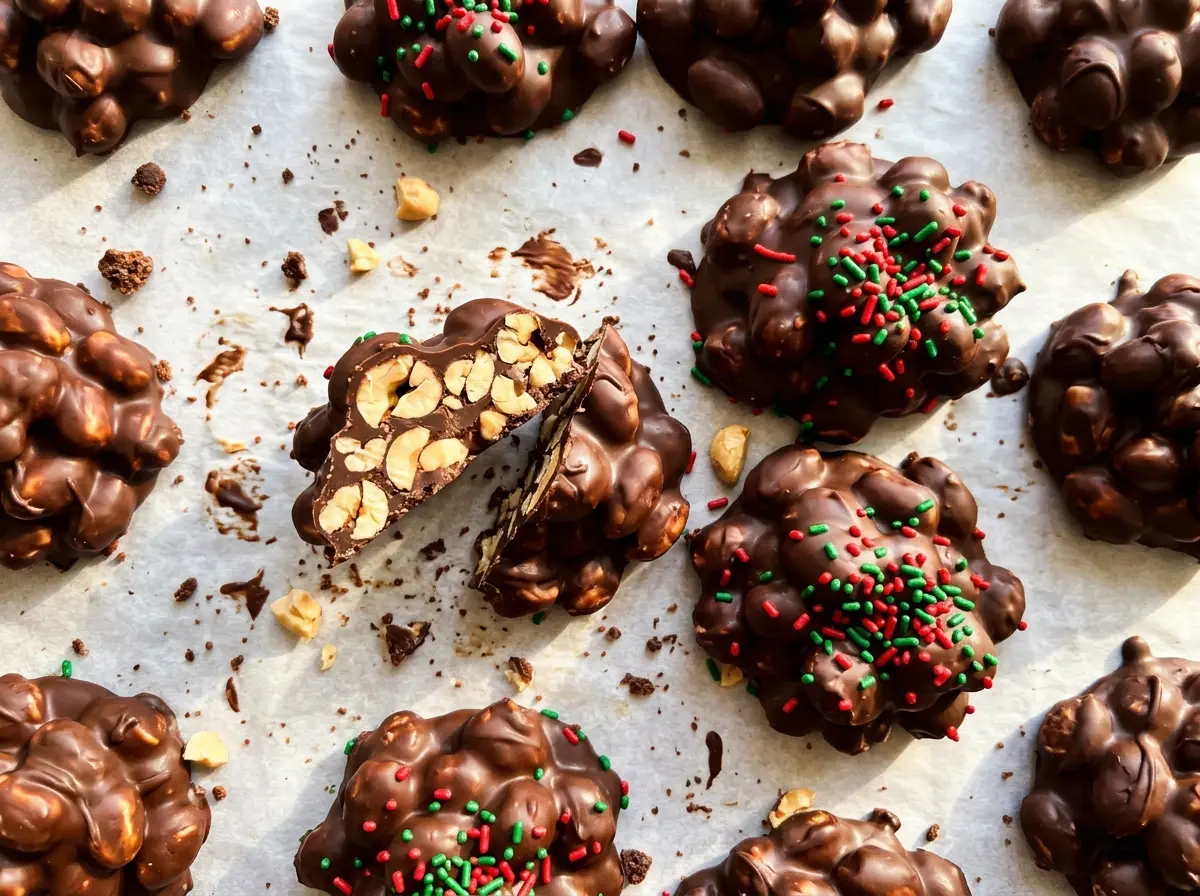
Kitchen Note
I wait for the mixture to cool to 110°F before adding the vanilla and beating. Starting while it’s warmer can make the beating stage harder to control, so let the thermometer—not impatience—set the pace.
Save Grandma’s Christmas Candy for a batch of old-fashioned chocolate fudge with a smooth set and a crunchy pecan finish.
Why the Candy Stops Being Stirred at the Boil
Stirring has two different jobs here, and the changeover is important. Before the syrup boils, constant stirring helps the sugar dissolve into the cocoa and milk. Once the mixture reaches a full boil, the spoon comes out and stays out while the candy cooks to 234°F.
That pause protects the texture. As the syrup concentrates, sugar crystals can form if the mixture is disturbed; too many crystals can leave finished fudge grainy instead of smooth. The thermometer gives you a clear target, while leaving the pan undisturbed gives the syrup a chance to cook evenly toward it. Keep your attention on the temperature rather than trying to hurry the process with extra stirring.
A heavy-bottomed saucepan helps distribute the heat across the mixture, which is useful during a cook that can take 15–25 minutes. A full boil is more than a few bubbles around the edge: the mixture should be boiling across the surface. Once it reaches that point, let the thermometer tell you when it’s time to take the pan off the heat.
What the Cocoa, Milk, and Pecans Bring to This Fudge

- Granulated sugar — This is the structure of the candy as well as its sweetness, so it isn’t a good place to improvise with a different sweetener. Ordinary granulated sugar works; there’s no need for a specialty variety. Stir until it has dissolved before the syrup comes to a full boil.
- Unsweetened cocoa powder — Cocoa supplies the chocolate flavor without adding more sugar. A familiar grocery-store cocoa works well here; choose a brand you enjoy, but you don’t need a specialty product. Sweetened cocoa drink mix isn’t a direct substitute because its added sugar changes the balance.
- Whole milk — The milk contributes both liquid and richness to the syrup. Use whole milk for the intended balance; lower-fat milk or a non-dairy drink won’t behave identically during the candy-making stage.
- Unsalted butter — Butter adds richness and goes on top of the hot mixture after it comes off the heat. Standard grocery-store butter is fine. Unsalted butter lets the small amount of salt stay controlled rather than introducing an unknown amount from a salted brand.
- Vanilla extract — Vanilla rounds out the cocoa once the mixture has cooled. A regular extract is all you need; there’s no reason to spend extra on a specialty bottle for this candy.
- Pecans — Chopped pecans add a tender crunch that contrasts with the smooth fudge. Fresh-tasting pecans matter more than their size or appearance, since stale nuts can bring a flat, bitter note. Chop them before you start the final beating stage so they’re ready to fold in.
From Boiling Syrup to Neat, Set Squares
Line the Pan Before the Syrup Cooks
Line an 8-inch square pan with parchment, leaving enough overhang to lift the candy out later. This is worth doing before you start cooking, because the fudge needs to be spread as soon as it’s ready. Set the prepared pan aside where it’s easy to reach. The overhang gives you a way to lift the slab without digging at the edges.
Dissolve the Sugar, Then Cook to 234°F
In a 3-quart heavy-bottomed saucepan, stir together the sugar, cocoa powder, salt, and whole milk over medium heat. Keep stirring until the mixture reaches a full boil and the sugar has dissolved. Then stop stirring and cook until a candy thermometer registers 234°F; this usually takes 15–25 minutes. Remove the pan from the heat and place the butter on top of the mixture.
Cool Before Beating
Let the mixture cool undisturbed to 110°F, which takes about 30–45 minutes. Add the vanilla only after it reaches that temperature. Beat for about 5–10 minutes, watching for the mixture to become thick and lose its glossy shine. If it’s still shiny and loose, keep beating until those visual cues change.
Fold, Spread, and Let the Fudge Set
Fold in the chopped pecans once the mixture is thick and no longer glossy. Spread it evenly in the prepared pan; work steadily so it reaches the corners before it firms up. Leave the pan at room temperature for 1–2 hours, then use the parchment overhang to lift out the slab. Cut it into 36 pieces.
Two Small Changes for a Different Batch
Leave Out the Pecans
For a nut-free version, omit the pecans rather than replacing them with another ingredient. The chocolate candy will have a smoother bite without the crunchy pieces, and the rest of the method stays the same. This is a no-pecan variation, not a guarantee against cross-contact for anyone with a nut allergy.
Cut Smaller Candy Bites
Once the slab has set, cut it into smaller pieces instead of the usual 36. You’ll get more portions with the same chocolate-and-pecan balance in each bite; use a sharp knife and cut straight down for tidy edges.
Storage and Reheating
- Refrigerator: Store the cut pieces in an airtight container for up to 2 weeks. Chilled fudge will feel firmer than it does at room temperature.
- Freezer: Freeze the pieces in an airtight container for up to 2 months. Thaw them in the refrigerator, then let them come to room temperature before serving.
- Reheating: This candy doesn’t need reheating. Let chilled pieces soften at room temperature; warming them can make the texture greasy or too soft.
Questions That Come Up While Making This Chocolate Candy
Grandma's Christmas Candy
Ingredients
Equipment
Method
- Line an 8-inch square pan with parchment paper, leaving some overhang to lift out the candy.
- In a 3-quart heavy-bottomed saucepan, stir together the sugar, cocoa powder, salt, and milk until combined.
- Cook over medium heat, stirring constantly, until the mixture comes to a full boil and the sugar has dissolved.
- Stop stirring and cook until a candy thermometer registers 234°F, about 15–25 minutes.
- Remove the pan from the heat and place the butter on top of the mixture.
- Let the mixture cool undisturbed to 110°F, about 30–45 minutes.
- Add the vanilla.
- Beat until thick and no longer glossy, about 5–10 minutes.
- Fold in the pecans.
- Spread the fudge evenly in the prepared pan.
- Let it set at room temperature for 1–2 hours.
- Lift it out by the parchment and cut into 36 pieces.