
Gingerbread Tiramisu – Holiday Recipe
A crisp gingersnap can turn soggy before you’ve even finished dipping the batch if it sits in coffee for too long. I learned to treat the dip as a quick…

By Ava
•
•
Reading time: 9 min
Tip: save now, make later.
A crisp gingersnap can turn soggy before you’ve even finished dipping the batch if it sits in coffee for too long. I learned to treat the dip as a quick touch, not a soak, and let the long chill soften the cookies gradually. That contrast is what makes gingerbread tiramisu feel like tiramisu while still bringing the warm spice of a ginger cookie.
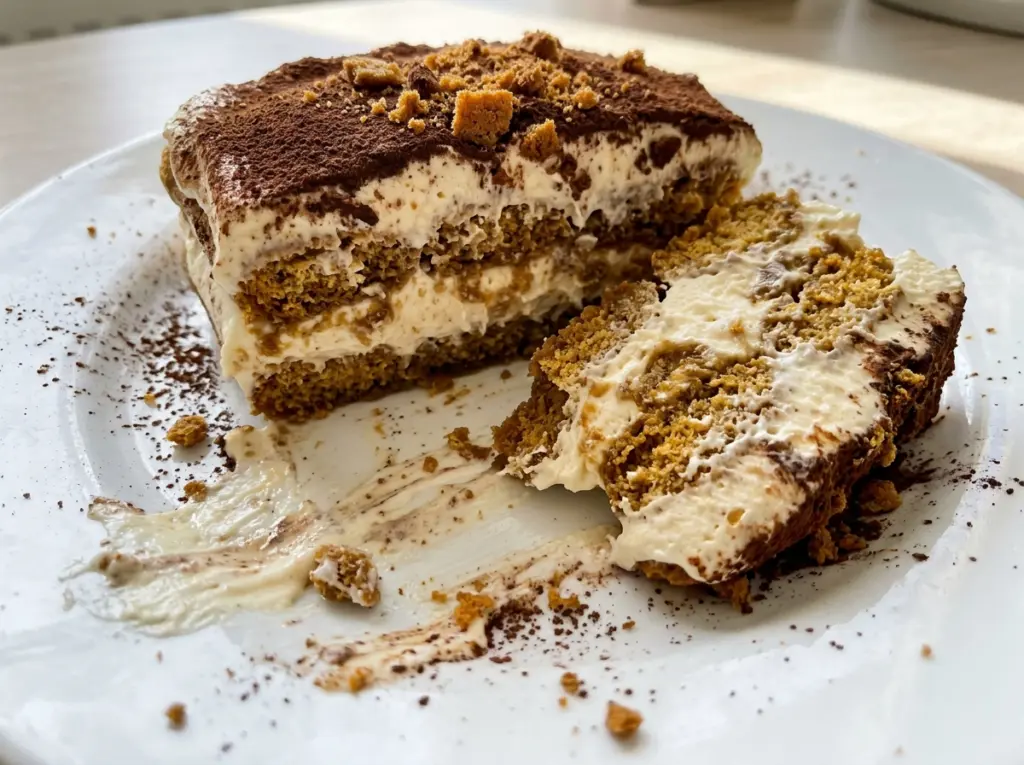
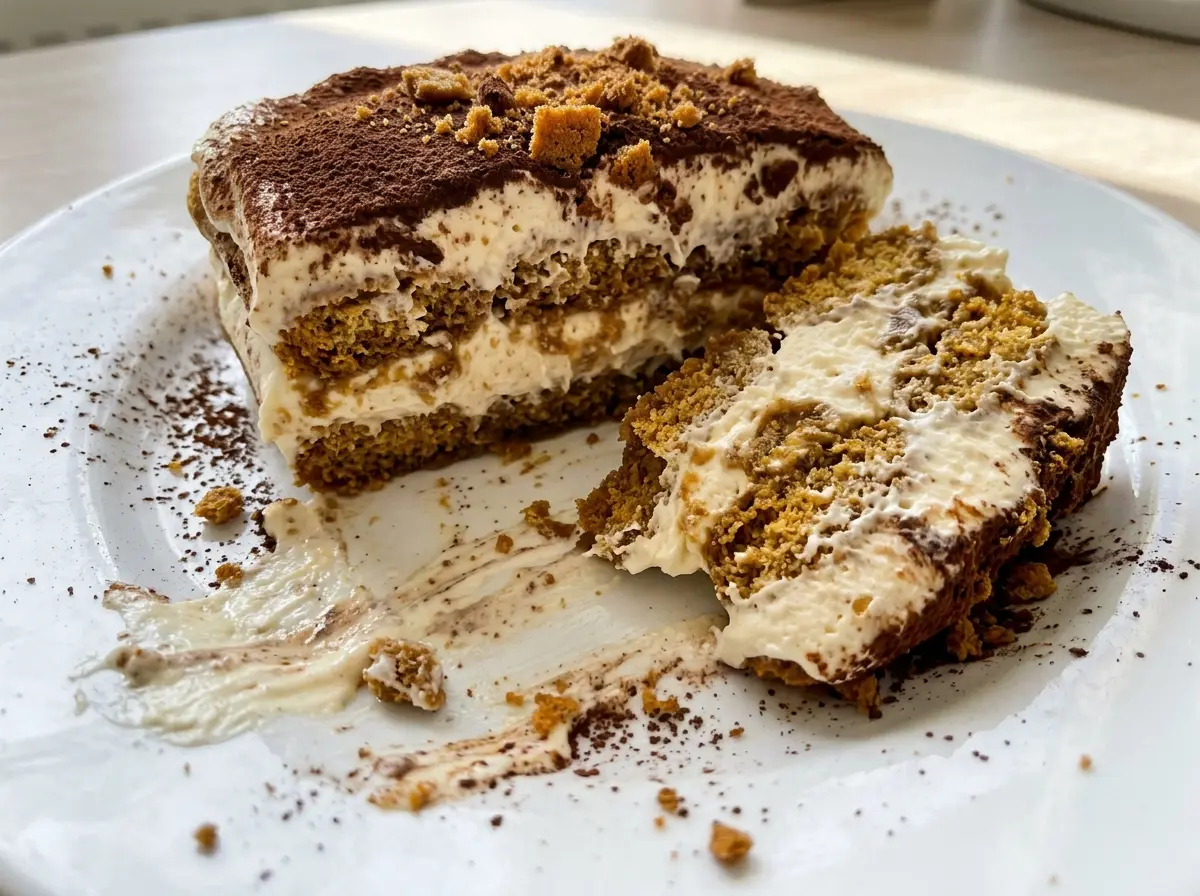
The cream gets its gingerbread character from unsulphured molasses and ground spices folded into mascarpone, then lightened with whipped cream. There’s no baking and no fussy individual portions: the layers go straight into a 9×13-inch dish, where the cookies settle into a soft, sliceable dessert as they chill. After at least eight hours, each spoonful has creamy spiced layers, coffee in the middle, and a crisp-cookie crumb on top.
Kitchen Note
Let the mascarpone soften for the full 15 minutes before mixing. It blends smooth quickly once it’s no longer cold and firm, so there’s no need to beat it for ages.
Save this gingerbread tiramisu for its coffee-softened gingersnaps and molasses-spiced mascarpone cream.
Why Strong Coffee Matters More Than You’d Think in Gingerbread Tiramisu
Coffee has to hold its own against two bold flavors here: sweet, spiced gingersnaps and mascarpone cream scented with molasses. A mild cup can disappear once it soaks into the cookies, leaving the dessert tasting mostly sweet. Strong brewed coffee gives each layer a clearer coffee note, even after the cookies have softened.
The cocoa dusting helps finish that balance. Its gentle bitterness keeps the molasses and warm spices from feeling one-note, while the crushed gingersnaps bring the familiar ginger-cookie flavor back to the top. I like this dessert best when the coffee is fully cooled before it goes into the dip; hot coffee would soften the cookies too quickly and make the layers harder to handle. The result should taste like a layered dessert with coffee and spice in conversation, not a bowl of sweet cream with cookies underneath.
The Ingredients That Give These Layers Their Gingerbread Character

- Crisp gingersnaps — Their dry, crunchy texture is what lets the coffee dip and refrigerator rest turn them tender without losing all their shape. Choose crisp cookies rather than soft or chewy ginger cookies. A different crisp ginger cookie can work, but a soft one tends to become mushy in the layers.
- Strong brewed coffee — Brewed coffee brings a fuller flavor to the dip than a weak cup, and it should be cooled before you begin assembly. Decaf brewed to the same strength is an easy option if you want the coffee taste without the caffeine.
- Mascarpone and heavy cream — Mascarpone gives the filling its mellow, rich base; cold heavy cream supplies the volume and airy texture. The mascarpone needs a short rest at room temperature before mixing, while the cream should stay cold until you whip it. Half-and-half won’t whip into the same stable cream, so it isn’t a good replacement here.
- Unsulphured molasses and ground spices — Unsulphured molasses brings a rounded, dark sweetness that ties the ginger, cinnamon, and cloves together. Blackstrap molasses is much more bitter and assertive, so it changes the balance. Use ground spices that still smell fragrant when you open the jars; dull spices won’t give the cream the same warm gingerbread aroma.
Building Soft, Distinct Layers Without Soaking the Cookies
Set Up the Coffee Dip
Pour the cooled strong coffee into a shallow bowl before assembling anything. A shallow dish gives you room to dip each cookie without bending or crumbling it. Keep the coffee nearby as you work so the dipping and layering can happen in a steady rhythm. Starting with cooled coffee also means the cream won’t sit beside a warm liquid while you assemble.
Whip the Cream Until It Holds Its Shape
Beat the cold heavy cream with an electric mixer on medium-high until soft peaks form, which takes 2 to 3 minutes. Add the powdered sugar and continue beating for 30 to 60 seconds, until the peaks are stiff. Check the cream as it thickens rather than stepping away; once it holds firm peaks, stop mixing. Cream that hasn’t reached stiff peaks won’t give the mascarpone mixture the same light body.
Make the Spiced Mascarpone Cream
In a second large bowl, beat the softened mascarpone with the molasses, vanilla, ginger, cinnamon, cloves, and salt on low speed just until smooth, about 30 seconds. Scrape the bowl if you see an unmixed patch around the sides. Fold in the whipped cream in three additions, turning gently each time. Stop when no white streaks remain so the finished cream stays even and airy.
Layer, Chill, and Finish Just Before Serving
Dip half of the gingersnaps briefly in the coffee, about 1 second per cookie, and arrange them in one layer in a 9×13-inch baking dish; break cookies to fill the gaps. Spread half the cream over them, then repeat with the remaining gingersnaps and cream. Cover and refrigerate for at least 8 hours and up to 24 hours, until the cookies have softened into the layers. Just before serving, crush the reserved gingersnaps over the top and dust with cocoa powder.
Three Easy Ways to Adapt the Gingerbread Layers
Make It Gluten-Free With Crisp Ginger Cookies
Use crisp gluten-free gingersnaps in place of the regular cookies, keeping the same layer-and-topping division. Gluten-free brands vary in thickness and dryness, so keep the coffee dip brief and choose cookies that are crisp straight from the package. The flavor stays close to the original, though the finished layers may soften at a slightly different pace.
Use Decaf Without Losing the Coffee Note
Brew decaf coffee strong and let it cool before dipping the cookies. It keeps the same coffee-and-spice character without changing the mascarpone cream or assembly. A weak brew will taste faint beneath the molasses and gingersnaps, so strength matters more than whether the beans are caffeinated.
Turn Up the Ginger
For a sharper gingerbread note, increase the ground ginger slightly while leaving the cinnamon and cloves as they are. That shifts the cream toward a more pronounced ginger warmth without adding another ingredient or changing the cookie layers. Keep the change modest so the ginger doesn’t crowd out the molasses.
Storage and Reheating
- Refrigerator: Keep the covered tiramisu refrigerated and enjoy leftovers within 3 days. The cookies will continue to soften, so the layers become less distinct over time.
- Freezer: Freezing isn’t recommended; the mascarpone cream can lose its smooth texture as it thaws, and the softened cookies won’t have the same consistency.
- Reheating: Don’t reheat this dessert. Serve it cold from the refrigerator; warming it will loosen the mascarpone cream.
Questions That Come Up When Making Gingerbread Tiramisu
Gingerbread Tiramisu – Holiday Recipe
Ingredients
Equipment
Method
- Pour the cooled coffee into a shallow bowl.
- In a large bowl, beat the cold heavy cream with an electric mixer on medium-high until soft peaks form, 2 to 3 minutes.
- Add the powdered sugar and beat until stiff peaks form, 30 to 60 seconds.
- In a second large bowl, beat the softened mascarpone, molasses, vanilla, ginger, cinnamon, cloves, and salt on low speed just until smooth, about 30 seconds.
- Fold the whipped cream into the mascarpone mixture in three additions until no streaks remain.
- Dip half of the 14 ounces of gingersnaps briefly in the coffee, about 1 second per cookie, and arrange them in a single layer in a 9x13-inch baking dish, breaking cookies as needed to fill gaps.
- Spread half of the mascarpone cream evenly over the cookie layer.
- Repeat with the remaining 7 ounces of gingersnaps and mascarpone cream.
- Cover and refrigerate for at least 8 hours and up to 24 hours, until the cookies have softened.
- Crush the reserved 2 ounces of gingersnaps, sprinkle them over the tiramisu, and dust with the cocoa powder just before serving.