
Gingerbread Sheet Cake
The first thing you notice when this cake comes out of the oven is the ginger and molasses rising together from the pan. The surface looks dark and set, but…

By Ava
•
•
Reading time: 9 min
Tip: save now, make later.
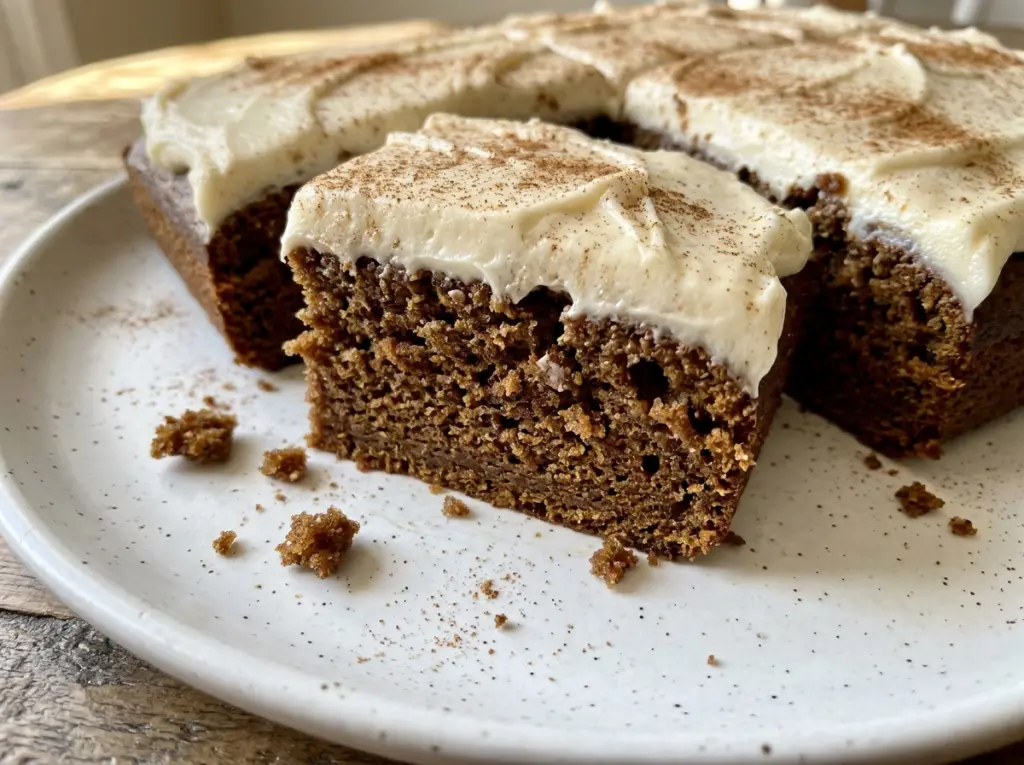
The first thing you notice when this cake comes out of the oven is the ginger and molasses rising together from the pan. The surface looks dark and set, but the crumb underneath stays soft and tender. I like that it bakes in one 9×13-inch pan, so there’s no stacking or trimming before the cream cheese frosting goes on.
Vegetable oil keeps the batter simple to mix and helps the cake stay moist, while unsulphured molasses gives it that deep, rounded gingerbread flavor. The batter is looser than a typical butter cake because boiling water goes into the mix, so don’t add extra flour to thicken it. Once the cake has cooled completely, the tangy frosting spreads into a smooth layer over the rich, warmly spiced crumb.
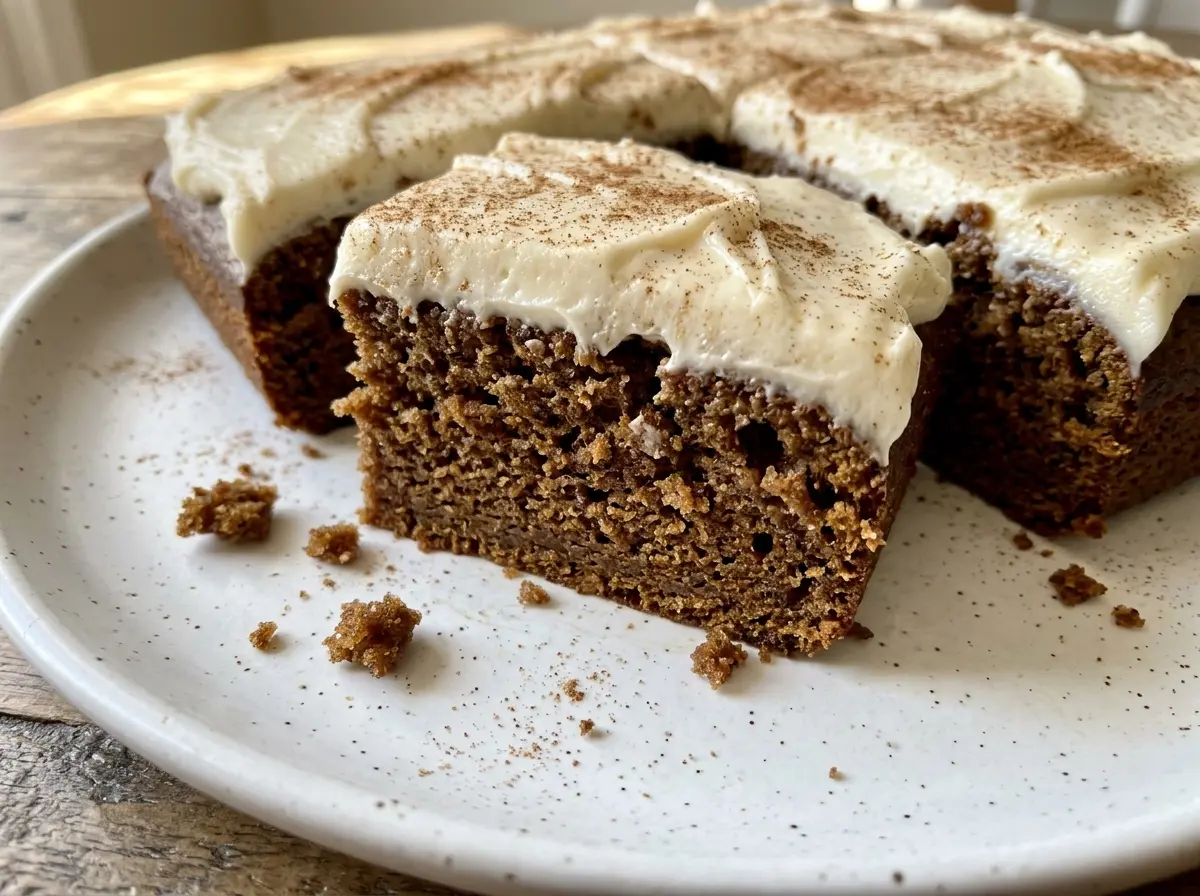
Cut it into squares right in the pan: each piece has a plush center, a thin frosting layer, and enough ginger and cinnamon to come through in every bite.
Kitchen Note
Let the cake cool all the way in the pan before frosting it. Even a little warmth can soften the cream cheese frosting and make it slide instead of holding a clean layer.
Save this gingerbread sheet cake for its tender molasses crumb and tangy cream cheese frosting, all baked and served from one pan.
Why vegetable oil gives this gingerbread such a tender crumb
Butter cakes often start by beating butter and sugar together to trap air. This batter takes a different route: vegetable oil is beaten with brown sugar, then the egg and molasses go in. There’s no butter to cream, and the oil stays liquid at room temperature, which helps the finished cake keep a soft, moist texture.
That choice also lets the molasses and spices lead instead of adding a buttery flavor. The boiling water loosens the batter and helps the baking soda disperse through it; the flour goes in gradually so it can be incorporated without prolonged mixing. Once the last flour addition disappears, stop. Mixing past that point can develop more gluten and leave the cake less tender.
This is a sturdy, single-layer cake rather than a delicate sponge. It doesn’t need to be unmolded or leveled, and the pan supports the soft crumb while you spread on the frosting. That makes it a practical choice when you want the generous flavor of gingerbread without a complicated build.
What molasses, oil, and cream cheese each bring to this cake
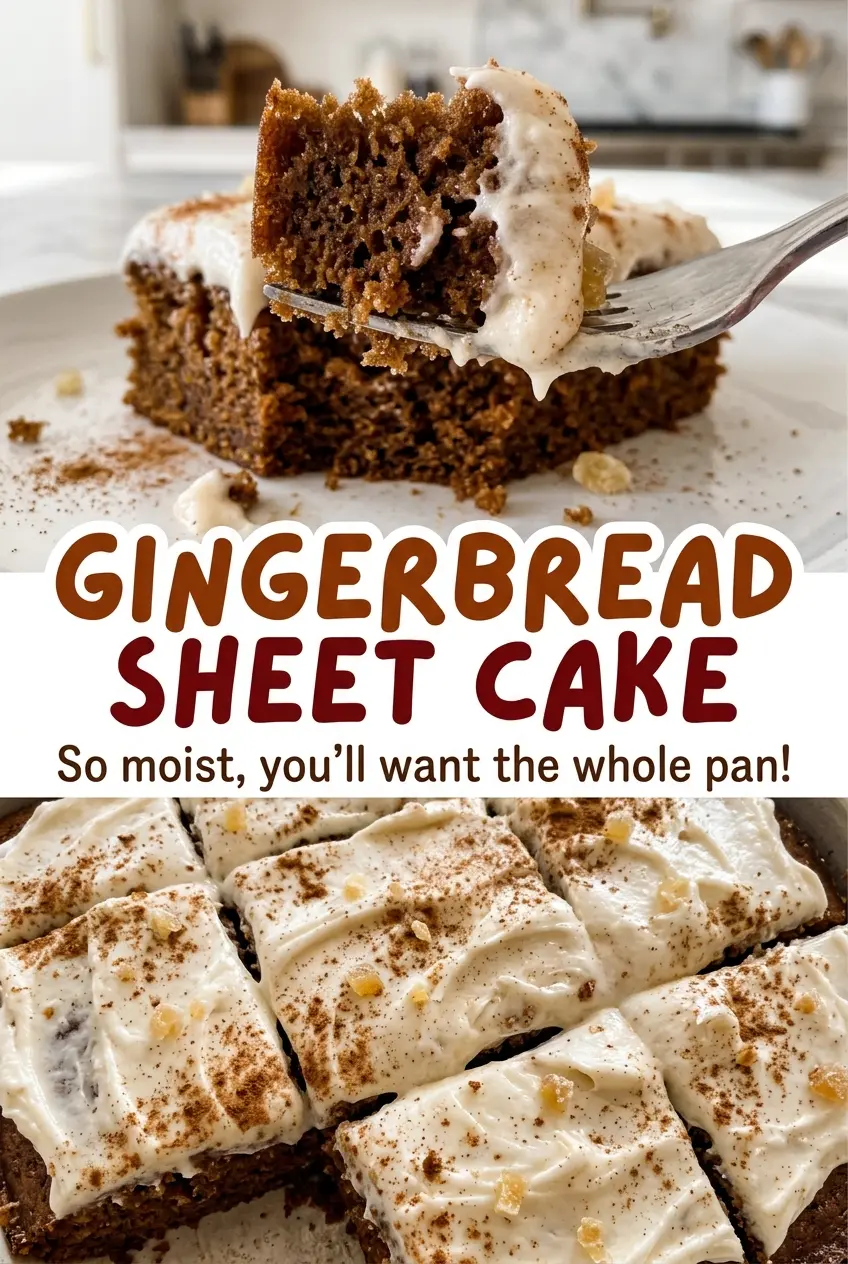
- Unsulphured molasses — This is the cake’s defining flavor: dark, mellow sweetness with a slight edge that stands up to ginger, cinnamon, and cloves. Choose unsulphured molasses for its balanced taste; ordinary grocery-store brands work well here.
- Vegetable oil — Its neutral flavor lets the spices and molasses stay prominent, and it keeps the mixing process straightforward. A standard supermarket vegetable oil is a good fit; a strongly flavored oil would distract from the gingerbread.
- Light brown sugar — Packed brown sugar adds sweetness and a little extra molasses character, supporting the deeper molasses without taking over. Keep it packed when measuring so the amount stays consistent.
- Ground ginger, cinnamon, and cloves — Ginger leads, cinnamon rounds it out, and cloves add a concentrated warm note. Fresh, aromatic spices make a noticeable difference; if a jar smells faint when you open it, the baked cake will taste less vivid.
- All-purpose flour — It gives the cake enough structure to hold its soft crumb and support the frosting. Regular all-purpose flour is the right everyday choice; a specialty flour isn’t needed.
- Baking soda — Stirring it into the boiling water disperses it before it meets the molasses batter. Use baking soda rather than baking powder, since they don’t perform the same job in this formula.
- Cream cheese and unsalted butter — Together they make a frosting that is both tangy and rich, with enough body to spread over the cooled cake. Soften both before beating; the cream cheese needn’t be a premium brand, but it should be smooth and fresh.
- Powdered sugar and vanilla — Powdered sugar thickens the frosting while keeping it smooth, and vanilla softens the tang of the cream cheese. Standard powdered sugar and vanilla extract are fine; the sugar is more useful here than a coarser granulated sweetener.
Mixing the batter and frosting without losing the soft texture
Start with the molasses base
Heat the oven to 350°F and grease a 9×13-inch baking pan with nonstick cooking spray. Beat the vegetable oil and packed light brown sugar in a large bowl until combined, then beat in the egg and unsulphured molasses. The mixture should look unified before you add the dry ingredients. Scrape the bowl if you see streaks of molasses clinging to the sides.
Alternate the flour and boiling water
Whisk the flour, ground ginger, cinnamon, cloves, and salt together in a medium bowl. Stir the baking soda into the boiling water, then add the flour mixture to the molasses mixture in three additions, alternating with the water in two additions; begin and end with flour. Mix only until the last streaks of flour disappear. The batter will be loose, so resist the urge to add more flour.
Bake until the center tests clean
Pour the batter into the prepared pan and bake for 32 to 38 minutes. Start checking at the shorter end of the range; a toothpick inserted in the center should come out clean or with a few moist crumbs, not wet batter. Let the cake cool completely in the pan on a wire rack, about 1 1/2 hours. The pan stays in place for frosting and serving.
Beat a fluffy cream cheese frosting
Beat the softened cream cheese and unsalted butter in a medium bowl until smooth, about 2 minutes. Add the powdered sugar, vanilla, and salt, and beat on low speed until combined so the sugar doesn’t fly out of the bowl. Increase to medium speed and beat until fluffy, about 1 minute. Spread the frosting over the cooled cake.
Two simple ways to change the finish on this gingerbread cake
Use dark brown sugar for a deeper molasses note
Replace the packed light brown sugar with the same amount of packed dark brown sugar. The cake will have a slightly more pronounced molasses flavor, while keeping the same soft, sheet-cake texture.
Leave it unfrosted for a simpler gingerbread
Bake the cake without making the cream cheese frosting for a less-rich finish that puts the molasses and spices up front. The crumb stays tender, but you lose the cool tangy contrast from the frosting.
Storage and Reheating
- Refrigerator: Keep leftover frosted cake covered in the refrigerator for up to 4 days. The crumb firms when chilled, so take out only the piece you’re serving.
- Freezer: Freeze individual slices until firm, then wrap them well and store in an airtight freezer container for up to 2 months. Thaw a slice in the refrigerator before serving; the frosting may be a little softer after thawing.
- Reheating: No reheating is needed. For a softer crumb, let a chilled slice stand briefly before eating, and avoid warming the cream cheese frosting.
Questions that come up when baking gingerbread sheet cake
Gingerbread Sheet Cake
Ingredients
Equipment
Method
- Heat the oven to 350°F and grease a 9x13-inch baking pan with the cooking spray.
- In a large bowl, beat the vegetable oil and brown sugar until combined.
- Beat in the egg and molasses.
- In a medium bowl, whisk together the flour, ginger, cinnamon, cloves, and salt.
- Stir the baking soda into the boiling water.
- Add the flour mixture to the molasses mixture in 3 additions, alternating with the water in 2 additions and beginning and ending with the flour mixture; mix just until combined.
- Pour the batter into the prepared pan.
- Bake for 32 to 38 minutes, until a toothpick inserted in the center comes out clean or with a few moist crumbs.
- Cool the cake completely in the pan on a wire rack, about 1 1/2 hours.
- Beat the cream cheese and butter in a medium bowl until smooth, about 2 minutes.
- Beat in the powdered sugar, vanilla, and salt on low speed until combined.
- Beat on medium speed until fluffy, about 1 minute.
- Spread the frosting over the cooled cake.
- Refrigerate any leftovers.