
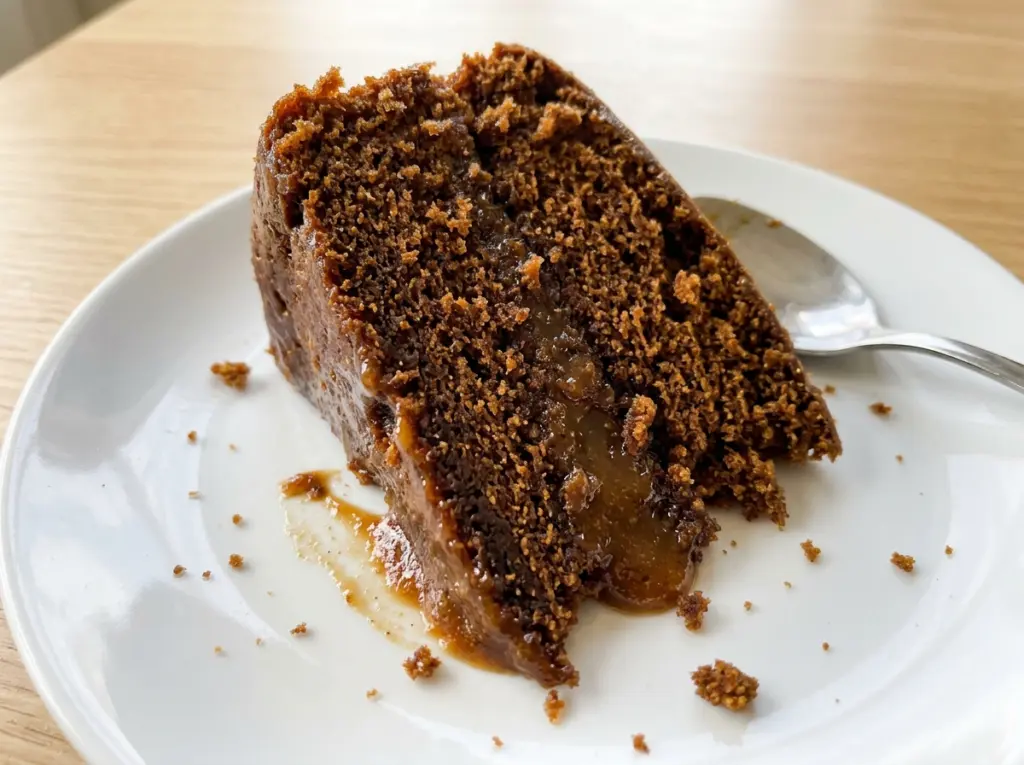
Gingerbread Pudding Cake
The first thing I look for when this comes out of the oven is the sauce bubbling around the edge while the cake in the middle has turned matte and…

By Ava
•
•
Reading time: 9 min
Tip: save now, make later.
The first thing I look for when this comes out of the oven is the sauce bubbling around the edge while the cake in the middle has turned matte and set. Gingerbread Pudding Cake has that contrast I want in a warm dessert: a soft, spiced top and a rich, spoonable layer underneath. It’s comforting without needing frosting or a separate sauce, and the ingredients are pantry-friendly.
Molasses gives the cake its deep gingerbread flavor, while ground ginger and cinnamon keep the spice warm rather than sharp. The batter comes together quickly, but the way the brown sugar and boiling water go into the pan is what turns it into pudding cake instead of an ordinary gingerbread square. Served warm, each scoop brings tender cake and dark, glossy sauce to the spoon.
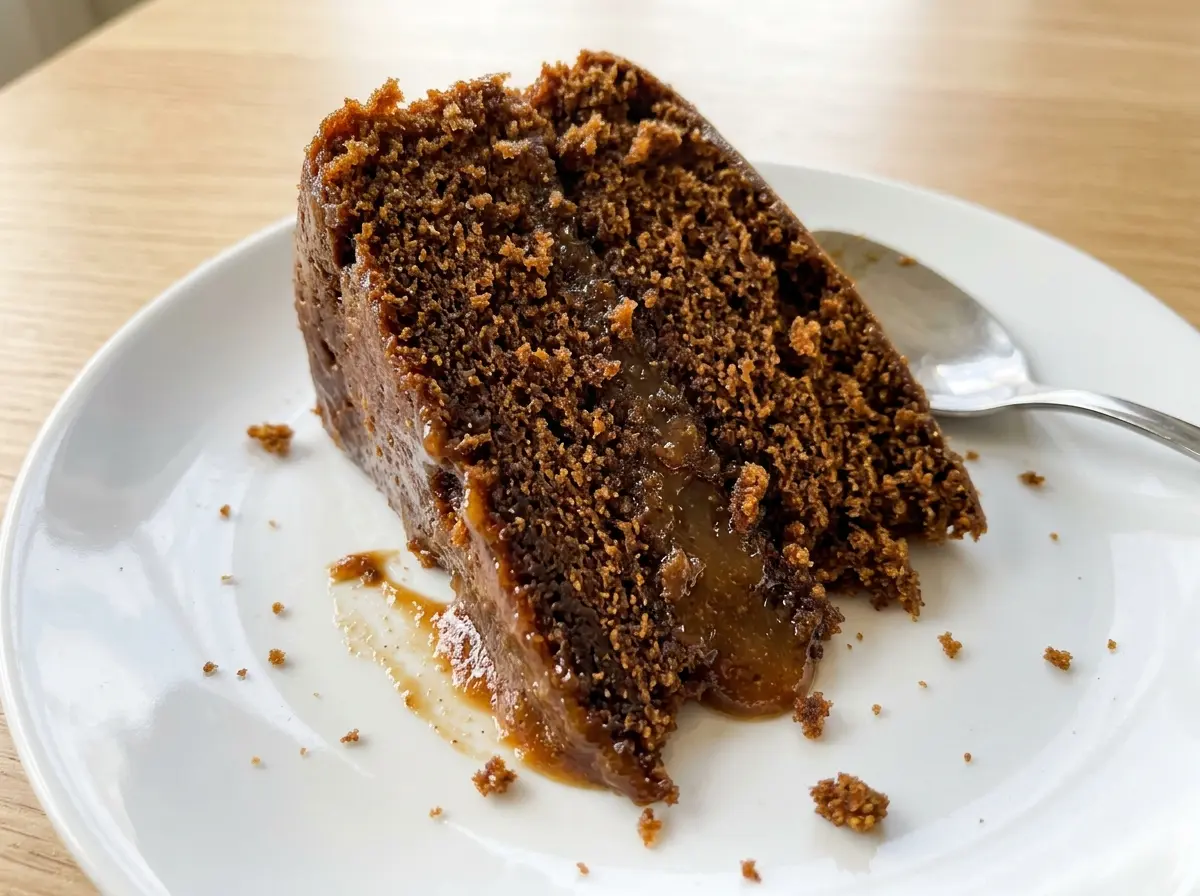
Kitchen Note
Room-temperature milk and egg help the melted butter stay fluid when you whisk the wet ingredients together. If the butter starts to firm into little flecks, keep whisking until the mixture looks even before adding it to the flour.
Save this Gingerbread Pudding Cake for a cozy dessert with a spiced cake top and bubbling molasses sauce underneath.
Why the Boiling Water Belongs on Top of the Batter
This cake gets its pudding layer from a second mixture that goes into the dish after the batter is spread. Brown sugar and cornstarch sit on top, then boiling water is poured over them. As the cake bakes, the top sets while the sugar mixture settles and thickens into sauce beneath it. That division is intentional: you aren’t aiming for one uniform cake crumb all the way through.
It can look counterintuitive to pour water over unbaked batter, especially when the pan is ready to go into the oven. Resist the urge to stir it in. Stirring would blend the layers together before they have a chance to form, and the finished dessert would lose the saucy bottom that makes pudding cake different. The surface should bake into a recognizable cake top, with sauce visible at the edges. A little unevenness in the top is fine; a dry, evenly cakey interior isn’t the goal here.
Molasses Is the Gingerbread Anchor; Cornstarch Builds the Sauce
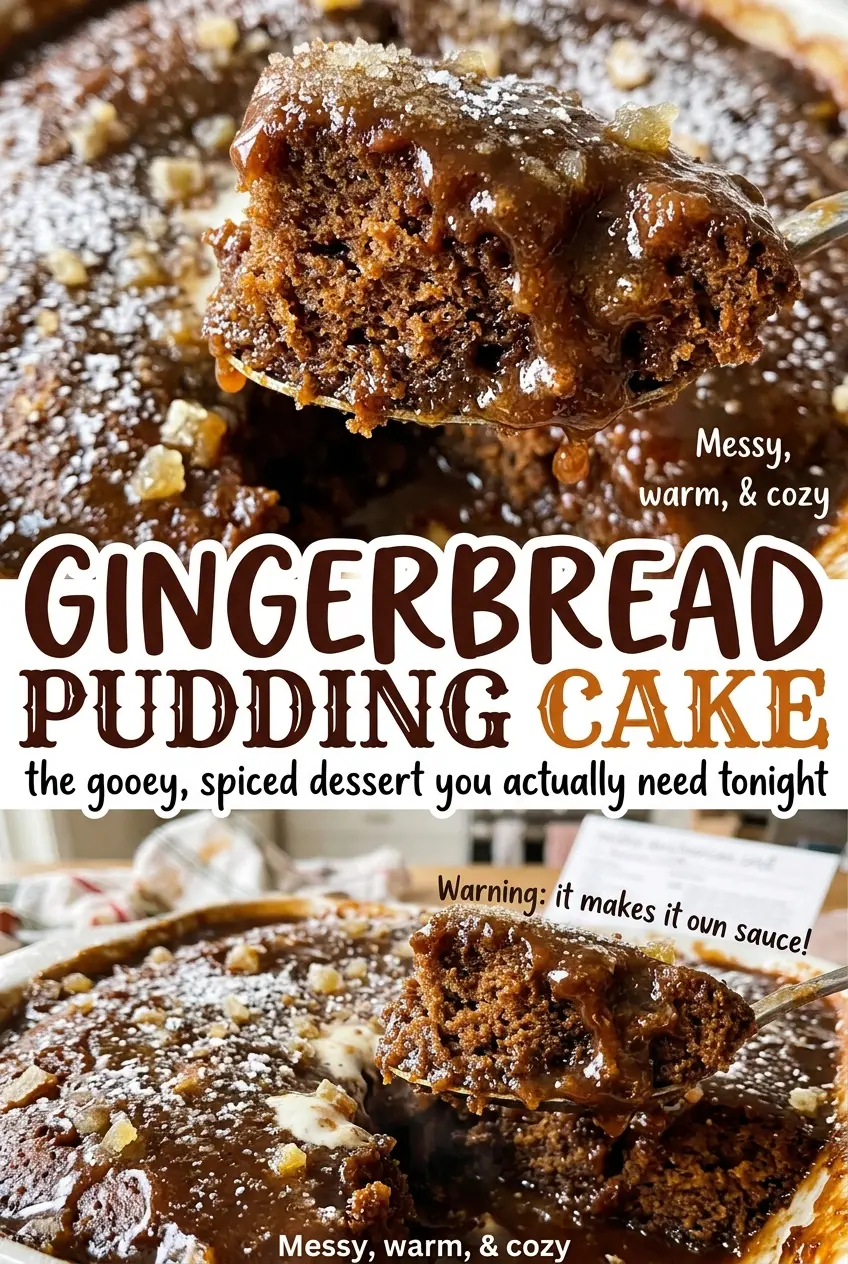
- Molasses — It gives the cake its unmistakable dark, bittersweet gingerbread character and also adds moisture. A standard baking molasses is a good choice; a stronger, more robust molasses makes the result more assertive. Keep blackstrap for another use, since its intense bitterness can overwhelm the spices.
- Ground ginger and cinnamon — Ginger supplies the warm bite, while cinnamon rounds it out. Fresh, fragrant spices matter more here than an expensive brand; if your jars smell faint, the cake will taste muted. Leaving out the cinnamon gives a more ginger-forward variation, but it won’t have the same rounded spice flavor.
- All-purpose flour and baking soda — Flour gives the cake top its structure, and baking soda helps it rise while working with the acidic molasses. A cup-for-cup gluten-free baking blend can replace the flour for a gluten-free version, though the top may be a little more delicate. Choose a blend intended for baking, preferably one that already contains xanthan gum.
- Whole milk, egg, and butter — Together they make the batter tender and give it enough richness to balance the molasses. The whole milk and unsalted butter are worth keeping for the intended texture; lower-fat milk will make a slightly less rich cake. The egg helps the top set, so there isn’t a dependable direct egg-free swap for this particular batter.
- Light brown sugar and cornstarch — Packed brown sugar brings a mellow caramel note to the sauce, and cornstarch thickens the liquid as it bakes. Cornstarch is doing a different job from the flour in the cake, so swapping in flour won’t give the same smooth, glossy sauce. The standard grocery-store versions of both work well.
From Molasses Batter to a Spoonable Sauce
Get the Dish Ready and Whisk the Dry Ingredients
Heat the oven to 350°F and grease an 8-inch square baking dish. In a medium bowl, whisk the flour, granulated sugar, baking soda, ground ginger, cinnamon, and salt until the spices are evenly distributed. Break up any small clumps of baking soda as you whisk so you don’t get a bitter pocket in the cake. Set the dry mixture aside while you combine the wet ingredients.
Mix the Batter Without Toughening It
Whisk the melted butter, molasses, milk, and egg in a separate bowl until the mixture looks cohesive. Stir the wet mixture into the dry ingredients just until combined; stop when you no longer see dry flour rather than beating it smooth. A few small lumps are less of a problem than an overmixed batter, which can bake up firm. Spread the batter evenly in the prepared dish so the cake top cooks at a consistent depth.
Make the Sauce Layer and Bake
Stir the packed brown sugar and cornstarch together, then sprinkle the mixture evenly over the batter. Pour the boiling water evenly across the surface without stirring; try to cover the whole pan rather than aiming all the water at one spot. Bake for 35 to 40 minutes, until the top is set and the sauce bubbles around the edges. If the center still looks like loose batter, give it more time in the oven.
Let the Layers Set Before Scooping
Take the dish out when the cake top is set and the sauce is bubbling at the edges, then let it rest for 10 minutes before serving. The sauce is loose right out of the oven, and that short rest gives it time to settle under the cake. Scoop down through both layers so each serving gets cake and sauce together. The edges will usually have more visible bubbling than the center.
Three Ways to Shift the Gingerbread Flavor
Make It Gluten-Free
Replace the all-purpose flour with a cup-for-cup gluten-free baking blend designed to replace wheat flour. A blend with xanthan gum helps the cake top hold together; expect a slightly more delicate crumb, especially while it’s warm.
Choose a More Robust Molasses
Use robust baking molasses in place of a milder one for a deeper, less sweet-tasting gingerbread note. The spice will feel a little bolder beside it, so this version suits anyone who likes molasses to be the first flavor they notice.
Let Ginger Lead
Leave out the cinnamon for a sharper, more direct ginger taste. The cake will lose some of the rounded warmth cinnamon brings, but the molasses and ground ginger still give it a clear gingerbread identity.
Storage and Reheating
- Refrigerator: Cover and refrigerate within 2 hours; keep leftovers for up to 3 days. The sauce thickens when chilled.
- Freezer: Freeze individual portions in airtight containers for up to 2 months. The sauce may loosen a little after thawing, so the texture won’t be quite as silky.
- Reheating: Warm an individual portion in the microwave in 20-second bursts until heated through. Avoid a long blast, which can make the cake top rubbery before the sauce is warm.
The Gingerbread Pudding Cake Questions That Come Up at the Stove
Gingerbread Pudding Cake
Ingredients
Equipment
Method
- Heat the oven to 350°F.
- Grease an 8-inch square baking dish.
- Whisk the flour, granulated sugar, baking soda, ginger, cinnamon, and salt in a medium bowl.
- Whisk the melted butter, molasses, milk, and egg in a separate bowl.
- Stir the wet ingredients into the dry ingredients just until combined.
- Spread the batter evenly in the prepared dish.
- Stir the brown sugar and cornstarch together.
- Sprinkle the brown sugar mixture evenly over the batter.
- Pour the boiling water evenly over the top without stirring.
- Bake for 35 to 40 minutes, until the cake top is set and the sauce bubbles around the edges.
- Let the cake rest for 10 minutes before serving.