
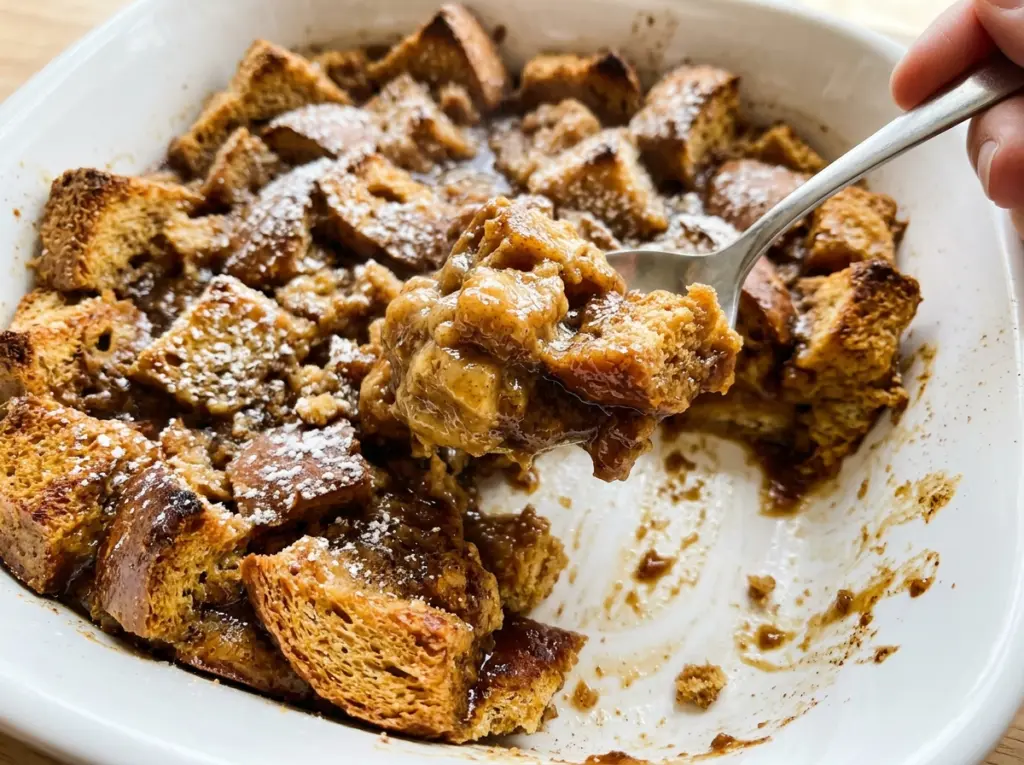
Gingerbread French Toast Casserole
The bread cubes look almost too dry when they go into the dish, but that’s exactly what lets them take on the gingerbread custard without falling apart. Once the eggs,…

By Ava
•
•
Reading time: 8 min
Tip: save now, make later.
The bread cubes look almost too dry when they go into the dish, but that’s exactly what lets them take on the gingerbread custard without falling apart. Once the eggs, milk, cream, molasses, and spices are whisked together, the whole casserole gets a long rest in the refrigerator before baking.
I like this approach because the prep happens ahead of time, while the streusel topping waits until just before the pan goes into the oven. That keeps the topping separate from the custard, so it bakes into a golden, crumbly layer instead of soaking up liquid overnight.
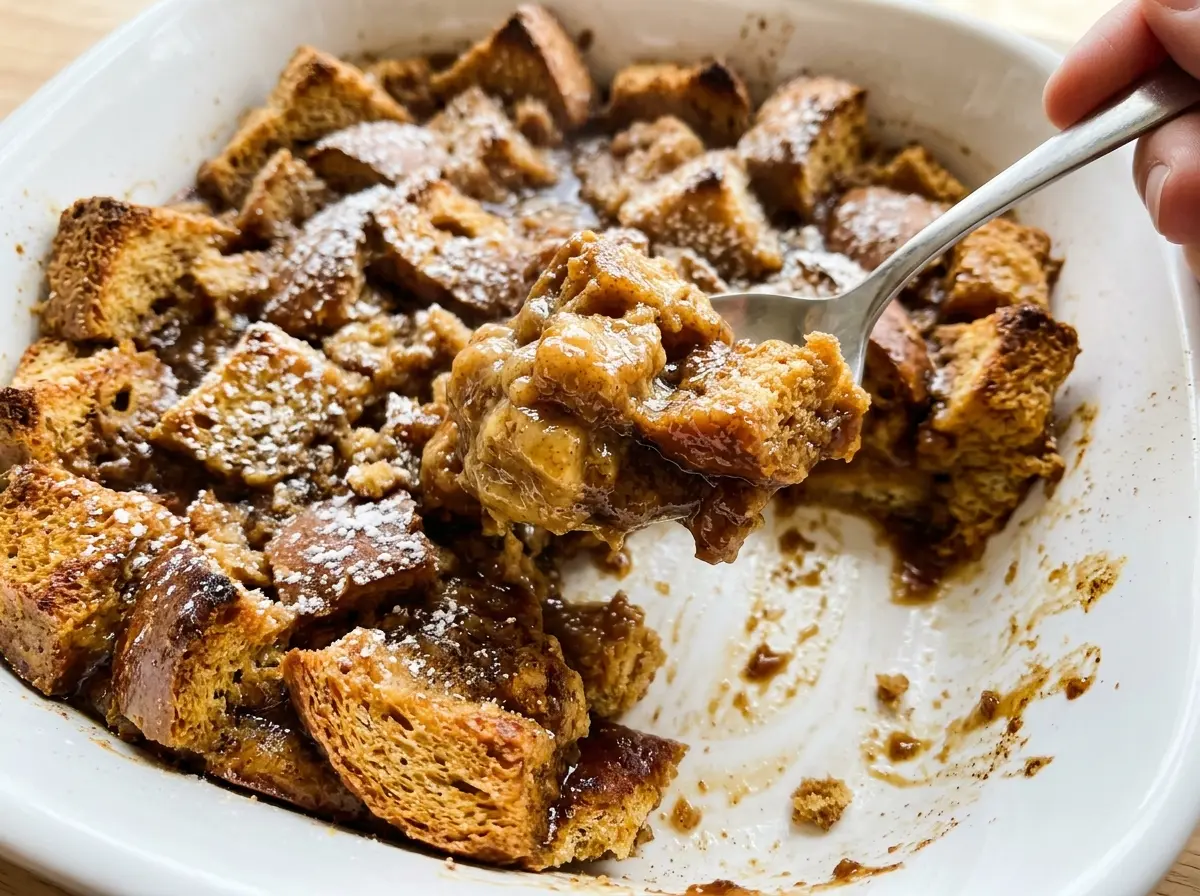
Gingerbread French Toast Casserole comes out with warm ginger and cinnamon in every bite, a soft custardy middle, and a sweet, crisp top. Give it the full rest after baking, and the center will be easier to serve in neat portions.
Kitchen Note
If the streusel starts looking like a paste, the butter has warmed too much in your hands. Work it just until you have coarse crumbs, then stop; those uneven bits bake into a better topping.
Save this Gingerbread French Toast Casserole for a make-ahead breakfast with a crisp streusel top and a warmly spiced center.
Why This Custard Needs a Four-Hour Head Start
Day-old bread has had time to lose some of its surface moisture, which gives it room to drink in the egg mixture. Freshly cut, soft bread starts out wetter and can turn mushy before the center of a casserole has a chance to set. Here, the slow soak is what makes the middle tender rather than dry in some spots and wet in others.
The minimum rest matters because the custard needs time to move beyond the outside of each cube. Pour it evenly over the bread and press the cubes gently so their surfaces meet the liquid; pressing hard can crush them and make the finished texture heavy. The longer rest, up to 12 hours, also makes this practical for breakfast: the bread and custard are already together, while the topping stays out of the way until baking time.
Think of the refrigerator time as part of the cooking, not a pause you can skip. When the cubes are evenly saturated, the casserole bakes as one cohesive dish instead of a layer of bread with pockets of egg custard between them.
How Bread, Molasses, and Spice Shape This Casserole

- Day-old challah or brioche — The bread provides the structure that holds the custard in place. Cut it into even 1-inch cubes so the pieces soak and bake at a similar rate. Either bread works; the choice changes the richness and bite, not the method.
- Unsulphured molasses — This gives the custard its deep gingerbread character and balances the sweetness of the brown sugar. Use the unsulphured kind for its rounded, less bitter taste; blackstrap has a sharper flavor that can overpower the spices.
- Eggs, whole milk, and heavy cream — Eggs set the custard, while the milk and cream give it a rich, soft texture. Keep these ingredients as listed for the intended balance; swapping in a thinner liquid can leave the center less creamy.
- Ground ginger, cinnamon, and cloves — Ginger leads, cinnamon adds warmth, and a small amount of cloves gives the mixture its familiar gingerbread depth. Fresh, fragrant ground spices make the biggest difference here; stale spices taste muted in a custard this mild.
- Flour, granulated sugar, and unsalted butter — Together they form the sweet crumb topping. The butter provides richness, while the flour gives the sugar something to cling to as it bakes. Standard flour and granulated sugar are fine; there’s no need for specialty versions.
From Bread Cubes to a Set Center: The Four Stages
Arrange the bread in an even layer
Coat a 9×13-inch baking dish with nonstick cooking spray, then spread the 1-inch bread cubes across the bottom. Keep them in an even layer rather than piling them into a mound, so the custard can reach the whole batch. A few small gaps between cubes are fine.
Whisk and pour the gingerbread custard
Whisk the eggs, whole milk, heavy cream, molasses, brown sugar, vanilla, ginger, cinnamon, cloves, and salt in a large bowl until the mixture looks smooth. Pour it evenly over the bread and press the cubes gently to help them absorb the liquid. Cover the dish and refrigerate it for at least 4 hours and up to 12 hours.
Mix the topping when it’s time to bake
When you’re ready to bake, heat the oven to 350°F. Stir the flour and granulated sugar together, then work in the cold butter with your fingertips. Stop when the mixture forms coarse crumbs; a few larger pieces are fine and give the topping some texture.
Bake until golden, then let it settle
Uncover the casserole and scatter the topping evenly over the bread. Bake for 50 to 60 minutes, loosely covering it with foil if the top browns too quickly. The top should be golden, and the center should be set at 160°F. Let it rest for 10 minutes before serving so the custard can settle.
Choose Challah for Structure or Brioche for a Richer Bite
Challah for a more defined cube
Use challah when you want the pieces to keep a little more shape through the soak and baking. Its texture gives each serving a distinct bread-and-custard bite without changing the gingerbread flavor.
Brioche for a softer, richer center
Choose brioche for a more buttery, tender result. It makes the finished casserole feel especially rich, so keep the cubes even and give them the full refrigerator rest before baking.
Storage and Reheating
- Refrigerator: Store leftovers covered at 40°F or below for 3 to 4 days. The topping softens as it sits.
- Freezer: Freeze cooled portions in an airtight container for up to 2 months. Thaw overnight in the refrigerator; the custard may be a little softer after thawing.
- Reheating: Warm portions covered in a 325°F oven until the center reaches 165°F, or reheat an individual portion in the microwave. Avoid heating uncovered for too long, since that dries the bread before the middle is warm.
Questions That Come Up Before Baking Gingerbread French Toast Casserole
Gingerbread French Toast Casserole
Ingredients
Equipment
Method
- Coat a 9x13-inch baking dish with nonstick cooking spray.
- Arrange the bread cubes in an even layer in the dish.
- In a large bowl, whisk the eggs, milk, cream, molasses, brown sugar, vanilla, ginger, cinnamon, cloves, and salt until smooth.
- Pour the egg mixture evenly over the bread.
- Press the cubes gently to help them absorb the liquid.
- Cover and refrigerate for at least 4 hours or up to 12 hours.
- When ready to bake, preheat the oven to 350°F.
- Stir the flour and granulated sugar together.
- Work in the butter with your fingertips until the mixture forms coarse crumbs.
- Uncover the casserole and scatter the topping evenly over it.
- Bake for 50 to 60 minutes, loosely covering with foil if it browns too quickly, until golden and set in the center at 160°F.
- Let the casserole rest for 10 minutes before serving.