
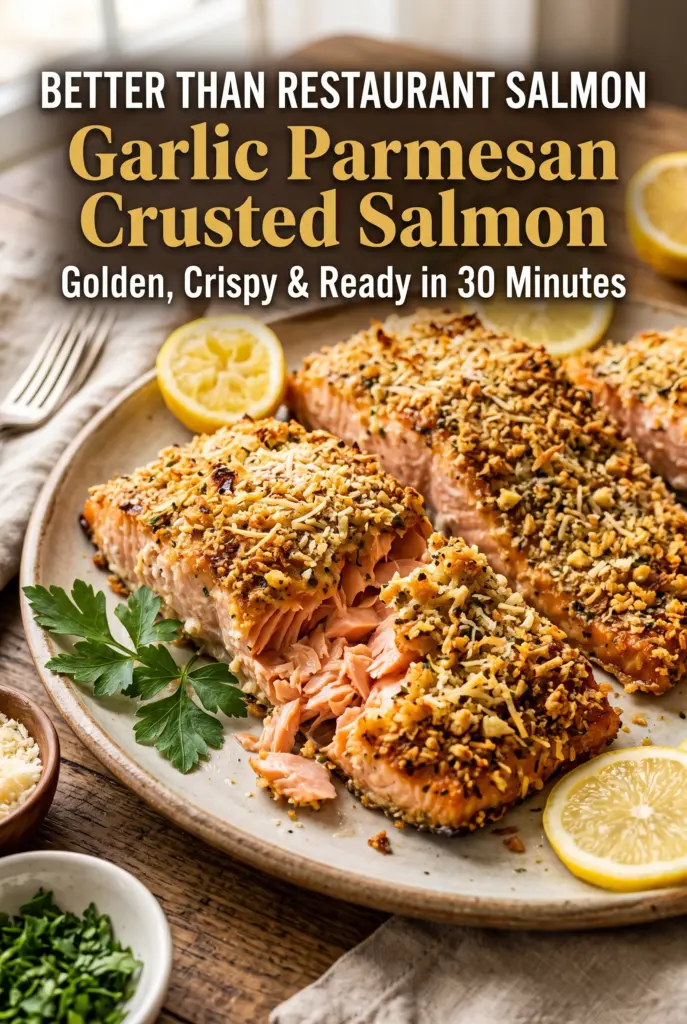
Garlic Parmesan Crusted Salmon
Garlic Parmesan crusted salmon comes out with a crisp, savory top that gives way to tender, flaky fish underneath. The contrast is what makes it worth repeating: the crust bakes…

By Ava
•
•
Reading time: 9 min
Tip: save now, make later.
Garlic Parmesan crusted salmon comes out with a crisp, savory top that gives way to tender, flaky fish underneath. The contrast is what makes it worth repeating: the crust bakes into a golden blanket instead of sliding off, and the salmon stays moist instead of drying out under the heat. It feels like a restaurant-style dinner, but it lands on the table in about half an hour.
The trick is in the crust itself. Parmesan brings the salty, nutty backbone, panko gives it lift and crunch, and a little mayonnaise plus melted butter bind everything so it actually stays put while it bakes. Dijon doesn’t read as mustardy here; it sharpens the cheese and keeps the topping from tasting flat. A quick broil at the end finishes the top with the kind of crisp edges that make people go back for a second piece.
You’ll find the small details below that matter most: how to keep the salmon from overcooking, why the topping should be pressed on firmly, and the best way to serve it if you want a full dinner without much extra work.
The parmesan crust got crisp in the oven and actually stayed on the salmon when I served it. I was worried the mayo would taste weird, but it just kept everything moist and gave the topping that golden finish.
Love that crispy Parmesan top? Save this garlic Parmesan crusted salmon for the nights when you want a fast dinner that still looks like you put real effort into it.
The Crust Needs to Stick Before It Needs to Brown
Most salmon toppings fail because they’re treated like a loose sprinkle. This one works because the mixture is pressed onto the fish in a thick, even layer before it ever goes into the oven. The mayo and melted butter act like glue, while the panko and Parmesan set into a crisp cap as the heat hits them.
The other mistake is overbaking while waiting for the crust to look done. Salmon keeps cooking after it leaves the oven, and a thin fillet can turn dry fast. Pull it when the fish flakes easily and the top is already a deep gold, then give it that short broil only if you want extra crunch.
What Each Ingredient Is Actually Doing in This Dish
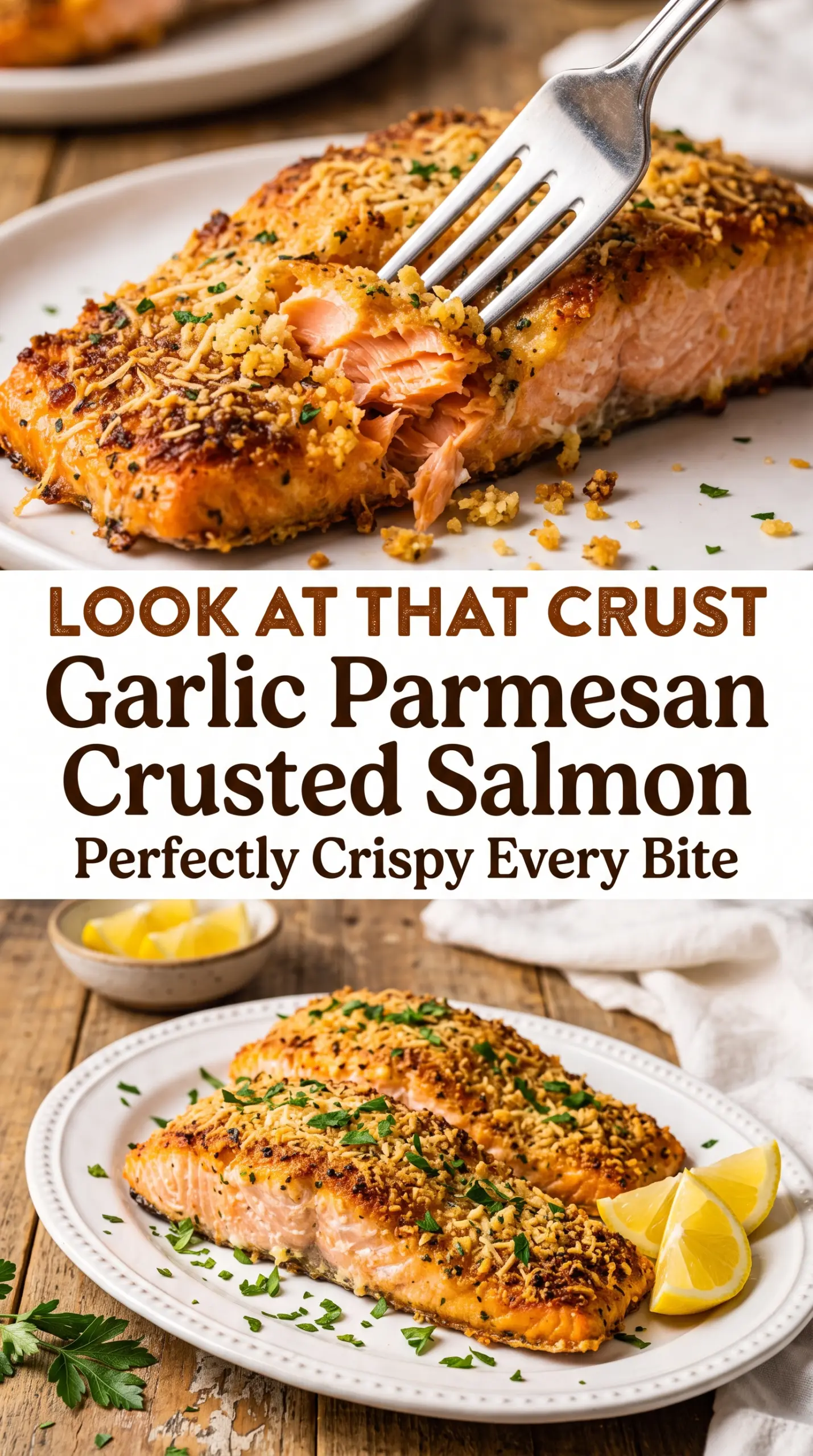
- Salmon fillets — Use fillets that are roughly the same thickness so they finish at the same time. Skin-on or skinless both work, but skin-on gives you a little more protection against overcooking on the bottom.
- Freshly grated Parmesan — This matters. Pre-grated cheese won’t melt and toast the same way, and the crust can turn sandy instead of crisp. Grate it fine so it blends cleanly with the panko.
- Panko breadcrumbs — Regular breadcrumbs get denser and softer. Panko keeps the topping light and crunchy, which is what gives the crust its texture once the cheese melts around it.
- Mayonnaise and butter — This is the part that keeps the crust from falling off. Mayo sounds unusual, but it brings fat and stability without making the topping greasy. If you want, you can swap in sour cream, but the crust won’t brown quite as evenly.
- Dijon mustard, garlic, lemon zest, and parsley — Dijon sharpens the cheese, garlic gives the crust its backbone, lemon zest lifts the richness, and parsley keeps the whole thing from tasting heavy. If you skip the zest, the crust still works, but it reads flatter.
How to Build a Golden Crust Without Overcooking the Salmon
Season the salmon first
Pat the fillets dry before anything else. Moisture on the surface keeps the seasoning from sticking and can make the bottom of the fish steam instead of roast. The olive oil helps the paprika, garlic powder, onion powder, salt, and pepper cling to the fish and adds a little insurance against dryness.
Mix the topping until it holds together
Stir the Parmesan, panko, garlic, butter, mayonnaise, Dijon, Italian seasoning, parsley, and lemon zest into a thick, damp mixture. It should clump when you press it between your fingers, not fall apart like dry crumbs. If it seems too loose, add a spoonful more Parmesan or panko until it packs cleanly.
Press and bake with confidence
Press the crust firmly onto the top of each fillet so it actually adheres during baking. A lined baking sheet keeps cleanup easy and prevents the crust from catching. Bake at 400°F until the salmon flakes with a fork at the thickest part, then broil briefly only if the top needs a deeper color. Walk away during the broil; the line between crisp and burnt is short.
How to Adapt This for Different Tables and Different Pantries
Dairy-Free Version
Swap the butter for olive oil or a plant-based butter and use a dairy-free Parmesan-style alternative if you have one that melts well. The crust won’t have quite the same salty depth, but the panko still gives you a good crunch and the salmon stays flavorful.
Gluten-Free Crust
Use certified gluten-free panko or crush gluten-free crackers into coarse crumbs. The texture stays crisp, though crackers can brown a little faster, so keep an eye on the broil at the end.
No-Mayonnaise Shortcut
Use plain Greek yogurt in place of the mayonnaise. It still helps bind the crust and adds tang, but it browns a bit more softly and the topping will taste slightly brighter.
How to Serve It as a Full Dinner
Pair the salmon with roasted vegetables, rice, mashed potatoes, or even a simple green salad. The crust is rich enough that you want a side with some contrast, either something starchy to soak up the juices or something bright and crisp to cut through the cheese.
Storage and Reheating
- Refrigerator: Store leftovers in an airtight container for up to 2 days. The crust softens a bit, but the flavor holds up well.
- Freezer: I don’t recommend freezing the finished salmon. The topping loses its crispness and the fish can turn dry once thawed.
- Reheating: Reheat in a 300°F oven for 10 to 12 minutes, uncovered, until warmed through. The biggest mistake is using the microwave, which turns the crust soggy and pushes the salmon past flaky into dry.
Answers to the Questions Worth Asking
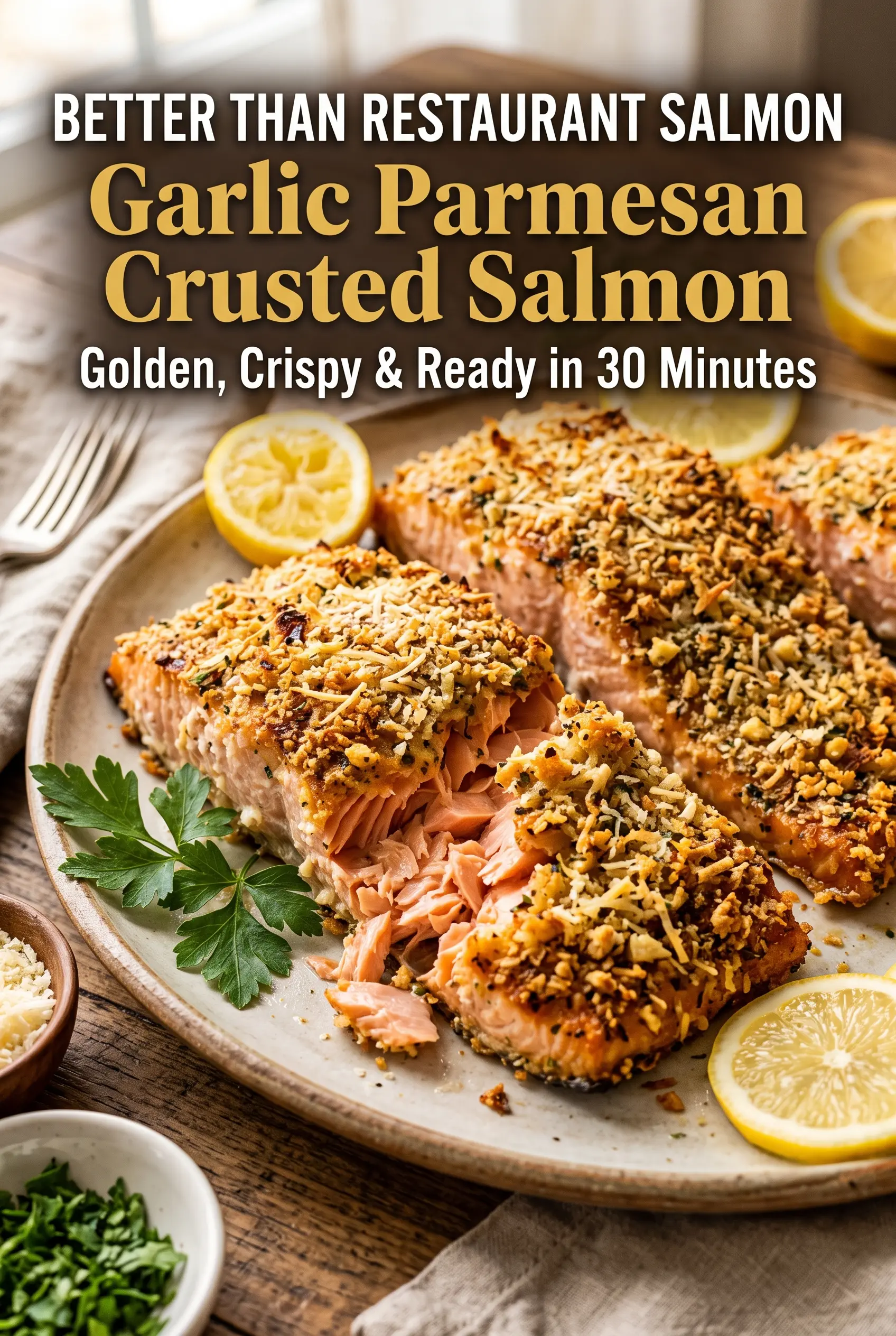
Garlic Parmesan Crusted Salmon
Ingredients
Equipment
Method
- Preheat the oven to 400°F (200°C).
- Line a sheet pan with parchment paper.
- Pat the salmon dry and brush with olive oil, ensuring the tops look evenly coated.
- Season the salmon with paprika, garlic powder, onion powder, kosher salt, and black pepper.
- In a bowl, combine Parmesan, panko, minced garlic, melted butter, mayonnaise, Dijon mustard, Italian seasoning, chopped parsley, and lemon zest until evenly mixed.
- Press the Parmesan mixture firmly onto the top of each salmon fillet, covering the surface completely.
- Arrange the fillets on the prepared sheet pan with crust-side up.
- Bake at 400°F (200°C) for 12–15 minutes, until the salmon flakes easily and the crust is set and lightly golden.
- Broil for 1–2 minutes to create an extra crispy golden crust, watching closely to avoid burning.
- Garnish with fresh parsley, lemon wedges, and extra Parmesan before serving.