
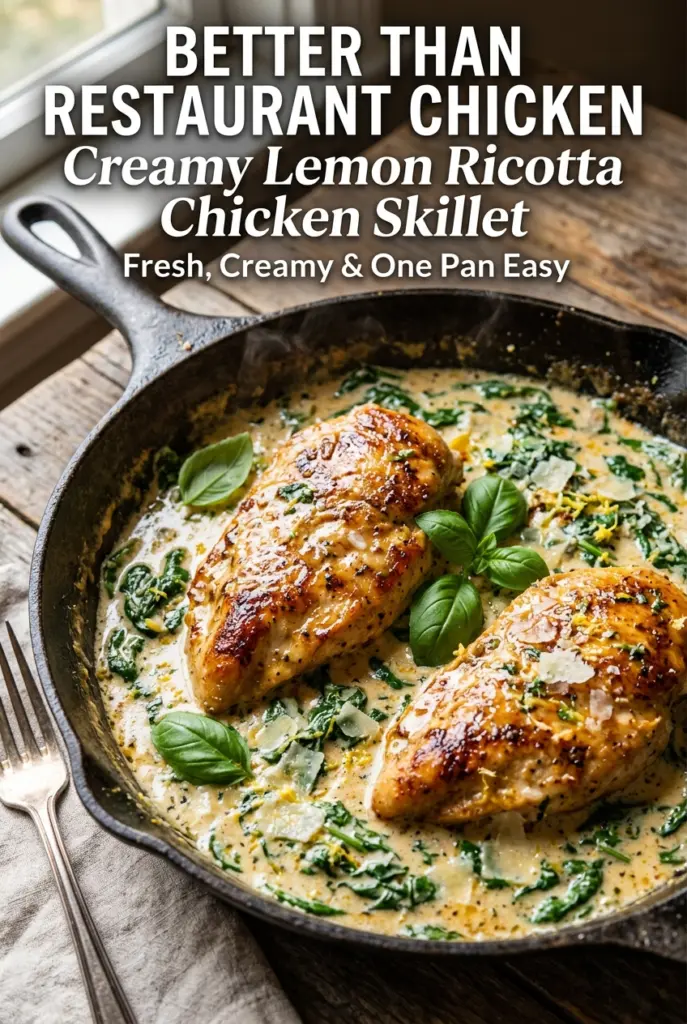
Creamy Lemon Ricotta Chicken Skillet
Juicy chicken, a silky ricotta-Parmesan sauce, and bright lemon all land in the same skillet, which is why this dish earns a spot in the regular dinner rotation. The sauce…

By Ava
•
•
Reading time: 9 min
Tip: save now, make later.
Juicy chicken, a silky ricotta-Parmesan sauce, and bright lemon all land in the same skillet, which is why this dish earns a spot in the regular dinner rotation. The sauce clings instead of pooling on the plate, and the lemon keeps the richness from tasting heavy. It feels polished, but the method is plain weeknight cooking: sear the chicken, build the sauce in the same pan, and let everything finish together.
The trick is in the heat control. Ricotta can go grainy if it gets rushed over high heat, so the broth goes in first to loosen the browned bits, then the dairy goes in over gentle heat until smooth. Fresh lemon zest matters here more than extra juice, because it gives the sauce a clean citrus edge without turning it sharp or thin.
Below, I’ll walk through the one part people usually get wrong with cream sauces, plus a few ways to adapt this skillet when you want to serve it with pasta, potatoes, or something lighter.
The sauce turned out smooth and glossy, and the lemon stayed bright instead of getting lost in the cream. I served it with rice and even the leftovers reheated without separating.
Save this Creamy Lemon Ricotta Chicken Skillet for a one-pan dinner with tender chicken and a bright, silky lemon sauce.
The reason ricotta stays silky instead of turning grainy
A lot of skillet cream sauces break because the pan is too hot when the dairy goes in. Ricotta is especially sensitive. It needs a gentle entrance, not a hard simmer. The broth first loosens the browned bits from the chicken, then the ricotta and cream melt into that base without seizing up. That order matters more than whisking harder.
Parmesan also helps the sauce thicken, but it should be added off the fiercest heat so it melts into the dairy instead of clumping. If your skillet is still screaming hot from the sear, pull it off the burner for a minute before adding the sauce ingredients. That short pause keeps the texture smooth and gives the lemon a fresher finish.
What each ingredient is actually doing in this skillet

- Chicken breasts — Boneless, skinless breasts give you a lean base that cooks quickly and slices cleanly. If yours are thick in the middle, pound them to an even thickness so the outside doesn’t overcook before the center reaches temperature.
- Whole milk ricotta — This is the body of the sauce. Whole milk ricotta melts smoother than low-fat ricotta, which can turn slightly chalky. If you only have part-skim, whisk it well with the cream before it hits the pan.
- Heavy cream — Cream keeps the ricotta from tasting dense and gives the sauce that glossy finish. Half-and-half works in a pinch, but the sauce will be thinner and a little less stable when it simmers.
- Fresh Parmesan — Grate it yourself if you can. Pre-shredded cheese often has anti-caking starch that makes the sauce less silky. You want Parmesan that disappears into the cream, not little gritty bits floating through it.
- Lemon zest and juice — Zest gives the sauce its bright top note; juice brings the sharp contrast. Use both. If you only use juice, the sauce tastes flat and can thin out more than you want.
- Chicken broth — This is the deglazing liquid and the flavor bridge between the chicken and the sauce. Low-sodium broth gives you more control, especially since Parmesan already brings salt.
- Baby spinach — It wilts fast and folds into the sauce without fighting it. Fresh spinach is the right choice here; frozen spinach releases too much water and dulls the sauce.
Building the skillet in the right order
Searing the Chicken First
Season the chicken evenly so every bite tastes like something, not just the sauce around it. Heat the oil until it shimmers, then lay the chicken in without moving it. The first side needs time to develop a deep golden crust, and if you flip too early, it will stick and tear. Pull the chicken when it reaches 165°F and transfer it to a plate so the juices stay put while you build the sauce.
Using the Fond as the Flavor Base
Once the chicken is out, the browned bits stuck to the pan become the best part of the dish. Add the butter and garlic, cook just until fragrant, then pour in the broth and scrape the bottom with a wooden spoon. Those caramelized bits dissolve into the liquid and give the sauce its savory backbone. If the pan looks black rather than brown, the heat was too high during searing and the bits may taste bitter.
Letting the Ricotta Melt Slowly
Lower the heat before the ricotta, cream, Parmesan, lemon zest, lemon juice, and seasoning go in. Stir until the sauce turns smooth and glossy, not bubbling hard. The sauce should coat a spoon and leave a clean path when you drag a spatula through it. If it looks grainy, the pan is too hot; take it off the burner and keep stirring until it settles.
Finishing with Spinach and Chicken
Fold in the spinach just until the leaves collapse into the sauce. They should look glossy and tender, not dark and mushy. Return the chicken to the skillet and spoon the sauce over the top so the heat from the pan finishes everything together. A short simmer at the end lets the flavors settle without drying out the chicken.
Three ways to change it without losing the point
Dairy-Free Version That Still Tastes Rich
Use a dairy-free cream plus a plain, unsweetened cashew-based ricotta if you can find one. The sauce won’t have the same tangy Parmesan finish, so add a little extra lemon zest and a pinch more salt to wake it up. It won’t taste identical, but it still gives you a creamy skillet dinner with a bright edge.
Making It Gluten-Free Without Changing the Method
This recipe is naturally gluten-free as written, as long as your chicken broth is certified gluten-free. The texture and technique stay the same, so there’s nothing to compensate for. Serve it with rice, mashed potatoes, or gluten-free pasta and the sauce still clings the way it should.
Turning It into a Pasta Sauce
Slice the chicken before returning it to the pan, then toss the sauce with hot cooked pasta and a splash of pasta water. The starch helps the ricotta sauce cling even better. Use a short pasta like rigatoni or penne so the sauce settles into the ridges instead of sliding off.
Storage and Reheating
- Refrigerator: Store in an airtight container for up to 3 days. The sauce may thicken as it chills, which is normal.
- Freezer: I don’t recommend freezing this one. Ricotta and cream sauces can separate after thawing and lose their smooth texture.
- Reheating: Warm it gently on the stove over low heat with a splash of broth or cream. High heat is what causes the sauce to break, so don’t rush it in the microwave.
Answers to the questions worth asking
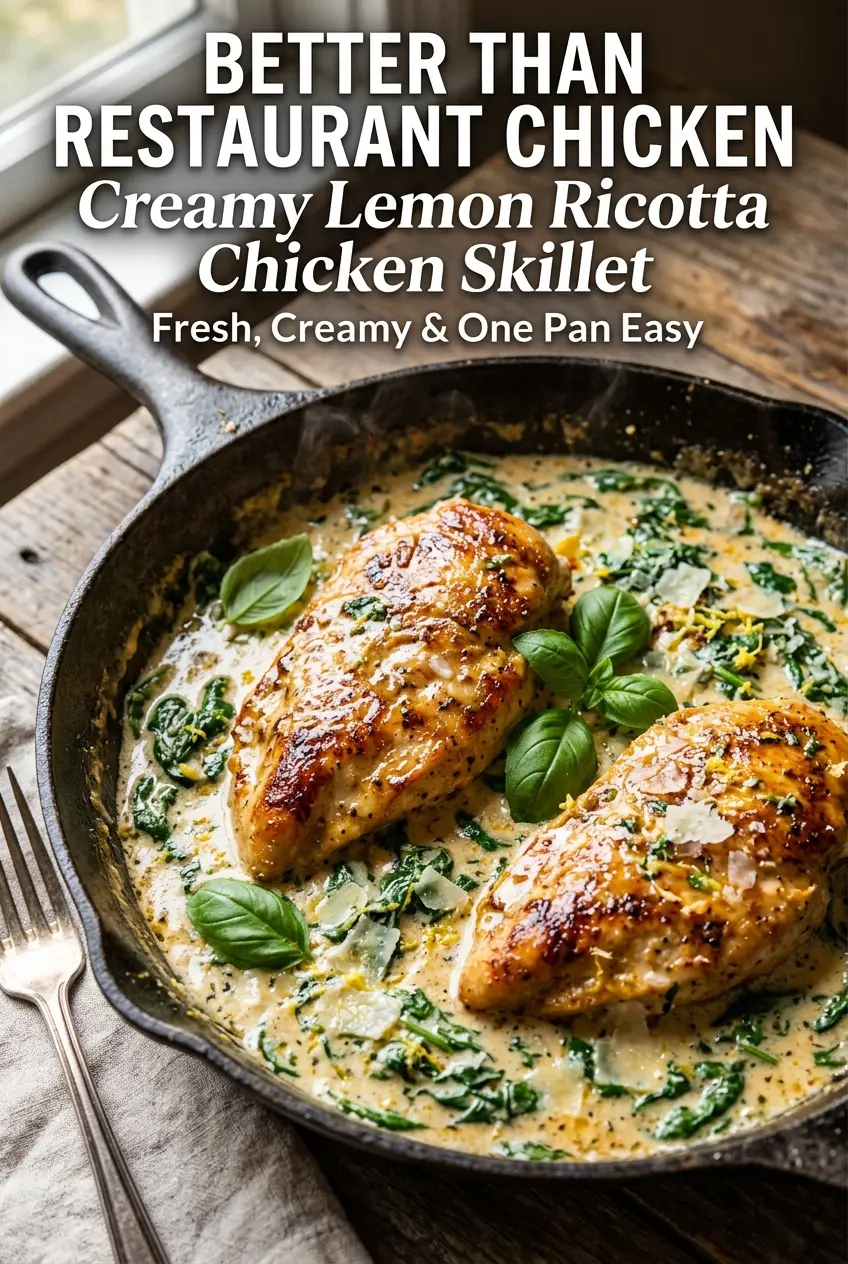
Creamy Lemon Ricotta Chicken Skillet
Ingredients
Equipment
Method
- Season the chicken breasts with Italian seasoning, garlic powder, paprika, kosher salt, and black pepper.
- Heat the olive oil in a large skillet over medium-high heat.
- Sear the chicken for 5–6 minutes per side, until golden and cooked to 165°F (74°C).
- Transfer the chicken to a plate.
- Melt the butter in the same skillet.
- Add the garlic and cook for 30 seconds.
- Stir in the chicken broth and scrape up any browned bits.
- Add the ricotta, heavy cream, Parmesan, lemon zest, lemon juice, and Italian seasoning.
- Stir until the sauce becomes smooth and creamy.
- Fold in the spinach until wilted.
- Return the chicken to the skillet and spoon the sauce over the top.
- Simmer for 3–4 minutes.
- Garnish with basil, chopped parsley, extra Parmesan, lemon slices, and fresh cracked black pepper.