
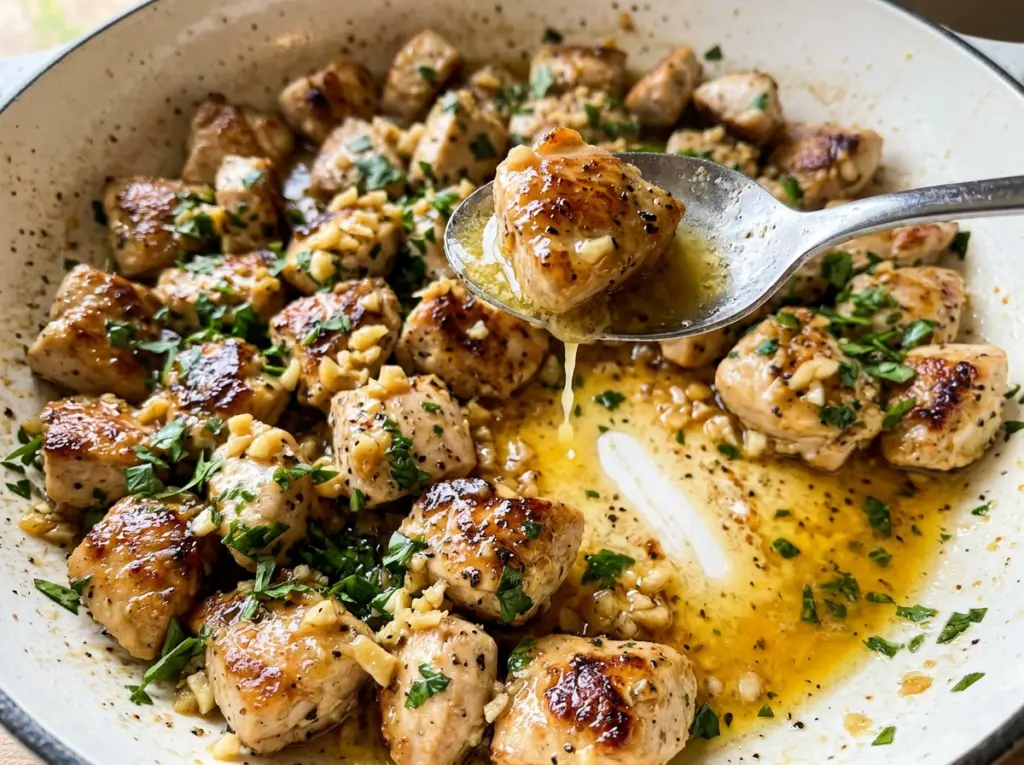
Garlic Butter Chicken Bites
The skillet gives a steady hiss when the chicken hits the hot oil, and that’s the sound I want to hear before the pieces start to brown. These Garlic Butter…

By Ava
•
•
Reading time: 8 min
Tip: save now, make later.
The skillet gives a steady hiss when the chicken hits the hot oil, and that’s the sound I want to hear before the pieces start to brown. These Garlic Butter Chicken Bites turn bite-size chicken breasts into a quick skillet dinner, then coat them in butter, garlic, parsley, and a squeeze of lemon. Each piece gets plenty of sauce without needing a separate pan or a long simmer.
I like how the butter and lemon meet at the end: the coating tastes rich, but the lemon juice keeps it from feeling heavy. The garlic goes into the skillet only after the heat comes down, so it has a chance to turn fragrant without scorching. Serve the chicken while the sauce is still glossy and clinging to the warm pieces.
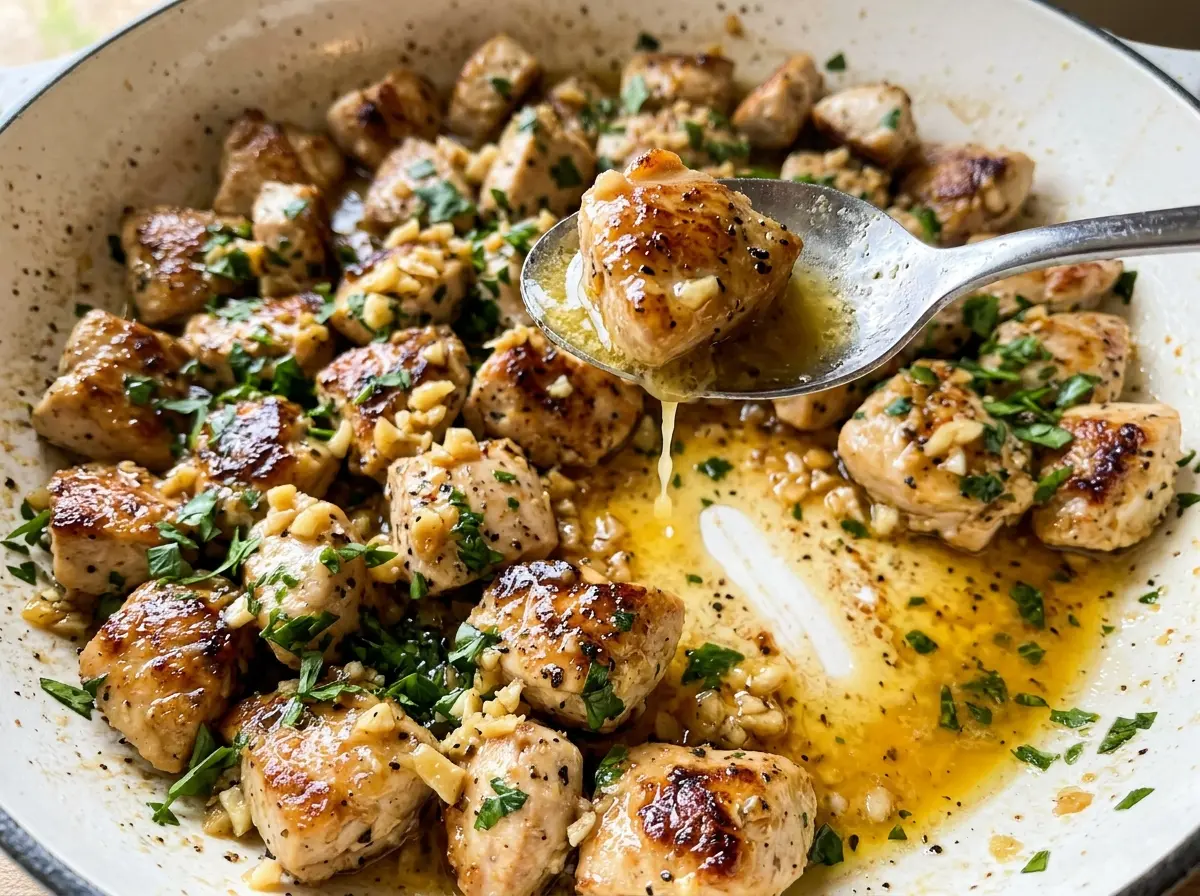
Kitchen Note
Garlic needs just 30 seconds in the butter here. Once it smells fragrant, bring the chicken back right away; waiting longer can turn the garlic bitter.
Save these Garlic Butter Chicken Bites for a quick skillet dinner with browned chicken and a glossy garlic-butter finish.
Why the Chicken Needs Two Trips Through the Skillet
Chicken bites brown best when they have room around them. Put too many pieces into one skillet and the moisture they release gets trapped; instead of developing browned edges, the chicken steams. A 12-inch skillet gives these pieces space, but cooking in two batches is what keeps the pan from getting crowded.
That little pause between batches is worth it. The first round leaves the skillet ready for the next one, and the browned bits at the bottom will mingle with the butter later. Turning the chicken occasionally gives more than one side a chance to color, while leaving it alone between turns gives the surface time to make contact with the hot pan. The goal isn’t a dark crust on every face. Look for browned patches and cooked-through centers, then let the garlic butter finish the job once both batches are back in the skillet.
Why These Ingredients Make the Garlic Butter Taste Balanced

- Chicken breasts — Boneless, skinless breasts are easy to cut into even pieces and cook quickly. Aim for pieces close to the same size so they finish at roughly the same time; uneven chunks make it harder to judge doneness.
- Paprika and black pepper — Paprika adds gentle warmth and color without taking over the garlic butter. Freshly ground black pepper gives the seasoning a sharper edge, but pre-ground pepper works fine here.
- Unsalted butter — Unsalted butter lets the kosher salt season the chicken without adding an unpredictable second source of salt. The butter also carries the garlic and parsley across the chicken; a good everyday butter is all you need.
- Fresh garlic — Minced cloves give the skillet sauce a bright, savory aroma. Fresh garlic is worth using because it tastes fuller here than garlic powder, which won’t create the same fragrant butter coating.
- Fresh parsley and lemon juice — Parsley adds a clean, green finish, while lemon juice cuts through the richness of the butter. Fresh lemon juice has the liveliest taste, though bottled juice will work when that’s what you have.
- Olive oil — The oil helps the chicken cook in the hot skillet before the butter goes in. Use a regular olive oil rather than saving an expensive finishing oil for this step.
Brown the Chicken First, Then Make the Garlic Butter
Season the Pieces and Heat the Skillet
Toss the chicken with the kosher salt, black pepper, and paprika until the seasoning coats the pieces evenly. Set a 12-inch skillet over medium-high heat and add the olive oil. Wait until the oil is shimmering before the chicken goes in; oil that hasn’t heated yet won’t give the pieces the same quick start in the pan. Keep the batches separate rather than piling all the chicken in at once.
Cook Both Batches Until Browned
Cook the chicken in two batches, turning the pieces occasionally, for 6–8 minutes per batch. Look for browned areas on the outside and check the thickest pieces with an instant-read thermometer; they need to reach 165°F. Transfer each finished batch to a plate while the next one cooks. Don’t judge doneness by the color alone, since small pieces can brown before the center is ready.
Melt the Butter and Wake Up the Garlic
After the chicken is out, reduce the heat to medium-low and add the butter to the same skillet. Stir until it melts, about 1 minute, then add the minced garlic. Cook it for 30 seconds, just until fragrant; the garlic should smell savory, not toasted or sharp. Keeping the heat lower at this point helps the garlic perfume the butter without burning.
Toss Everything in the Pan
Return the chicken and any juices from the plate to the skillet. Add the chopped parsley and lemon juice, then toss until every piece is coated and heated through, about 1 minute. Scrape and stir gently so the butter, herbs, and juices spread around the pan. Take the skillet off the heat once the chicken is hot and glossy rather than letting the butter continue to cook.
Three Easy Ways to Adapt These Chicken Bites
Use Chicken Thighs for a Juicier Bite
Swap in boneless, skinless chicken thighs cut into 1-inch pieces. They bring a slightly richer taste and stay juicy, though the pieces may need a little more or less time than breast meat; use 165°F in the thickest pieces as your doneness cue.
Make the Butter Sauce Dairy-Free
Replace the butter with 4 tablespoons olive oil. Add it after reducing the heat, then stir in the garlic and continue with the parsley and lemon juice. The finished coating will taste fruitier and feel less buttery, but it still carries the garlic across the chicken.
Trade Regular Paprika for Smoked Paprika
Use the same amount of smoked paprika in place of the regular paprika. It gives the chicken a deeper, woodsy note that stands up well to the garlic; the skillet method stays the same.
Storage and Reheating
- Refrigerator: Store leftovers in a covered container for 3–4 days. The butter will firm up when cold, and the chicken won’t be quite as juicy after reheating.
- Freezer: Freeze cooled chicken in an airtight container for up to 2–3 months. Thaw it in the refrigerator before reheating; the parsley may look less fresh after freezing.
- Reheating: Warm gently in a skillet over low heat or microwave in short intervals, stirring between them, until the chicken reaches 165°F. High heat or a long reheating stretch can dry out the small pieces.
Questions That Come Up While Cooking Garlic Butter Chicken Bites
Garlic Butter Chicken Bites
Ingredients
Equipment
Method
- Toss the chicken with the salt, pepper, and paprika until evenly coated.
- Heat the olive oil in a 12-inch skillet over medium-high heat until shimmering.
- Cook the chicken in two batches, turning occasionally, for 6–8 minutes per batch, until browned and the thickest pieces reach 165°F.
- Transfer each batch to a plate.
- Reduce the heat to medium-low and add the butter to the skillet.
- Stir until melted, about 1 minute.
- Add the garlic and cook for 30 seconds, until fragrant.
- Return the chicken and any juices to the skillet, add the parsley and lemon juice, and toss until coated and heated through, about 1 minute.