
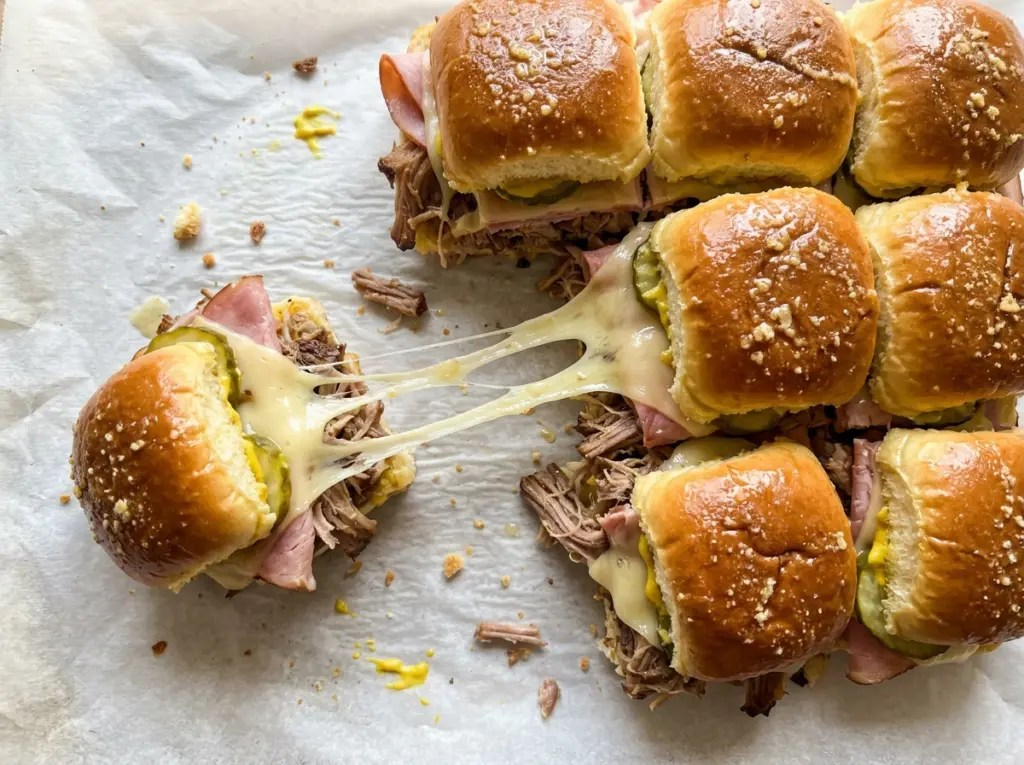
Cuban Pork Party Sliders
As the pork browns, the kitchen starts to smell like garlic and oregano, and the little crusty bits left in the Dutch oven are worth keeping. They dissolve into the…

By Ava
•
•
Reading time: 9 min
Tip: save now, make later.
As the pork browns, the kitchen starts to smell like garlic and oregano, and the little crusty bits left in the Dutch oven are worth keeping. They dissolve into the orange-and-lime cooking liquid and give Cuban pork party sliders a savory, bright center instead of plain shredded meat.
I let the shoulder roast until a fork pulls it apart easily, then build the sliders as one connected slab. That makes the layers easier to assemble and gives the cheese time to melt before the tops turn golden. Ham and Swiss bring a familiar salty, creamy layer; dill pickle chips cut through it with a sharp, tangy bite. Each slider gets a little of everything, with tender pork tucked between soft rolls.
Kitchen Note
After shredding, toss the pork with only 1/2 cup of the cooking liquid. The meat stays juicy, but the rolls don’t get drenched before they bake.
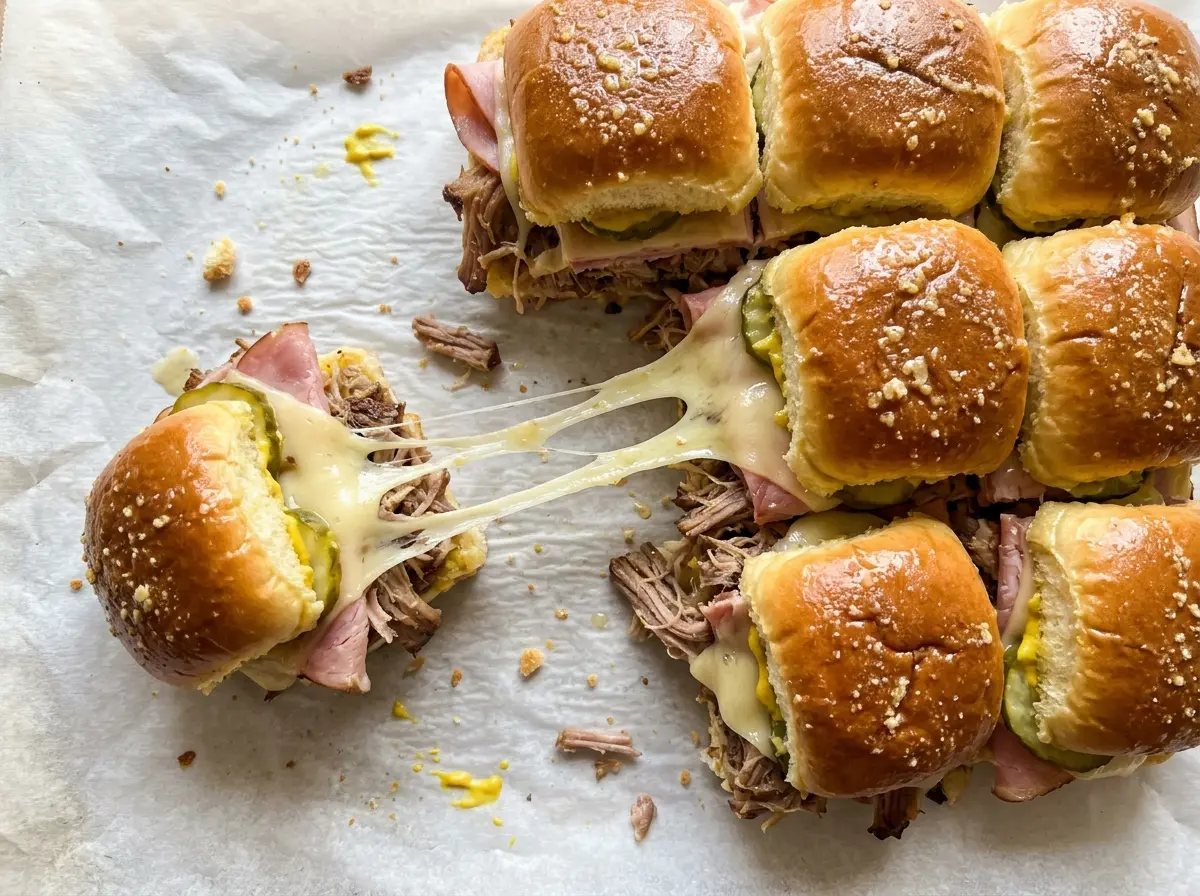
Save these Cuban pork party sliders for a gathering: citrus-braised pork, ham, Swiss, and dill pickles baked together under buttery golden rolls.
Why Pork Shoulder Has to Go Past the Usual Roast Temperature
Pork shoulder won’t pull apart just because it has cooked for a long time. It needs to get hot enough for its connective tissue to soften, which is why I look for a temperature between 195°F and 205°F and check that a fork slides in easily. If the pork is still firm or resists shredding, it needs more time in the covered Dutch oven. Pulling it early leaves you with slices or tough strands instead of the tender filling these sliders need.
The low oven temperature gives the large chunks time to soften without rushing the process. Start checking near the shorter end of the roasting window, but let tenderness make the final call; a few minutes with a thermometer can’t tell you whether the fork test has passed. Once the shoulder is tender, the citrus-and-garlic liquid also gives the shredded meat a chance to take on the seasoning. That’s what makes the pork taste like part of the sandwich rather than a separate layer.
What Gives the Pork Its Brightness—and the Sliders Their Cuban-Inspired Balance

- Pork shoulder — Its fat and connective tissue make it well suited to a long, covered roast and easy shredding. Choose boneless shoulder with some marbling; a lean cut such as pork loin won’t give the same tender result. Keep the three large chunks so they brown well and still fit in the pot.
- Orange and lime juice — Orange juice rounds out the sharp lime, while both juices season the pork as they cook with the garlic and spices. Fresh juice has a brighter aroma, but bottled juice works in the same quantities if that’s what you have. Keep the two juices in balance rather than replacing one entirely.
- Garlic, oregano, and cumin — Together they give the braising liquid its savory, earthy backbone. Dried oregano is the right fit here because it holds up through the long roast; fresh herbs won’t deliver the same concentrated flavor in this method. Mince the garlic so it disperses through the liquid instead of leaving large pieces.
- Deli ham, Swiss, and dill pickles — Thinly sliced ham layers neatly, Swiss melts over the pork, and pickle chips bring the salty-tangy contrast that keeps each bite from feeling heavy. A mild melting cheese such as provolone can stand in for Swiss, though it will be less nutty; use the same number of slices. Drain pickle chips well so excess brine doesn’t run into the rolls.
- Soft slider rolls and yellow mustard — Soft rolls are easy to slice horizontally as one slab and hold the layered filling together. Yellow mustard spreads easily over the cut sides and adds a gentle tang. For a gluten-free version, use soft gluten-free slider rolls sturdy enough to stay connected when sliced as a slab; their texture may be more delicate.
From a Proper Pork Sear to Sliders with Golden Tops
Brown the Shoulder in Batches
Heat the oven to 300°F, then warm the olive oil in a 5- to 6-quart Dutch oven over medium-high heat. Brown the pork in batches for 2 to 3 minutes per side, turning until each large chunk has color on all sides. Crowding the pot makes the pork steam instead of brown, so give each piece room and transfer browned chunks to a plate. Those browned surfaces add depth to the liquid that comes next.
Let the Citrus Braise Do Its Work
Whisk the orange juice, lime juice, garlic, oregano, cumin, kosher salt, and black pepper into the Dutch oven, scraping up the browned bits from the bottom. Return the pork and turn each piece to coat it in the liquid. Cover the pot and roast for 3 1/2 to 4 1/2 hours, until the pork reaches 195°F to 205°F and pulls apart easily with a fork. If it still feels tight, put the lid back on and continue roasting rather than trying to shred it early.
Shred and Season the Pork
Move the tender pork to a cutting board and shred it with two forks. Skim excess fat from the cooking liquid before measuring out 1/2 cup to toss with the meat. The pork should look moist and lightly coated, not swimming in liquid. Keep the rest of the liquid nearby while assembling, but don’t add more to the rolls.
Layer the Slab, Then Bake Until Golden
Set the oven to 350°F and coat a 9×13-inch baking dish with cooking spray. Slice the rolls horizontally as one slab and place the bottom half in the dish, then spread on the mustard and layer the ham, shredded pork, Swiss, and pickle chips. Set the tops in place and brush them with melted butter. Cover loosely with foil and bake for 15 minutes, then uncover and bake for 8 to 10 minutes, until the cheese is melted and the tops are golden. Rest the sliders for 5 minutes before cutting them apart.
Two Easy Ways to Adapt the Slider Slab
Make Them Gluten-Free
Replace the soft slider rolls with gluten-free slider rolls and keep the pork, ham, cheese, pickles, and assembly the same. Choose rolls that can be sliced and held together as a slab; gluten-free bread can be more fragile, so handle the top and bottom gently. The filling stays the same, but the bun texture may be less pillowy.
Leave Out the Ham for a Pork-Forward Version
Skip the deli ham and layer the shredded pork directly under the Swiss. The sliders taste less salty and put the citrus-braised shoulder at the center of every bite. Keep the pickles in place for a bright counterpoint.
Storage and Reheating
- Refrigerator: Keep leftover sliders covered in the refrigerator for 3 to 4 days. The rolls soften as they sit against the filling.
- Freezer: Freeze wrapped sliders in an airtight container for up to 2 months. The bread and pickles soften after thawing, but the pork and cheese freeze well.
- Reheating: Reheat covered in a 325°F oven until hot throughout, then uncover briefly to crisp the tops. The microwave is quicker but can make the rolls chewy.
Questions That Come Up Before the Sliders Go in the Oven
Cuban Pork Party Sliders
Ingredients
Equipment
Method
- Heat the oven to 300°F.
- Heat the olive oil in a 5- to 6-quart Dutch oven over medium-high heat. Brown the pork in batches on all sides, 2 to 3 minutes per side, transferring it to a plate as it browns.
- Whisk the orange juice, lime juice, garlic, oregano, cumin, salt, and pepper into the Dutch oven, scraping up the browned bits.
- Return the pork to the Dutch oven and turn to coat.
- Cover the Dutch oven and roast for 3 1/2 to 4 1/2 hours, until the pork reaches 195°F to 205°F and pulls apart easily with a fork.
- Transfer the pork to a cutting board and shred it.
- Skim excess fat from the cooking liquid, then toss the pork with 1/2 cup of the liquid.
- Set the oven to 350°F and coat a 9x13-inch baking dish with cooking spray.
- Slice the rolls horizontally as one slab and place the bottom half in the dish.
- Spread the mustard over the roll bottoms.
- Layer on the ham, shredded pork, Swiss cheese, and pickle chips.
- Set the roll tops in place and brush with the melted butter.
- Cover loosely with foil and bake for 15 minutes.
- Uncover and bake for 8 to 10 minutes, until the cheese is melted and the tops are golden.
- Rest the sliders for 5 minutes, then cut apart and serve.