
Crispy Bacon Brussels Sprouts
The bacon starts to sizzle before the Brussels sprouts ever hit the pan, and that head start matters. It gives the pieces time to release some fat without asking them…

By Ava
•
•
Reading time: 9 min
Tip: save now, make later.
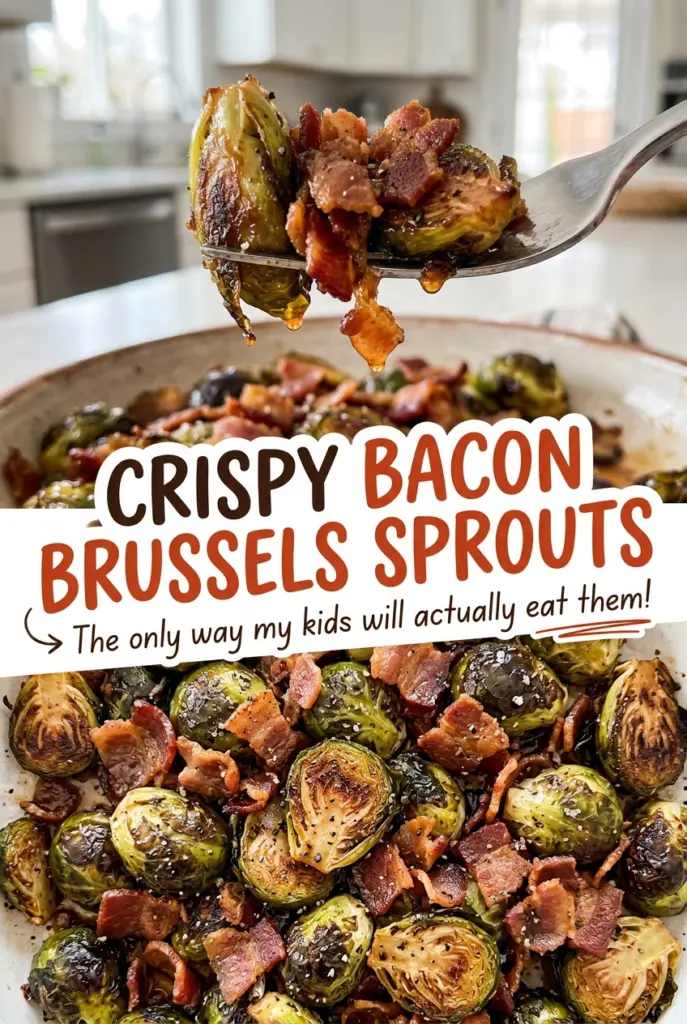
The bacon starts to sizzle before the Brussels sprouts ever hit the pan, and that head start matters. It gives the pieces time to release some fat without asking them to stay in the oven long enough to burn while the vegetables soften. For Crispy Bacon Brussels Sprouts, that means browned cut sides, tender centers, and bacon that still has a little bite.
I like how the sprouts pick up the savory drippings as they roast, while olive oil helps coat them evenly. Keeping the cut faces against the hot sheet pan gives them direct contact with the metal instead of letting them steam in a pile. The finished dish is simple, but the contrast is what makes it work: crisp bacon, soft centers, and deep golden edges.
Kitchen Note
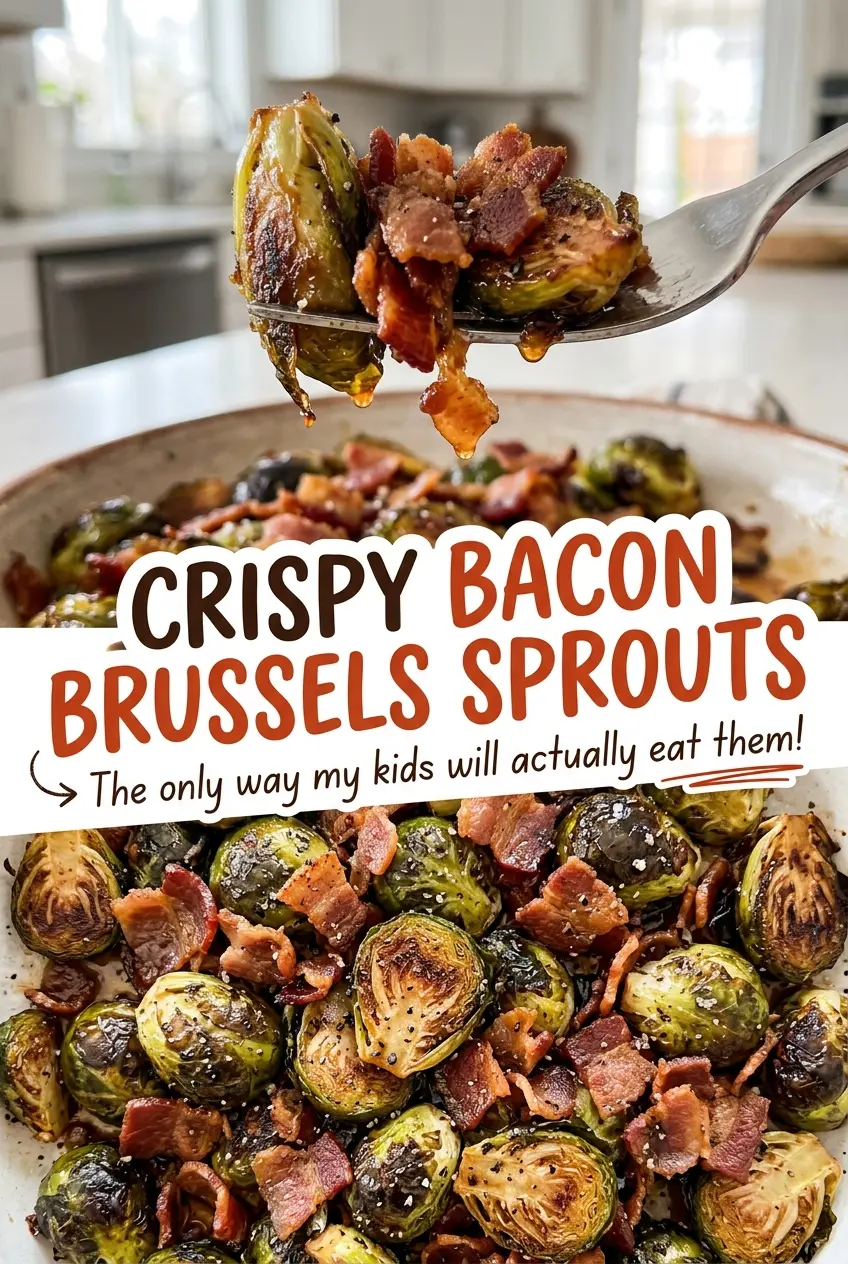
Set the sprouts cut side down and leave them in place while they roast. That contact is what builds the dark, browned faces; turning them early trades that crust for pale spots.
Save these Crispy Bacon Brussels Sprouts for a savory side with deeply browned edges and crisp bacon in every serving.
Why the Bacon Gets a Head Start Instead of Roasting Beside the Sprouts
Bacon and Brussels sprouts don’t need the same amount of time in the oven. Thick-cut bacon needs a little time to render, but leaving it in for the full vegetable roast risks pushing those small pieces past crisp and into burnt. Starting it on its own lets the fat begin collecting on the pan before the sprouts go in.
That rendered fat is useful, but it isn’t a reason to skip the olive oil. The oil helps the sprouts get an even coating along with the drippings, so the whole batch roasts instead of leaving some pieces dry and others greasy. Once the sprouts are tender and browned, the bacon goes back on for a short final roast. It finishes crisping then, rather than spending the entire time in the oven. The separate stages are what let both parts reach their best texture in the same pan.
Why Thick-Cut Bacon Matters More Than You Might Expect

- Thick-cut bacon — The chunkier pieces hold their shape through both oven turns and give you a crisp bite alongside the tender sprouts. Choose pieces with a good balance of meat and fat; very lean bacon won’t leave as much rendered fat on the pan. Cut it into even half-inch pieces so they cook at roughly the same pace.
- Brussels sprouts — Look for firm sprouts with compact leaves and similar sizes, which makes it easier for the halves to become tender together. Trim the dry stem ends and halve each sprout through the stem so the layers stay attached during roasting. Fresh sprouts give you a better chance at browned surfaces than frozen ones.
- Olive oil — It helps distribute the coating over the sprouts instead of relying on the bacon drippings alone. A basic olive oil works well here; there’s no need to use a costly finishing oil because it roasts along with the vegetables.
- Black pepper — Pepper adds a gentle bite that cuts through the bacon’s richness. Use ground black pepper from the pantry; this dish doesn’t depend on a specialty variety for its texture or flavor.
The Two-Roast Sequence That Gets the Bacon Crisp and the Sprouts Tender
Render the Bacon Before the Vegetables Go On
Heat the oven to 425°F and spread the bacon pieces across an 18×13-inch rimmed baking sheet. Roast for 8–10 minutes, until some fat has rendered and the pieces are just beginning to brown. They shouldn’t be fully crisp yet, since they’ll return to the oven later. Transfer them to a paper towel-lined plate and leave the rendered fat on the sheet pan.
Coat the Sprouts in the Pan Drippings
Add the trimmed, halved sprouts to the baking sheet with the olive oil, kosher salt, and black pepper. Toss them on the pan so the oil and bacon fat coat the surfaces. If the sprouts look crowded, take a moment to spread them into a single layer; piled pieces trap moisture rather than browning well. Turn the halves so their cut sides face down.
Roast Until the Cut Faces Are Deeply Browned
Roast the sprouts for 20–25 minutes. Look for deeply browned cut sides, not just a faint tan edge, and pierce one with a fork to check that the center is tender. If the sprouts are still firm in the middle, they need more time within that roasting window. Their size can affect how quickly they soften, so use the fork test along with the color cue.
Return the Bacon for Its Crisp Finish
Put the bacon back on the baking sheet and toss it with the sprouts. Roast for another 3–5 minutes, until the bacon is crisp. Keep the pieces mixed through the vegetables so the bacon fat and browned bits cling to the sprouts. Pull the pan once the bacon has regained its crisp texture.
Small Ingredient Choices That Shift the Bacon-and-Sprout Balance
Choose Sprouts of a Similar Size
Uniform sprouts are a small shopping choice that pays off in the pan: the halves soften at a more even pace, so you’re less likely to have tiny pieces collapse while larger ones stay firm. If you have a mixed-size batch, keep the largest halves together and check their tenderness with a fork before taking everything out.
Pick the Bacon Style for the Smokiness You Like
Thick-cut bacon is the important part for sturdy, crisp pieces, while the particular bacon you buy can bring a milder or smokier note. A strongly smoked variety makes the whole pan taste more assertive; a less smoky one lets the roasted sprouts come through more clearly. Either way, keep the cut size consistent so the pieces render evenly.
Keep It Gluten-Free and Dairy-Free
The ingredients here don’t include flour, dairy, or a grain-based coating, so the dish fits a gluten-free or dairy-free table without changing the vegetables or cooking method. Check the bacon’s ingredient and allergen information for a product that suits your needs, since bacon formulations vary. The result stays the same savory, crisp-edged side.
Storage and Reheating
- Refrigerator: Keep leftovers in a covered container for 3–4 days. The sprouts soften after chilling, and their browned faces won’t stay as crisp as they were fresh from the oven.
- Freezer: Freeze in an airtight container for up to 2–3 months. The sprouts will be softer after thawing, so freezing is best when texture matters less than saving leftovers.
- Reheating: Reheat in the oven until hot throughout; an uncovered pan gives the surfaces a better chance to dry out than a microwave does. For food safety, reheat leftovers to 165°F.
Questions That Come Up Before the Pan Goes in the Oven
Crispy Bacon Brussels Sprouts
Ingredients
Equipment
Method
- Heat the oven to 425°F.
- Spread the bacon pieces on an 18x13-inch rimmed baking sheet.
- Roast for 8–10 minutes, until some fat has rendered and the pieces are just beginning to brown.
- Transfer the bacon to a paper towel-lined plate, leaving the rendered fat on the baking sheet.
- Add the Brussels sprouts, olive oil, salt, and pepper to the baking sheet and toss to coat.
- Arrange the sprouts cut side down in a single layer.
- Roast for 20–25 minutes, until the cut sides are deeply browned and the sprouts are tender when pierced with a fork.
- Return the bacon to the baking sheet and toss with the sprouts.
- Roast for 3–5 minutes, until the bacon is crisp.