
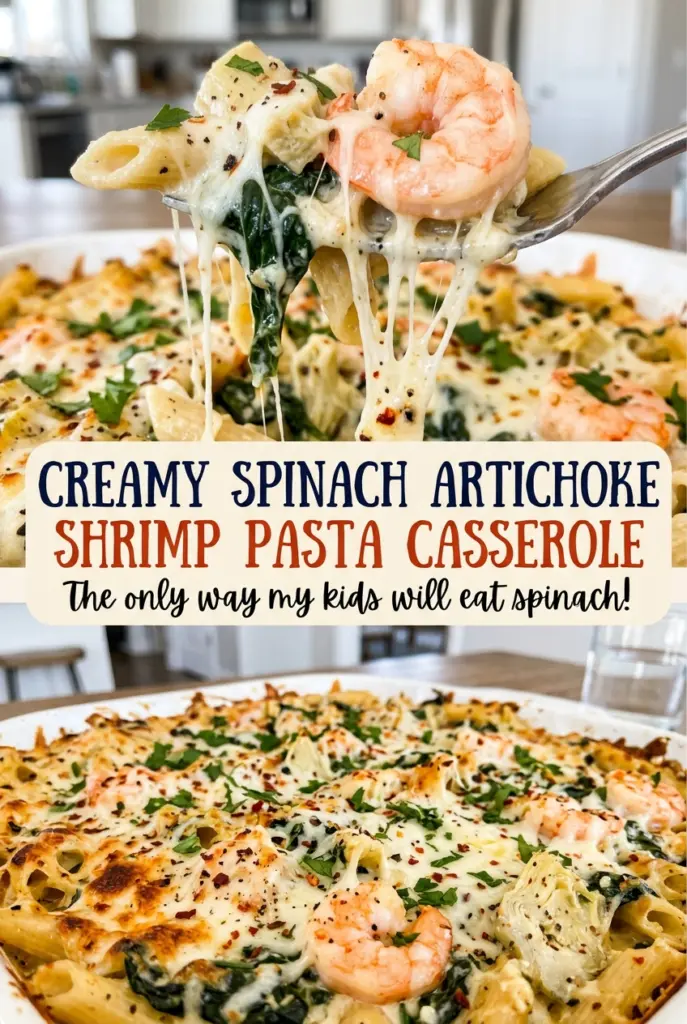
Creamy Spinach Artichoke Shrimp Pasta Casserole
When the casserole comes out of the oven, the mozzarella is bubbling at the edges and the shrimp in the middle should be opaque, not tough. That balance is what…

By Ava
•
•
Reading time: 9 min
Tip: save now, make later.
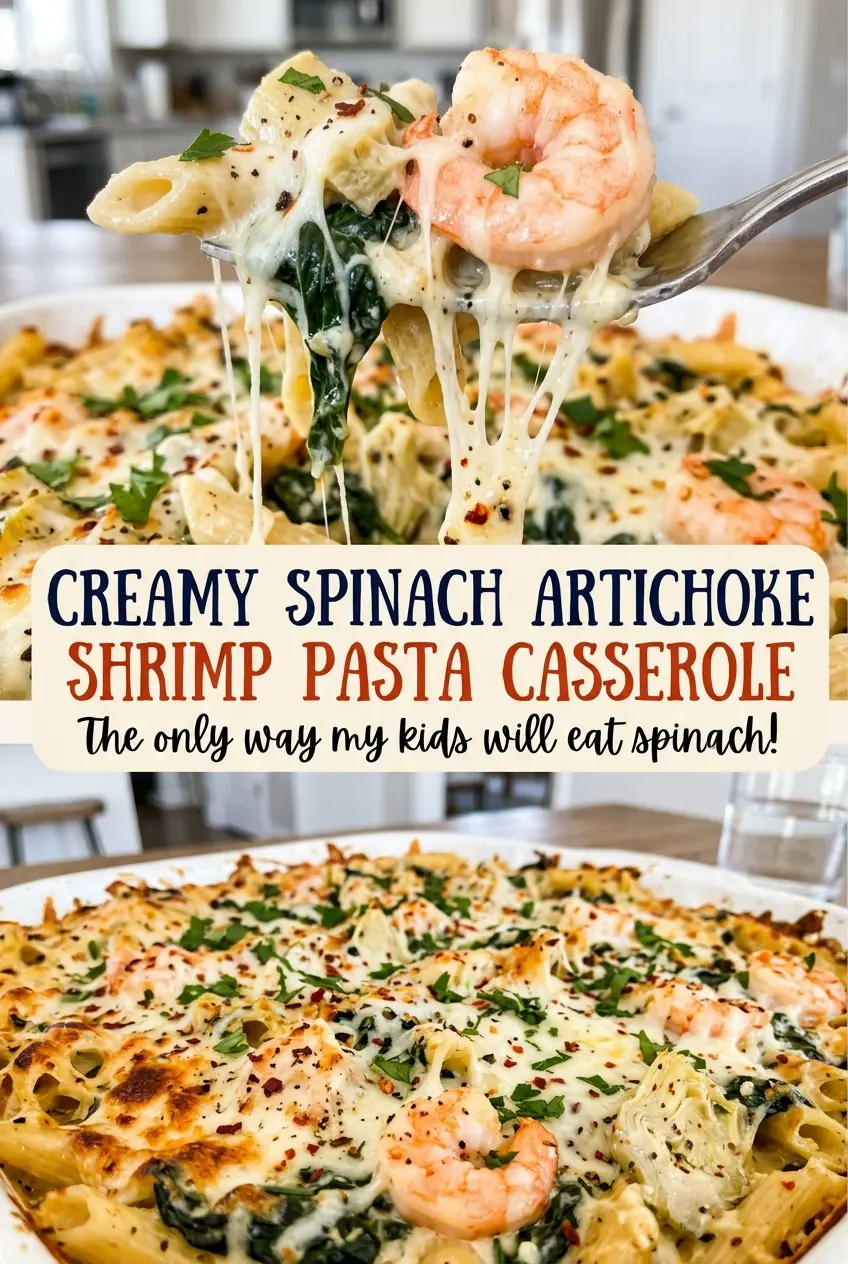
When the casserole comes out of the oven, the mozzarella is bubbling at the edges and the shrimp in the middle should be opaque, not tough. That balance is what makes this creamy spinach artichoke shrimp pasta casserole work: the pasta finishes cooking in the sauce, while the foil keeps the top from browning before the center is hot.
I cook the penne just shy of al dente, then fold it into a sauce built from a simple butter-and-flour base. Cream cheese, sour cream, and Parmesan make it tangy and rich without relying on a jarred dip. The spinach and artichokes bring plenty of character, and large shrimp tuck into the creamy pasta for a complete dinner from one baking dish.
Give the casserole a short rest after baking. The sauce settles around the penne, and each scoop holds together instead of running across the plate.
Kitchen Note
Pat the thawed shrimp dry before it goes into the pasta. Surface moisture can loosen the sauce, so take a moment with paper towels and get the shrimp dry to the touch.
Save this creamy spinach artichoke shrimp pasta casserole for a cozy dinner with bubbling mozzarella and a tangy, creamy sauce.
Why the Penne Goes Into the Oven Slightly Undercooked
Penne that tastes perfectly tender when it leaves the pot can turn soft by the time a casserole finishes baking. It keeps absorbing liquid in the oven, and this sauce gives it plenty to take in. Cooking the pasta until it’s two minutes shy of the package’s al dente timing leaves room for that second stretch of cooking.
The sauce should look generous when you stir everything together; it isn’t meant to cling tightly to every piece before baking. As the casserole heats, the pasta drinks in some of that sauce, while the covered dish holds in moisture. If you start with fully cooked pasta, the penne can lose its bite and the finished casserole may seem dry even though there’s sauce in the dish. Keep the pasta a little firm at the draining stage, and it will land tender after its time in the oven.
The Ingredients That Keep This Casserole Creamy, Not Watery
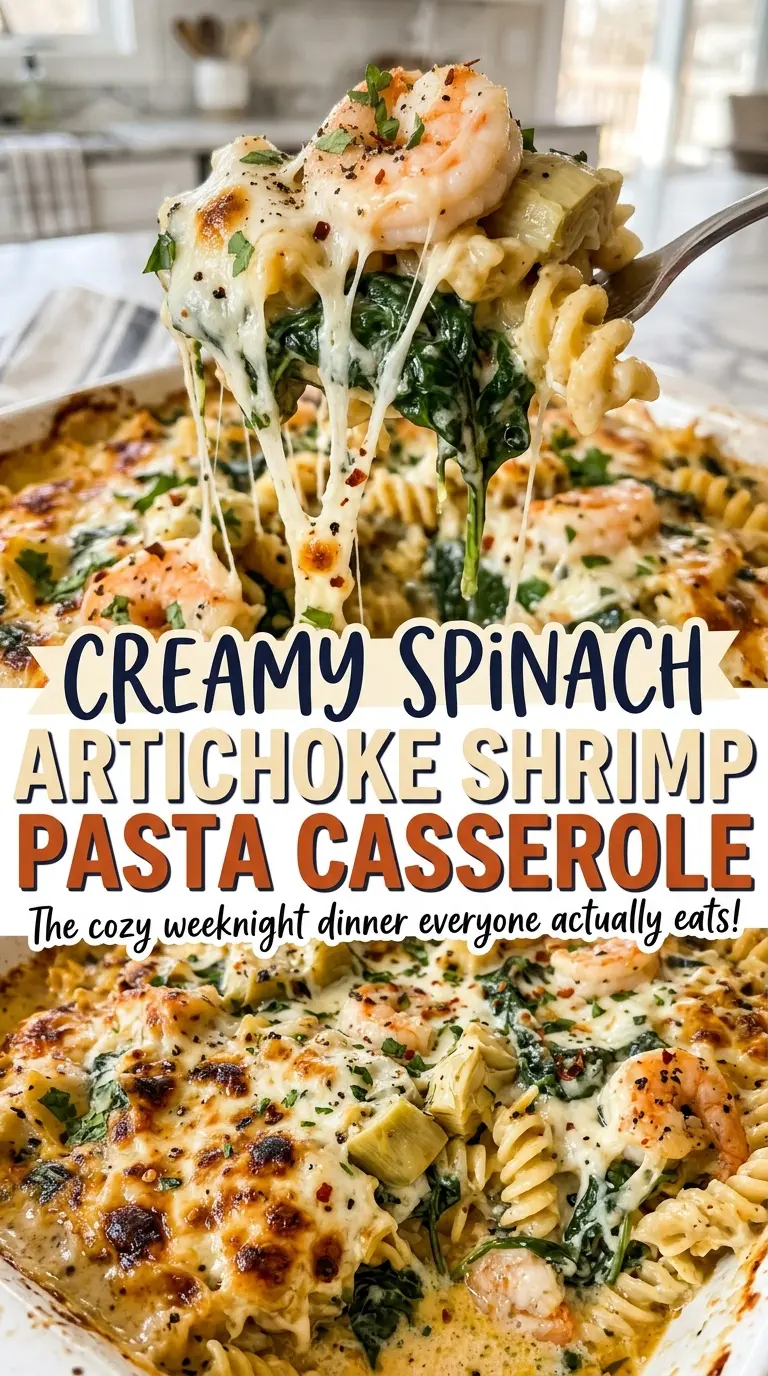
- Large raw shrimp — Peeled and deveined shrimp in the 21-to-25-per-pound range are large enough to stay distinct among the penne. Buy them plain rather than pre-seasoned, since the Parmesan and artichokes already season the casserole. Thaw frozen shrimp before adding them.
- Frozen chopped spinach — Frozen spinach is convenient here and folds evenly through the sauce. Thaw it first, then squeeze out as much liquid as you can; leftover water thins the creamy base. Fresh spinach doesn’t behave like a direct one-for-one swap unless it’s cooked down and drained first.
- Artichoke hearts — Canned hearts are easy to drain and chop into pieces that spread through the pasta. Plain canned artichokes keep the sauce’s seasoning balanced. Marinated hearts bring oil, herbs, and extra salt, so they’ll give the casserole a noticeably different, more assertive taste.
- Cream cheese, sour cream, and Parmesan — Together, these give the sauce its creamy body and familiar tang. Finely grated Parmesan melts more evenly than coarse shreds; a wedge grated at home is a good choice, though a packaged finely grated Parmesan works too. Let the cream cheese soften so it blends smoothly.
- Low-moisture mozzarella — This is the right style for a stretchy, browned top without adding much extra liquid. Fresh mozzarella holds more moisture and can make the surface wetter, so stick with shredded low-moisture mozzarella for the closest result.
Building the Sauce and Baking Until the Shrimp Are Just Done
Stop the Penne Before It’s Fully Tender
Heat the oven to 375°F and grease a 9×13-inch baking dish. Bring the water and kosher salt to a boil in a 6-quart pot, then cook the penne until it’s two minutes short of the package directions for al dente. Drain it and return it to the pot. Don’t rinse it; the warm pasta is ready to catch the sauce.
Whisk a Smooth, Spoon-Coating Sauce
While the pasta cooks, melt the butter in a 3-quart saucepan over medium heat and cook the minced garlic for 30 seconds. Whisk in the flour and cook for 1 minute, then gradually whisk in the milk. Bring the sauce to a gentle simmer and cook for 3 to 5 minutes, whisking often, until it coats a spoon; a hard boil can make it harder to control. Take the pan off the heat before whisking in the softened cream cheese, then stir in the sour cream, Parmesan, salt, and black pepper.
Cover First, Then Let the Mozzarella Bubble
Pour the sauce over the pasta and stir in the spinach, chopped artichokes, and shrimp until everything is evenly distributed. Transfer the mixture to the prepared dish, spread it into an even layer, and scatter the mozzarella across the top. Cover with foil and bake for 15 minutes, then uncover and bake for 8 to 12 minutes more. Look for bubbling around the edges and opaque shrimp in the center that reach 145°F; if the middle shrimp still look translucent, give the dish more time. Rest the casserole for 5 to 10 minutes before serving so the sauce can settle.
Two Swaps for a Different Spin on the Casserole
Make It Gluten-Free with Penne and a Roux Swap
Use gluten-free penne and replace the all-purpose flour with the same amount of a gluten-free measure-for-measure flour blend. Cook the pasta by its package timing, stopping two minutes early as usual. The sauce may feel a little less silky, but the casserole keeps its creamy spinach-artichoke character.
Give the Top a Provolone Edge
Replace half of the shredded mozzarella with shredded low-moisture provolone. It melts well alongside the mozzarella and adds a sharper, more savory note without changing the creamy filling. Keep the total amount of shredded cheese the same.
Storage and Reheating
- Refrigerator: Store covered leftovers for 3 to 4 days. The penne will continue to absorb sauce, so the chilled casserole will be firmer.
- Freezer: Freeze cooled portions in airtight containers for up to 2 months. Thaw them in the refrigerator; the creamy sauce may separate slightly and the pasta will be softer after freezing.
- Reheating: Reheat portions covered in a 350°F oven until the center reaches 165°F. Keep the dish covered so the pasta doesn’t dry out, and avoid reheating shrimp longer than needed.
Questions That Come Up Before This Shrimp Pasta Goes in the Oven
Creamy Spinach Artichoke Shrimp Pasta Casserole
Ingredients
Equipment
Method
- Heat the oven to 375°F.
- Grease a 9x13-inch baking dish.
- Bring the water and kosher salt to a boil in a 6-quart pot.
- Add the penne and cook until 2 minutes shy of the package directions for al dente.
- Drain the pasta and return it to the pot.
- While the pasta cooks, melt the butter in a 3-quart saucepan over medium heat.
- Add the garlic and cook for 30 seconds.
- Whisk in the flour and cook for 1 minute.
- Gradually whisk in the milk, bring to a gentle simmer, and cook for 3 to 5 minutes, whisking often, until thickened enough to coat a spoon.
- Remove the pan from the heat and whisk in the cream cheese until smooth.
- Stir in the sour cream, Parmesan, 1/2 teaspoon kosher salt, and black pepper.
- Pour the sauce over the pasta, add the spinach, artichoke hearts, and shrimp, and stir until evenly combined.
- Transfer the mixture to the prepared baking dish and spread it evenly.
- Sprinkle the mozzarella over the top.
- Cover the dish with foil and bake for 15 minutes.
- Uncover and bake for 8 to 12 minutes, until bubbling and the shrimp in the center are opaque and reach 145°F.
- Let the casserole rest for 5 to 10 minutes before serving.