
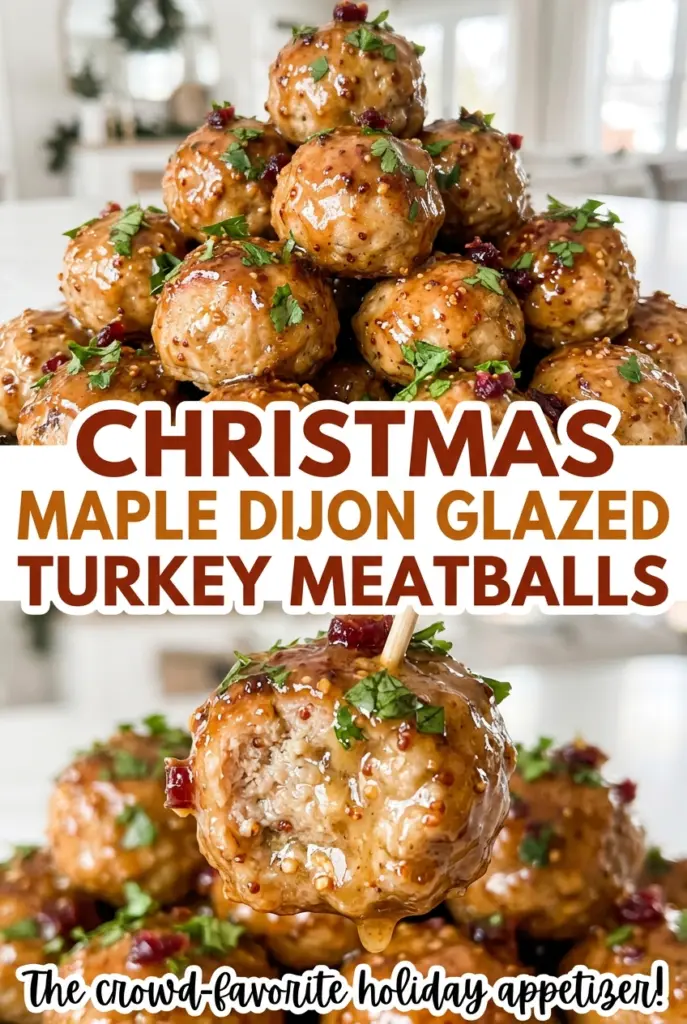
Christmas Maple Dijon Glazed Turkey Meatballs
The maple glaze starts bubbling almost as soon as it hits the warm meatballs, and the Dijon keeps that sweetness from taking over. I make these Christmas Maple Dijon Glazed…

By Ava
•
•
Reading time: 9 min
Tip: save now, make later.
The maple glaze starts bubbling almost as soon as it hits the warm meatballs, and the Dijon keeps that sweetness from taking over. I make these Christmas Maple Dijon Glazed Turkey Meatballs when I want a holiday-ready bite that still comes together with everyday ingredients. The first bake gives the turkey time to cook through before the glaze goes on, so the maple doesn’t spend the whole time in the oven.
For tender turkey meatballs, I let the panko soak in milk before adding the rest of the mixture. That little pause gives the breadcrumbs time to soften, rather than pulling moisture from the turkey as it bakes. Then I mix gently and save the glaze for the final few minutes, when it can turn glossy and cling to each meatball. You get a savory, lightly tangy center wrapped in a shiny maple-Dijon coating.
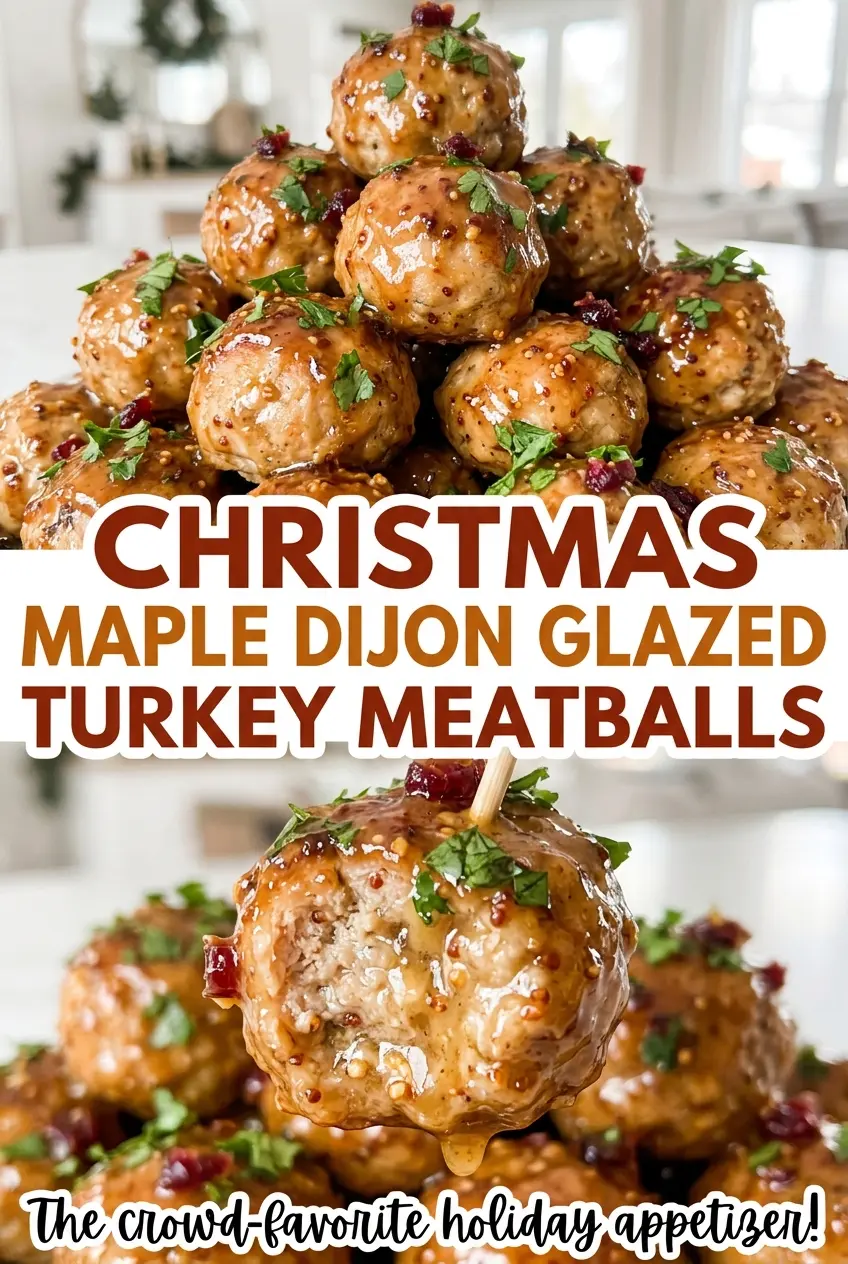
Kitchen Note
Let the panko and milk stand for the full 5 minutes before mixing in the turkey. The breadcrumbs should look softened and damp, not like dry crumbs; that quick soak helps keep these lean meatballs tender.
Save these Christmas Maple Dijon Glazed Turkey Meatballs for a holiday spread: tender turkey centers with a glossy, sweet-tangy finish.
Why the Glaze Goes on After the Turkey Is Cooked
Maple syrup can go from glossy to overly dark if it spends too long in a hot oven. These meatballs get their first bake without any glaze, which lets the turkey cook through while the sweet coating stays safely off the pan. The glaze simmers separately on the stovetop, where you can stir it and watch it thicken.
Only after the meatballs are cooked do I toss them with the maple-Dijon mixture and return them to the oven for a short finish. That timing gives the glaze a chance to cling and shine without asking it to withstand the full baking time. It also means the mustard and cider vinegar stay noticeable alongside the maple instead of disappearing into a long, sticky bake. Keep the final bake brief: the goal is a glossy coating, not a dark, hard shell.
What Panko, Pure Maple, and Dijon Each Bring
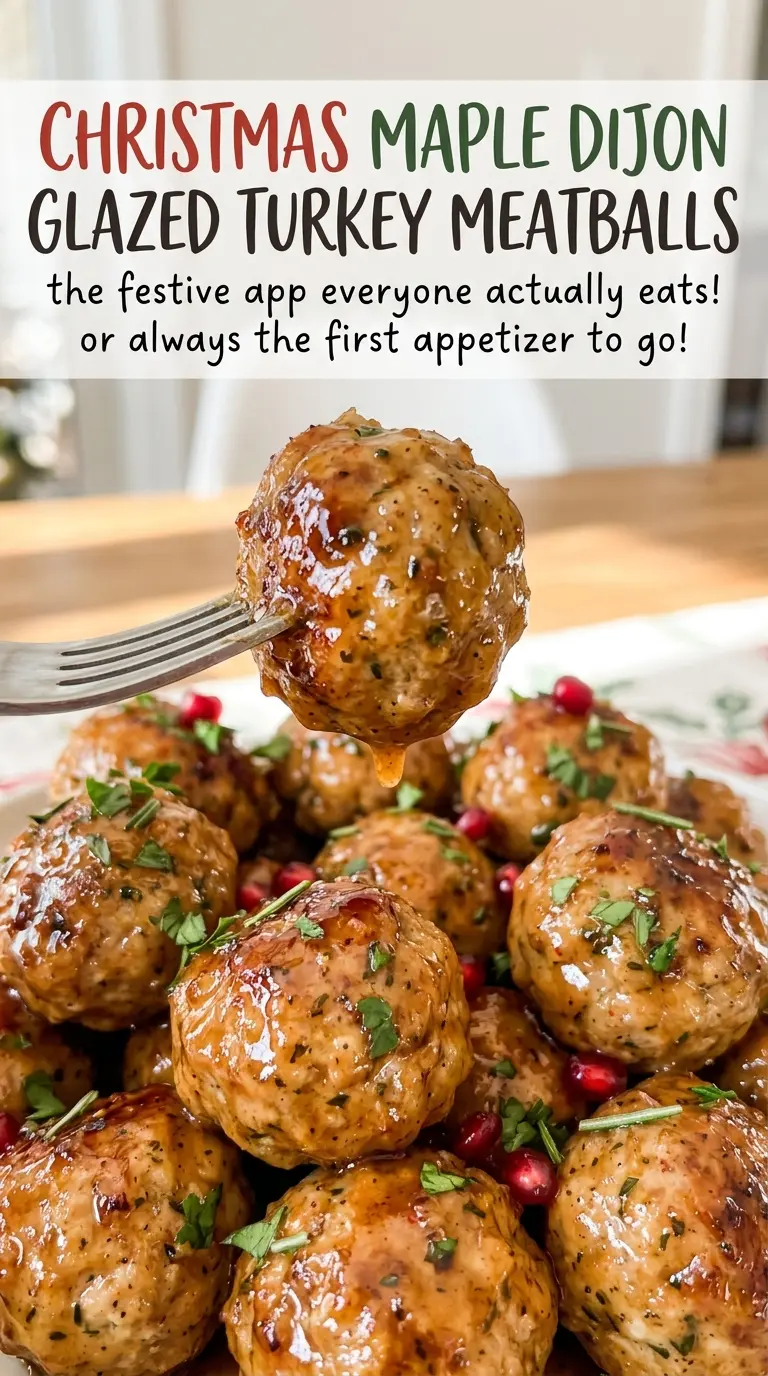
- Panko breadcrumbs — Their light, coarse texture makes a softer binder than fine, tightly packed crumbs. Choose plain panko; seasoned crumbs can bring extra salt and herbs that compete with the maple-Dijon glaze. Regular plain breadcrumbs work in a pinch, though the finished centers will be a little denser.
- Ground turkey — Turkey keeps the meatballs mild enough for the glaze to stand out. Use fresh ground turkey from a package you trust; there’s no need to pay extra for a particular brand. Handle it gently once it goes into the bowl, since compacting the mixture makes the meatballs firm.
- Pure maple syrup — This is the main sweetener and gives the glaze its distinct maple character. Pancake syrup is mostly a different style of sweetener and won’t give quite the same flavor, so pure maple syrup is worth choosing here.
- Dijon mustard and apple cider vinegar — Dijon brings a smooth mustard bite, while the vinegar cuts the syrup’s sweetness. A smooth Dijon works best for an even glaze; whole-grain mustard would leave a noticeably seedier coating.
- Milk, egg, onion, and garlic — Milk softens the panko, egg helps bind the mixture, and finely grated onion distributes its moisture and flavor through the turkey. Grate the onion finely so you don’t end up with large wet pieces in the meatballs; minced garlic blends in more evenly than a coarse chop.
- Unsalted butter — Butter rounds out the sharp edges of the mustard and vinegar and gives the glaze a smooth finish. Unsalted butter lets the added kosher salt season the meatballs without introducing extra salt through the glaze.
From a Soft Panade to Glossy Maple-Dijon Coating
Soften the Panko Before Mixing
Heat the oven to 400°F and line a rimmed baking sheet with parchment paper. In a large bowl, stir the panko and milk together, then leave the mixture for 5 minutes. It should look moistened rather than dusty when you add the other ingredients. Skipping the rest leaves dry breadcrumbs that can make the turkey mixture harder to combine evenly.
Mix Gently and Shape 24 Meatballs
Add the egg, finely grated onion, minced garlic, kosher salt, and black pepper to the softened panko, then add the ground turkey. Mix just until everything is combined; stop as soon as you no longer see separate streaks of ingredients. Shape the mixture into 24 meatballs and arrange them on the prepared sheet. If you keep squeezing or reworking the mixture, the meatballs can bake up compact instead of tender.
Bake the Meatballs and Simmer the Glaze
Bake the meatballs for 15–20 minutes, until the centers reach 165°F. While they bake, combine the maple syrup, Dijon mustard, apple cider vinegar, and butter in a small saucepan over medium heat. Stir as the mixture simmers for 2–3 minutes; it should look smooth and slightly thickened. Keep it at a simmer rather than letting it boil hard, which can darken the syrup before the meatballs are ready.
Toss, Coat, and Give the Glaze a Brief Finish
Transfer the cooked meatballs to a bowl and toss them with the glaze until coated. Return them to the parchment-lined baking sheet and bake for 3–5 minutes. Look for a glossy surface with glaze clinging to the meatballs rather than pooling in a thin layer underneath. Take them out once they look lacquered; a longer second bake can make the coating too dark.
Easy Swaps for Different Tables
Make the Meatballs Gluten-Free
Replace the panko with plain gluten-free panko, using the same amount. It keeps the same light breadcrumb texture, though a very fine gluten-free crumb may make the centers a little more compact.
Make a Dairy-Free Batch
Use unsweetened oat milk in place of the milk and plant-based butter in place of the unsalted butter, keeping each swap equal in amount. The glaze may be a touch less rich, but it will still coat the meatballs smoothly.
Use Ground Chicken Instead
Ground chicken can stand in for the ground turkey without changing the glaze or shaping method. Its mild taste works well with maple and Dijon; check the centers for doneness rather than relying on color alone.
Storage and Reheating
- Refrigerator: Keep leftover meatballs in an airtight container for 3–4 days. The glaze will thicken as it chills.
- Freezer: Freeze cooled meatballs in a single layer until firm, then transfer them to a freezer-safe airtight container. For best quality, use within 2–3 months; thaw overnight in the refrigerator.
- Reheating: Warm them gently in a covered baking dish in a 325°F oven until hot throughout, or heat in short intervals in the microwave. Avoid high heat for too long, which can dry out the turkey and make the maple coating sticky.
Questions I Get Asked About These Turkey Meatballs
Christmas Maple Dijon Glazed Turkey Meatballs
Ingredients
Equipment
Method
- Heat the oven to 400°F.
- Line a rimmed baking sheet with parchment paper.
- In a large bowl, stir the panko breadcrumbs and milk together, then let stand for 5 minutes.
- Add the egg, finely grated yellow onion, minced garlic, kosher salt, and black pepper.
- Add the ground turkey and mix gently until just combined.
- Shape the mixture into 24 meatballs and place them on the prepared baking sheet.
- Bake for 15–20 minutes, until the centers reach 165°F.
- While the meatballs bake, combine the maple syrup, Dijon mustard, apple cider vinegar, and butter in a small saucepan over medium heat.
- Simmer for 2–3 minutes, stirring, until smooth and slightly thickened.
- Transfer the cooked meatballs to a bowl, add the glaze, and toss to coat.
- Return the glazed meatballs to the baking sheet and bake for 3–5 minutes, until the glaze is glossy and clings to the meatballs.