
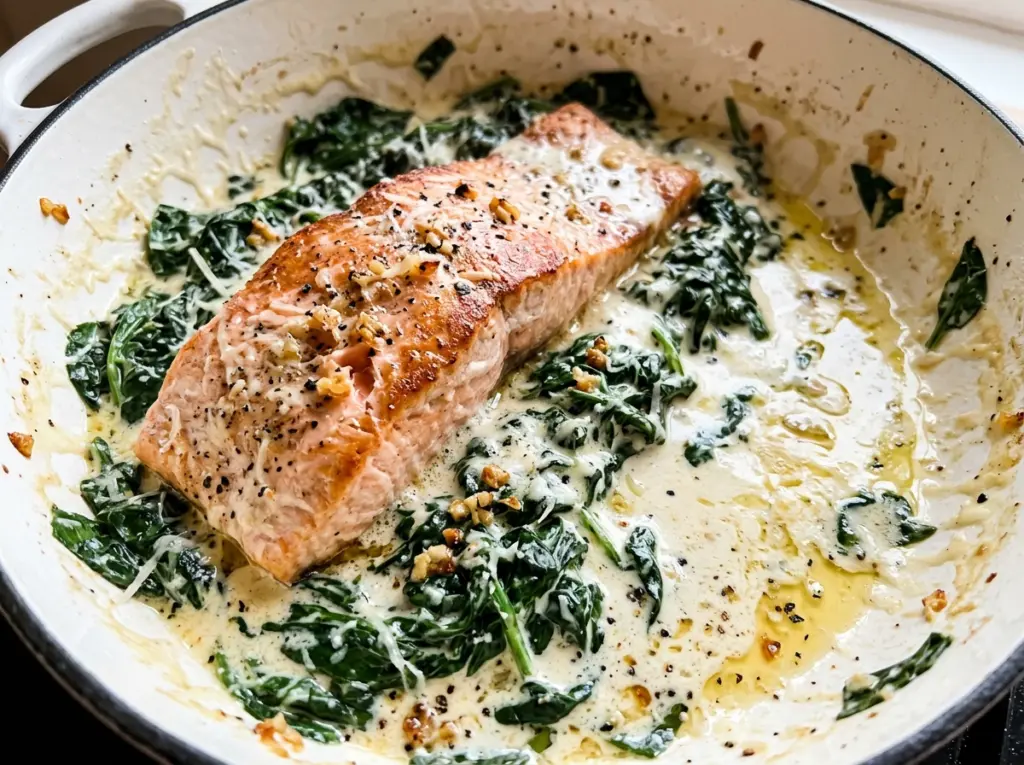
Creamy Salmon Florentine
The skillet changes character fast: first there’s the clean, savory smell of salmon searing, then butter and garlic take over as the sauce comes together. Creamy Salmon Florentine gives each…

By Ava
•
•
Reading time: 8 min
Tip: save now, make later.
The skillet changes character fast: first there’s the clean, savory smell of salmon searing, then butter and garlic take over as the sauce comes together. Creamy Salmon Florentine gives each fillet a rich spinach sauce instead of leaving the greens on the side. Baby spinach wilts right into the cream, Parmesan adds a salty, savory finish, and a little lemon juice keeps the sauce from tasting too heavy.
I sear the salmon first, then set it aside while the sauce is made in the same skillet. It goes back in for a gentle finish, so the fish cooks through as the sauce gathers around it. Spoon that creamy spinach over the top, and each bite has tender salmon with a bright, silky sauce.
Kitchen Note
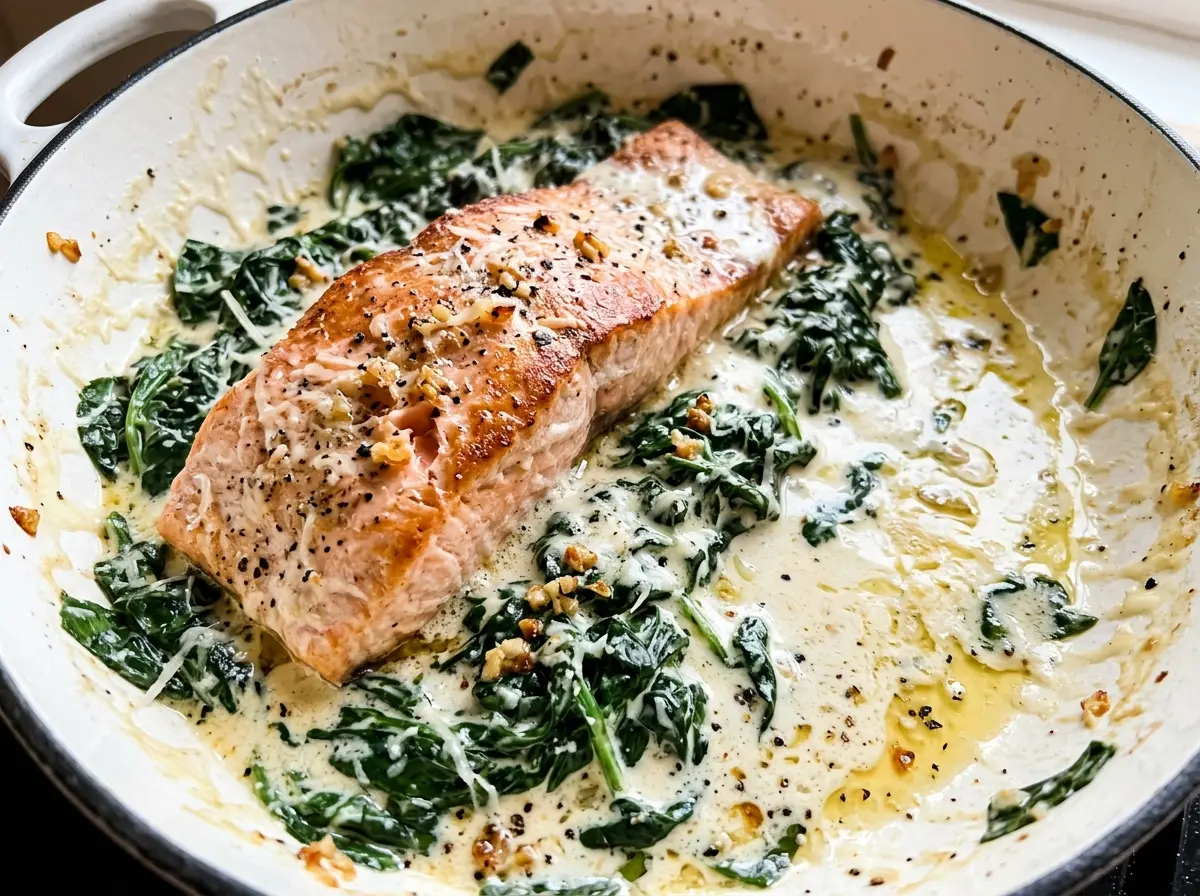
When the salmon goes back into the skillet, pour in every drop of juice that collected on the plate. It blends into the sauce and brings the salmon’s savory flavor along with it.
Save Creamy Salmon Florentine for a dinner that pairs tender salmon with a silky Parmesan spinach sauce.
Why This Salmon Sauce Starts With a One-Minute Flour Base
A creamy skillet sauce needs more than cream to cling to salmon. Here, flour cooks briefly in the melted butter before the broth and cream go in. That short cook gives the flour a chance to lose its raw taste and helps it thicken the liquid into a sauce instead of leaving it thin and runny.
The way the liquids meet the flour matters, too. Whisk them in gradually, rather than pouring them all into the skillet at once, and the flour blends more evenly. The sauce should look smooth before it simmers; then a few minutes of gentle cooking gives it time to thicken. A hard boil isn’t an upgrade here. Keeping the heat controlled protects the creamy texture and leaves a sauce that coats the spinach and salmon instead of pooling at the bottom of the plate.
The Ingredients That Give the Spinach Sauce Its Body

- Salmon — Fillets about an inch thick cook at a steadier pace than thin pieces, which matters when they finish in the sauce. Skinless fillets make this skillet method straightforward. You don’t need an expensive variety; look for evenly thick pieces with a fresh smell.
- Baby spinach — Its tender leaves wilt quickly into the sauce without needing a separate pan. Regular spinach works as a substitute; chop any large leaves so they soften evenly. Prewashed baby spinach saves a little prep time.
- Heavy cream and butter — Together they make the sauce rich and smooth. Choose heavy cream rather than a reduced-fat pourable dairy product for the fullest texture. Standard grocery-store butter works well here; there’s no need for a specialty brand.
- Low-sodium chicken broth — It loosens the cream and adds savory depth without making the sauce overly salty. Low-sodium vegetable broth is a direct swap if you’d rather not use chicken broth; the finished sauce will taste a little less savory.
- Parmesan and lemon — Finely grated Parmesan melts more evenly than large shreds, so the sauce stays cohesive. A block grated just before cooking gives the smoothest result, though packaged finely grated Parmesan works. Lemon juice stirred in at the finish brings a clean, tart contrast to the cream.
- Garlic, flour, and olive oil — Freshly minced garlic gives the butter a clear savory aroma, while the flour helps the sauce cling to the fish. The olive oil is there for searing, so a basic olive oil is a good choice.
The Skillet Sequence That Keeps the Salmon Tender
Sear the Fillets Before Building the Sauce
Pat the salmon dry, season both sides, and heat the olive oil in a 12-inch skillet over medium-high heat. Lay the fillets in the pan and leave them undisturbed for 4 minutes on the first side; then turn and sear for 2 minutes on the second. If the fish sticks when you try to turn it, give it a little more time rather than tearing at it. Transfer the fillets to a plate while you make the sauce.
Cook the Garlic and Flour in Butter
Lower the heat to medium and melt the butter in the skillet. Stir in the minced garlic and cook for 30 seconds, just until fragrant. Mix in the flour and cook for 1 minute, stirring so it coats the butter and garlic instead of clumping in one spot. Keep the heat at medium; browned garlic can make the sauce taste bitter.
Whisk in the Cream, Then Wilt the Spinach
Gradually whisk in the chicken broth and heavy cream until the mixture is smooth. Bring it to a gentle simmer and stir for 2 to 3 minutes, until it thickens slightly; a rolling boil can make a cream sauce less smooth. Stir in the baby spinach and cook for 1 to 2 minutes, until the leaves have wilted into the sauce. Finish by stirring in the Parmesan and lemon juice.
Finish the Salmon Gently in the Sauce
Return the salmon to the skillet along with the juices on the plate. Let the sauce simmer gently for 2 to 4 minutes, spooning it over the fillets as they finish. Check the thickest part of each piece with an instant-read thermometer; it should reach 145°F. If the sauce is bubbling hard, lower the heat so the fish finishes gently instead of breaking apart.
Three Easy Changes for Creamy Salmon Florentine
Make the sauce gluten-free
Replace the all-purpose flour with the same amount of a gluten-free 1:1 flour blend made for baking. Avoid almond or coconut flour, which won’t thicken the sauce in the same way. The sauce may have a slightly different texture, but the rest of the skillet method stays the same.
Use half-and-half for a lighter sauce
Swap the heavy cream for an equal amount of half-and-half. The sauce will be less rich and a little thinner, so keep it at a gentle simmer rather than letting it boil. The flour still provides body, and the spinach and Parmesan stay in the mix.
Trade Parmesan for Pecorino
Use finely grated Pecorino in place of the Parmesan for a sharper, saltier finish. It melts into the sauce in the same way, but its stronger taste comes through more clearly, so expect the spinach sauce to taste bolder.
Storage and Reheating
- Refrigerator: Refrigerate leftovers in an airtight container within 2 hours and eat within 3 to 4 days. The spinach softens and the salmon firms up as it chills.
- Freezer: Freezing isn’t recommended. The cream sauce can separate as it thaws, and the spinach tends to turn watery.
- Reheating: Warm leftovers gently in a skillet over low heat, turning the salmon once and stirring the sauce carefully. Avoid high heat; it can dry out the fish and make the sauce separate.
Questions That Come Up With Creamy Salmon Florentine
Creamy Salmon Florentine
Ingredients
Equipment
Method
- Pat the salmon dry and season both sides with the kosher salt and black pepper.
- Heat the olive oil in a 12-inch skillet over medium-high heat.
- Sear the salmon for 4 minutes on the first side.
- Sear for 2 minutes on the second side, then transfer the salmon to a plate.
- Reduce the heat to medium and melt the butter in the skillet.
- Add the garlic and cook for 30 seconds.
- Stir in the flour and cook for 1 minute.
- Gradually whisk in the chicken broth and heavy cream until smooth.
- Bring the sauce to a gentle simmer and cook for 2 to 3 minutes, stirring, until slightly thickened.
- Stir in the spinach and cook for 1 to 2 minutes, until wilted.
- Stir in the Parmesan cheese and lemon juice.
- Return the salmon and any accumulated juices to the skillet.
- Simmer gently for 2 to 4 minutes, until the thickest part of each fillet reaches 145°F.