
Creamy Roasted Tomato Soup With Garlic And Basil Recipe
As the tomato halves roast, their cut sides soften and pick up a little color around the edges, while the garlic turns tender enough to mash with a spoon. That…

By Ava
•
•
Reading time: 8 min
Tip: save now, make later.
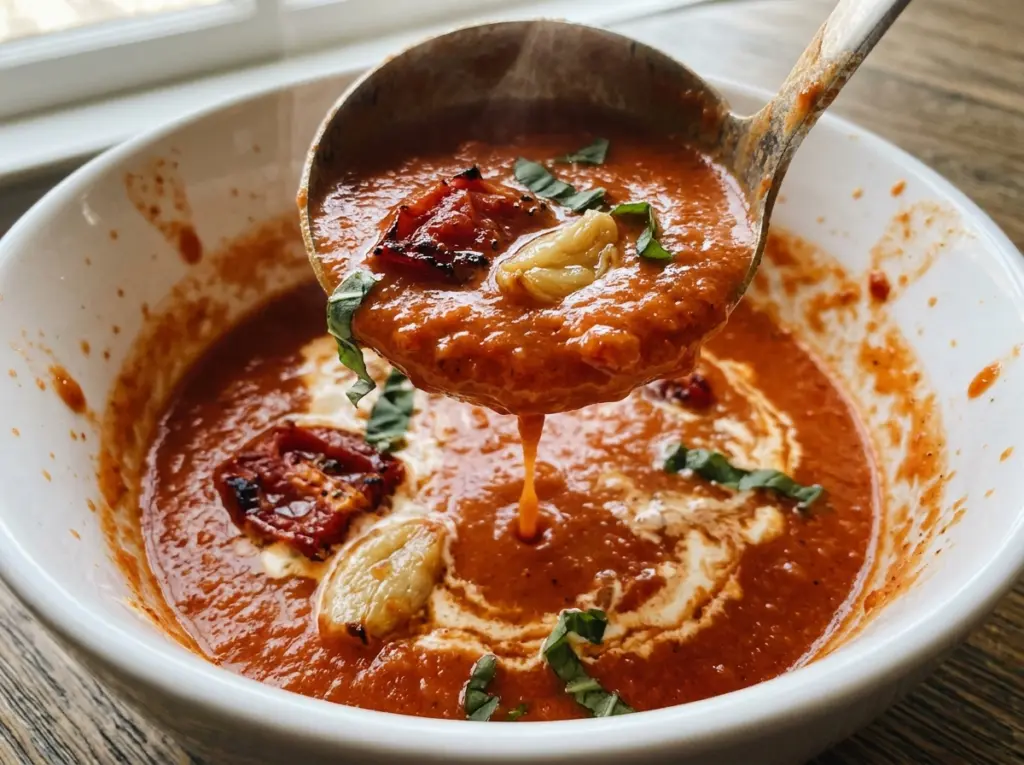
As the tomato halves roast, their cut sides soften and pick up a little color around the edges, while the garlic turns tender enough to mash with a spoon. That tray of vegetables becomes the backbone of this creamy roasted tomato soup with garlic and basil, so the soup tastes rounded and full without a long stovetop simmer.
I like that the tomatoes, onion, and garlic all roast together before they meet the broth. Blending the vegetables smooth first, then stirring in the cream and basil at the end, keeps the soup silky and lets the basil stay bright rather than cooking away into the background. Each bowl is tomato-forward, with gentle garlic and a fresh finish.
Kitchen Note
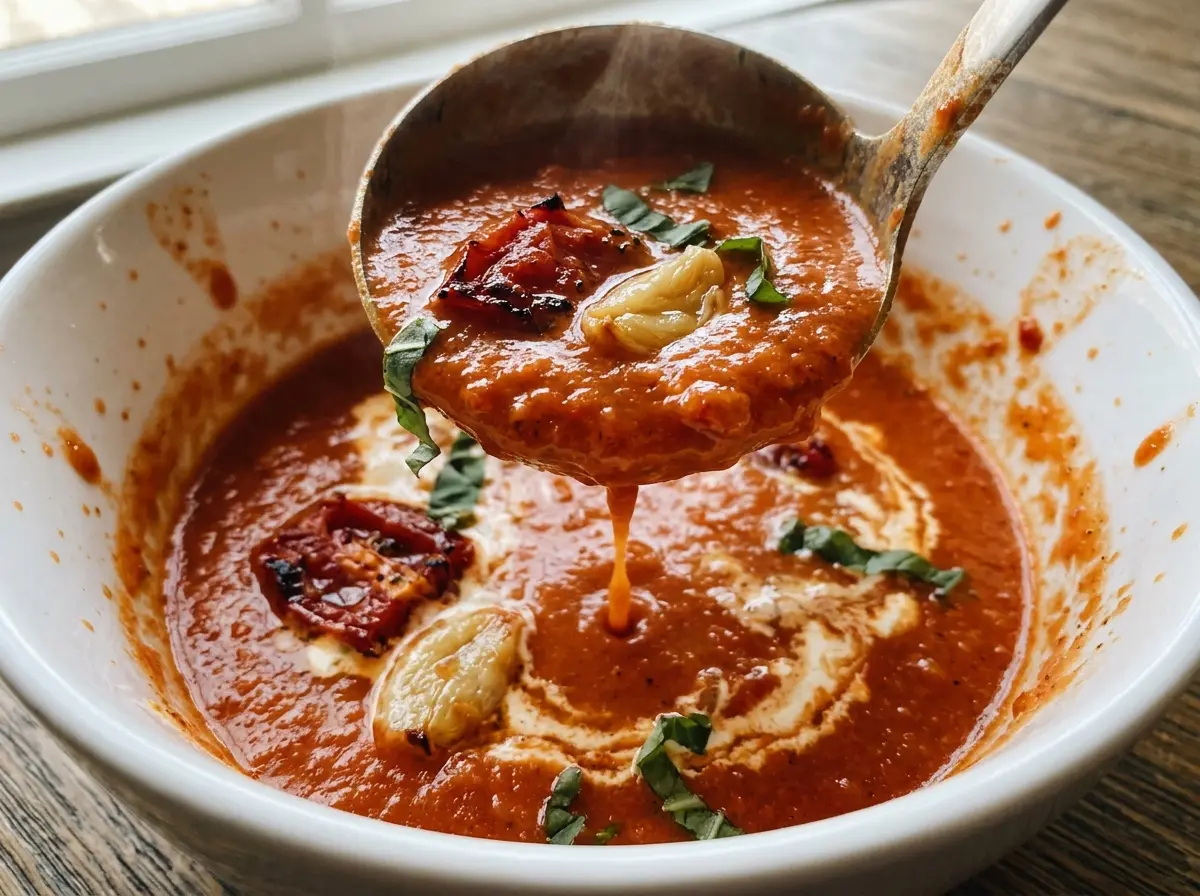
Pour every bit of the roasting-pan juices into the saucepan with the vegetables. Those juices carry the browned tomato and onion flavor, and leaving them behind makes the finished soup less rounded.
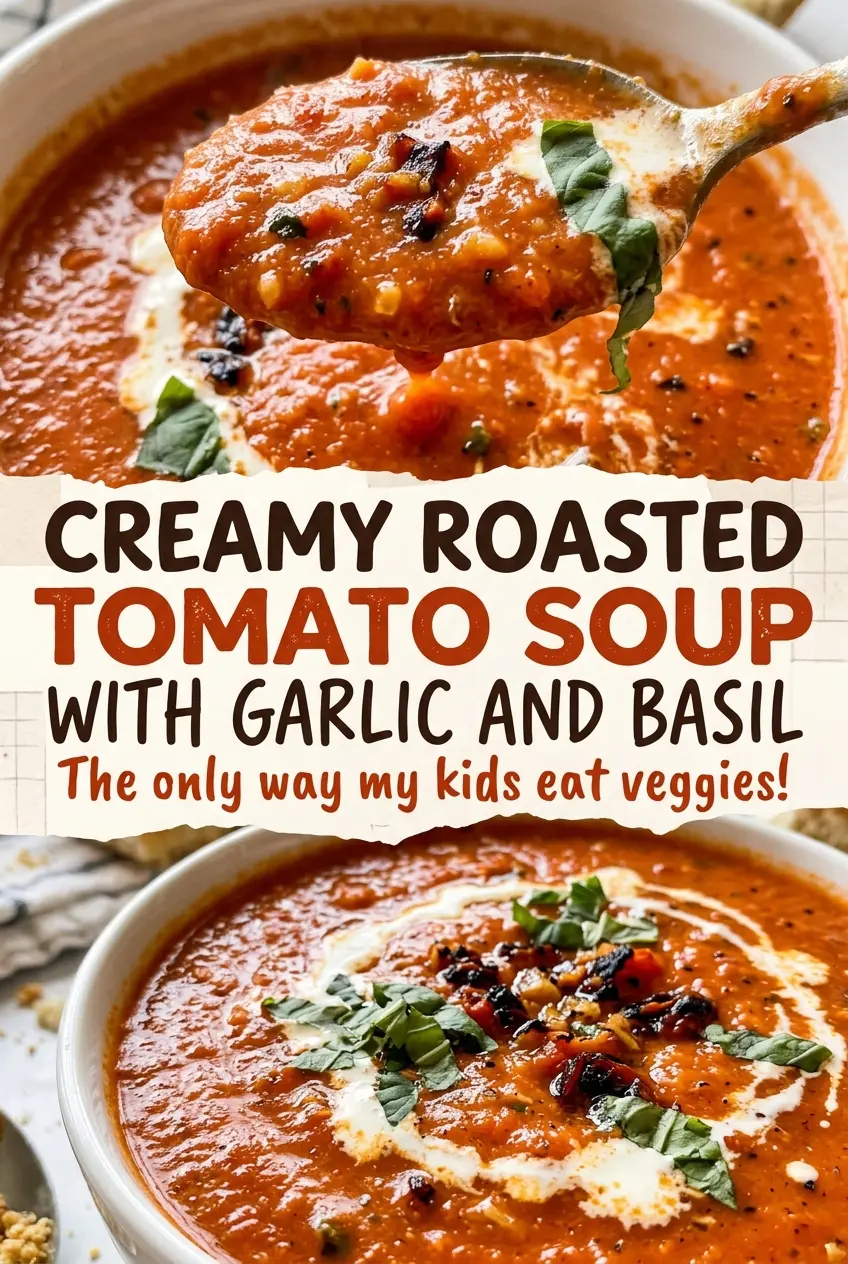
Save this creamy roasted tomato soup with garlic and basil for a cozy bowl with deep roasted tomato flavor and a fresh basil finish.
Why These Tomatoes Roast Before They Meet the Broth
Tomatoes release plenty of moisture as they cook. If they go straight into a pot of broth, their flavor stays softer and more diluted; roasting first lets some of that moisture evaporate and gives the cut edges a chance to brown. That small amount of browning adds depth without needing a long list of seasonings.
Arrange the halves cut-side up on the baking sheet so the exposed surfaces roast rather than sit in their own juices. The tomatoes should be very soft by the end, with some light browning at the edges. Don’t judge the tray by whether every tomato looks deeply caramelized; the goal is tender fruit and a few browned spots, not charred skins. Once blended with broth, those soft roasted tomatoes make a smooth soup with enough body to carry the cream.
The onion and garlic roast alongside the tomatoes, which means they soften and mellow before blending. The garlic shouldn’t be hard or raw-tasting in the finished soup. Together, the roasted vegetables give the broth a richer base, while the short simmer afterward brings everything together before the soup is blended.
What the Tomatoes, Cream, and Basil Each Bring
- Ripe tomatoes — They supply the soup’s main flavor and soften enough to blend smooth after roasting. Choose ripe tomatoes that give slightly when pressed; firm, underripe ones tend to taste less rounded. Canned tomatoes aren’t a direct stand-in here because the roasting stage depends on whole fresh halves.
- Yellow onion and garlic — The onion adds a mellow savory base, and roasting takes the raw edge off the garlic. Fresh, firm garlic cloves are worth using because they roast alongside the vegetables and become part of the soup’s smooth texture. Keep the onion in substantial wedges so it softens over the same roasting window as the tomatoes.
- Low-sodium vegetable broth — It loosens the blended vegetables into soup without overwhelming the roasted tomato flavor. A standard grocery-store broth works well; choosing low-sodium gives you more control over the seasoning already added to the tray.
- Heavy cream — Cream softens the tomatoes’ acidity and gives the soup its plush finish. It contributes more richness than a thinner dairy option, so I don’t treat it as interchangeable with broth.
- Fresh basil — Chopped fresh leaves bring a green, fragrant finish that dried basil can’t quite reproduce here. Stir it in after blending, close to the end, so its aroma remains noticeable in the bowl.
- Olive oil — A drizzle helps the vegetables roast and keeps their surfaces from drying out. A basic everyday olive oil is fine; there’s no need to use a special finishing oil for the baking sheet.
Roast, Simmer, Then Blend for a Silky Finish
Arrange the vegetables for even roasting
Heat the oven to 425°F. Set the tomato halves cut-side up on an 18×13-inch rimmed baking sheet, with the onion wedges and peeled garlic cloves arranged around them. Drizzle with olive oil, then season with kosher salt and black pepper. Give the vegetables room across the pan; crowded pieces release moisture close together instead of developing the lightly browned edges you want.
Roast until the tomatoes are very soft
Roast for 35 to 45 minutes. Look for tomatoes that have collapsed and softened, with light browning around their edges, and garlic that feels tender rather than firm. The exact point in that range depends on the tomatoes, so use their texture as your cue instead of expecting every tray to look identical. If the tomatoes are still holding their shape firmly, they need more time in the oven.
Simmer the roasted vegetables with broth
Transfer the roasted vegetables and all the pan juices to a 5-quart saucepan, then add the low-sodium vegetable broth. Bring the mixture to a simmer over medium heat and let it simmer for 10 minutes. Keep it at a steady simmer rather than a hard boil; this gives the broth time to mingle with the roasted vegetables without splashing around the pot.
Blend smooth before adding cream and basil
Take the saucepan off the heat and use an immersion blender to blend the soup until smooth. Move the blender through the pot slowly so no large pieces of onion or tomato are left behind. Stir in the heavy cream and chopped fresh basil, then warm the soup over low heat for 2 to 3 minutes, until hot but not boiling. A gentle warm-through keeps the cream from reaching a boil and leaves the basil’s fresh aroma intact.
Two Simple Ways to Change the Finish
Dairy-free, without the cream
Leave out the heavy cream for a dairy-free version. The blended soup will be lighter and more tomato-forward, with less of the rounded, velvety finish that cream brings; keep the basil for its fresh contrast.
A basil-free, tomato-first bowl
Skip the fresh basil if you want the roasted tomato, onion, and garlic to stand out without a herbal finish. The soup will still be creamy and smooth, but its last impression will be more savory and less bright.
Storage and Reheating
- Refrigerator: Store in a covered container for up to 4 days. The soup may thicken as it chills.
- Freezer: Freeze in airtight containers for up to 3 months. The cream may separate a little after thawing, but the soup can be stirred or blended smooth again as it warms.
- Reheating: Warm gently in a saucepan over low heat, stirring often, until the soup reaches 165°F. Don’t let it boil; high heat can make the cream look separated.
Questions That Come Up With Roasted Tomato Soup
Creamy Roasted Tomato Soup With Garlic And Basil Recipe
Ingredients
Equipment
Method
- Preheat the oven to 425°F.
- Arrange the tomatoes cut-side up, onion, and garlic on an 18x13-inch rimmed baking sheet.
- Drizzle with olive oil.
- Sprinkle with salt and pepper.
- Roast for 35–45 minutes, until the tomatoes are very soft and lightly browned at the edges and the garlic is tender.
- Transfer the roasted vegetables and all the pan juices to a 5-quart saucepan.
- Add the broth and bring to a simmer over medium heat.
- Simmer for 10 minutes.
- Remove the saucepan from the heat and blend the soup until smooth with an immersion blender.
- Stir in the heavy cream and basil.
- Warm over low heat for 2–3 minutes, until hot but not boiling.