
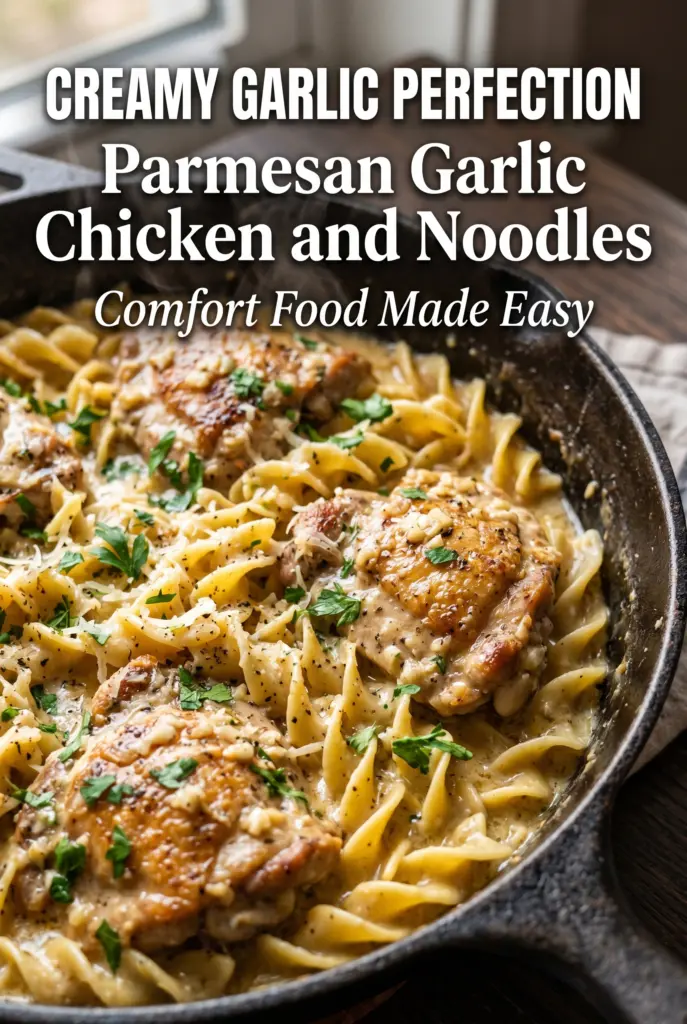
Parmesan Garlic Chicken and Noodles
Buttery noodles, tender chicken, and a Parmesan garlic sauce that clings to every strand make this the kind of dinner that disappears fast. The sauce is rich without feeling heavy,…

By Ava
•
•
Reading time: 9 min
Tip: save now, make later.
Buttery noodles, tender chicken, and a Parmesan garlic sauce that clings to every strand make this the kind of dinner that disappears fast. The sauce is rich without feeling heavy, and the whole dish lands in that sweet spot where it tastes like you worked harder than you did. It’s the kind of skillet meal that earns repeat requests because it gives you comfort-food payoff without a long ingredient list or a complicated sauce.
What makes this version work is the order of operations. The chicken gets a quick golden sear first, then the same pan picks up the garlic, broth, cream, and Parmesan so none of that flavor gets left behind. Freshly grated Parmesan matters here because pre-shredded cheese can turn the sauce grainy instead of smooth, and the pasta gets tossed in at the end so it soaks up the sauce instead of sitting under it.
Below you’ll find the little details that keep the sauce silky, plus a few smart ways to adapt it if you need to swap the noodles or stretch the dish for a bigger crowd.
The sauce coated the noodles beautifully and didn’t get gluey like some cream pastas do. I used fresh Parmesan like you suggested and the whole skillet was gone in one sitting.
Creamy Parmesan Garlic Chicken and Noodles with a silky sauce and golden chicken is the one to pin for an easy skillet dinner night.
The Reason the Sauce Stays Creamy Instead of Turning Grainy
Parmesan garlic sauces usually go wrong in one of two places: the heat is too high when the cream and cheese go in, or the cheese is added too fast. Both mistakes push the sauce toward a broken, sandy texture. The fix is simple, but it matters. Keep the pan at a gentle simmer, and let the Parmesan melt in gradually so it blends into the cream instead of clumping on contact.
The other detail that helps is keeping the chicken out of the skillet until the sauce has started to thicken. If you return it too early, the pan cools down and the sauce can turn loose and thin. If you wait until it’s just slightly thickened, the noodles will finish the job for you as they toss through the sauce and pull it into every bite.
What Each Ingredient Is Actually Doing in This Dish
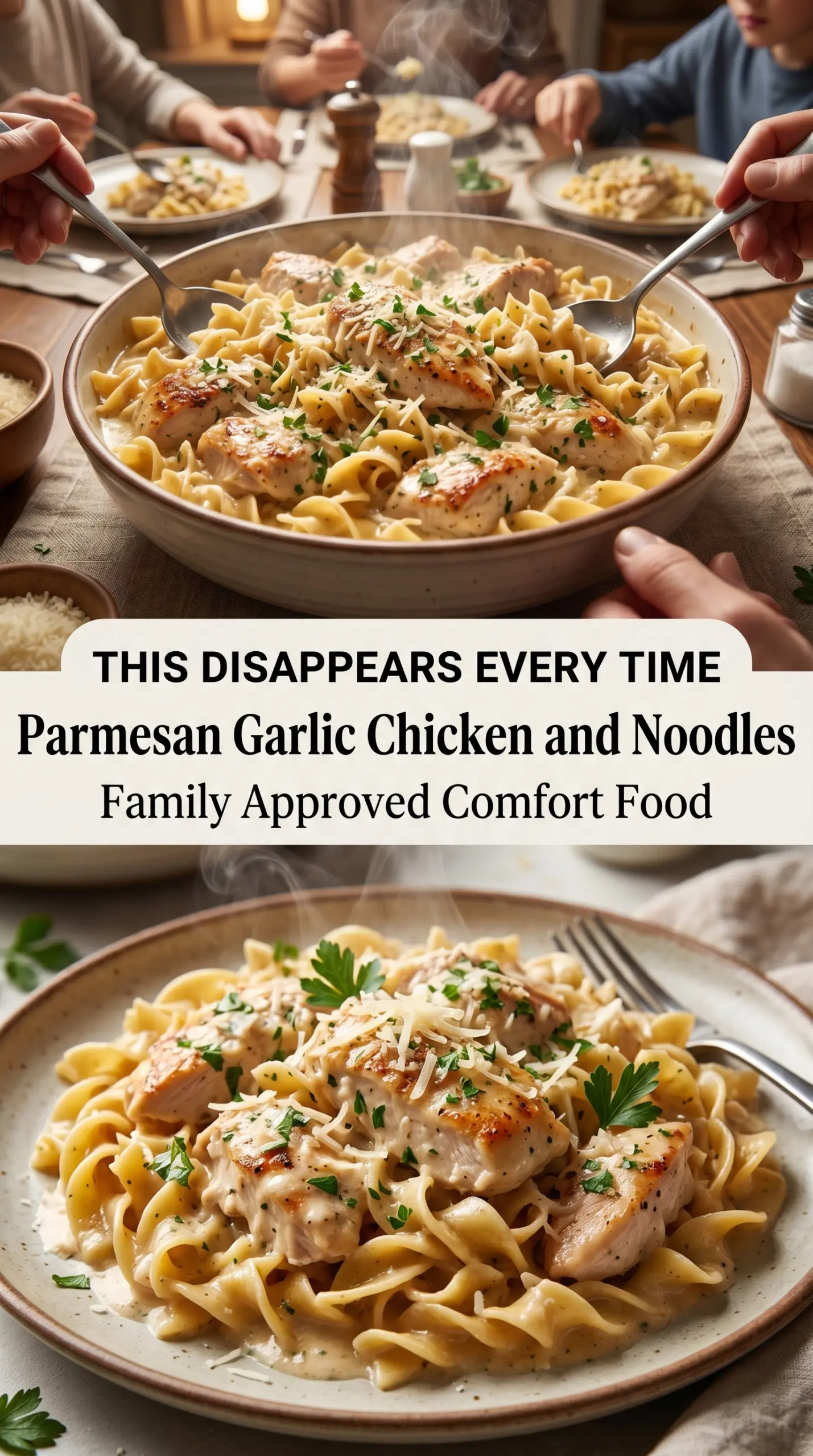
- Egg noodles — Their broad shape catches the sauce better than thin pasta. If you need a swap, fettuccine or rotini works, but you’ll lose some of that soft, cozy noodle texture that makes this dish feel so comforting.
- Chicken breasts — Cubing the chicken before cooking gives you more surface area for browning and keeps the pieces tender. Chicken thighs work if you want a richer result, and they’re more forgiving if you cook them a minute or two longer.
- Butter and garlic — These build the base of the sauce. The garlic only needs about 30 seconds; once it smells fragrant, move on. If it browns, it turns bitter and takes over the whole pan.
- Heavy cream — This gives the sauce body and helps it cling to the noodles. Half-and-half can work in a pinch, but the sauce will be looser and a little less luxurious.
- Freshly grated Parmesan — This is the ingredient that makes the sauce taste finished. Pre-grated cheese often contains starches that keep it from melting smoothly, so grate it yourself if you want that silky texture.
- Chicken broth — It thins the sauce just enough and brings savory depth. Use a low-sodium broth if you want more control over the salt level, since Parmesan already adds plenty.
How to Build the Skillet So Every Bite Gets Sauce
Searing the Chicken First
Heat the olive oil until it shimmers, then add the seasoned chicken in a single layer. Let it sit long enough to pick up color before stirring, because that browning adds more flavor than just cooking the pieces through. If your pan looks crowded, the chicken will steam instead of sear, and the sauce won’t have those flavorful browned bits at the bottom.
Making the Garlic Cream Base
Melt the butter in the same skillet and stir in the garlic just until it smells sweet and sharp at the same time. Pour in the broth and cream, then stir to lift up anything stuck to the pan. Once the Parmesan goes in, keep the heat low and let the sauce settle into a gentle simmer. A hard boil is what breaks cream sauces, so keep it calm.
Finishing with the Noodles
Add the cooked noodles and chicken back to the skillet only after the sauce has thickened slightly. Toss everything until the noodles look glossy and the sauce clings instead of pooling at the bottom. If it seems a little thick, splash in a spoonful or two of broth to loosen it. Finish with parsley and extra Parmesan while the sauce is still hot so the cheese melts right on top.
How to Adapt This for Different Needs
Make It Gluten-Free
Swap the egg noodles for your favorite gluten-free pasta and cook it just to al dente. Gluten-free noodles can soften fast once they hit the sauce, so it helps to undercook them by a minute and toss them in right before serving.
Use Chicken Thighs for a Richer Result
Boneless chicken thighs work well here and stay juicy even if you cook them a touch longer. They add a little more richness to the finished dish, which pairs nicely with the cream and Parmesan.
Lighten the Sauce a Little
You can replace part of the heavy cream with milk or half-and-half, but the sauce won’t be as thick or stable. If you go that route, keep the heat low and don’t rush the simmer, because thinner dairy breaks more easily.
Stretch It for a Bigger Family Dinner
Add an extra cup of broth and a bit more Parmesan if you want to serve more people. The sauce should still look a little loose when it comes together, because the noodles will absorb some of it as it sits.
Storage and Reheating
- Refrigerator: Store leftovers in an airtight container for up to 3 days. The noodles will absorb more sauce as they sit, so the dish gets thicker by the next day.
- Freezer: I don’t recommend freezing this one. Cream sauces can separate when thawed, and the noodles usually turn soft and mealy.
- Reheating: Warm it gently on the stove or in the microwave with a splash of broth or milk. High heat is the mistake that turns the sauce oily and tight, so heat it slowly and stir as it loosens.
The Things That Trip People Up With This Dish
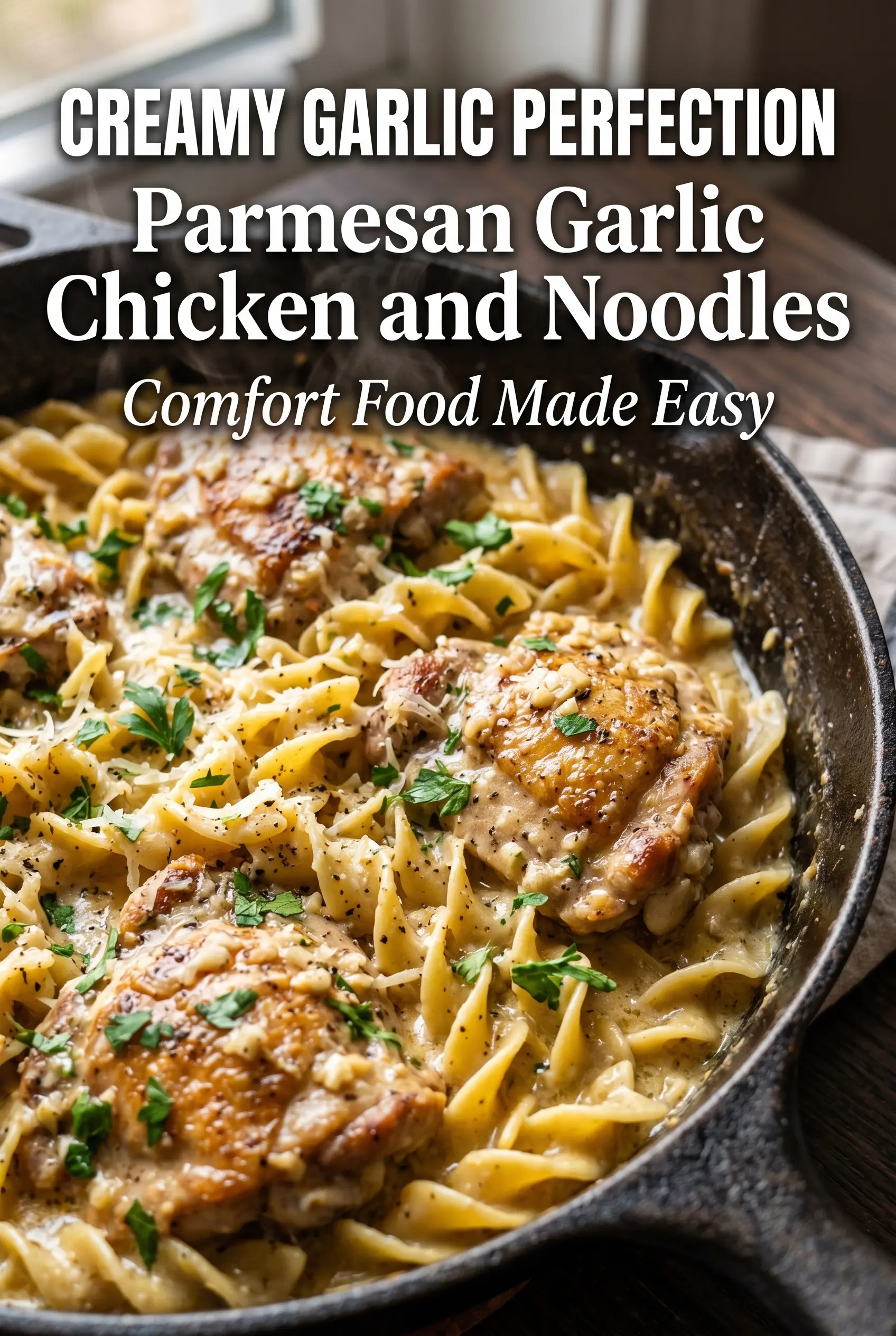
Parmesan Garlic Chicken and Noodles
Ingredients
Equipment
Method
- Cook egg noodles according to package directions, then drain and set aside.
- Season boneless skinless chicken breasts, cubed with salt, black pepper, and Italian seasoning.
- Heat olive oil in a large skillet over medium-high heat.
- Cook boneless skinless chicken breasts, cubed for 6–8 minutes until golden and fully cooked.
- Remove boneless skinless chicken breasts, cubed and set aside.
- In the same skillet, melt butter.
- Add garlic, minced and cook for 30 seconds until fragrant.
- Pour in chicken broth and heavy cream, stirring to combine.
- Stir in freshly grated Parmesan cheese, onion powder, and paprika until smooth.
- Simmer for 3–4 minutes until slightly thickened.
- Return boneless skinless chicken breasts, cubed to the skillet.
- Add cooked egg noodles and toss to coat.
- Sprinkle with chopped parsley and extra Parmesan before serving.