
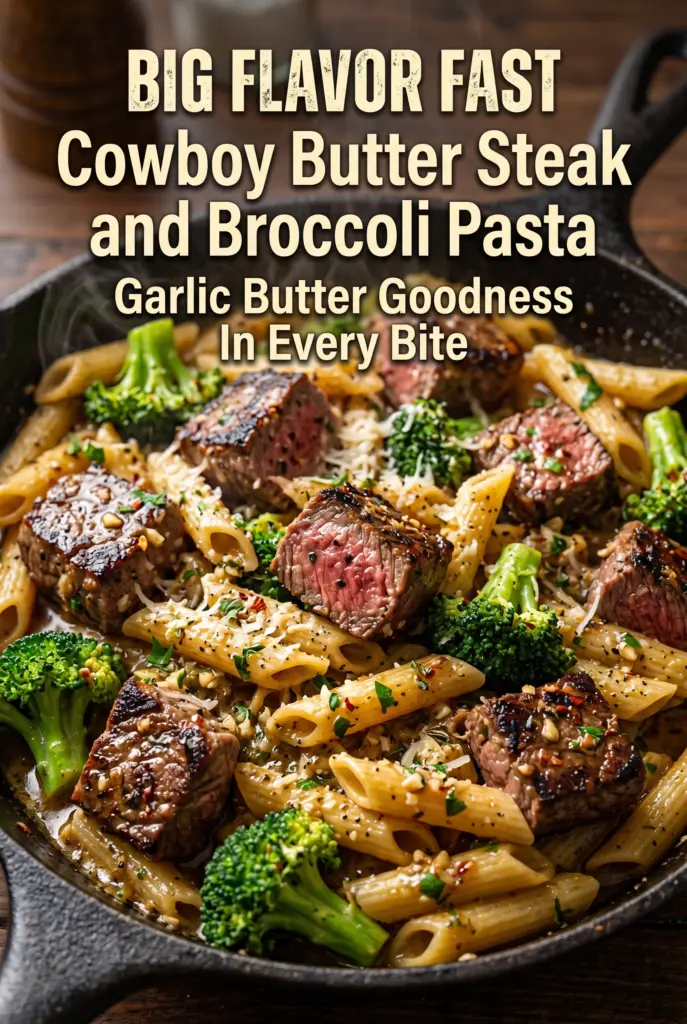
Cowboy Butter Steak and Broccoli Pasta
Steak, broccoli, and pasta all land in one pan with a cowboy butter sauce that clings instead of pooling at the bottom of the bowl. The steak stays juicy, the…

By Ava
•
•
Reading time: 10 min
Tip: save now, make later.
Steak, broccoli, and pasta all land in one pan with a cowboy butter sauce that clings instead of pooling at the bottom of the bowl. The steak stays juicy, the broccoli keeps a little bite, and the garlic herb butter wraps everything in a glossy coating that tastes like it took far more effort than it did. This is the kind of dinner that disappears fast because every forkful gets a little bit of everything.
What makes this version work is the order. The pasta water gets reserved for the end, which gives you control over the sauce thickness instead of guessing with extra butter. The steak is seared first and pulled out before the butter sauce goes in, so it browns hard without overcooking while the rest of the dish comes together. A hit of Dijon and lemon keeps the sauce from tasting heavy, and the Parmesan gives it a salty finish without turning it gluey.
Below, I’ll walk through the one point that matters most for the steak, the ingredient choices that really affect the outcome, and a few smart swaps if you need to work with what’s in your kitchen.
The sauce coated the pasta instead of sitting watery in the skillet, and the steak stayed tender even after tossing everything together. I liked that the broccoli kept a little crunch and didn’t turn mushy by the time dinner hit the table.
Save this Cowboy Butter Steak and Broccoli Pasta for nights when you want a bold, creamy skillet dinner that actually coats the pasta.
The Part That Keeps the Steak Tender Instead of Chewy
The biggest mistake in a pasta skillet like this is leaving the steak in the pan while the sauce finishes. Sirloin only needs a short, hard sear to pick up color; after that, it’s better off resting while the butter, garlic, and seasonings build the sauce. If you cook it all the way through before the pasta even goes in, it turns tight and loses the juicy bite that makes this dinner worth making.
The second thing that matters is heat. Butter burns faster than people expect, and garlic goes bitter if it sits in a screaming-hot skillet. Pull the pan back to medium before the butter goes in, then let the aromatics bloom just long enough to smell nutty and fragrant. That’s how you get a sauce that tastes rich instead of scorched.
- Sirloin steak — This cut gives you a tender bite without the cost of ribeye. Cut it into even pieces so it sears at the same rate; uneven chunks leave you with a mix of overdone and underdone steak.
- Broccoli florets — Fresh broccoli holds its shape best here. If you use frozen, it needs to be thawed and patted dry first or it will water down the sauce.
- Dijon mustard — This doesn’t make the pasta taste mustardy. It helps emulsify the butter sauce and gives it a little sharpness so the dish doesn’t feel flat.
- Parmesan cheese — Grate it fresh if you can. Pre-shredded cheese can work, but it melts less smoothly and can leave the sauce grainy.
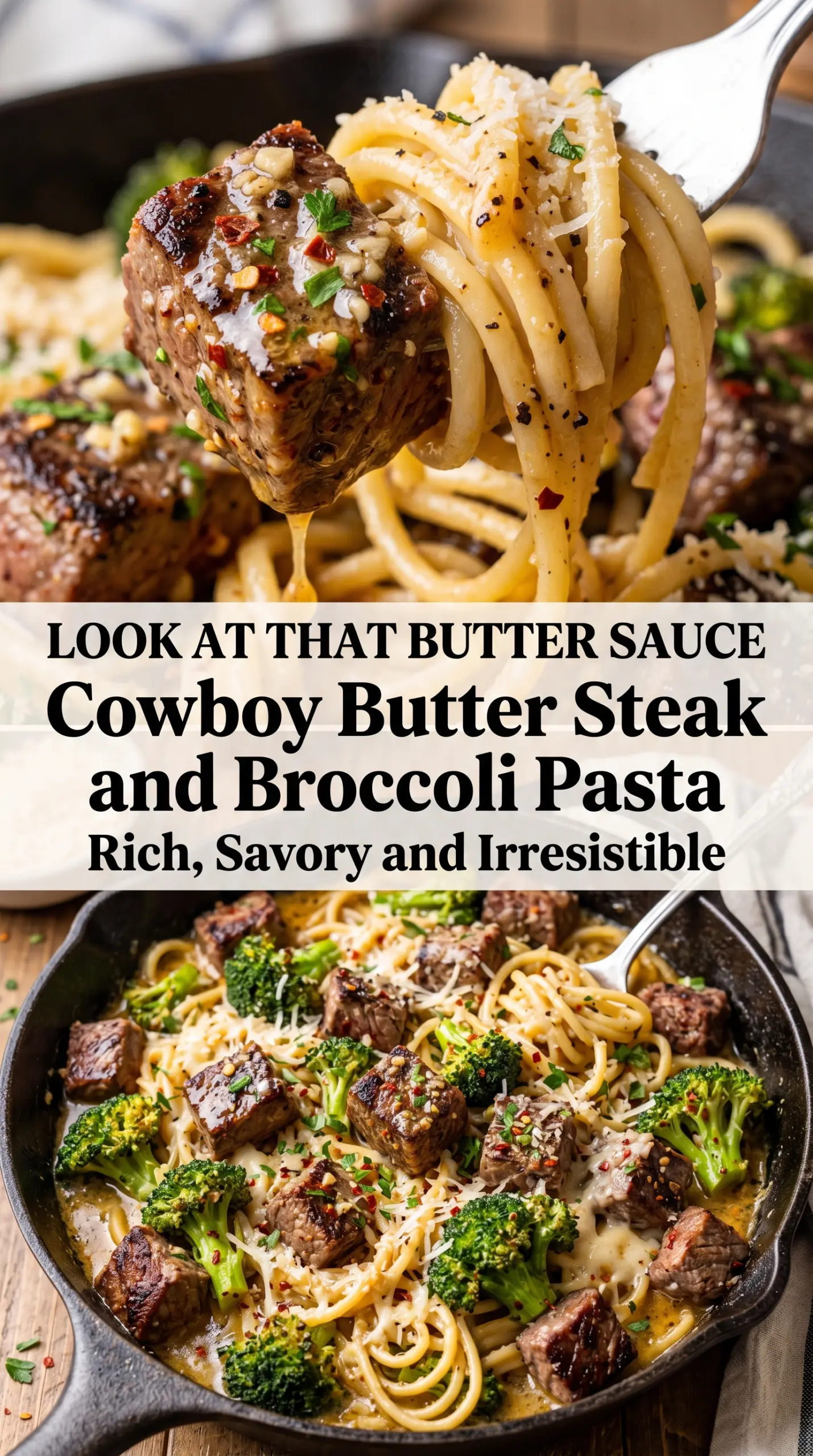
The pasta water is not a backup ingredient. It’s the thing that turns a buttery skillet into a sauce that actually coats the noodles. Start with a little, toss, then add more only if the pan looks tight and dry. Once the Parmesan goes in, the sauce should look glossy and move around the pasta instead of clumping on top of it.
Building the Skillet in the Right Order
Cooking the Pasta and Broccoli Together
Boil the pasta until it’s just shy of done, then add the broccoli for the last few minutes so it softens without losing its color. The goal is broccoli that still has a little snap at the stem, not pale florets that collapse when you toss them with the sauce. Drain everything well and reserve a cup of pasta water before anything goes near the skillet.
Searing the Steak Fast and Leaving It Alone
Heat the oil until it shimmers, then add the steak in a single layer. If you crowd the pan, the meat steams and turns gray instead of getting that browned edge that gives the dish depth. Let each side sear for a couple of minutes without constant stirring, then pull the steak out while the center is still a little under where you want it.
Turning Butter, Garlic, and Seasonings into Sauce
Lower the heat before the butter goes in. Stir in the garlic just until fragrant, then add the Dijon, lemon juice, herbs, red pepper flakes, onion powder, and cayenne. If the skillet is too hot here, the garlic will brown too fast and the sauce will taste harsh, so keep the mixture moving and stop the cooking once it smells rich and savory.
Bringing Everything Back Together
Add the pasta, broccoli, and steak back to the pan, then toss with Parmesan and a splash of pasta water. The sauce should cling to the noodles and leave a light sheen on the beef and vegetables. If it looks dry, add another small splash of pasta water rather than more butter; too much butter makes the sauce greasy instead of silky.
What to Change When You Need a Different Version
Gluten-Free Pasta Swap
Use a sturdy gluten-free penne or rotini and cook it just to al dente. Some gluten-free pastas release less starch, so the sauce may need an extra splash of pasta water or even a spoonful of the pasta cooking liquid with a little more Parmesan to help it cling.
Dairy-Free Cowboy Butter Style
Use a good plant-based butter and skip the Parmesan, or replace it with a dairy-free hard cheese alternative that melts well. The sauce will be a little less rich and a little less salty, so lean on the Dijon, lemon, and garlic to keep the flavor sharp.
Chicken Instead of Steak
Boneless chicken breast or thighs both work. Sear the pieces until cooked through, then follow the same sauce steps. Chicken thighs give you more forgiveness and stay juicier, while breast meat tastes a little cleaner but needs closer attention so it doesn’t dry out.
Storage and Reheating
- Refrigerator: Store leftovers in an airtight container for up to 3 days. The pasta will absorb some sauce as it sits, so expect it to tighten up a bit.
- Freezer: This freezes, but the pasta and broccoli soften after thawing. Freeze only if you don’t mind a softer texture; pack it tightly in a freezer-safe container for up to 2 months.
- Reheating: Reheat gently on the stovetop or in the microwave with a splash of water or broth. High heat dries out the steak and makes the sauce separate, so warm it slowly and stir as it loosens.
Answers to the Questions Worth Asking
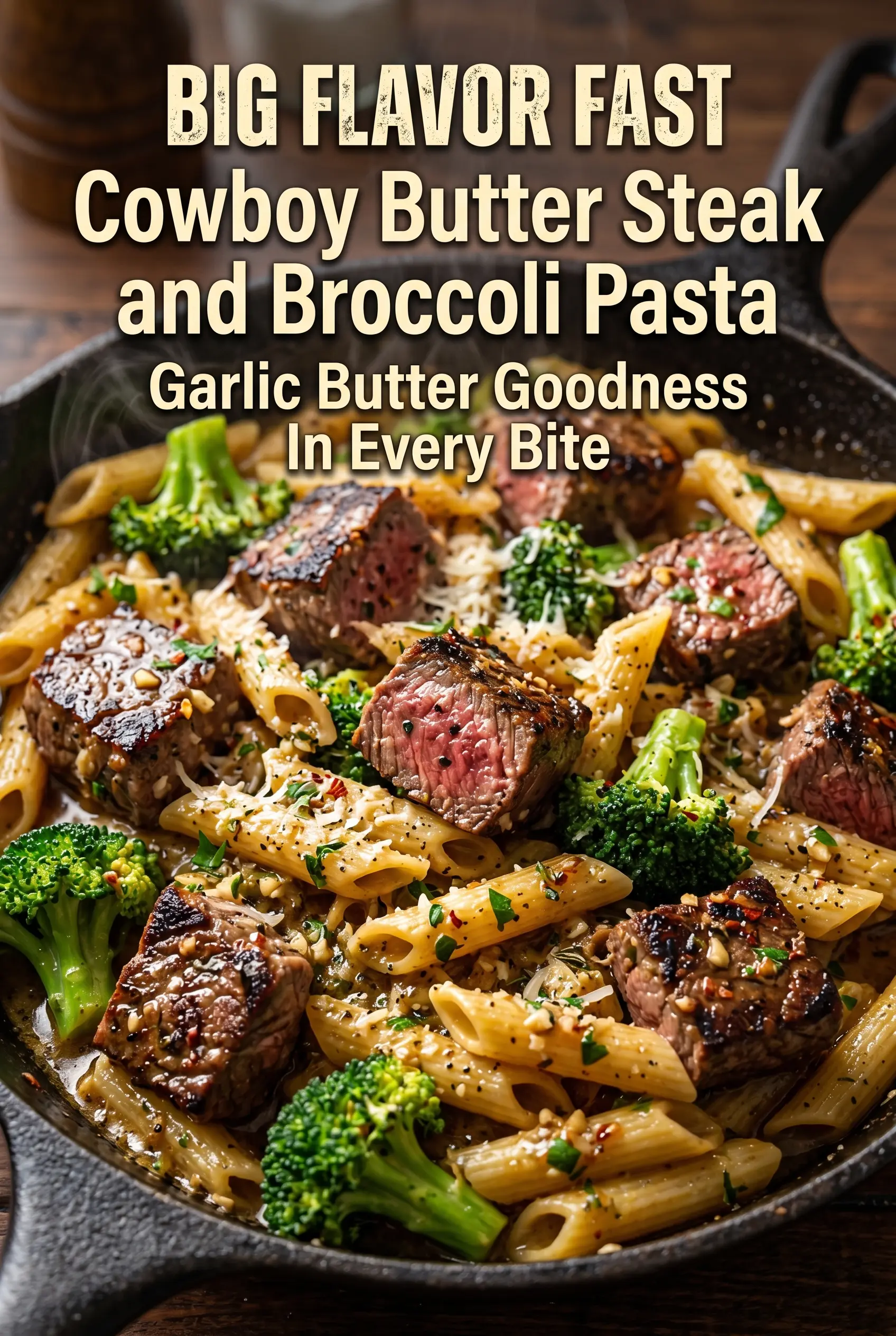
Cowboy Butter Steak and Broccoli Pasta
Ingredients
Equipment
Method
- Cook penne pasta according to package directions until al dente. Add broccoli florets during the last 3 minutes of cooking so they stay bright and crisp-tender.
- Drain the pasta and broccoli and reserve 1/2 cup pasta water. Keep the pasta water nearby for loosening the sauce while you toss.
- Season the sirloin steak pieces with salt, black pepper, and paprika. Make an even coating so each bite browns and stays flavorful.
- Heat olive oil in a large skillet over medium-high heat until shimmering. Add steak bites and sear 2–3 minutes per side until browned.
- Remove the steak from the skillet and set aside. Leave the browned bits in the pan for maximum flavor in the sauce.
- Reduce heat to medium and melt butter in the skillet. Scrape up any browned bits while the butter foams.
- Add minced garlic and cook for 30 seconds. Stir constantly until fragrant without letting it darken.
- Stir in Dijon mustard, lemon juice, crushed red pepper flakes, dried parsley, dried chives, onion powder, and cayenne pepper. Cook just until combined and glossy.
- Return the steak to the skillet. Toss to coat so the seasoning and sauce cling to every piece.
- Add the drained penne and broccoli to the skillet. Toss until evenly coated in the garlic herb cowboy butter sauce.
- Add Parmesan cheese and toss again to melt it into the sauce. Sprinkle in reserved pasta water as needed, a splash at a time, until the sauce turns silky and clings.
- Serve immediately with extra Parmesan. Keep the pasta hot so the sauce looks glossy and the broccoli doesn’t overcook.