
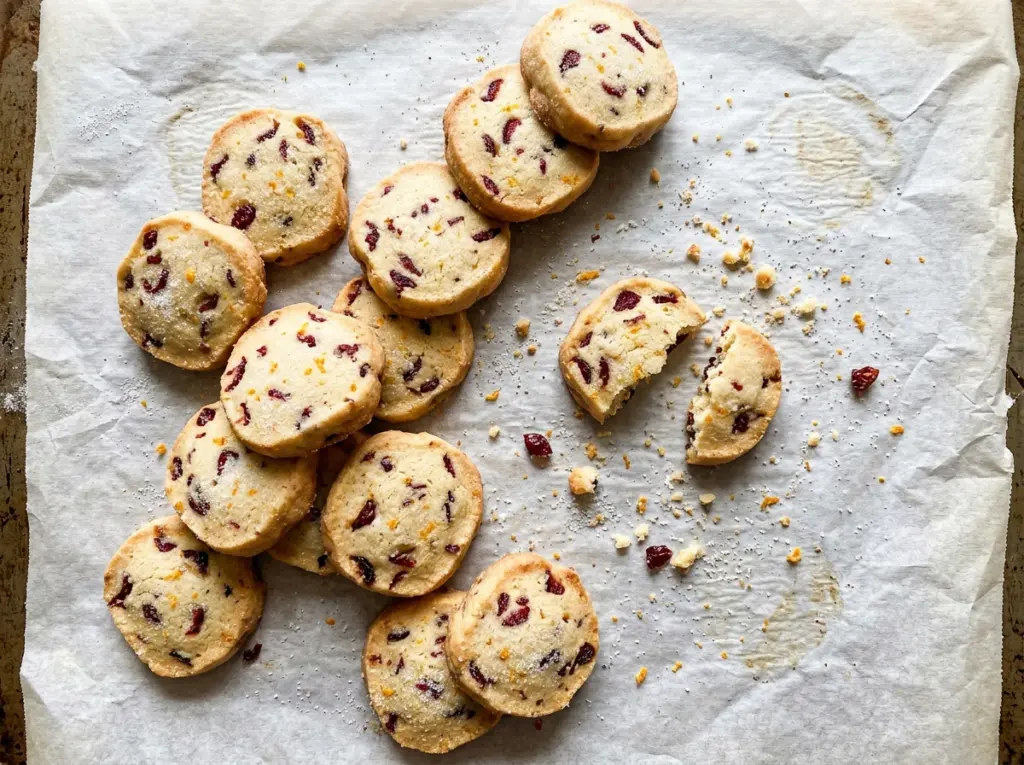
Cranberry Orange Slice and Bake Cookies
The first thing you notice when you slice a chilled log is how the cranberry pieces show up in every round. A little orange zest scents the dough before it…

By Ava
•
•
Reading time: 9 min
Tip: save now, make later.
The first thing you notice when you slice a chilled log is how the cranberry pieces show up in every round. A little orange zest scents the dough before it even reaches the oven, and the edges turn golden while the centers stay pale. These cranberry orange slice and bake cookies give you that bright, buttery combination without rolling or cutting out individual shapes.
I like that the dough can be shaped ahead and baked in batches, which makes the final stretch feel calm instead of rushed. The orange zest goes into the butter and sugar early, so its citrus flavor is spread through the dough rather than left in isolated bits. Chopped dried cranberries give each cookie a tart-sweet bite, and a short chill firms the logs for clean slices. The finished rounds are tender, lightly crisp at the edges, and full of orange and cranberry in every bite.
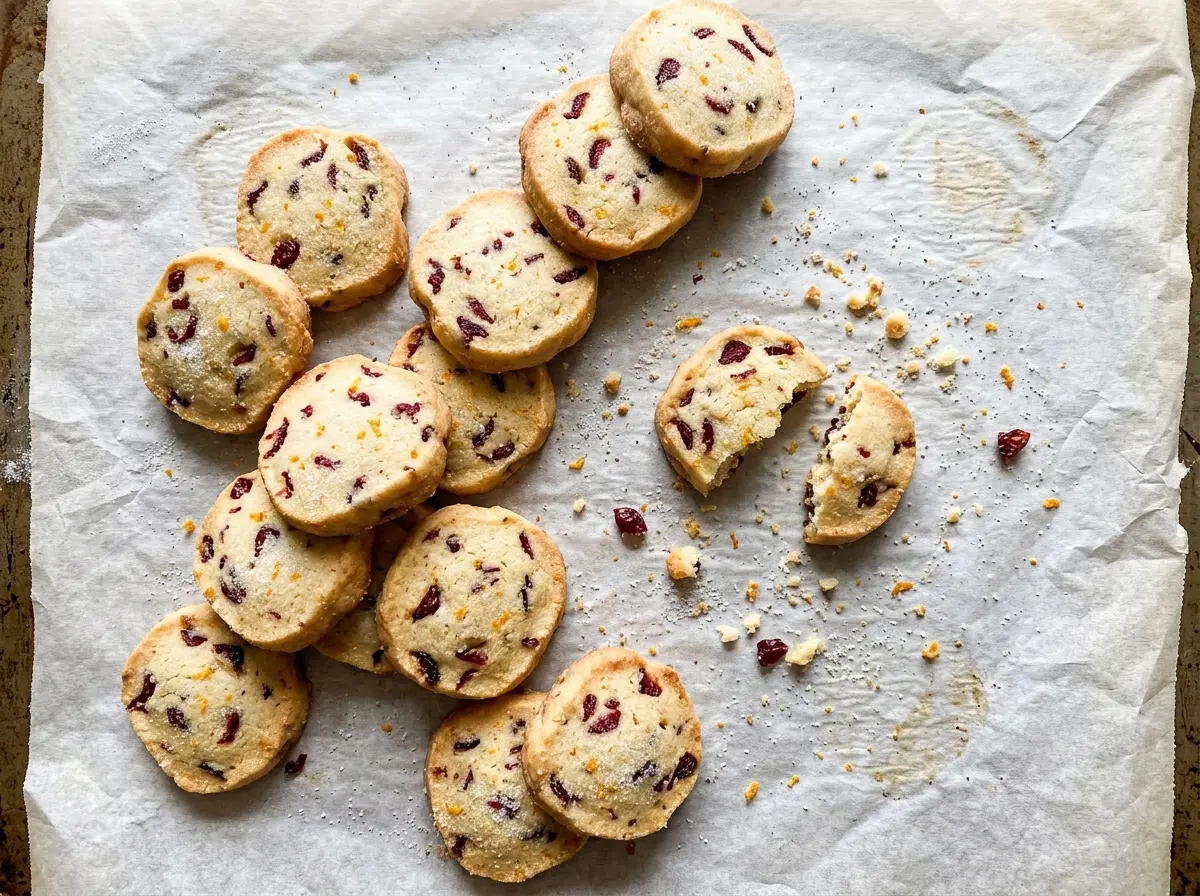
Kitchen Note
Shape both logs to the same thickness from end to end, not just the same length. That small bit of care gives you rounds that bake at the same pace instead of thin ends turning golden before the middle slices.
Save these cranberry orange slice and bake cookies for a bright citrus-and-cranberry cookie tray, with dough you can chill before baking.
Why the Orange Zest Belongs in the Butter, Not at the End
Orange zest carries its fragrance in tiny pockets of oil. Beating finely grated zest with the butter and sugar helps those oils disperse throughout the dough, so the citrus comes through in the whole cookie instead of a few concentrated spots. It also gives the sugar time to pick up the orange aroma while the butter turns creamy.
Adding zest later, alongside the cranberries, would leave less time for that even distribution. The flavor would still be there, but it could taste patchier from bite to bite. Finely grated zest matters, too: broad strips are harder to blend into a smooth dough and can leave chewy bits behind. Keep the grater on the colored outside of the orange, where the aromatic zest is, rather than digging into the bitter white pith.
This is a small order-of-operations choice, but it helps the cranberry and orange taste balanced. The cranberries bring their own tartness, so you want the orange to be present across the cookie, not hit in occasional bursts.
What the Butter, Zest, and Cranberries Bring to the Dough

- Unsalted butter — Butter gives the cookies their rich taste and tender crumb. Standard grocery-store butter works well; it doesn’t need to be a specialty brand, but use fresh butter because its flavor is prominent. A plant-based baking stick can replace it for a dairy-free version, though the cookies may have a slightly different spread and richness.
- Orange zest — The zest supplies the fresh citrus aroma that dried fruit alone can’t provide. A firm, fragrant orange is easiest to zest, but an ordinary orange is fine if the skin is clean and aromatic. Finely grate only the colored exterior; lemon zest can stand in for a sharper citrus note.
- Large egg — The egg binds the dough and helps it hold together when sliced. A room-temperature egg blends more smoothly into softened butter than one straight from the refrigerator. Use a fresh large egg; a smaller egg can leave the dough drier and harder to bring together.
- All-purpose flour — This gives the rounds enough structure to keep their shape while staying tender. Store-brand flour is perfectly suitable; measure it without packing it into the cup. A cup-for-cup gluten-free baking blend formulated for cookies is the most practical swap, though the rounds may be more delicate.
- Dried cranberries — Their chewy texture and tart-sweet flavor stand out against the buttery dough. Choose cranberries that are soft rather than leathery, and chop them finely so they distribute through the rounds without creating oversized fruit pockets. Dried cherries can replace them for a deeper fruit flavor.
- Granulated sugar and vanilla — Regular granulated sugar creams with the butter and helps the cookies bake with lightly golden edges; a specialty sugar isn’t needed. Vanilla rounds out the orange and fruit, and imitation vanilla works if that’s what you have, with a slightly less rounded aroma.
The Chill-and-Slice Sequence That Keeps Every Cookie Round
Cream the Zest Into the Butter
Beat the softened butter, granulated sugar, and finely grated orange zest in a large bowl with an electric mixer on medium speed for about 2 minutes, until creamy. If the butter is too cold, it won’t blend smoothly; if it’s melted, the dough won’t have the same structure. Scrape the bowl if needed so the zest and butter mixture is evenly combined before the egg goes in.
Bring the Dough Together Gently
Beat in the room-temperature egg and vanilla until combined. Add the flour and kosher salt, then mix on low only until no dry flour remains. Mixing longer once the flour is in can make the cookies tougher, so stop as soon as the dough comes together. Fold in the finely chopped cranberries so they’re spread through the dough without overworking it.
Shape the Logs and Let Them Firm
Divide the dough in half and shape each portion into a log 9 inches long and about 1 3/4 inches in diameter. Wrap the logs and refrigerate until firm, at least 2 hours; a soft log is difficult to slice cleanly. If the ends are uneven, gently reshape them before chilling so the first and last rounds aren’t unusually thin.
Slice, Bake, and Cool in Two Stages
Heat the oven to 350°F and line a large rimmed baking sheet with parchment paper. Slice the chilled logs into 3/8-inch rounds, arrange them about 1 inch apart, and bake one sheet at a time for 10–13 minutes, until the edges are just beginning to turn golden. If the edges are still pale, give the cookies another minute and check again rather than waiting for the tops to brown. Leave them on the baking sheet for 5 minutes before moving them to a wire rack to cool completely.
Three Swaps That Change the Cookie Without Losing Its Slice-and-Bake Ease
Use lemon for a sharper citrus note
Replace the orange zest with the same amount of finely grated lemon zest. The cookies will taste brighter and more tart against the dried cranberries, while the dough still mixes and slices the same way.
Trade the cranberries for dried cherries
Use finely chopped dried cherries in place of the cranberries. They bring a rounder, less tangy fruit flavor that pairs well with the orange; chop them to a similar size so the slices stay easy to cut.
Make a gluten-free batch
Replace the all-purpose flour with the same volume of a cup-for-cup gluten-free baking blend intended for cookies. The dough may feel a little more fragile, so handle the chilled logs gently and support each round as you move it to the baking sheet.
Storage and Reheating
- Refrigerator: Keep the baked cookies airtight for up to 1 week. They’ll feel firmer when cold, so let them come to room temperature before serving.
- Freezer: Freeze completely cooled cookies in an airtight container, with parchment between layers, for up to 2 months. Thaw them covered at room temperature.
- Reheating: These cookies don’t need reheating; serve them at room temperature. Avoid microwaving, which can soften the butter and leave the cookies limp.
Questions That Come Up While Slicing and Baking These Cookies
Cranberry Orange Slice and Bake Cookies
Ingredients
Equipment
Method
- Heat the oven to 350°F.
- Line a large rimmed baking sheet with parchment paper.
- Beat the butter, sugar, and orange zest in a large bowl with an electric mixer on medium speed until creamy, about 2 minutes.
- Beat in the egg and vanilla until combined.
- Add the flour and salt and mix on low just until no dry flour remains.
- Fold in the cranberries.
- Divide the dough in half and shape each portion into a 9-inch-long log about 1 3/4 inches in diameter.
- Wrap the logs and refrigerate until firm, at least 2 hours.
- Slice the chilled logs into 3/8-inch-thick rounds.
- Arrange the rounds about 1 inch apart on the prepared baking sheet, working in batches.
- Bake one sheet at a time for 10–13 minutes, until the edges are just beginning to turn golden.
- Cool the cookies on the baking sheet for 5 minutes.
- Transfer the cookies to a wire rack to cool completely.