
Cranberry Glazed Pork Loin With Balsamic And Rosemary – Cozy Dinner Recipe
As the cranberries simmer, their skins pop one by one and the liquid turns glossy, tart, and thick enough to cling to a spoon. That’s the moment I watch for…

By Ava
•
•
Reading time: 8 min
Tip: save now, make later.
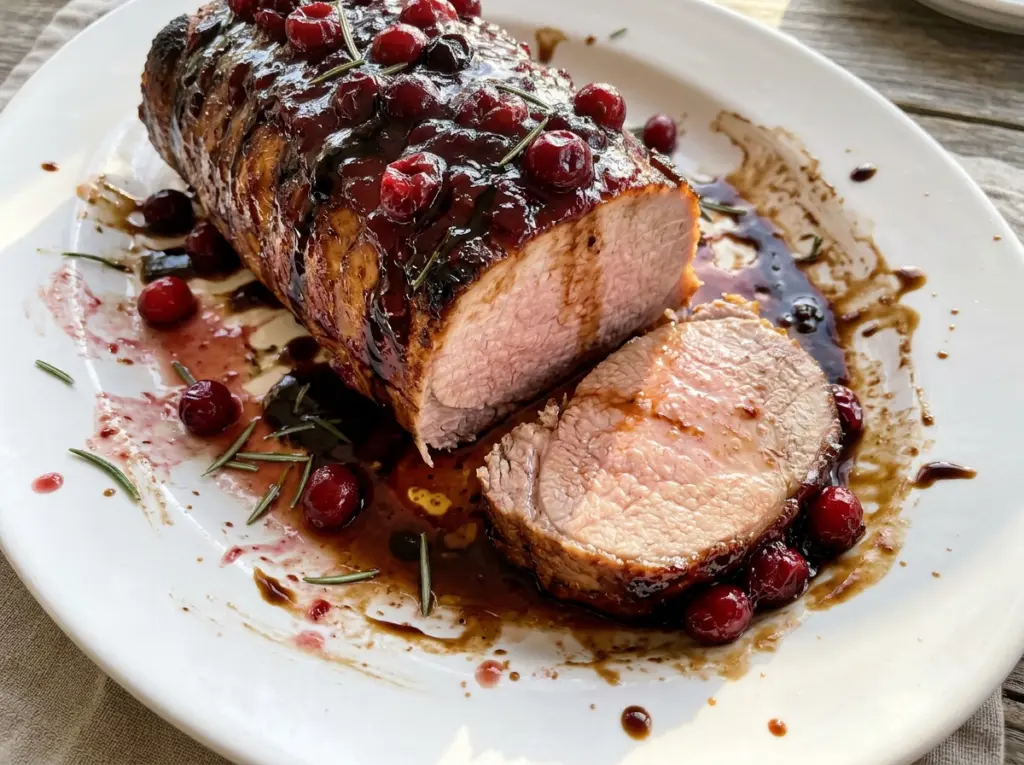
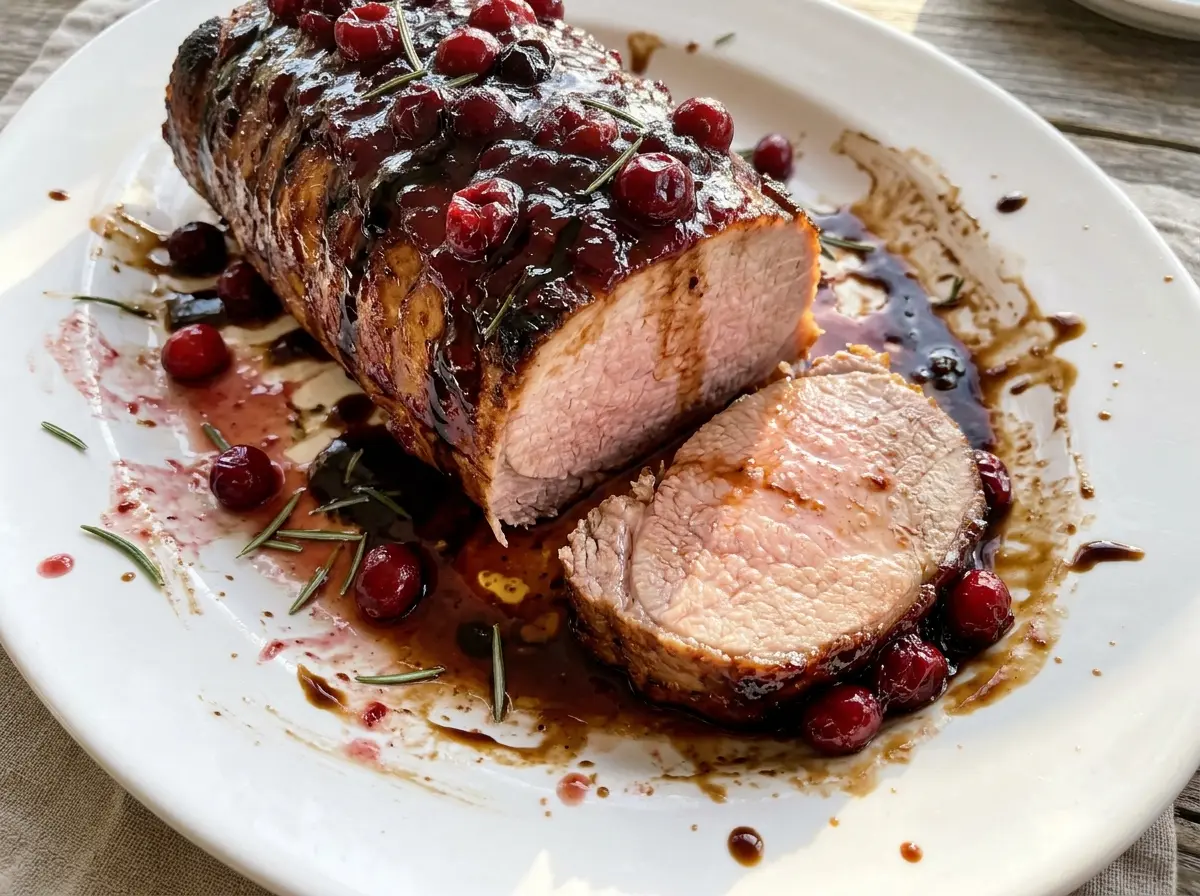
As the cranberries simmer, their skins pop one by one and the liquid turns glossy, tart, and thick enough to cling to a spoon. That’s the moment I watch for with this cranberry glazed pork loin: the fruit should still have a little shape, but the glaze shouldn’t look watery. The balsamic keeps the brown sugar from making it taste like dessert.
A boneless pork loin is lean, so I rely on an instant-read thermometer instead of guessing from the clock. The roast gets a simple rosemary-and-garlic rub, then the cranberry glaze goes on near the end, when it has time to coat the outside without spending the whole roast in the oven. After a short rest, the slices are juicy and the extra glaze is ready for the table.
Kitchen Note
I tent the roast loosely rather than wrapping it tightly. Give it the full 10-minute rest before slicing; cutting early lets the juices run onto the board.
Save this cranberry glazed pork loin for a cozy dinner with tart berries, balsamic, and rosemary in every slice.
Why This Cranberry Glaze Goes on Near the End, Not at the Start
The glaze has brown sugar in it, which is what gives the cranberries a rounded sweetness and helps the liquid thicken. That same sugar can darken too much if it sits against the hot pan for the full roasting time. Brushing it on during the final stretch gives it time to cling to the pork and turn glossy without asking it to withstand the oven from the beginning.
Balsamic vinegar does more than make the glaze taste tangy. Its acidity keeps the cranberries and brown sugar in balance, so each slice tastes savory first and sweet-tart after. Keep about half the glaze off the roast and serve it separately; that way the fruit stays bright on the plate, and anyone who wants more can add it at the table. You’re aiming for a coating, not a thick blanket that hides the roast’s rosemary seasoning.
Fresh Cranberries and Balsamic Set the Glaze’s Sweet-Tart Balance

- Fresh cranberries — They bring a tart, fruity edge and burst into the glaze as they simmer. Choose berries that look firm rather than shriveled. Canned cranberry sauce isn’t a close stand-in; it’s already sweetened and set, so it won’t cook down the same way.
- Balsamic vinegar — Everyday balsamic works well here; an expensive aged bottle isn’t needed. Its acidity cuts through the sugar and pork, while a sweeter or more delicate vinegar would shift the balance. I wouldn’t substitute another vinegar in this particular glaze.
- Light brown sugar — The molasses notes fit the tart berries and help create a thicker glaze. Pack it firmly when measuring. A different sweetener can change both the taste and how the glaze reduces.
- Fresh and dried rosemary — Fresh rosemary gives the simmered cranberries a fragrant, herbal note, while dried rosemary seasons the roast directly. Use the form listed for each part; dried herbs are more concentrated and don’t behave like chopped fresh leaves in the glaze.
- Boneless pork loin — Look for a roast close to the stated size and shape, with a fat cap on one side. Pork loin is not the same cut as pork tenderloin; the smaller, narrower tenderloin cooks on a different schedule.
- Olive oil, garlic powder, salt, and pepper — These coat and season the roast without competing with the fruit. Ordinary olive oil and pantry garlic powder are all you need; save specialty oils for a dish where their flavor won’t be covered by the glaze.
From Simmering Berries to a 145°F Pork Loin
Simmer the Cranberries Until the Glaze Clings
Combine the cranberries, brown sugar, balsamic vinegar, water, fresh rosemary, and the smaller amount of kosher salt in a medium saucepan over medium heat. Bring the mixture to a simmer, then cook for 10–15 minutes, stirring occasionally. Most of the berries should burst, and the liquid should thicken enough to coat a spoon rather than run like juice. Take the pan off the heat once it reaches that point.
Season the Roast All Over
Heat the oven to 375°F. Pat the pork loin dry, then rub it all over with olive oil, kosher salt, black pepper, dried rosemary, and garlic powder. Get the seasoning onto the sides as well as the top, so the slices don’t have bland edges. Set the roast fat-side up in a 9×13-inch roasting pan.
Roast Before Adding the Glaze
Roast the pork uncovered for 45–65 minutes, checking the thickest part with an instant-read thermometer. At this stage, look for about 130°F; the roast isn’t at its final temperature yet. Insert the thermometer into the center of the thickest section, not into a thin edge. If the reading is lower, give the roast more oven time and check again.
Glaze, Finish, and Rest
Brush the roast with about half of the cranberry glaze, keeping the remaining glaze separate for serving. Return it to the oven for another 10–15 minutes, until the thickest part reaches 145°F. Transfer the roast to a cutting board, tent it loosely with foil, and let it rest for 10 minutes before slicing. Serve the reserved glaze alongside the pork.
Three Small Changes for a Different Cranberry-Rosemary Finish
A Milder Rosemary Glaze
Leave the fresh rosemary out of the cranberry mixture and keep the dried rosemary in the pork rub. The fruit will taste more direct and less herbal, while the roast still has rosemary in its seasoning.
A Garlic-Free Roast
Omit the garlic powder from the rub and leave the other seasonings in place. The pork will have a cleaner rosemary-and-pepper flavor, with the cranberry glaze taking a more prominent role.
Keep the Glaze off the Roast
For a roast with a less sticky exterior, skip brushing glaze onto the pork and roast it until the thickest part reaches 145°F. Serve all the glaze at the table instead. The meat stays savory on the outside, and the sweet-tart fruit remains easy to portion.
Storage and Reheating
- Refrigerator: Keep leftover pork and glaze covered in the refrigerator for 3–4 days. The chilled glaze will firm up, and the pork may be less juicy after storage.
- Freezer: Freeze sliced pork and leftover glaze in separate airtight containers for up to 2–3 months. Thaw overnight in the refrigerator for the best texture.
- Reheating: Warm pork slices covered in the microwave at medium power in short intervals, or heat them gently in a covered oven-safe dish. Reheat leftovers to 165°F; prolonged uncovered heating is the quickest way to dry out lean slices.
Questions That Come Up With Cranberry-Glazed Pork Loin
Cranberry Glazed Pork Loin With Balsamic And Rosemary – Cozy Dinner Recipe
Ingredients
Equipment
Method
- Combine the cranberries, brown sugar, balsamic vinegar, water, fresh rosemary, and 1/8 teaspoon salt in a medium saucepan over medium heat.
- Bring to a simmer and cook for 10–15 minutes, stirring occasionally, until most of the cranberries have burst and the glaze thickens; remove from the heat.
- Heat the oven to 375°F.
- Pat the pork dry.
- Rub it all over with the olive oil, 1 teaspoon salt, pepper, dried rosemary, and garlic powder.
- Set the roast fat-side up in a 9x13-inch roasting pan and roast uncovered for 45–65 minutes, until the thickest part registers about 130°F on an instant-read thermometer.
- Brush the roast with about 1/2 cup of the glaze, keeping any remaining glaze separate for serving.
- Roast for another 10–15 minutes, until the thickest part reaches 145°F.
- Transfer the pork to a cutting board, tent loosely with foil, and rest for 10 minutes before slicing.
- Serve with the remaining glaze.