
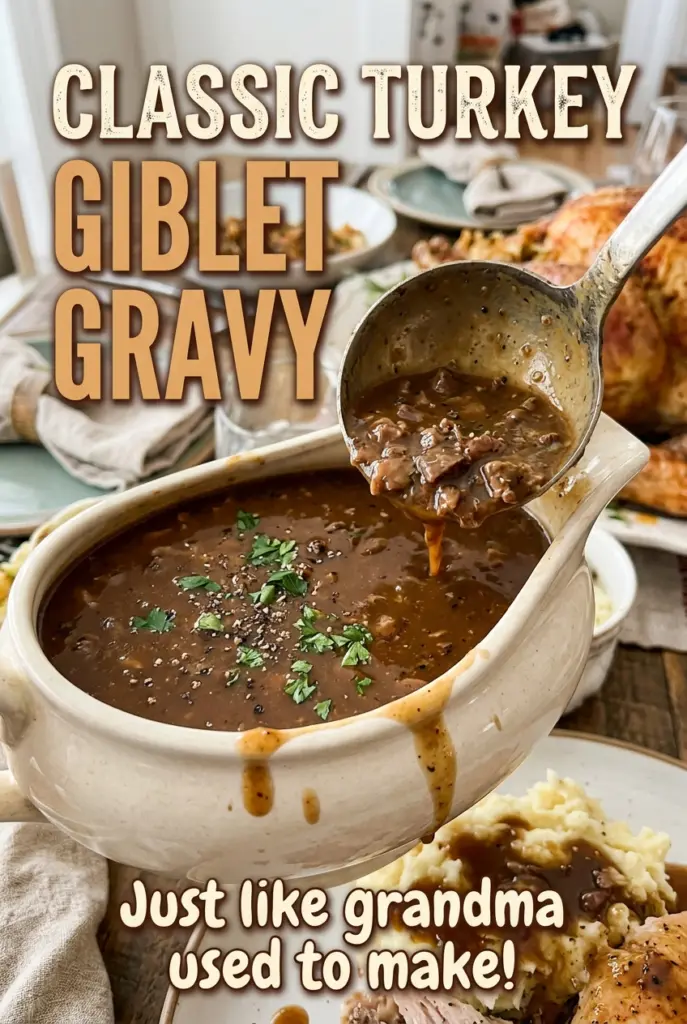
Classic Turkey Giblet Gravy
The stock for this gravy starts with the neck, heart, and gizzard, and the kitchen slowly fills with that deep, savory turkey aroma while they simmer. I used to rush…

By Ava
•
•
Reading time: 9 min
Tip: save now, make later.
The stock for this gravy starts with the neck, heart, and gizzard, and the kitchen slowly fills with that deep, savory turkey aroma while they simmer. I used to rush this part, but a quick boil never gave me the same rounded flavor. Classic Turkey Giblet Gravy takes a little time on the stove, then comes together with a simple butter-and-flour roux and the turkey pan drippings.
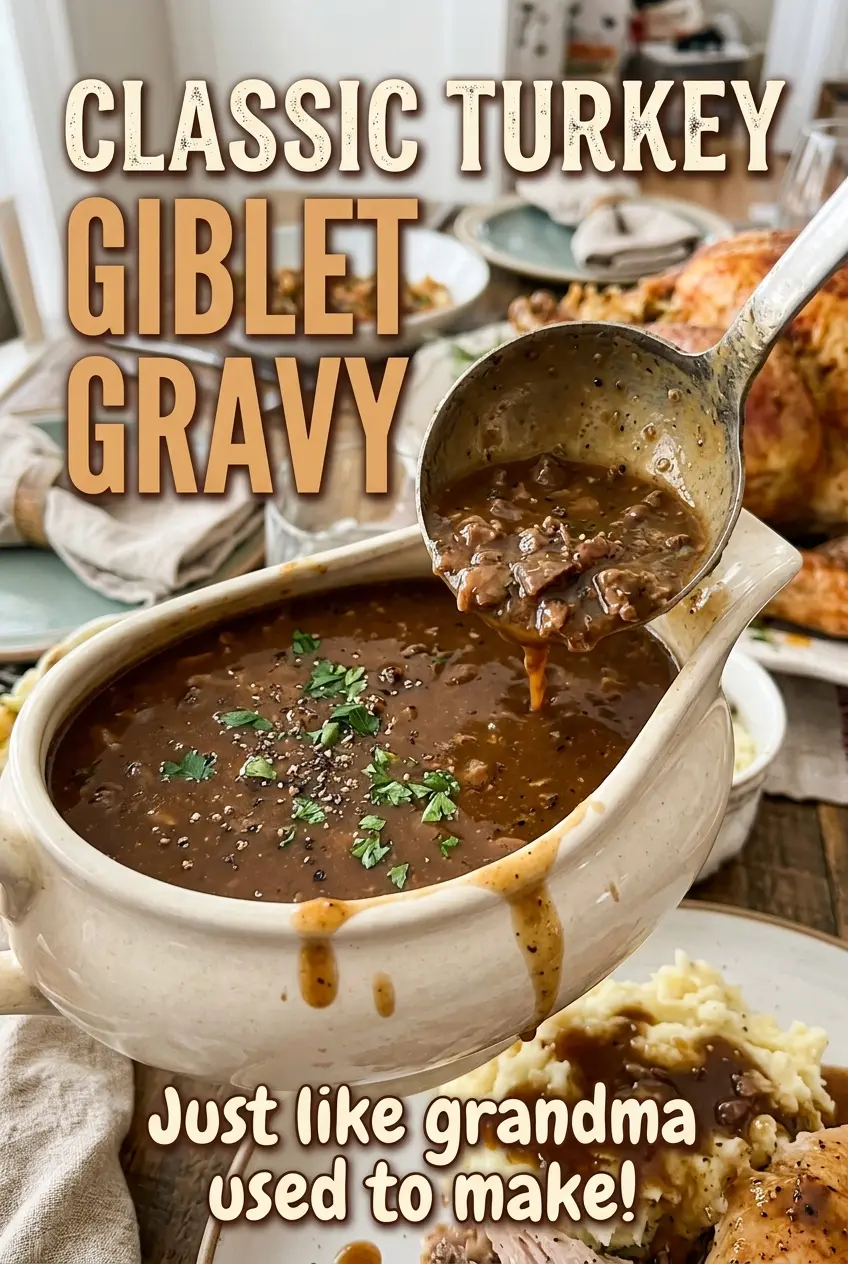
The balance is what makes it work: homemade giblet stock gives the gravy its base, while defatted drippings bring in the roasted flavor from the bird. The chopped giblets and neck meat go back into the finished gravy, so each spoonful has a little texture and plenty of turkey flavor. It’s a comforting, old-fashioned gravy that belongs right beside the turkey.
Kitchen Note
Strain the stock before you measure it. The giblets and vegetables take up room in the saucepan, so measuring the starting water won’t tell you how much usable stock you have.
Save this Classic Turkey Giblet Gravy for a holiday table: it brings homemade giblet stock, roasted turkey drippings, and tender chopped giblets together in one savory gravy.
Why This Gravy Uses Both Giblet Stock and Turkey Drippings
Giblet stock and pan drippings do different jobs here. The stock is the main liquid, simmered with the neck, heart, and gizzard so it carries a gentle turkey savor through every spoonful. The drippings bring the concentrated, roasted notes that come from the bird cooking in its pan. Using both gives the gravy more depth than either one provides on its own.
The drippings are measured after they’re defatted, so the gravy gets their browned flavor without an oily layer competing with the roux. The flour-thickened stock keeps the result spoonable and smooth, while the chopped giblets make it recognizably old-fashioned. It’s not meant to be a plain, silky sauce; the meat gives it a satisfying, homemade texture. If you’re used to making gravy from only pan juices, that separate stock base is what lets the turkey flavor stay full without making the finished gravy greasy.
The Giblets, Drippings, and Roux That Shape the Gravy
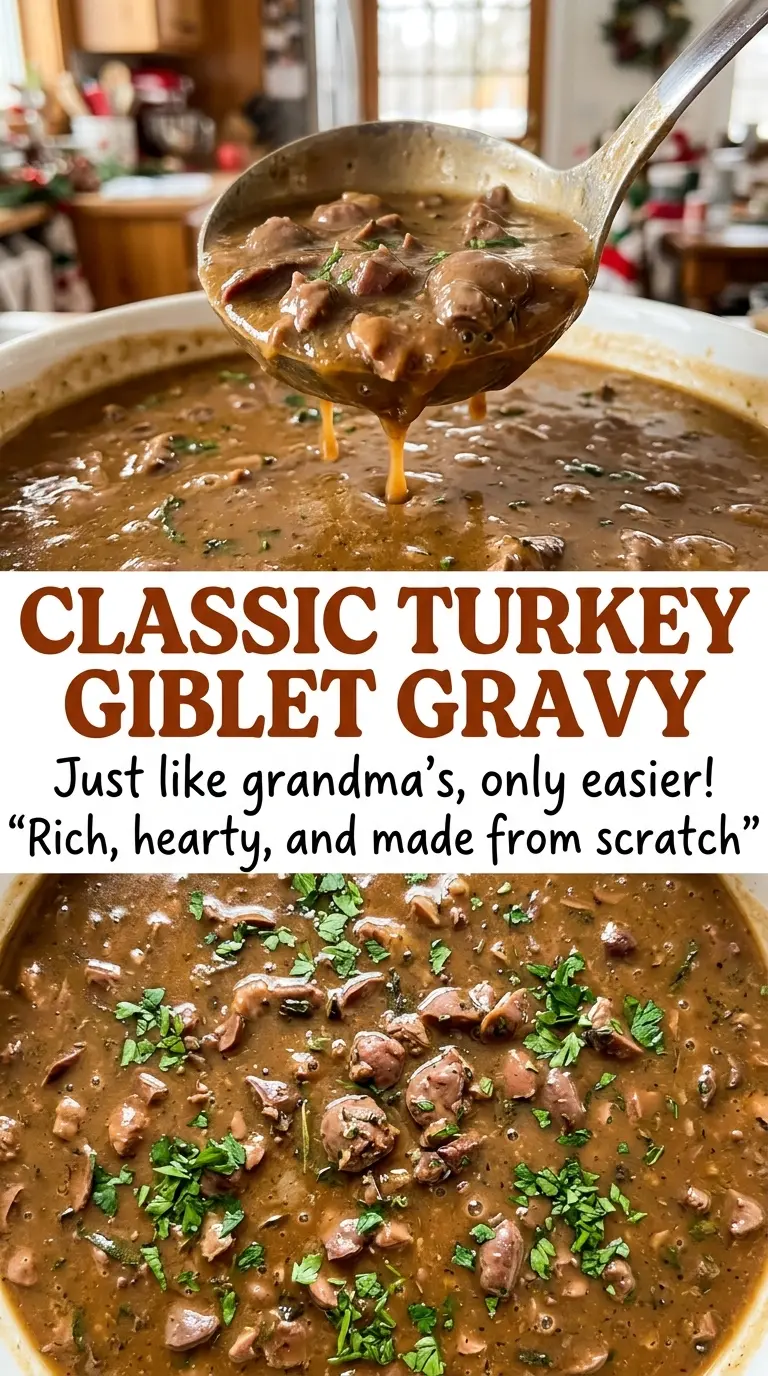
- Turkey giblets and neck — Fresh giblets give the stock its distinctive turkey flavor, and the neck contributes meat to chop into the finished gravy. Keep the liver separate from the heart and gizzard so it can be added later in the simmer; that distinction also makes it easy to leave the liver out for a milder variation.
- Onion, celery, bay leaf, and peppercorns — These aromatics give the stock a savory background without taking over the turkey. A basic yellow onion and celery rib are all you need here; there’s no advantage to buying specialty produce for a long-simmered stock.
- Butter and all-purpose flour — Together they make the roux that thickens the stock. Unsalted butter lets the measured kosher salt stay in your control, and ordinary all-purpose flour is the dependable choice for a smooth, classic gravy.
- Turkey pan drippings — Use the defatted portion so the finished gravy tastes roasted rather than greasy. If you’re collecting drippings from the roasting pan, separate the fat from the juices before measuring; the concentrated juices are what belong in the gravy.
Build the Stock and Roux in Separate Stages
Simmer the Giblets for a Full Stock
Put the neck, heart, and gizzard in a 3-quart saucepan with the water, onion, celery, bay leaf, and whole peppercorns. Bring everything to a boil over medium-high heat, then reduce the heat to low, cover the pan partially, and simmer gently for 1 1/2 to 2 hours. You’re looking for a quiet simmer, not a hard, rolling boil. Add the liver for the final 15 minutes so it cooks through without spending the entire stock-making time in the pot.
Strain, Measure, and Chop the Meat
Transfer the cooked giblets to a plate and strain the stock into a bowl. Measure 4 cups of stock for the gravy. Once the giblets are cool enough to handle, pull the neck meat from its bones, then finely chop it with the heart, gizzard, and liver. Take your time with the neck; check the meat as you remove it so small bones don’t end up in the gravy.
Cook the Roux Without Stopping the Whisk
Melt the butter in a clean 3-quart saucepan over medium heat. Whisk in the flour and keep whisking constantly for 2 minutes. The mixture should come together into a smooth paste with no pockets of dry flour. Don’t walk away during this short stage; steady whisking helps the roux cook evenly and gives the stock a smooth base.
Whisk in the Stock and Drippings Gradually
Pour in the 4 cups of stock gradually while whisking, then whisk in the turkey pan drippings until the liquid looks smooth. Adding the liquids in stages helps them blend into the roux rather than leaving clumps behind. Bring the gravy to a simmer and cook for 5 to 8 minutes, whisking often. It’s ready for the giblets when it has thickened and coats the whisk lightly.
Finish with Chopped Giblets
Stir the chopped giblets and neck meat into the gravy along with the kosher salt and ground black pepper. Let everything simmer together for 2 minutes, stirring so the meat is distributed through the saucepan. Taste for seasoning while it’s hot, keeping in mind that pan drippings vary in saltiness. Serve the gravy while it’s warm.
Two Useful Ways to Adapt the Giblet Gravy
Make It Gluten-Free
Replace the all-purpose flour with the same amount of a cup-for-cup gluten-free flour blend that works for thickening sauces. Cook it with the butter for the same 2 minutes, whisking constantly, then add the stock gradually. The result keeps the buttery, roux-thickened character, though the exact texture can vary a little by blend.
Make a Milder, Liver-Free Version
Leave out the liver and make the stock with the neck, heart, and gizzard. Chop the cooked heart and gizzard with the neck meat, then stir them into the gravy at the finish. You’ll still get plenty of turkey flavor, with less of the distinctively rich taste that liver brings.
Storage and Reheating
- Refrigerator: Store covered for 3 to 4 days. The gravy will firm up as it chills, and the chopped giblets will make it feel thicker.
- Freezer: Freeze in an airtight container for up to 3 months for best quality. Thaw overnight in the refrigerator; the texture may need a good stir as it warms.
- Reheating: Warm it gently in a saucepan, stirring often, until it reaches 165°F. Avoid a hard boil, which can make the gravy reduce too much before the center is hot.
Questions That Come Up While Making Giblet Gravy
Classic Turkey Giblet Gravy
Ingredients
Equipment
Method
- Put the neck, heart, and gizzard in a 3-quart saucepan with the water, onion, celery, bay leaf, and whole black peppercorns.
- Bring to a boil over medium-high heat.
- Reduce the heat to low, cover partially, and simmer gently for 1 1/2 to 2 hours, adding the liver for the final 15 minutes.
- Transfer the giblets to a plate and strain the stock into a bowl.
- Measure 4 cups strained giblet stock.
- When cool enough to handle, remove the neck meat from the bones and finely chop it with the heart, gizzard, and liver.
- Melt the unsalted butter in a clean 3-quart saucepan over medium heat, whisk in the flour, and cook for 2 minutes, whisking constantly.
- Gradually whisk in the 4 cups stock and the defatted turkey pan drippings until smooth.
- Bring to a simmer and cook, whisking often, for 5 to 8 minutes, until thickened.
- Stir in the chopped giblets and neck meat, kosher salt, and ground black pepper.
- Simmer for 2 minutes, then serve.