

Classic Fish and Chips
The potatoes come out of their first fry pale and a little limp, which can look like a mistake until you see how they turn after their second trip into…

By Ava
•
•
Reading time: 10 min
Tip: save now, make later.
The potatoes come out of their first fry pale and a little limp, which can look like a mistake until you see how they turn after their second trip into the oil. That two-stage approach is what gives classic fish and chips tender centers and crisp edges without asking the fish to wait around while the potatoes finish.
I fry the chips first, then cook the cod in a cold lager batter and keep it warm on a rack in a low oven. The work is orderly, but the details matter: dry potatoes, oil temperatures checked with a thermometer, and room around each piece in the pot. Those small choices help the coating turn deep golden instead of greasy.
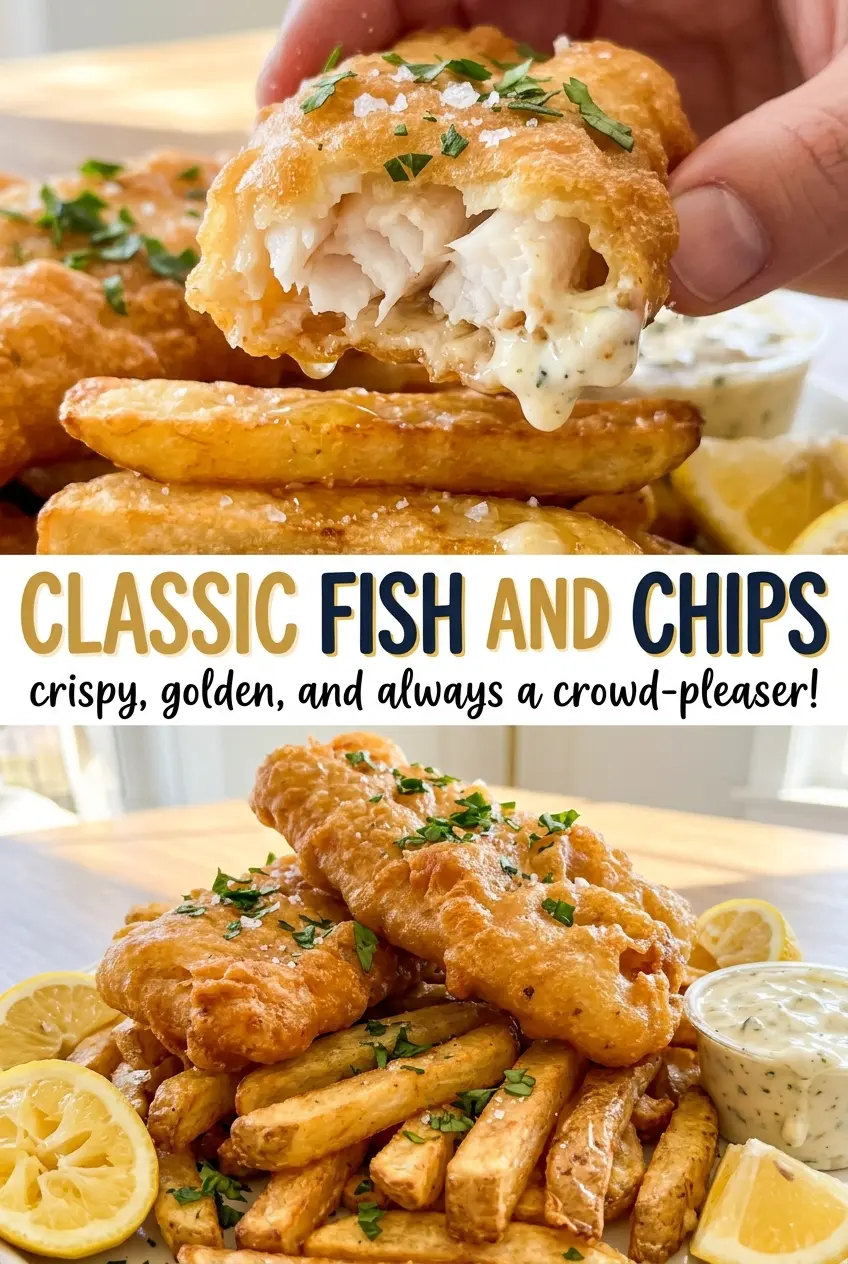
It’s a proper plate of crisp battered cod and golden russet chips, with the fish still tender inside and the potatoes ready to eat straight from the rack.
Kitchen Note
Whisk the cold beer into the batter only until the dry pockets disappear. A few small lumps are fine; continuing to beat the batter can make the coating heavier than it needs to be.
Save this classic fish and chips recipe for crisp beer-battered cod and golden russet chips, cooked in a sequence that lets both reach the table hot.
Why the Chips Need Two Trips Through the Oil
Trying to cook the potatoes until crisp in one go is what makes this plate harder to time. The first fry at a lower temperature cooks the insides while leaving the sticks pale; the hotter second fry is brief and focused on building the crisp outside. If you tried to do both jobs at once, the exterior could darken before the centers softened.
That split also gives you a useful holding point. The potatoes finish their first fry before the fish goes in, then wait on a room-temperature rack while you cook the cod. The fish, in turn, rests on a separate rack in the 200°F oven while the oil heats for the final fry. Keeping the components on racks rather than piling them on a plate lets steam escape instead of softening the coating. The thermometer matters because the oil has to move from one temperature to the next as the cooking changes; don’t judge it by bubbles alone.
Why Cod, Cornstarch, and Cold Lager Make This Batter Fry Up Light
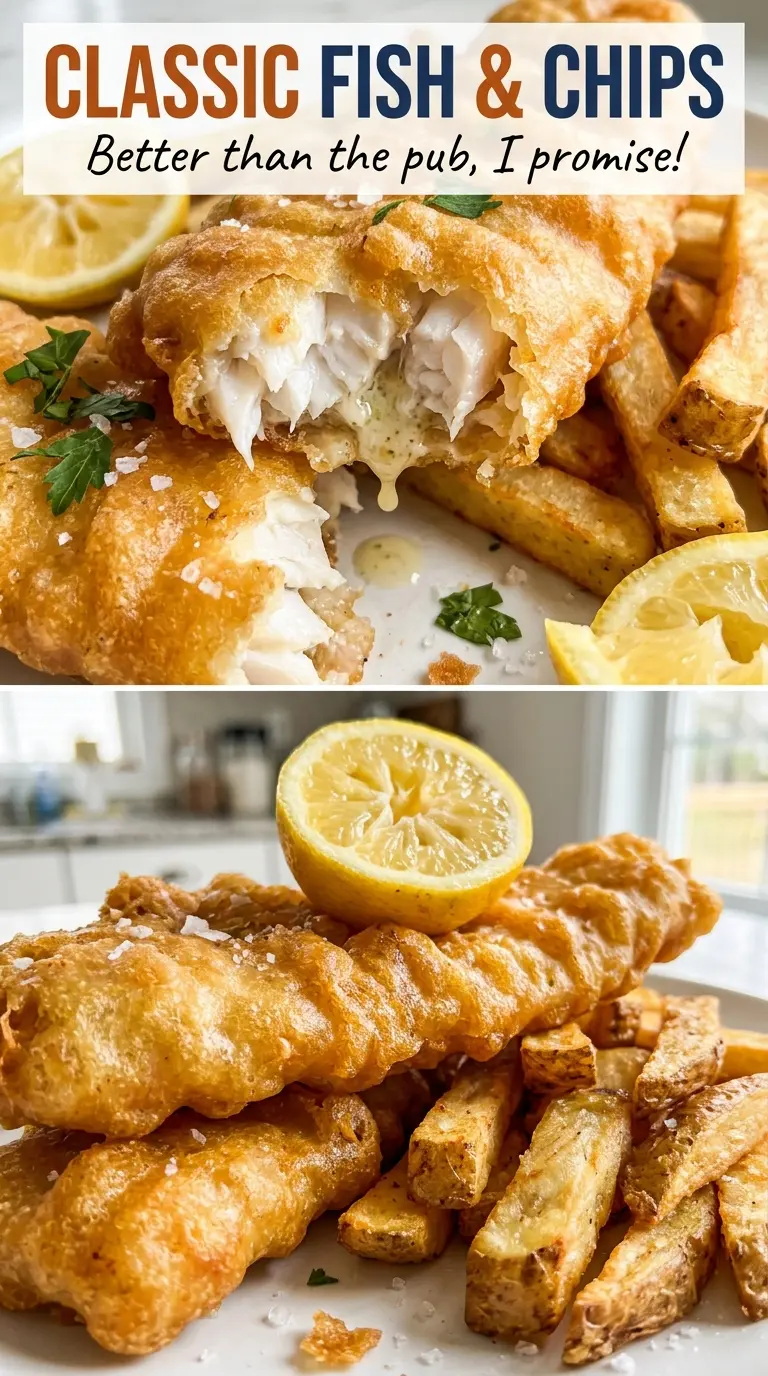
- Russet potatoes — Their starchy flesh turns soft inside while the outside can crisp during the final fry. Choose firm potatoes without green patches or soft spots. Scrub them well and cut the sticks evenly so they cook at a similar pace.
- Cod — Skinless fillets about an inch thick give you generous portions that stay tender under the batter. Fresh or previously frozen cod both work; what matters most is a clean, mild-smelling fish with an even thickness. Patting it dry helps the dredging flour cling instead of turning pasty.
- All-purpose flour and cornstarch — Flour gives the batter structure, while cornstarch helps make the fried shell crisp rather than bready. The separate flour for dredging gives the batter a dry surface to grip. For a gluten-free adaptation, see the variation below rather than swapping only one flour.
- Cold lager — A straightforward lager gives the batter its liquid and a mild beer flavor without taking over the cod. Cold beer helps keep the batter cool as it goes into hot oil. A budget lager is fine here; choose one you’d be comfortable drinking, not a strongly flavored specialty beer.
Frying the Chips and Fish in the Right Order
Soaking and Drying the Potatoes
Cut the scrubbed russets into even half-inch sticks and cover them with cold water for 30 minutes. Drain them well, then pat them thoroughly dry with clean kitchen towels before they go anywhere near the oil. Water on the potatoes can cause hot oil to spit, and wet surfaces also make it harder to get a crisp finish. Keep the two racks ready: one over a baking sheet near the stove for the chips, and one over a baking sheet in the oven for the fish.
Giving the Chips Their First Fry
Heat the vegetable oil in a 6-quart Dutch oven to 325°F, with a deep-fry thermometer attached so you can track the temperature. Fry the potatoes in three batches for 5 to 6 minutes each, keeping the oil near 325°F. They should feel tender but remain pale, not browned and crisp yet. Lift each batch to the room-temperature rack while you move on to the fish.
Dredging and Frying the Cod
Pat the cod dry, then coat each piece in the flour set aside for dredging and shake off the excess. Whisk the batter ingredients together before stirring in the cold lager, then heat the oil to 350°F. Dip two pieces of fish into the batter, let the extra drip back into the bowl, and lower them carefully into the oil. Fry in two batches for 4 to 6 minutes each, maintaining the oil near 350°F, until the coating is deep golden and the thickest part of the fish reaches 145°F; transfer each batch to the rack in the oven.
Finishing the Chips While the Fish Stays Warm
Raise the oil temperature to 375°F for the final fry. Cook the potatoes in two batches for 2 to 3 minutes each, watching for a golden color and crisp edges. Transfer them to the room-temperature rack and sprinkle with the remaining kosher salt. Serve them with the warm fish rather than letting the chips sit in a pile, where trapped steam will soften their crust.
Three Ways to Adapt This Fish and Chips
Make the Batter Gluten-Free
Use rice flour in place of the all-purpose flour both for dredging and in the batter, and choose gluten-free lager and gluten-free baking powder. The coating will be crisp with a slightly different, more delicate texture; whisk gently and let excess batter drip away before frying.
Use Haddock Instead of Cod
Haddock makes a good swap for the cod while keeping the familiar mild, flaky character of the dish. Cut it into pieces about the same thickness, and use the same golden-color and internal-temperature cues; the cooking time can vary with the shape of the fillets.
Choose a Maltier Lager
Swap the mild lager for an amber lager if you’d like the coating to have a deeper toasted malt note. Keep it cold and use the same amount; a darker, more assertive beer will make the batter flavor more noticeable alongside the fish.
Storage and Reheating
- Refrigerator: Refrigerate leftovers within 2 hours and keep them covered for up to 3 to 4 days. The fish coating and chips will soften as they sit.
- Freezer: I don’t recommend freezing the finished fish and chips; thawing makes the potatoes soft and the battered coating loses its crisp texture.
- Reheating: Warm the fish and chips separately on wire racks in a 200°F oven until heated through. Don’t cover them or use the microwave, which traps steam and leaves the coating softer.
Questions That Come Up When Frying Fish and Chips
Classic Fish and Chips
Ingredients
Equipment
Method
- Heat the oven to 200°F.
- Place a wire rack over a rimmed baking sheet in the oven for holding the fish, and set a second rack over a second rimmed baking sheet near the stove for the chips.
- Put the potato sticks in a large bowl, cover with the cold water, and soak for 30 minutes.
- Drain the potatoes and pat them thoroughly dry with clean kitchen towels.
- Pour the vegetable oil into a 6-quart Dutch oven, attach a deep-fry thermometer, and heat over medium-high heat to 325°F.
- Fry the potatoes in 3 batches for 5 to 6 minutes per batch, keeping the oil near 325°F, until tender but still pale.
- Transfer the potatoes to the room-temperature rack.
- Pat the cod dry with paper towels.
- Put the 1/2 cup flour in a shallow dish and dredge each piece of cod, shaking off the excess flour.
- In a medium bowl, whisk together the 1 cup flour, cornstarch, baking powder, 1 teaspoon of the kosher salt, and black pepper.
- Whisk in the beer just until no dry pockets remain.
- Heat the oil to 350°F.
- Dip 2 pieces of cod in the batter, let the excess drip back into the bowl, and carefully lower them into the oil.
- Fry the fish in 2 batches for 4 to 6 minutes per batch, maintaining the oil near 350°F, until deep golden and the thickest part reaches 145°F.
- Transfer each batch to the rack in the oven.
- Heat the oil to 375°F.
- Fry the potatoes in 2 batches for 2 to 3 minutes per batch, until golden and crisp.
- Transfer the chips to the room-temperature rack.
- Sprinkle the chips with the remaining 1/2 teaspoon kosher salt and serve with the fish.