
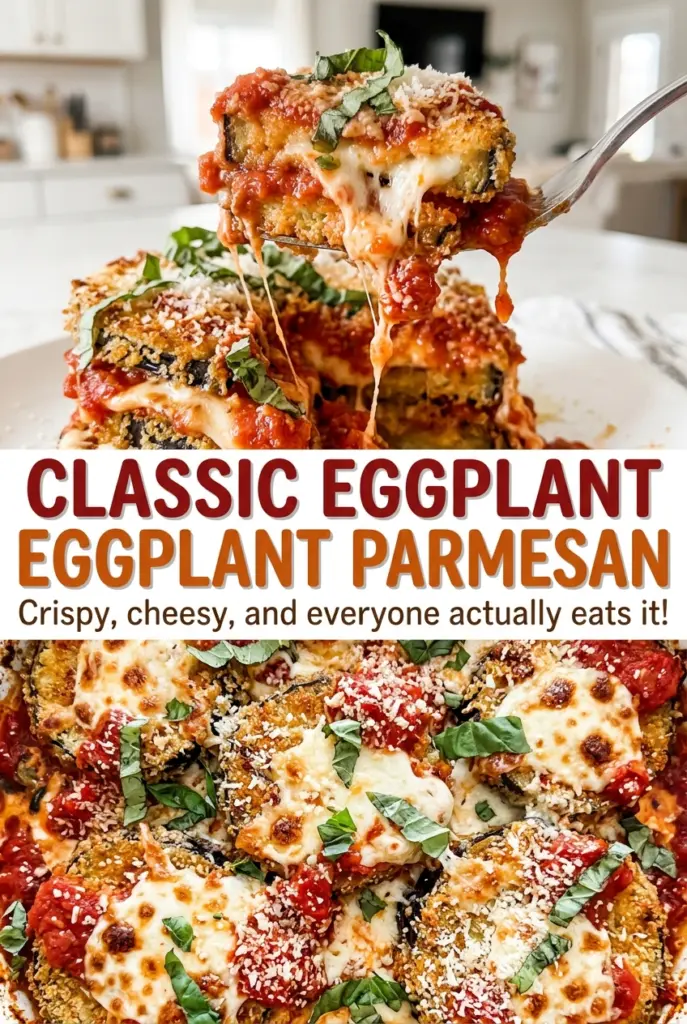
Classic Eggplant Parmesan
The first sign that the eggplant is ready for the oven is the sound: the slices give a quiet crunch when I move them from the paper towels, and the…

By Ava
•
•
Reading time: 9 min
Tip: save now, make later.
The first sign that the eggplant is ready for the oven is the sound: the slices give a quiet crunch when I move them from the paper towels, and the kitchen smells like garlic and tomato. Classic Eggplant Parmesan takes a few steps, but each one has a job. Salting the slices, frying them until golden, and baking them under sauce and cheese gives you tender eggplant without a watery middle.
I keep the tomato sauce simple and let it simmer uncovered while the eggplant rests. Then I bread and fry the slices before layering them, rather than asking a raw, wet slice to cook through under the cheese. The result is a casserole with distinct layers, browned cheese, and eggplant that still has some structure beneath the sauce.
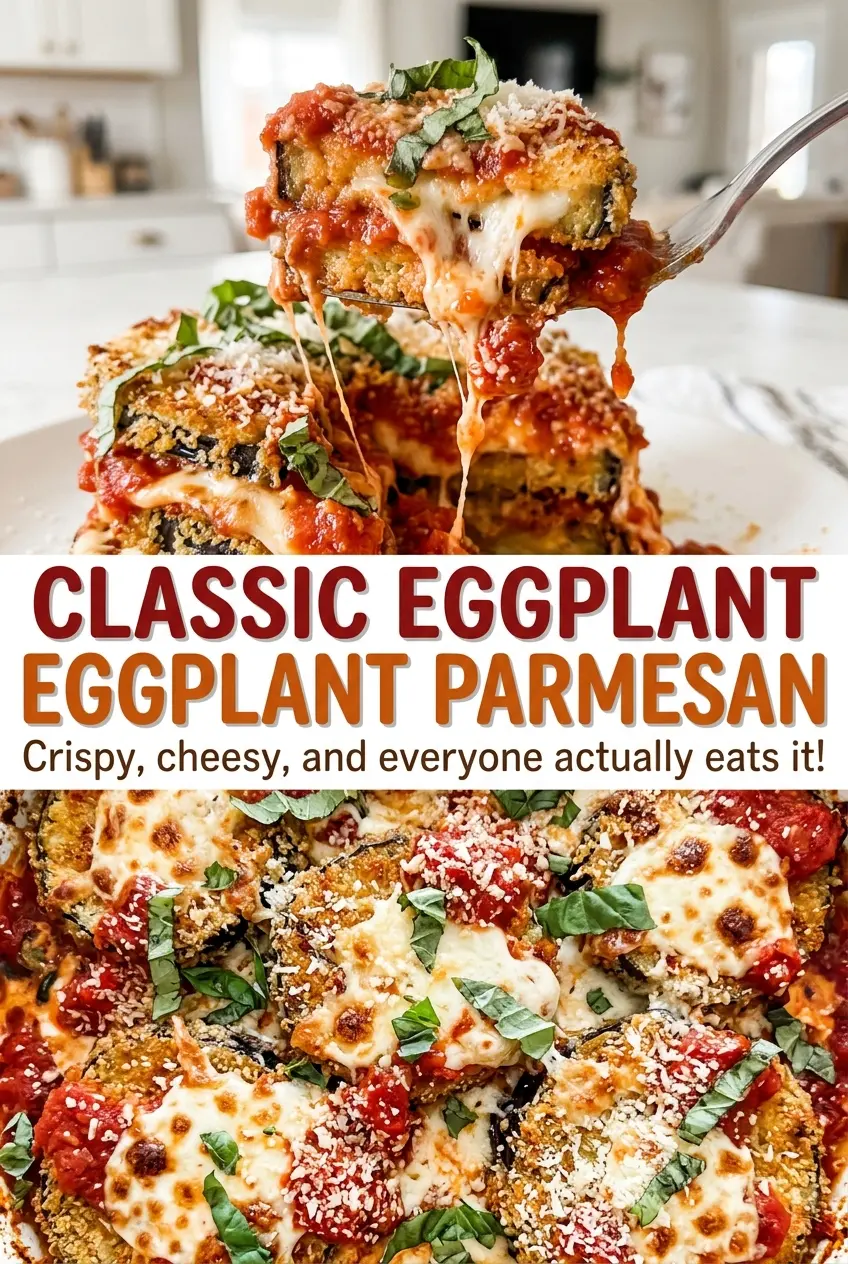
Kitchen Note
After rinsing the salted slices, pat them until the surfaces feel dry, not just damp. Any water left behind can thin the egg coating and leave bare patches in the breadcrumbs.
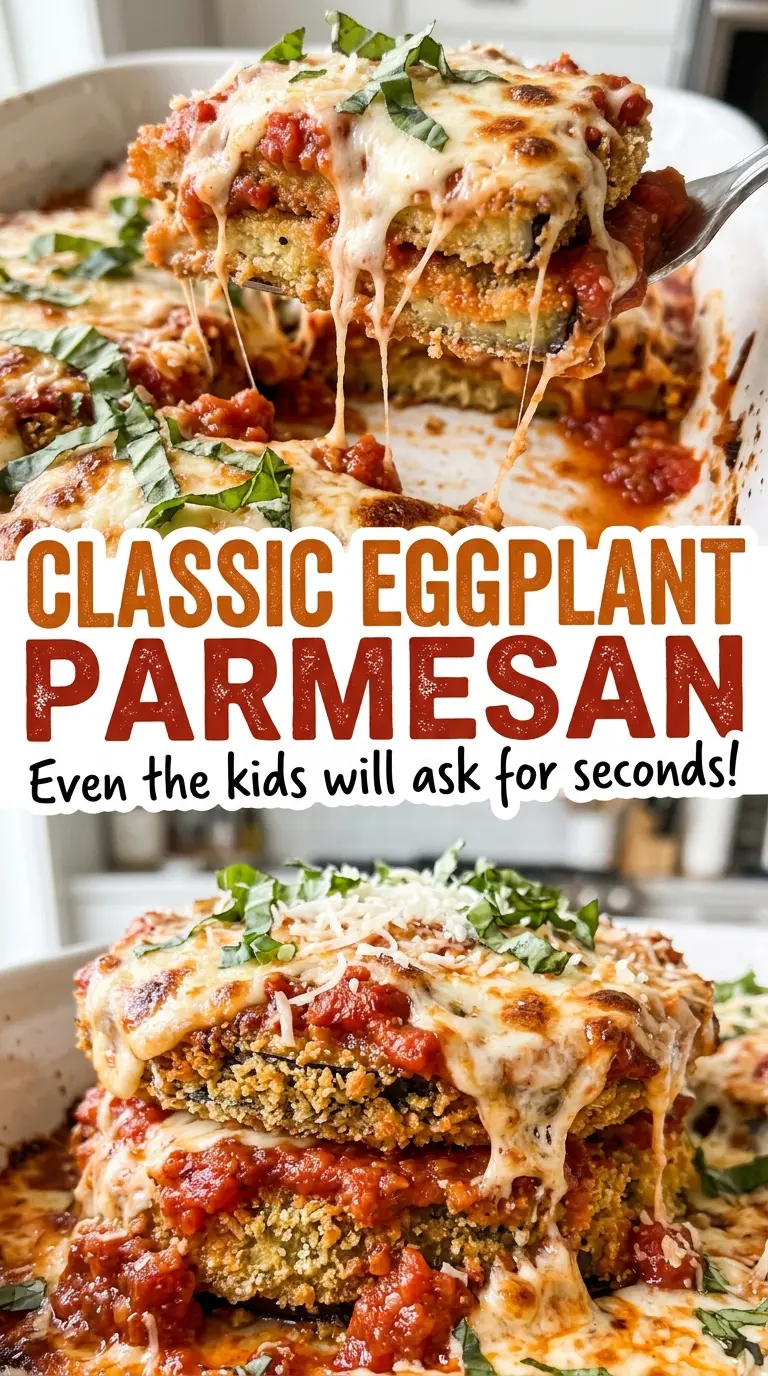
Save Classic Eggplant Parmesan for a cozy dinner: golden breaded slices layered with tomato sauce, mozzarella, and Parmesan.
Why the Flour-Then-Egg Coating Matters More Than a Thick Crumb Layer
Eggplant gives off moisture as it cooks, and a coating that isn’t anchored well can slide away under the sauce. The flour goes on first to give the beaten egg a dry surface to cling to; the egg, in turn, helps the breadcrumbs form an even jacket. That sequence is more useful than piling on a thick layer of crumbs, which can turn heavy or fall off in sheets.
Each slice should be coated all the way around, but it shouldn’t carry a clump of flour or breadcrumbs. Shake off the flour before dipping, and let excess egg drip back into its bowl before moving to the crumbs. This keeps the breading tidy and gives the hot oil room to brown it evenly. Once the slices are layered with sauce and cheese, the coating softens a little, but it still gives the eggplant a savory, crisp-edged layer rather than disappearing into the casserole.
The Ingredients That Keep the Eggplant Crisp Under All That Cheese
- Crushed tomatoes — Canned tomatoes are a dependable, affordable base here, and a store brand works well. If you have whole peeled canned tomatoes instead, crush them by hand for a slightly chunkier sauce; avoid a watery fresh tomato swap, which can loosen the casserole.
- Eggplant — Choose firm eggplants with smooth, unwrinkled skin. Medium globe eggplants give you broad crosswise slices that stack neatly; very small or narrow ones make uneven layers. The salt-and-rinse preparation also seasons the flesh without leaving a salty crust.
- Italian-seasoned breadcrumbs — Their fine crumb makes an even coating, and the seasoning brings flavor to the fried slices before they’re covered in sauce. Plain breadcrumbs will work but make the coating milder; no special brand is needed if the crumbs are fresh and dry.
- Low-moisture mozzarella — This melts across the layers without releasing as much liquid as fresh mozzarella. Whole-milk mozzarella gives a softer, richer melt, while part-skim low-moisture mozzarella is a sound option if you prefer a less rich finish.
- Finely grated Parmesan — Fine shreds scatter through the layers and melt evenly with the mozzarella. A wedge grated at home has a particularly fresh, savory taste, though packaged finely grated Parmesan is convenient and works in the casserole.
Build the Casserole Around Golden Eggplant, Not a Pile of Crumbs
Simmer the Garlic-Tomato Base
Warm the olive oil in a 3-quart saucepan over medium heat, then stir the minced garlic for about 30 seconds, just until fragrant. Add the crushed tomatoes, oregano, 1 teaspoon of the kosher salt, and black pepper. Bring the sauce to a simmer, lower the heat, and cook uncovered for 20 to 25 minutes, stirring occasionally. Keep it at a gentle simmer rather than a hard boil so it reduces without splattering.
Salt, Rinse, and Dry the Slices
Trim the eggplants and cut them crosswise into 1/2-inch slices. Arrange the slices in one layer, sprinkle both sides with the remaining 2 teaspoons kosher salt, and leave them for 30 minutes. Rinse under cold water, then pat dry thoroughly with paper towels. If the slices are still wet, the flour and egg coating won’t cling as evenly.
Set Up a Clean Breading Line
Heat the oven to 375°F while you prepare three shallow bowls: flour in the first, eggs beaten with water in the second, and Italian-seasoned breadcrumbs in the third. Coat each slice in flour and shake off the excess before dipping it in egg. Press it into the breadcrumbs so the surface is covered, then set it aside without stacking the coated slices. Keeping the bowls in order helps prevent loose flour from clumping in the egg or crumbs.
Fry Until Golden and Tender
Heat the canola oil in a 12-inch skillet over medium heat to 350°F. Work in batches so the slices have space in the pan; crowding cools the oil and makes the coating greasy instead of crisp. Fry for 2 to 3 minutes per side, until golden brown and tender, then drain on paper towels. Let the oil return to 350°F between batches for more even browning.
Layer, Bake, and Let It Set
Spread about 1 cup of sauce in the bottom of a 9×13-inch baking dish. Arrange half the eggplant over it, then add half of the remaining sauce and half of both cheeses; repeat with the rest of the eggplant, sauce, mozzarella, and Parmesan. Bake uncovered for 25 to 30 minutes, until the sauce bubbles and the cheese is browned in spots. Rest the casserole for 15 minutes before serving so the layers settle and portions are easier to lift out.
Three Useful Swaps for a Different Eggplant Parmesan
Make the Breading Gluten-Free
Replace the all-purpose flour with a 1:1 gluten-free flour blend and use Italian-seasoned gluten-free breadcrumbs. The egg still binds the coating, though the crumb may brown a little differently, so use the golden color and tenderness of the slices as your cues.
Choose a Lighter Mozzarella Layer
Use part-skim low-moisture mozzarella in place of whole-milk mozzarella. It still melts well, but the finished casserole is less rich and the cheese may feel a little firmer. Keep the low-moisture style rather than switching to fresh mozzarella.
Use Italian-Seasoned Panko for a Coarser Crunch
Swap the Italian-seasoned breadcrumbs for the same amount of Italian-seasoned panko. Its larger flakes make a more pronounced, craggy crust, though the coating won’t be as fine or even on each slice.
Storage and Reheating
- Refrigerator: Store covered for 3 to 4 days. The breading softens as it sits in the sauce, but the flavors settle together.
- Freezer: Freeze cooled portions in airtight containers for up to 3 months. The eggplant and coating will be softer after thawing, though the casserole still reheats well.
- Reheating: Warm portions in a 350°F oven until hot throughout, or microwave a single serving in short intervals. Reheating too long in the microwave can make the eggplant mushy.
Questions That Come Up Before the First Slice
Classic Eggplant Parmesan
Ingredients
Equipment
Method
- Heat the olive oil in a 3-quart saucepan over medium heat. Add the garlic and cook for about 30 seconds, stirring, until fragrant.
- Stir in the crushed tomatoes, oregano, 1 teaspoon of the kosher salt, and the black pepper. Bring to a simmer, reduce the heat to low, and cook uncovered for 20 to 25 minutes, stirring occasionally.
- While the sauce simmers, trim the eggplants and cut them crosswise into 1/2-inch slices. Arrange in a single layer, sprinkle both sides with the remaining 2 teaspoons kosher salt, and let stand for 30 minutes.
- Rinse the eggplant slices under cold water and pat them very dry with paper towels.
- Heat the oven to 375°F.
- Put the flour in one shallow bowl, beat the eggs with the water in a second bowl, and put the breadcrumbs in a third bowl.
- Coat each eggplant slice in flour, shaking off the excess, then dip it in egg and coat it in breadcrumbs.
- Heat the canola oil in a 12-inch skillet over medium heat to 350°F. Fry the slices in batches for 2 to 3 minutes per side, until golden brown and tender, then drain on paper towels.
- Spread about 1 cup of sauce in the bottom of a 9x13-inch baking dish. Arrange half the eggplant in the dish, spoon over half of the remaining sauce, and sprinkle with half of the mozzarella and Parmesan; repeat with the remaining eggplant, sauce, and cheeses.
- Bake uncovered for 25 to 30 minutes, until the sauce is bubbling and the cheese is browned in spots.
- Let rest for 15 minutes before serving.