
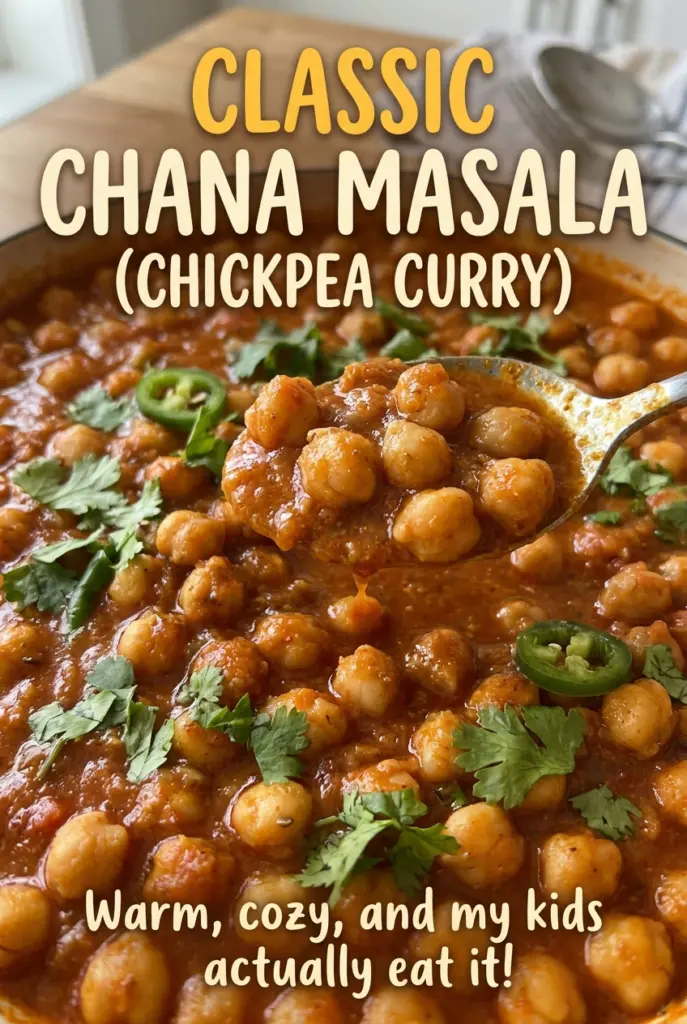
Classic Chana Masala (Chickpea Curry)
The cumin seeds start to crackle in the oil before the onions even hit the pan, and that first burst of fragrance is how I know this curry is off…

By Ava
•
•
Reading time: 10 min
Tip: save now, make later.
The cumin seeds start to crackle in the oil before the onions even hit the pan, and that first burst of fragrance is how I know this curry is off to a good start. I used to rush the onions, but giving them the full time to soften and turn golden at the edges makes the tomato base taste rounder, not sharp. That patient start is what makes this classic chana masala taste like it’s had much longer to simmer.
The spices go in briefly before the crushed tomatoes, just long enough to bloom in the hot oil without scorching. Then the tomatoes cook down until thick, and the chickpeas get time to soak up all that spiced sauce. Mashing a few against the side of the pan gives the curry a silky body while leaving plenty of chickpeas whole. The finished bowl is warm with cumin and ginger, bright with lemon, and thick enough to cling to every chickpea.
Kitchen Note
When you mash the chickpeas, press just a portion against the side of the pan and stir them back in. They thicken the sauce without turning the whole curry into a puree, so you still get tender chickpeas in every bite.
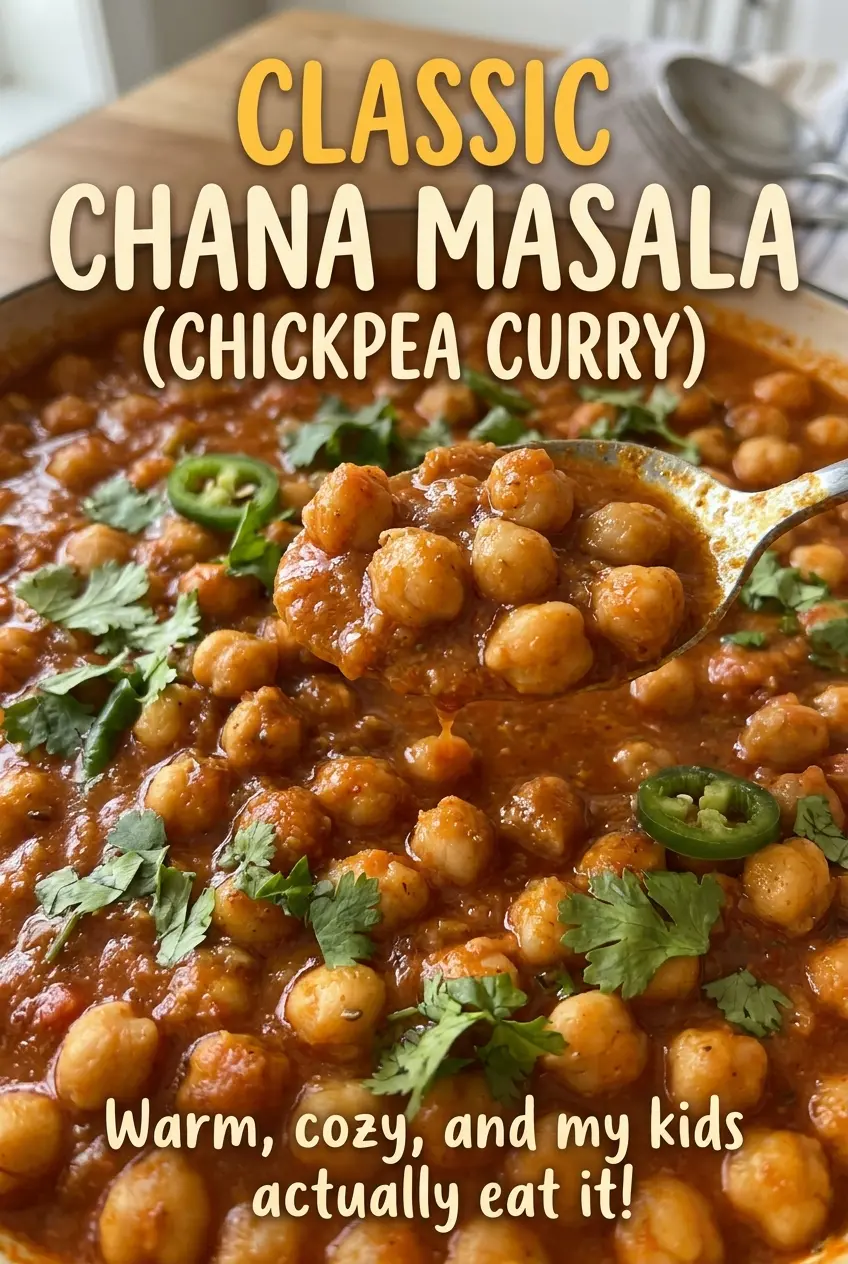
Save this classic chana masala for a cozy dinner: tender chickpeas, a thick cumin-spiced tomato sauce, and a bright finish of lemon and cilantro.
Why the Oil Around the Tomatoes Matters More Than a Long Simmer
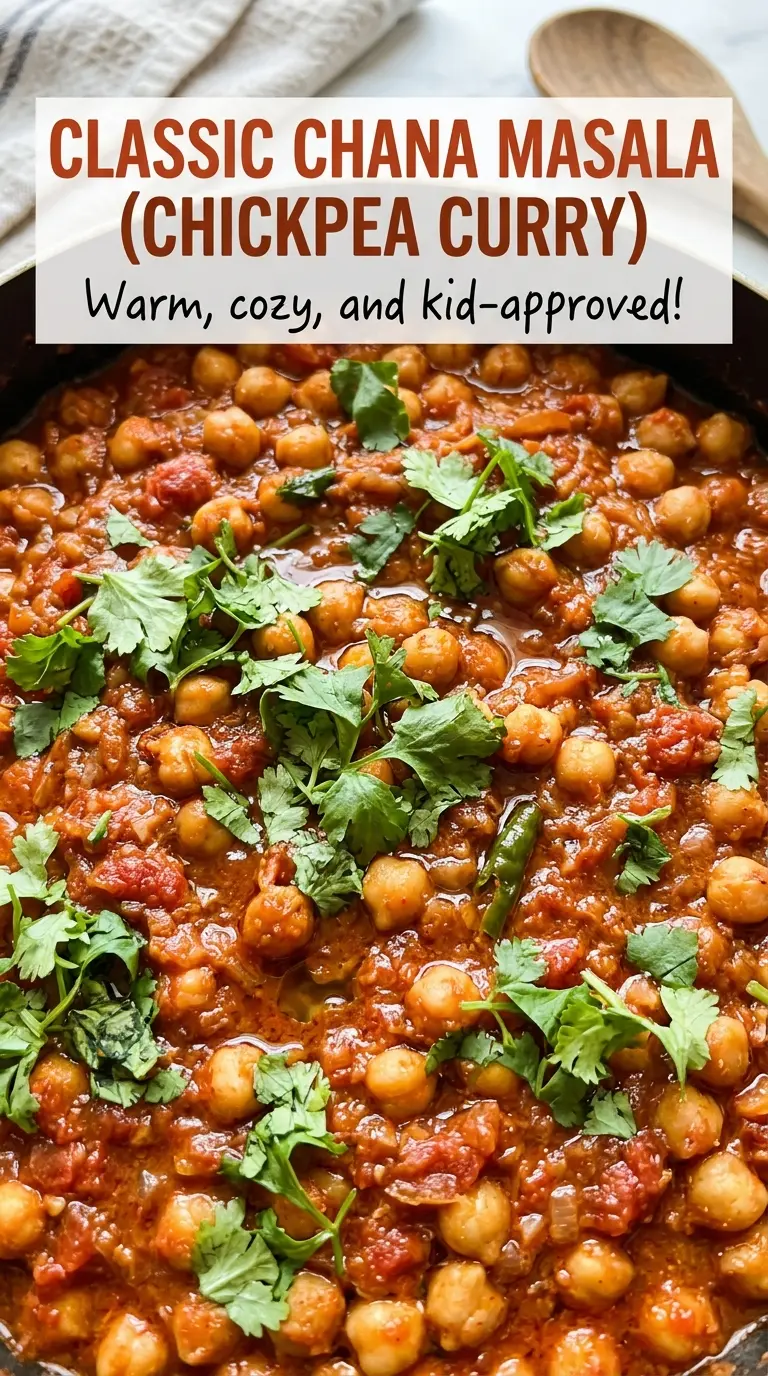
Tomatoes can taste raw and a little sharp if they go straight from the can to the chickpeas. In this curry, they get their own stretch in the pan first. As they cook down, their watery edge disappears, the sauce darkens and thickens, and you’ll see a little oil beginning to show around the edges. That visual cue tells you the tomato base has concentrated before the chickpeas are added.
It’s worth staying close and stirring often during this part. Crushed tomatoes can catch on the bottom as their moisture cooks away, especially around the edges of the skillet. If the base is still loose and bright red after a few minutes, keep cooking until it looks thicker and the oil starts to separate. Adding the chickpeas too early dilutes that concentrated base, and the final curry can taste more like chickpeas in tomato liquid than a unified, spiced sauce.
This isn’t about cooking the tomatoes until every bit of oil disappears or forcing a deep brown color. Look for a thick, glossy mixture with small beads of oil at the perimeter. Once the chickpeas and water go in, the sauce has time to loosen slightly, cling to the chickpeas, and thicken again during the uncovered simmer.
The Spices That Give Chana Masala Its Layered Flavor
- Cumin seeds and ground cumin — They do different jobs here. Whole seeds release a warm, toasted aroma when they hit the oil; ground cumin spreads that earthy flavor through the sauce. Fresh, fragrant spices make the biggest difference, but there’s no need for a specialty brand. Keep the seeds whole for their brief bloom rather than substituting the ground spice for them.
- Ground coriander, turmeric, and cayenne — Coriander brings a rounded, citrusy warmth, turmeric gives the sauce its golden tone, and cayenne supplies the heat. Buy spices that smell lively when you open the jar; stale ones can make the curry seem muted. These ground spices go in after the ginger and garlic, and a short stir in the oil helps wake them up without letting them scorch.
- Crushed tomatoes — Canned crushed tomatoes give this curry a consistent texture and enough moisture to build a sauce. A basic store brand works well. The mixture needs to reduce before the chickpeas go in, so a watery tomato product would change how long that stage takes and how thick the finished curry gets.
- Canned chickpeas — Drained and rinsed canned chickpeas keep this a practical stovetop curry, and their tender texture is ready to absorb the sauce during the simmer. Standard cans are fine; choose chickpeas that look intact rather than heavily broken. The recipe depends on them being cooked before they reach the skillet, so dried chickpeas need to be cooked separately first.
- Fresh ginger, garlic, and the finishing ingredients — Freshly grated ginger and minced garlic give the base a fragrant bite that dried versions don’t quite reproduce. Garam masala, lemon juice, and fresh cilantro go in at the end, where their aromas stay distinct instead of disappearing into a long cook. If you don’t have cilantro, leaving it out is better than adding an unrelated herb; the curry will still have its lemony finish, just without that fresh green note.
Build the Tomato Base Before the Chickpeas Go In
Bloom the cumin seeds, then soften the onion
Warm the neutral oil in a 12-inch skillet or medium Dutch oven over medium heat, then add the cumin seeds. Give them about 30 seconds, until fragrant; they should smell toasty, not dark or burnt. Add the finely chopped onion and cook for 8–10 minutes, stirring occasionally. Wait for softened pieces with golden edges rather than stopping while the onion is still pale and crisp.
Wake up the ginger, garlic, and ground spices
Stir in the grated ginger and minced garlic and cook for 1 minute, just until aromatic. Add the ground coriander, ground cumin, turmeric, and cayenne, then stir for 30 seconds. Keep the spices moving across the bottom of the pan so they bloom in the oil without catching. If the garlic starts to brown sharply, lower the heat and keep stirring.
Reduce the crushed tomatoes
Add the crushed tomatoes and stir them into the onion and spices. Cook for 6–8 minutes, stirring often as the mixture thickens. The sauce should look less watery and begin to leave a glossy trace on the bottom of the pan. Look for a little oil showing around the edges before moving on.
Simmer the chickpeas and finish the curry
Stir in the drained, rinsed chickpeas, water, and kosher salt, then bring the pan to a simmer. Cook uncovered for 15–20 minutes, stirring occasionally, until the sauce is thick and the chickpeas are tender. Mash some chickpeas against the side of the pan, then stir in the garam masala and lemon juice and simmer for 1 minute. Take the pan off the heat, stir in the cilantro, and let the curry rest for 5 minutes before serving.
Three Small Changes for a Different Chana Masala
A thicker, more cohesive curry
Mash more of the chickpeas against the side of the pan before stirring in the finishing spices. The sauce turns denser and more spoon-coating, though you’ll have fewer whole chickpeas in each serving.
A gentler heat level
Leave out the cayenne for a milder pot while keeping the cumin, coriander, turmeric, and garam masala in place. The curry will lose that quick peppery warmth but keep its rounded, aromatic spice.
Vegan and gluten-free as written
This chana masala already uses plant-based ingredients and contains no wheat-based ingredients, so it needs no dairy or meat replacement. Its hearty texture comes from the chickpeas and the thickened tomato sauce, not from cream or flour.
Storage and Reheating
- Refrigerator: Store in a covered container for 3–4 days. The sauce thickens as it chills, and the chickpeas soften a little more.
- Freezer: Freeze in airtight portions for up to 3 months. Thaw overnight in the refrigerator for the most even reheating.
- Reheating: Warm gently in a saucepan, stirring now and then, until the center reaches 165°F; add a little water if the chilled sauce is too thick. Avoid a hard boil, which can break up the chickpeas.
The Chana Masala Questions That Come Up at the Stove
Classic Chana Masala (Chickpea Curry)
Ingredients
Equipment
Method
- Heat the oil in a 12-inch skillet or medium Dutch oven over medium heat, then add the cumin seeds and cook for about 30 seconds, until fragrant.
- Add the onion and cook for 8–10 minutes, stirring occasionally, until softened and golden at the edges.
- Stir in the ginger and garlic and cook for 1 minute, then add the ground coriander, ground cumin, turmeric, and cayenne and stir for 30 seconds.
- Add the crushed tomatoes and cook for 6–8 minutes, stirring often, until thickened and the oil begins to show around the edges.
- Stir in the chickpeas, water, and salt; bring to a simmer, then cook uncovered for 15–20 minutes, stirring occasionally, until the sauce is thick and the chickpeas are tender.
- Mash some of the chickpeas against the side of the pan to thicken the curry, then stir in the garam masala and lemon juice and simmer for 1 minute.
- Remove the pan from the heat, stir in the cilantro, and let the curry rest for 5 minutes before serving.