
Cinnamon Roll Casserole
The edges puff and turn golden while the middle is still soft, which can make this casserole look finished before it is. I learned to trust the center more than…

By Ava
•
•
Reading time: 9 min
Tip: save now, make later.
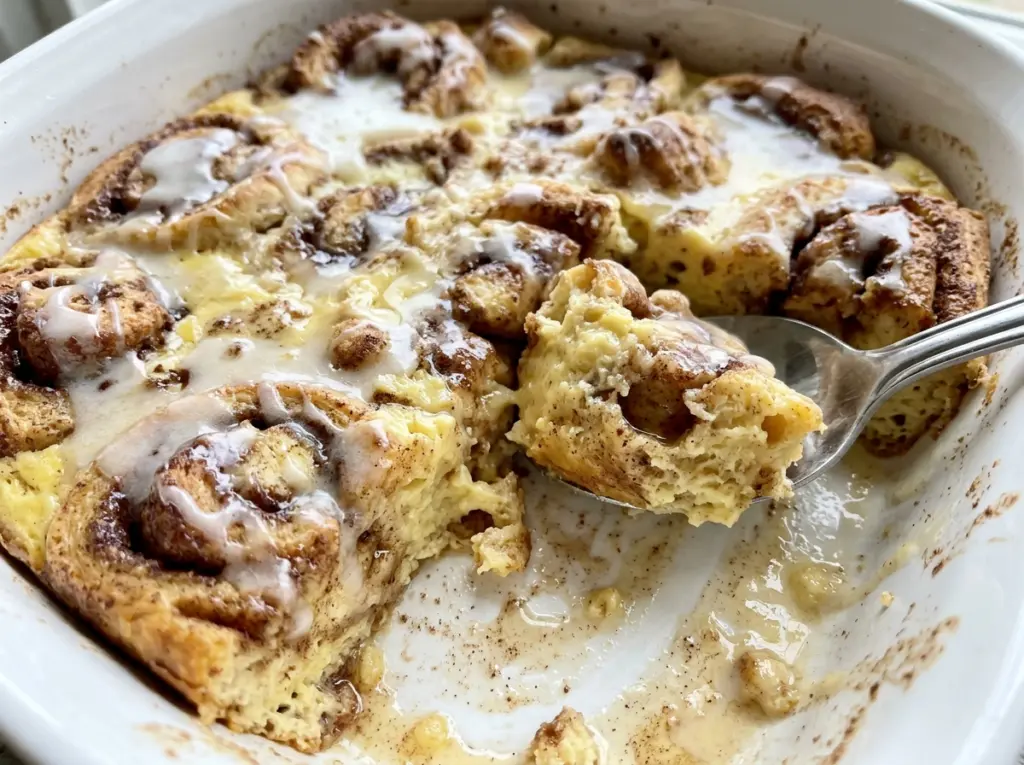
The edges puff and turn golden while the middle is still soft, which can make this casserole look finished before it is. I learned to trust the center more than the color: the egg mixture needs time to set through the pieces of dough, not just around them. This cinnamon roll casserole turns refrigerated cinnamon rolls into a warm, pull-apart bake with a soft center and the icing from the cans drizzled over the top.
Cutting each roll into four pieces gives the egg mixture plenty of places to settle, and spreading those pieces evenly in the dish helps the casserole bake at a steady pace. I whisk the milk and eggs with vanilla, cinnamon, and salt, then pour that mixture over the rolls before baking. The result is tender and fragrant without losing the cinnamon-roll texture beneath the custard.
Kitchen Note
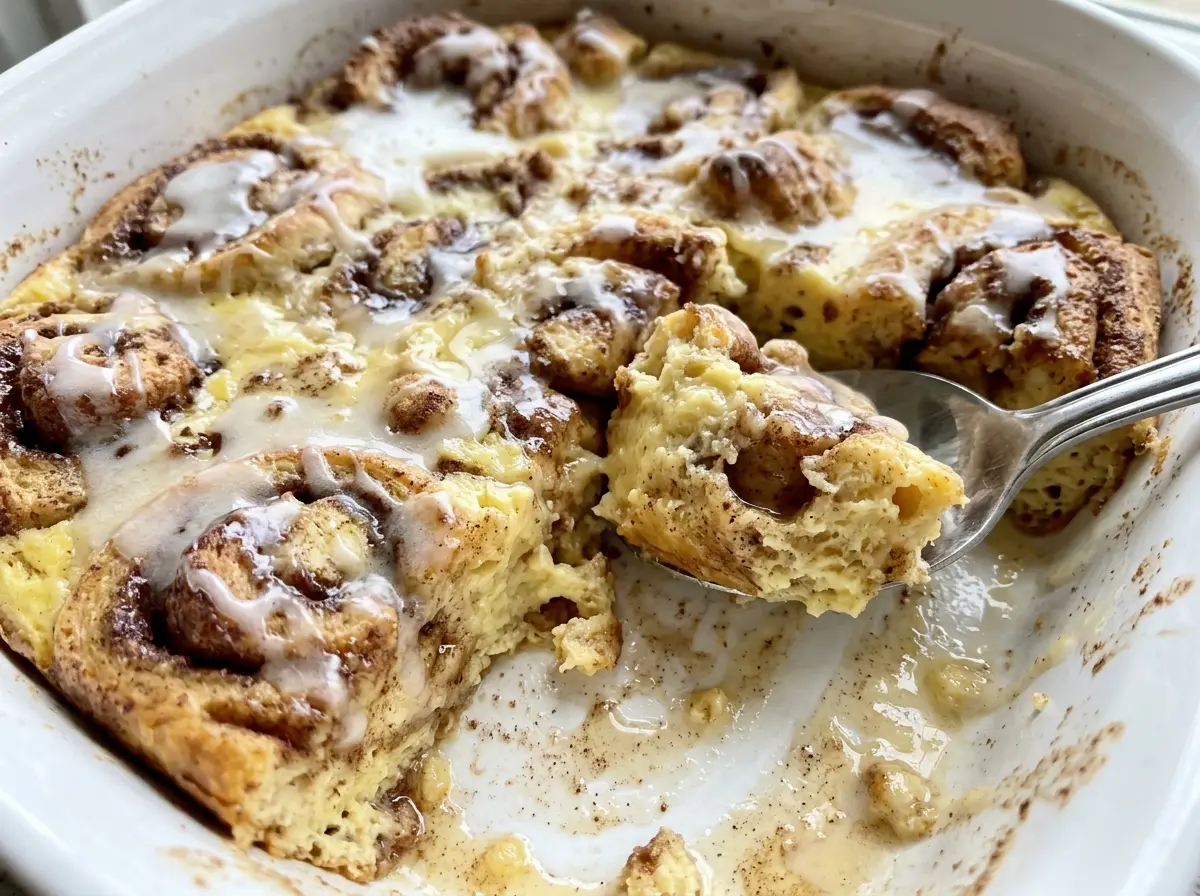
Let the casserole rest for the full 10 minutes before adding the icing. The surface settles, so the warm icing drapes over the top instead of disappearing into the soft pieces.
Save this cinnamon roll casserole for a brunch bake with a puffed, custardy center and warm icing drizzled over the top.
Why a golden top doesn’t tell you the center is ready
The outside of this casserole browns first, but the center has a different job to do. It contains the most egg-and-milk mixture, and that custard needs to set all the way through the pieces of dough. Color is a useful clue, not the final test; a browned surface can sit over a middle that is still loose.
Cutting the rolls into quarters helps here. Smaller pieces leave more edges and gaps for the custard to move between, while an even layer keeps one section from being piled much higher than another. The center should reach 160°F, and the bake should look puffed and golden when it comes out. Those cues work together: the thermometer checks the part you can’t judge by looking, and the surface tells you the dough has baked up around it.
Give the baking dish a quick look before it goes into the oven. If one corner has a mound of dough and another is nearly bare, spread the pieces out so the egg mixture isn’t concentrated in just one spot. That small bit of care makes the finished casserole easier to portion, too.
Why the cinnamon rolls and custard need to stay in balance

- Refrigerated cinnamon rolls — These provide the dough, cinnamon filling, and included icing, so the cans do most of the flavor work. Use rolls with their icing packets and keep the dough chilled until you’re ready to cut it; soft, warm dough is harder to portion cleanly. Different brands can vary in sweetness and dough texture, so the same-size cans are the simplest way to keep the balance consistent.
- Eggs — The eggs bind the milk into a custard that sets around the rolls. Large eggs give the mixture the right structure here; egg whites alone won’t deliver the same richness and can bake up firmer.
- Whole milk — Milk loosens the eggs and keeps the baked center tender. If you only have 2% milk, it works in the same amount, though the custard will be a little less rich. I wouldn’t use a much thinner milk alternative for this version because it changes the custard’s body.
- Vanilla and ground cinnamon — Vanilla rounds out the sweet dough, while ground cinnamon reinforces the spice already tucked into the rolls. Fresh, aromatic cinnamon makes a noticeable difference; the vanilla doesn’t need to be a premium extract, but use one whose aroma you like.
- Salt — A small amount keeps the custard from tasting flat against the sweet dough and icing. Measure it as listed rather than adding extra, since the packaged rolls and icing already bring sweetness and seasoning.
How to bake the pieces evenly and set the custard
Prepare the dish and cut the rolls
Heat the oven to 350°F and grease a 9×13-inch baking dish. Set the icing packets aside as you open the cans, then cut each cinnamon roll into four pieces. Arrange the pieces evenly across the dish rather than leaving a tall pile in the middle. Keeping the pieces in a fairly even layer gives the egg mixture a consistent path through the casserole.
Whisk and pour the custard
In a medium bowl, whisk the eggs, whole milk, vanilla, ground cinnamon, and salt until the mixture is combined. You want the yolks and whites blended without streaks of egg white showing. Pour it evenly over the cut rolls, moving around the dish so one area doesn’t get all the liquid. If some pieces shift as you pour, nudge them back into an even layer.
Bake until the center is set
Bake the casserole uncovered for 35–40 minutes. Look for a puffed top with golden edges, then check the middle with an instant-read thermometer; it needs to reach 160°F. If the center hasn’t reached that temperature, keep baking and check again rather than pulling the dish just because the top has browned. The casserole will be hot, so insert the thermometer carefully without pressing the pieces down.
Rest, warm the icing, and drizzle
Let the casserole rest for 10 minutes after baking. Put the reserved icing in a microwave-safe bowl and microwave it for 10 seconds, or until it’s pourable, then stir it smooth. Microwaves vary, so check the texture after the first burst instead of letting the icing get hot and runny. Drizzle it over the casserole just before serving.
Two packaged-roll choices that change the finish
Cream cheese icing for a tangier top
Choose refrigerated cinnamon rolls that come with cream cheese icing, keeping the same can size and quantity. The custard method stays the same, while the topping has a little tang to offset the sweet dough. Use the icing included with those rolls rather than adding a separate topping.
An orange-iced cinnamon roll version
For a citrus note, use refrigerated cinnamon rolls with orange-flavored icing, provided you can find the same can size. Keep the egg mixture unchanged so the bake still sets around the dough. The orange icing shifts the finish toward a brighter, lightly citrusy sweetness without adding another ingredient.
Storage and Reheating
- Refrigerator: Cover leftovers and refrigerate within 2 hours; eat within 3–4 days. The dough softens as it sits, so the pieces won’t have quite the same freshly baked edges.
- Freezer: Freeze cooled portions in an airtight container for up to 2 months. Thaw them in the refrigerator overnight; the texture will be softer after thawing.
- Reheating: Reheat a portion covered in a 325°F oven until the center reaches 165°F, or heat it in the microwave in short bursts. Don’t reheat the whole casserole repeatedly; warm only what you’ll serve.
Questions that come up while this casserole bakes
Cinnamon Roll Casserole
Ingredients
Equipment
Method
- Heat the oven to 350°F and grease a 9x13-inch baking dish.
- Open the cinnamon roll cans and set the icing packets aside.
- Cut each roll into 4 pieces.
- Arrange the pieces evenly in the baking dish.
- In a medium bowl, whisk the eggs, milk, vanilla, cinnamon, and salt until combined.
- Pour the mixture evenly over the rolls.
- Bake uncovered for 35–40 minutes, until puffed and golden and the center reaches 160°F.
- Let the casserole rest for 10 minutes.
- Put the reserved icing in a microwave-safe bowl and microwave for 10 seconds, or until pourable.
- Stir the icing and drizzle it over the casserole.