
Chocolate Orange Bark
The chocolate looks melted around the edges first, while a few stubborn pieces sit in the middle of the bowl. I used to keep microwaving until every piece disappeared, and…

By Ava
•
•
Reading time: 8 min
Tip: save now, make later.
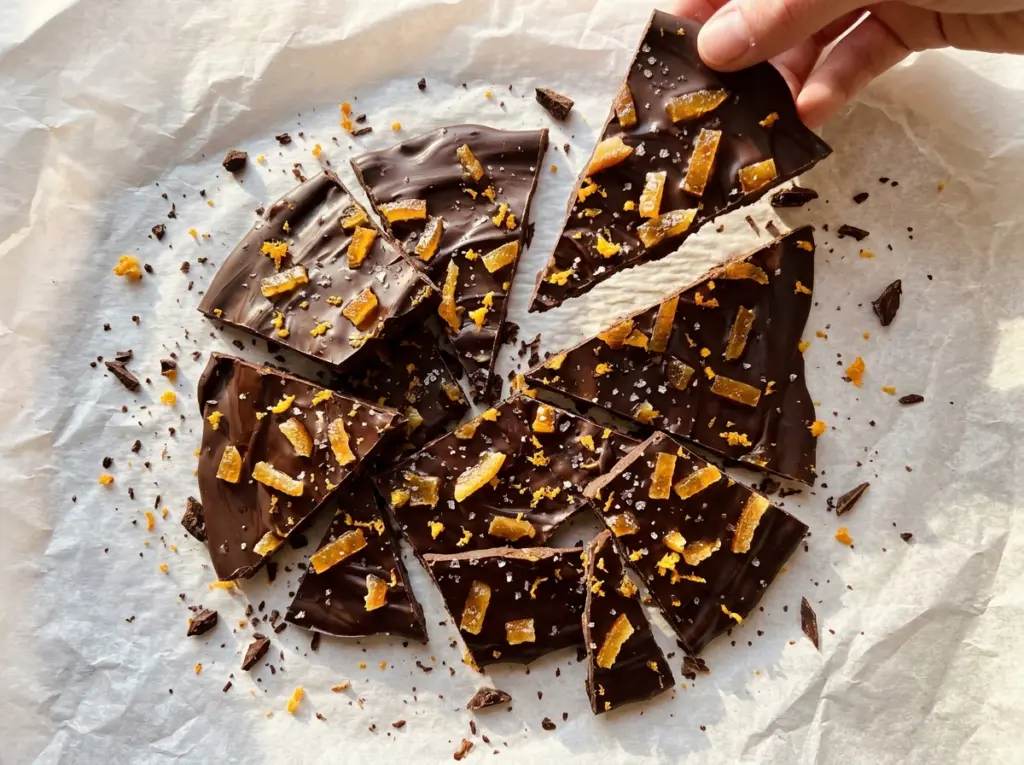
The chocolate looks melted around the edges first, while a few stubborn pieces sit in the middle of the bowl. I used to keep microwaving until every piece disappeared, and that extra heat was exactly what made the chocolate thick instead of silky. For Chocolate Orange Bark, I’ve learned to let stirring do some of the work and stop as soon as the mixture turns smooth.
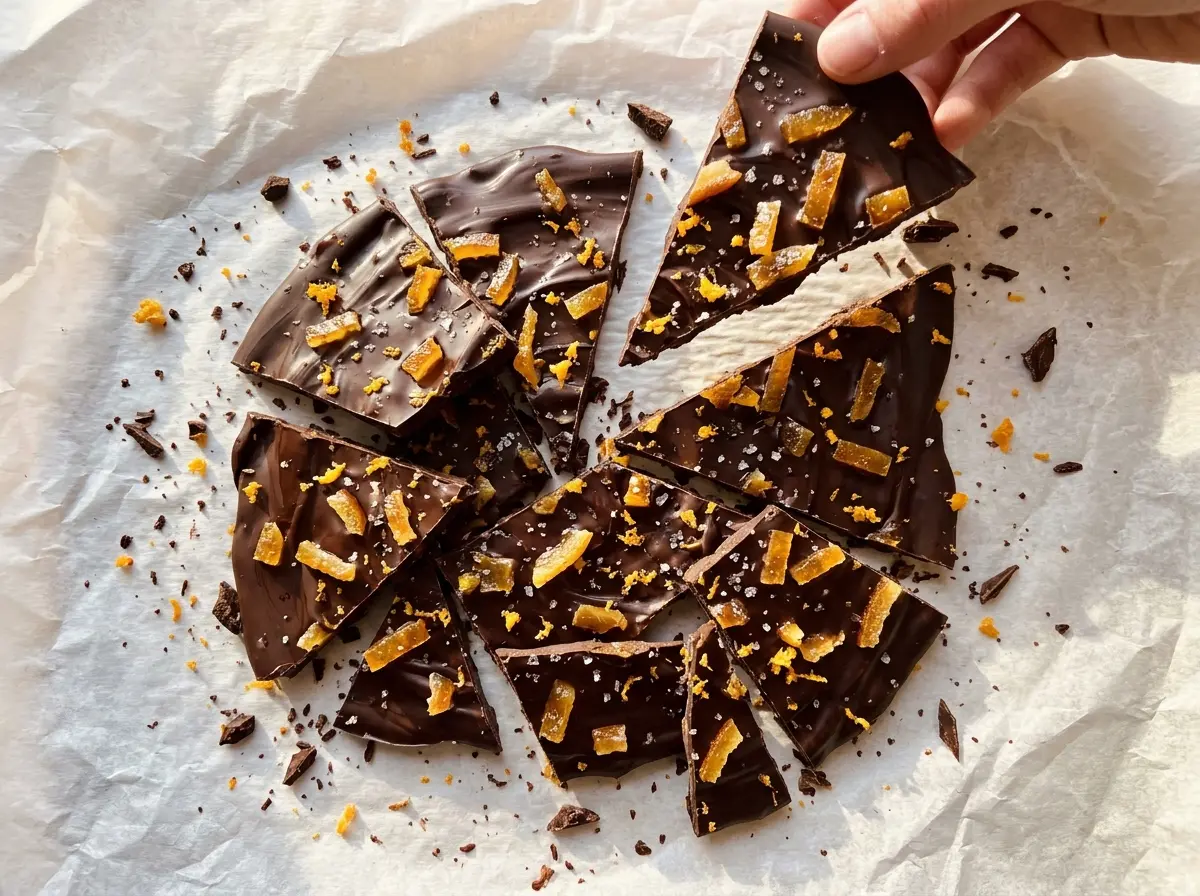
The two forms of orange make each piece taste more than just sweet: orange extract perfumes the chocolate, while finely chopped candied peel brings little chewy, citrusy bites. Roasted pistachios add a crisp, savory contrast, and the bittersweet chocolate keeps the whole thing from tipping into candy-shop sweetness. It’s a simple bark, but the balance comes from letting each ingredient do a different job. The finished pieces are glossy, fragrant, and dotted with orange and green.
Kitchen Note
Finely chopped chocolate melts more evenly than a mix of tiny shards and big chunks. If a few large pieces are left behind, the smaller bits can take more heat than they need before the bowl is smooth.
Save this chocolate orange bark for a make-ahead treat with chewy candied peel and roasted pistachios in every piece.
Why the Orange Flavor Needs Two Different Forms
Orange extract and candied orange peel aren’t interchangeable, and using both is what makes this bark taste citrusy all the way through. The extract carries a fine orange aroma into the chocolate itself, so the base doesn’t taste like plain bittersweet chocolate with a few flavored spots. The peel brings a more concentrated hit of citrus, plus a soft, chewy texture that breaks up the snap of the set chocolate.
That contrast matters in a bark, where every bite has a slightly different mix of topping and chocolate. If you relied on peel alone, some pieces would get a strong orange bite while others might not. If you relied on extract alone, you’d lose the little candied pieces that make the topping feel distinct. The pistachios play a separate role: their roasted, unsalted crunch gives the sweet peel somewhere savory to land. Together, the three additions make the bark layered without turning it into a long project or asking you to temper chocolate.
How the Chocolate, Peel, and Pistachios Shape Each Bite

- Bittersweet chocolate — Choose a plain bar in the 60% to 70% cacao range and chop it finely. The cacao percentage sets the sweetness and depth of the base; a bar within this range also gives the citrus room to stand out. Since chocolate is most of the bark, use one you enjoy eating on its own. Filled or flavored chocolate would compete with the orange and make the finished flavor less clear.
- Orange extract — This is the most direct way to spread orange aroma through the chocolate without adding juice. Use orange extract rather than fresh orange juice; the juice adds liquid that can make melted chocolate seize. The extract is added after melting, so its aroma stays noticeable in the finished bark.
- Candied orange peel — Finely chopped peel gives you small chewy pieces instead of large chunks that dominate a bite. If the pieces are uneven, take a moment to chop them to a similar size before scattering them over the chocolate. Fresh orange zest isn’t a like-for-like replacement: it lacks the candied sweetness and soft texture.
- Roasted unsalted pistachios — Roasting brings out a deeper, toastier taste, while the unsalted version keeps the topping from making the bark taste salty. Chopped pieces distribute more evenly than whole nuts and are easier to bite through once the chocolate is firm. There isn’t a need to toast them again; they’re already roasted.
Melting and Setting Chocolate Without Losing Its Smooth Finish
Line the Pan Before You Melt
Line a 9×13-inch rimmed baking sheet with parchment paper before you start heating the chocolate. Having the pan ready means you can spread the chocolate while it’s still fluid. Use a medium microwave-safe bowl for the chopped chocolate. Keep the parchment inside the rim so it stays in place as you spread the mixture.
Melt the Chocolate in Short Rounds
Microwave the chocolate at 50% power in 30-second intervals, stirring after each one. It takes about 2 to 3 minutes total, though the bowl may still have a few softened pieces when you pause to stir. Stir thoroughly each time; the warmth in the bowl helps those pieces melt without another long blast. Stop when the chocolate is smooth.
Stir in the Extract and Spread
Stir the orange extract into the melted chocolate until it’s evenly incorporated. Pour or spoon the chocolate onto the prepared baking sheet, then spread it into an even layer. An even spread gives the bark a consistent thickness, so you don’t end up with paper-thin edges and a much thicker middle. Work while the chocolate is still easy to move.
Add the Toppings and Let the Bark Firm
Sprinkle the candied orange peel and chopped pistachios evenly over the chocolate. Press them in lightly so they stay attached as the bark sets; pressing hard can push the toppings down unevenly. Refrigerate the pan until the chocolate is firm, 30 to 45 minutes. Break the set bark into pieces to serve.
Two Ways to Shift the Sweetness or Skip the Nuts
Use 70% cacao for a more bittersweet bark
Choose chocolate at the darker end of the recipe’s 60% to 70% range for a more pronounced cocoa taste and a less-sweet finish. The candied peel will stand out more against it. Keep the amount and the rest of the ingredients the same.
Leave out the pistachios for a tree-nut-free adaptation
Omit the pistachios and keep the chocolate and candied orange peel. The bark still sets, but you’ll lose the roasted crunch and savory contrast. For someone avoiding tree nuts, use ingredients and preparation surfaces free from tree-nut cross-contact.
Storage and Serving
- Room temperature: Store the bark in an airtight container in a cool, dry place for up to 2 weeks. Warm conditions can soften the chocolate.
- Refrigerator: Keep it airtight for up to 2 weeks if your kitchen is warm. Let the closed container lose its chill before opening it to limit condensation on the chocolate.
- Freezer: Freezing is possible in an airtight container, but temperature changes can leave chocolate dull or spotty as it warms. I prefer keeping this bark in a cool, dry place or the refrigerator instead.
Questions That Come Up While Making Chocolate Orange Bark
Chocolate Orange Bark
Ingredients
Equipment
Method
- Line a 9x13-inch rimmed baking sheet with parchment paper.
- Place the chocolate in a medium microwave-safe bowl.
- Microwave at 50% power in 30-second intervals, stirring after each, until melted and smooth, about 2 to 3 minutes total.
- Stir the orange extract into the melted chocolate.
- Spread the chocolate into an even layer on the prepared baking sheet.
- Sprinkle the candied orange peel and pistachios evenly over the chocolate.
- Press the toppings in lightly.
- Refrigerate until firm, 30 to 45 minutes.
- Break the bark into pieces.
- Serve.