
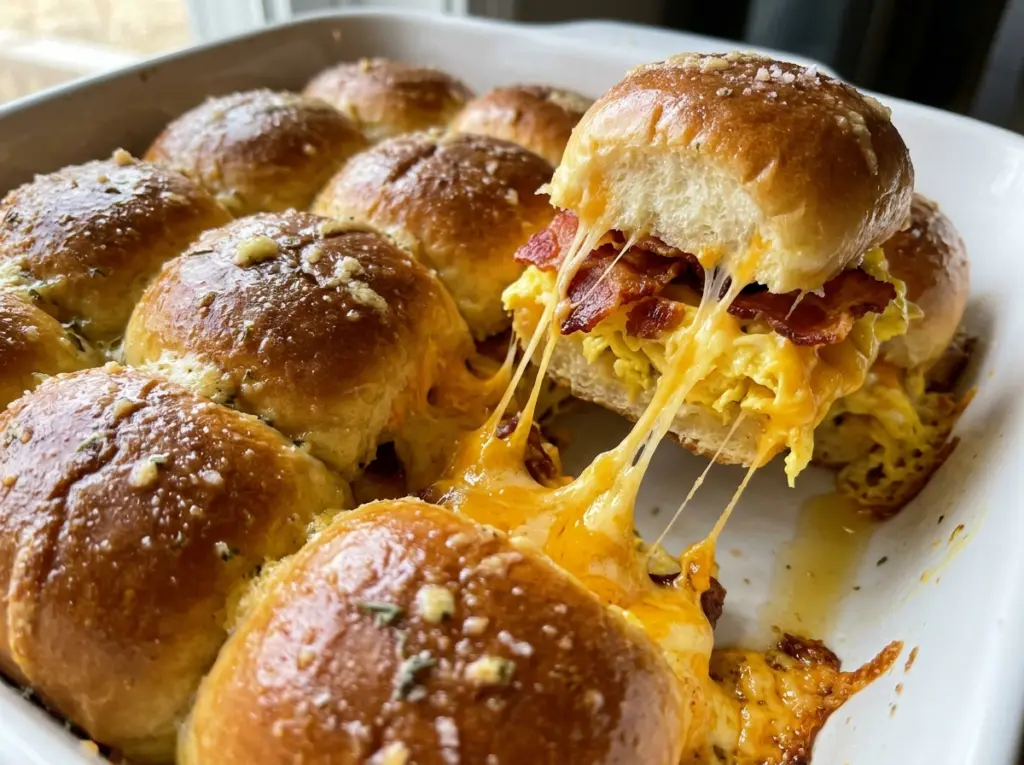
Cheesy Bacon Breakfast Sliders
The eggs are the part that can turn a breakfast slider from tidy to soggy. If they’re still loose when they go onto the bread, the bottoms soak up that…

By Ava
•
•
Reading time: 9 min
Tip: save now, make later.
The eggs are the part that can turn a breakfast slider from tidy to soggy. If they’re still loose when they go onto the bread, the bottoms soak up that extra moisture before the cheese has a chance to melt. For these cheesy bacon breakfast sliders, I cook the eggs gently until there’s no liquid left, but stop while they’re still soft.
Keeping the Hawaiian rolls connected as one slab makes assembly quicker and gives you neat little sandwiches once you cut them apart. I layer the eggs, crisp bacon, and cheddar over the bottom slab, then brush the tops with buttery Dijon before baking. The sweet rolls balance the salty filling, and that mustard-garlic topping gives the golden tops a savory edge.
They’re made for a brunch table, but the six servings also make a substantial breakfast without a lot of individual assembly. Each slider comes apart with a soft, cheesy middle and a buttery top.
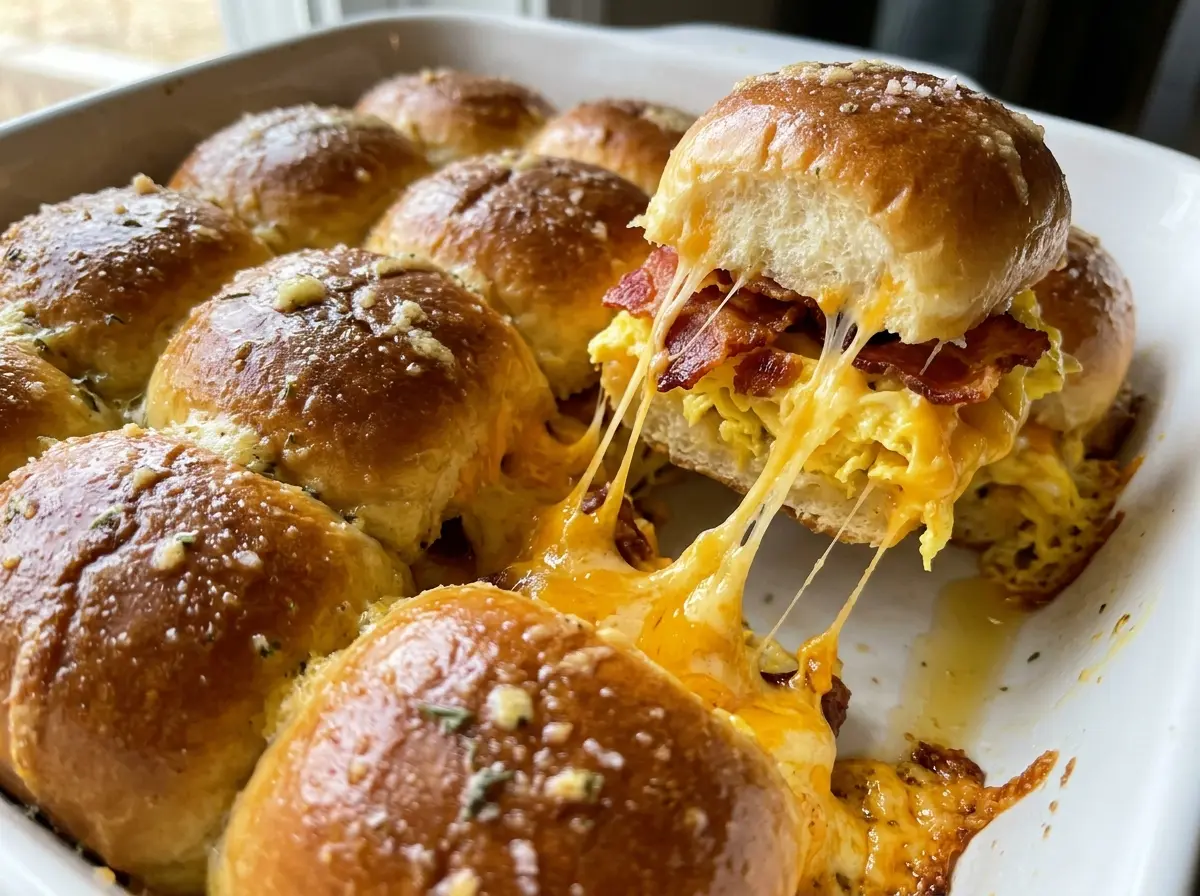
Kitchen Note
Give the baked sliders their full five-minute rest before cutting. The cheese settles just enough to help the filling stay in place, so you get cleaner edges instead of a bacon-and-egg tumble.
Save these cheesy bacon breakfast sliders for brunch: soft Hawaiian rolls, crisp bacon, and cheddar under buttery Dijon tops.
Why These Sliders Bake Better as One Connected Slab
Pull-apart rolls are easy to separate, but separating them before assembly gives you twelve little sandwiches to fill and line up. Keeping the rolls joined while you slice them horizontally turns the bottom and top into two even slabs. That makes it easier to spread the egg mixture from edge to edge without tearing soft bread or leaving a few rolls underfilled.
The order of the layers helps, too. Eggs go directly onto the bread, bacon sits over the eggs, and cheddar covers the filling before the top slab goes on. As the cheese melts, it helps hold the bacon and eggs together beneath the upper rolls. You still cut the sandwiches apart before serving, but they bake as one piece, so the edges stay tucked in and the tops brown together.
A 9×13-inch dish gives the slab room to sit flat without crowding. If the rolls shift while you move them, nudge the joined slab back into shape before adding the filling; there’s no need to pry the individual rolls apart.
How the Sweet Rolls, Cheddar, and Dijon Shape Each Bite

- Hawaiian sweet rolls — Their slight sweetness balances salty bacon and sharp cheddar, and their soft connected shape makes assembly straightforward. Soft pull-apart dinner rolls work if that’s what you have, though the finished sliders will be less sweet.
- Eggs and whole milk — Whole eggs give the filling its tender, substantial texture; the milk softens the curds as they cook. A splash of half-and-half can replace the milk, though the eggs will taste a little richer. Whisk the eggs and milk together before they hit the skillet so the seasoning disperses evenly.
- Bacon — Regular bacon brings both crisp pieces for the filling and savory rendered fat for cooking the eggs. Thick-cut bacon takes longer to crisp, so use the visual cue of crisp slices rather than relying only on the clock. Turkey bacon can stand in, but it won’t render the same amount of fat or bring quite the same smoky richness.
- Cheddar — Cheddar gives the sliders a familiar sharp, salty note and melts over the filling. Monterey Jack is a good swap if you want a milder, softer melt; the sliders will have less of cheddar’s tang.
- Butter, Dijon, and garlic powder — This quick topping coats the rolls and gives the browned tops a savory finish. Yellow mustard can replace Dijon for a sharper, more straightforward mustard taste. Stir the topping until the mustard is evenly mixed through the melted butter before brushing.
From Crisp Bacon to Golden, Pull-Apart Tops
Set Up the Baking Dish and Crisp the Bacon
Heat the oven to 350°F and grease a 9×13-inch baking dish. Cook the bacon in a 12-inch skillet over medium heat, turning it occasionally so it browns on both sides. It usually takes 8 to 10 minutes; look for crisp slices rather than limp, pale centers. Transfer the bacon to a paper towel-lined plate, then drain all but 1 tablespoon of fat from the skillet.
Scramble the Eggs Until Softly Set
Whisk the eggs with the milk, kosher salt, and black pepper in a bowl. Pour them into the skillet and cook over medium-low heat, stirring gently so the curds stay soft. They’re ready in 3 to 5 minutes, when no liquid egg remains but the curds still look tender. High heat or constant vigorous stirring can make the eggs firm and dry before they reach the oven.
Layer the Filling Inside the Roll Slab
Slice the rolls horizontally as one slab, keeping the top and bottom sections intact, and set the bottom half in the prepared dish. Spread the eggs over the bread, crumble the bacon across them, and layer on the cheddar slices. Place the top slab over the filling, lining up the edges with the bottom. If the filling spills toward one side, redistribute it before covering so each slider gets a fair share.
Brush, Cover, and Bake Until the Tops Turn Golden
Melt the butter, stir in the Dijon and garlic powder, and brush the mixture over the tops of the rolls. Cover the dish loosely with foil and bake for 15 minutes. Uncover and bake for another 5 to 8 minutes, until the cheese has melted and the tops are golden. Let the slab rest before cutting it into individual sliders.
Three Small Changes That Shift the Flavor or Texture
Make a bacon-free vegetarian batch
Leave out the bacon and cook the seasoned egg mixture in a nonstick skillet. The result is a milder, softer filling without the bacon’s smoky saltiness; the cheddar and Dijon-butter topping still give the sliders plenty of savory flavor.
Use a lighter layer of cheddar
Use one slice of cheddar per roll instead of layering two. You’ll get a less gooey middle with more of the egg and bacon coming through, while keeping the same sweet roll and crisp top.
Take the tang out of the topping
Skip the Dijon in the butter topping for a gentler, buttery garlic finish. The tops won’t have the mustard’s slight tang, but the rolls will still brown under the butter as they bake.
Storage and Reheating
- Refrigerator: Store cooled leftovers in an airtight container for 3 to 4 days. The rolls soften as they sit, but the filling keeps well.
- Freezer: Freeze individual cooled sliders, wrapped tightly and placed in a freezer-safe container, for up to 2 months. The bread may be a little softer after thawing.
- Reheating: Warm refrigerated or thawed sliders in a 325°F oven, covered loosely with foil, until hot throughout; reheat leftovers to 165°F. Leaving them uncovered the whole time can dry the tops before the centers warm through.
Questions That Come Up While Making Breakfast Sliders
Cheesy Bacon Breakfast Sliders
Ingredients
Equipment
Method
- Heat the oven to 350°F and grease a 9x13-inch baking dish.
- Cook the bacon in a 12-inch skillet over medium heat, turning occasionally, until crisp, 8 to 10 minutes; transfer to a paper towel-lined plate and drain all but 1 tablespoon of fat from the skillet.
- Whisk the eggs, milk, salt, and pepper in a bowl, then pour into the skillet and cook over medium-low heat, stirring gently, until softly set with no liquid egg remaining, 3 to 5 minutes.
- Slice the rolls horizontally as one slab and place the bottom half in the prepared dish; spread the eggs over the rolls, crumble the bacon on top, layer on the cheese, and place the top half of the rolls over the filling.
- Melt the butter and stir in the Dijon mustard and garlic powder, then brush the mixture over the tops of the rolls.
- Cover the dish loosely with foil and bake for 15 minutes, then uncover and bake until the cheese is melted and the tops are golden, 5 to 8 minutes.
- Rest the sliders for 5 minutes, then cut apart and serve.