
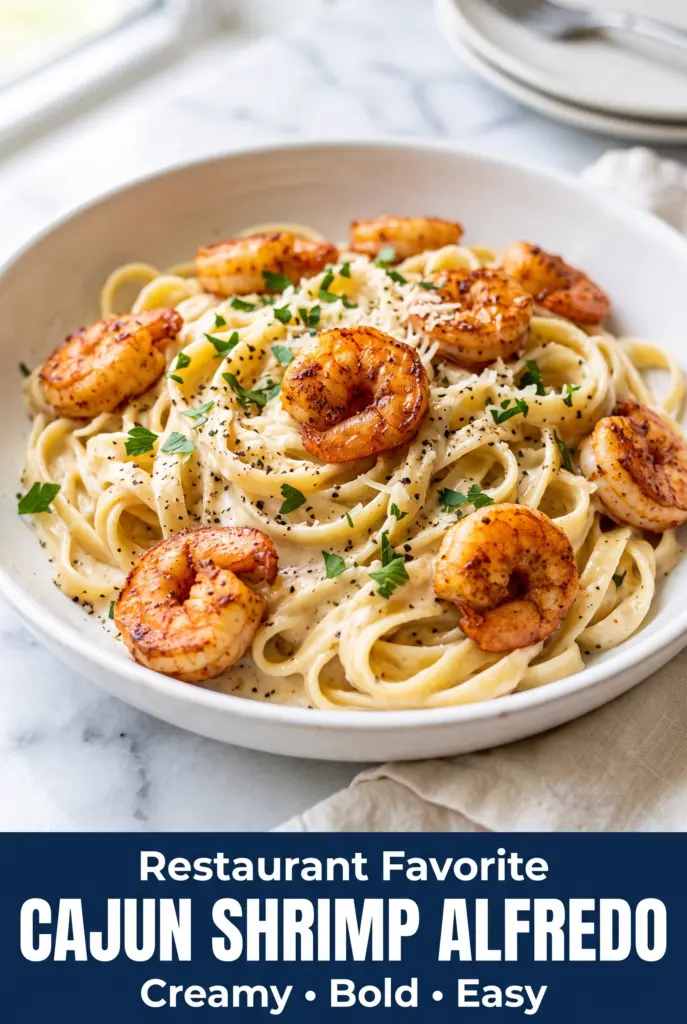
Cajun Shrimp Alfredo
Cajun Shrimp Alfredo hits that sweet spot between comfort food and restaurant-style dinner. The shrimp stay juicy, the sauce turns silky without feeling heavy, and the Cajun seasoning gives the…

By Ava
•
•
Reading time: 10 min
Tip: save now, make later.
Cajun Shrimp Alfredo hits that sweet spot between comfort food and restaurant-style dinner. The shrimp stay juicy, the sauce turns silky without feeling heavy, and the Cajun seasoning gives the whole pan a little heat and smoke that keeps each bite interesting. It’s the kind of pasta that disappears fast because the sauce clings to the fettuccine instead of pooling at the bottom of the bowl.
What makes this version work is the way the seasoning gets split between the shrimp and the cream sauce. That keeps the shrimp flavorful on their own, while the sauce still tastes balanced instead of one-note. Parmesan needs gentle heat here too; if it goes in over a hard boil, it can turn grainy instead of melting into a smooth Alfredo.
Below you’ll find the part that matters most: how to keep the shrimp tender, how to keep the sauce from breaking, and the small finishing touch that wakes the whole dish up at the table.
The sauce thickened up beautifully and the shrimp stayed tender instead of rubbery. I used the lemon at the end like you suggested and it cut through the richness perfectly.
Save this Cajun Shrimp Alfredo for a creamy pasta night with juicy shrimp and a sauce that stays smooth.
The Reason the Shrimp Go in Last, Not First
Shrimp cooks fast enough that it can go from plump to tight in the time it takes most sauces to finish simmering. That’s why the shrimp are cooked separately and added back at the end. They get seasoned early for flavor, seared just until opaque, then held out of the sauce while the Alfredo comes together. If you leave them in the pan while the cream reduces, they’ll overcook before the sauce is ready.
The other thing that matters here is residual heat. The sauce should be smooth and finished before the shrimp return to the skillet. Toss them only long enough to warm through and coat them. That last gentle fold keeps the texture tender and prevents the shrimp from releasing too much moisture into the sauce.
What the Parmesan, Cream, and Cajun Seasoning Each Bring to the Pan
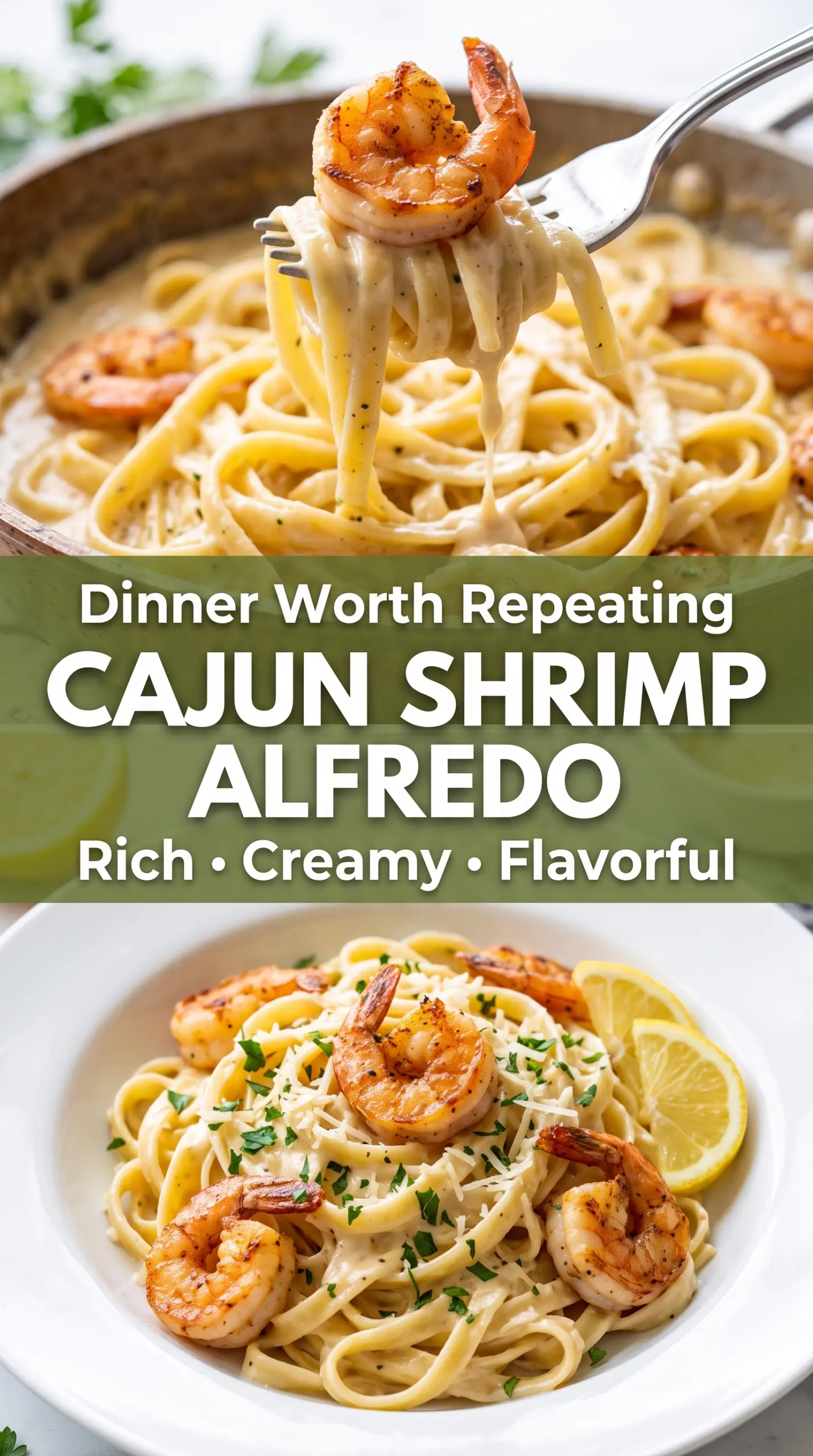
- Large shrimp — Bigger shrimp hold up better against the rich sauce and are easier to sear without turning tough. If you only have smaller shrimp, cut the cooking time down and pull them from the pan as soon as they’re pink and opaque.
- Cajun seasoning — This is doing double duty: it seasons the shrimp and gives the sauce its backbone. Different brands can vary a lot in saltiness, so taste before adding extra salt later.
- Heavy cream — There’s no true stand-in if you want that classic Alfredo body. Half-and-half can work in a pinch, but the sauce will be thinner and needs a softer simmer so it doesn’t split.
- Freshly grated Parmesan — This is not the place for the bagged stuff. Pre-grated cheese often has anti-caking agents that can make the sauce grainy instead of smooth. Grate it fine so it melts quickly and evenly.
- Reserved pasta water — A small splash helps the sauce loosen and cling to the fettuccine without getting watery. Add it slowly; too much will thin the Alfredo faster than you can recover it.
- Lemon wedges — They don’t make the dish taste lemony. They cut through the cream and bring the shrimp forward, which keeps the whole plate from tasting heavy.
Building the Alfredo Before the Cheese Has a Chance to Break
Season and Sear the Shrimp
Toss the shrimp with olive oil and part of the Cajun seasoning until every piece has a thin, even coating. Lay them in a hot skillet in a single layer and let them sear without moving them too much; that gives you a little color instead of steamed shrimp. Flip once, cook just until pink and opaque, then move them to a plate. If they curl tightly into a C-shape and look firm, they’re done.
Start the Sauce in the Same Pan
Keep the same skillet on the stove and lower the heat before you add the butter and garlic. Those browned bits left behind by the shrimp are the start of the sauce, so don’t scrub them out. The garlic only needs about 30 seconds; once you smell it, move on. If the garlic browns, it will carry a bitter edge through the whole dish.
Simmer, Don’t Boil, the Cream
Pour in the cream and add the remaining seasoning, paprika, salt, and pepper. Let it come up to a gentle simmer, not a rolling boil. You want small bubbles around the edge and a slight thickening across the surface. High heat is what causes cream sauces to split or turn greasy, so keep the burner steady and modest.
Whisk in the Parmesan Off the Heat if Needed
Stir in the Parmesan gradually until the sauce turns glossy and smooth. If the pan looks too hot, pull it off the burner for a minute before adding the cheese. That small pause helps the cheese melt instead of clumping. Once the sauce coats the back of a spoon, it’s ready for the pasta.
Finish with Pasta and Shrimp
Add the cooked fettuccine and toss until every strand is coated. If the sauce tightens up too much, loosen it with a splash of reserved pasta water. Return the shrimp to the skillet only long enough to warm through, then finish with parsley and lemon. That last step wakes up the sauce and keeps the richness in check.
How to Adapt This for a Lighter or More Flexible Dinner
Gluten-Free Pasta Swap
Use a sturdy gluten-free fettuccine and cook it just to al dente. Gluten-free pasta can soften fast once it hits the sauce, so pull it a minute early and toss it immediately. The sauce itself is naturally gluten-free as long as your Cajun seasoning blend doesn’t include any flour or fillers.
Dairy-Light Version
You can swap in half-and-half for part of the cream, but the sauce will be thinner and a little less luxurious. Keep the heat low and add the Parmesan in small handfuls so it still emulsifies. This version works best if you want the same flavor with a lighter finish, not a full Alfredo clone.
Make It a Little Spicier
Add a pinch of cayenne or extra Cajun seasoning to the sauce after the cream goes in. That gives the heat time to bloom without scorching the spices in the pan. Go slowly; once the sauce is rich, the spice reads stronger than it would in a thinner dish.
Storage and Reheating
- Refrigerator: Store in an airtight container for up to 3 days. The sauce thickens as it chills, so expect it to look a little dense before reheating.
- Freezer: Alfredo sauce doesn’t freeze well. The cream and cheese can separate after thawing, and the texture turns grainy.
- Reheating: Warm gently in a skillet over low heat with a splash of cream or milk, stirring often. Don’t blast it in the microwave on high or the sauce can break and the shrimp can turn rubbery.
Answers to the Questions Worth Asking
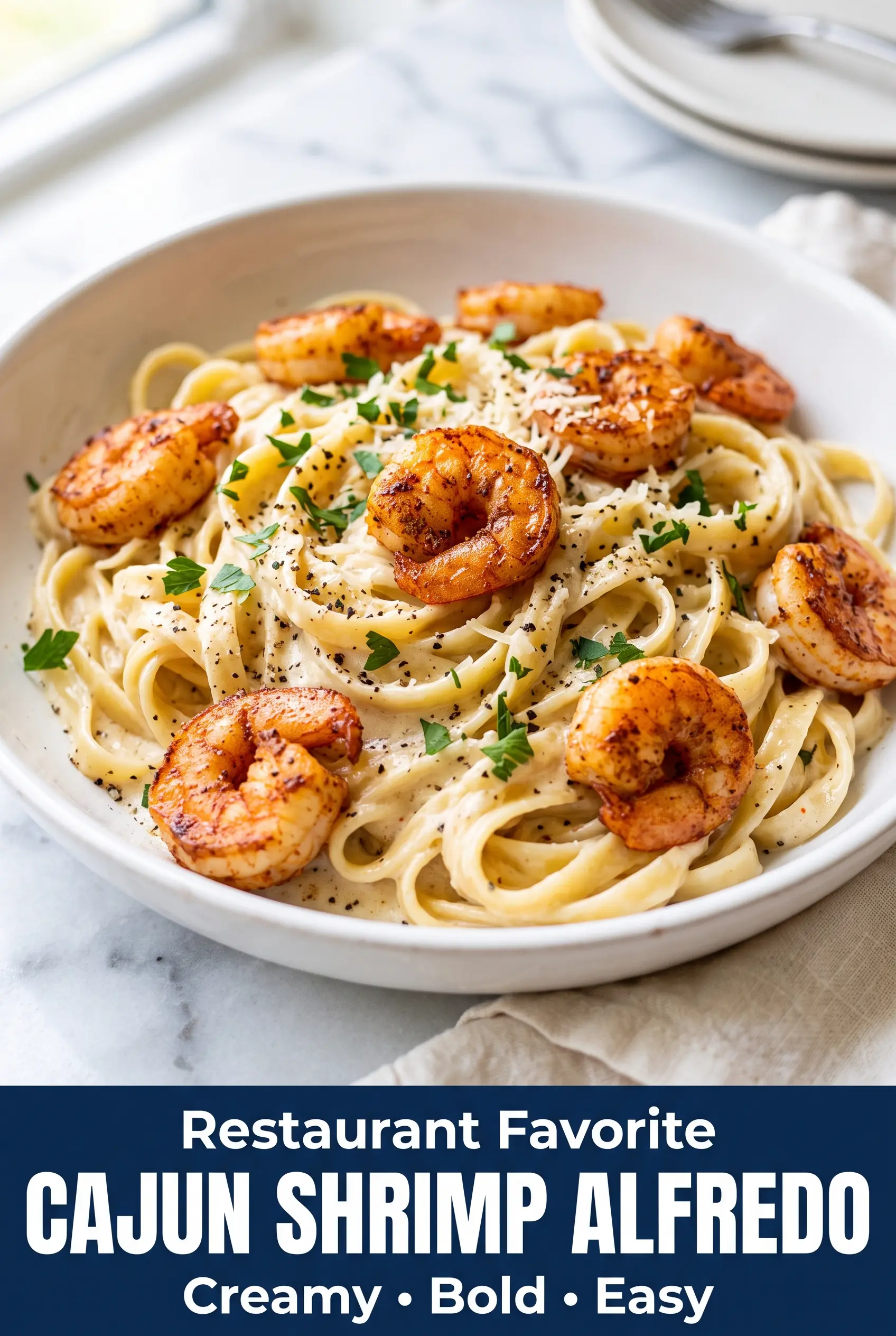
Cajun Shrimp Alfredo
Ingredients
Equipment
Method
- Cook the fettuccine according to package directions until al dente, stirring occasionally so it cooks evenly.
- Reserve 1/2 cup of pasta water, then drain the fettuccine and set aside.
- Toss the shrimp with the olive oil and 1½ tsp of the Cajun seasoning until coated.
- Heat a large skillet over medium-high heat, then cook the shrimp for 2–3 minutes per side until pink, opaque, and 145°F internally.
- Transfer the cooked shrimp to a plate while you make the sauce.
- Reduce the heat to medium, then melt the butter in the same skillet.
- Sauté the garlic for 30 seconds until fragrant, stirring to prevent browning.
- Pour in the heavy cream and stir in the remaining Cajun seasoning, smoked paprika, kosher salt, and black pepper.
- Simmer the sauce for 3–4 minutes until slightly thickened, scraping up any browned bits.
- Whisk in the Parmesan cheese until smooth and creamy.
- Add the cooked fettuccine to the skillet and toss until evenly coated in the sauce.
- Add a splash of reserved pasta water if needed to loosen the sauce to a silky consistency.
- Return the shrimp to the skillet and gently toss to coat in the Alfredo sauce.
- Garnish with chopped fresh parsley and serve immediately with lemon wedges.