
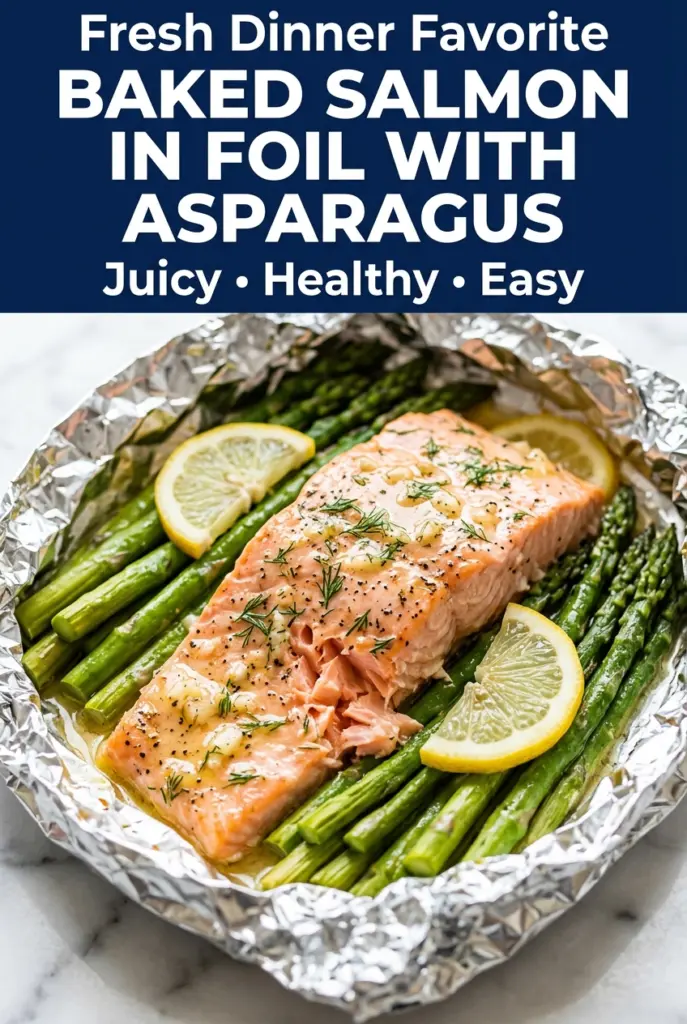
Baked Salmon in Foil with Asparagus
Baked salmon in foil with asparagus gives you tender fish, crisp-tender vegetables, and a garlicky lemon butter sauce that stays right where it should: on the salmon and in the…

By Ava
•
•
Reading time: 10 min
Tip: save now, make later.
Baked salmon in foil with asparagus gives you tender fish, crisp-tender vegetables, and a garlicky lemon butter sauce that stays right where it should: on the salmon and in the packet. The foil does the heavy lifting here. It traps steam so the asparagus cooks without drying out, while the butter melts into the lemon and garlic and turns into a bright, savory finish you can spoon over everything at the table.
The trick is keeping the salmon from overcooking while the asparagus stays snappy. Thin fillets will finish fast, so a hot oven and tightly sealed packets matter. Heavy-duty foil helps too, because it holds the shape better and seals more reliably than thin sheets. I also like slicing the lemon thin instead of squeezing a lot more juice over the top; those rounds perfume the fish as they bake and keep the sauce balanced instead of sharp.
Below you’ll find the small details that make this dinner work on a weeknight: how to portion the asparagus so it cooks evenly, when the salmon is done even before the center looks completely opaque, and a few smart swaps if you need to change up the vegetables or keep the meal dairy-free.
The salmon came out flaky and the asparagus was still crisp at the tips. The garlic lemon butter pooled in the foil and tasted like something from a nice restaurant, but it was on the table in under 20 minutes.
Save this baked salmon in foil with asparagus for an easy lemon butter dinner that cooks in one packet and leaves almost no cleanup.
The Packet Seals In Moisture, But It Also Controls the Vegetable Timing
Foil packets are forgiving, but they still reward a little thought. Salmon and asparagus don’t cook at exactly the same pace, and the difference matters when the fish is portioned into 6-ounce fillets. The asparagus sits underneath the salmon and gets the benefit of the hot steam, so it softens without needing a long roast. If the spears are thick, trim the woody ends well and keep the pieces in an even layer so the ones on the edges don’t stay tough while the center overcooks.
The biggest mistake is overloading the packet. When the salmon is crowded, the butter and lemon sauce can’t circulate, and you end up with pale fish and mushy asparagus instead of a glossy finish. Give each fillet its own space, and seal the foil tightly enough that steam stays inside but not so tightly that the packet tears when the salmon expands a little in the heat.
What the Garlic, Lemon, and Butter Are Really Doing Here
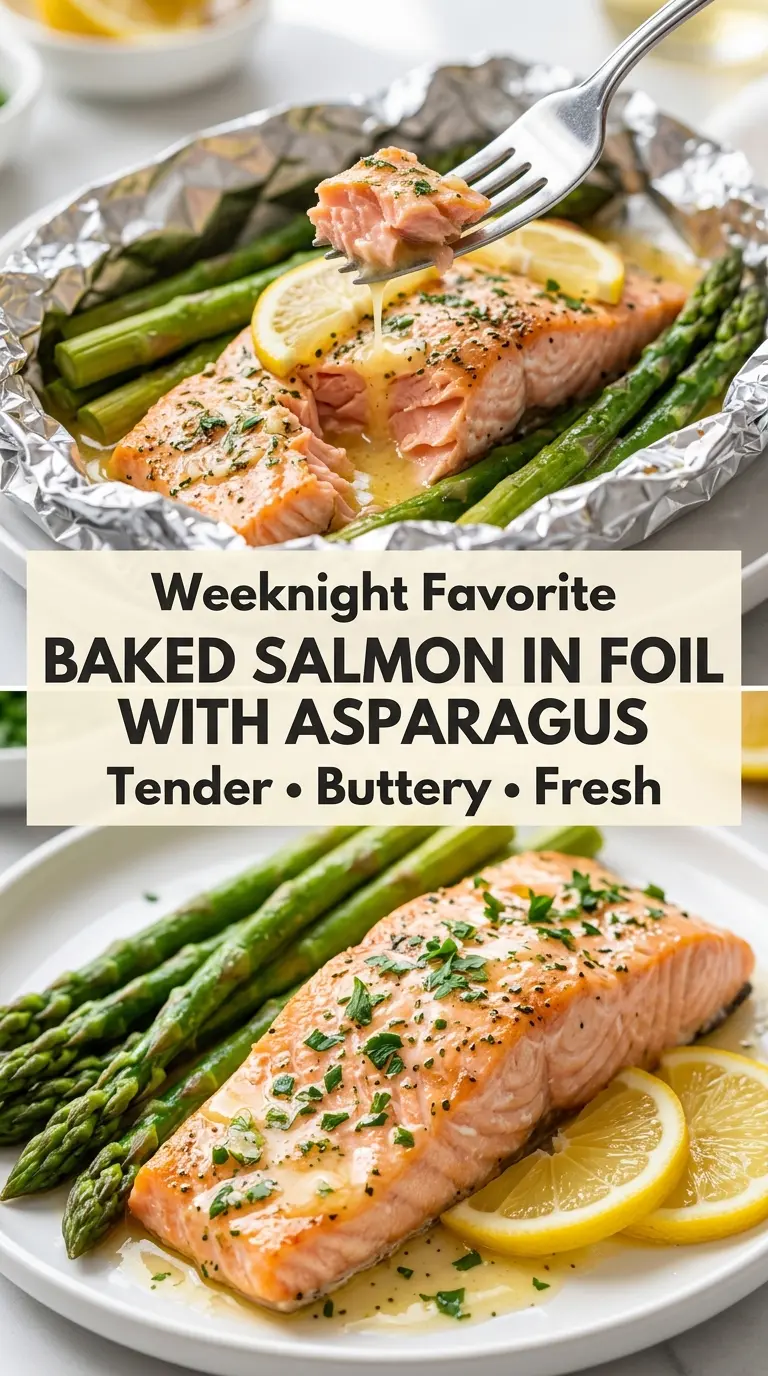
- Salmon fillets — Look for fillets that are close to the same thickness so they finish at the same time. Skin-on or skinless both work, but skin-on gives you a little more protection against overcooking. If you’re using frozen salmon, thaw it completely and pat it dry before seasoning, or the packets will steam too aggressively and dilute the sauce.
- Asparagus — Medium spears are the sweet spot here. Thin asparagus can go limp fast, and very thick spears may need a minute or two more. Trim the dry ends and keep the spears in one layer under the fish so they roast in the buttery juices instead of sitting in a pile.
- Butter and olive oil — The butter brings richness and helps the garlic and lemon cling to the fish, while the olive oil keeps the mixture from tasting heavy. If you need a dairy-free version, use all olive oil plus a little extra lemon zest; you lose some of the roundness, but the sauce still tastes clean and bright.
- Lemon juice and lemon slices — The juice seasons the butter mixture, but the slices do something different: they perfume the salmon as it bakes and keep the top from tasting flat. Use fresh lemon here. Bottled juice can taste dull and a little bitter once it heats up.
- Garlic and Italian seasoning — Fresh garlic matters more than the dried herbs. It mellows in the oven and turns sweet, while dried Italian seasoning brings enough backbone to keep the sauce from tasting one-note. If your garlic is very finely minced, keep an eye on the edges of the packet so it doesn’t darken too much under the lemon butter.
The 15 Minutes That Decide Whether the Salmon Stays Tender
Building the Vegetable Bed
Start by dividing the asparagus into even piles on the foil sheets. That bed matters because it lifts the salmon just enough to let the steam circulate underneath while the vegetables soak up the butter as it drips down. Drizzle the asparagus with a little oil first so it doesn’t dry out before the salmon releases its own juices. If the spears are all different thicknesses, put the thicker ends toward the outer edges of the packet where the heat is strongest.
Spooning on the Garlic Butter
Whisk the melted butter, oil, garlic, lemon juice, zest, seasoning, paprika, salt, and pepper until the mixture looks evenly flecked, then spoon it over the salmon rather than pouring all of it in one spot. That gives you better coverage and keeps the garlic from clumping in one corner. The paprika won’t taste smoky here; it adds color and helps the top of the fish pick up a deeper finish. If the butter starts to solidify while you work, warm it just until fluid again.
Sealing and Baking the Packets
Fold each packet tightly, leaving a little room above the fish so steam can move around. Bake at 400°F until the salmon flakes easily with a fork and the thickest part reaches 145°F. The fish should look opaque at the edges but still slightly glossy in the center when you open the packet. If you wait until it looks completely dry in the oven, you’ve gone too far. Open the packets carefully because the steam is hot, then finish with parsley and the buttery juices from the foil.
Three Practical Ways to Adjust This Dinner Without Losing What Makes It Work
Dairy-Free Salmon Packets
Swap the butter for more olive oil and add an extra teaspoon of lemon zest. The sauce will be lighter and less silky, but the salmon still gets a glossy coating and the asparagus stays bright. This works best if you use plenty of garlic and serve the packets right away while the juices are still hot.
Using Different Vegetables
Broccolini, thin zucchini, or green beans all work, but they change the timing. Broccolini needs about the same bake time as asparagus, while zucchini softens faster and should be cut into thicker planks so it doesn’t collapse. Keep the vegetables in a single layer so the packet stays steamy instead of watery.
Making It for Two or for a Crowd
For two servings, cut the foil into two smaller packets and keep the salmon fillets centered over the asparagus so they cook evenly. For a crowd, assemble the packets ahead of time and refrigerate them for a few hours before baking. Don’t leave them overnight with the lemon on the fish, or the acid can start to cure the surface and change the texture.
Storage and Reheating
- Refrigerator: Store leftovers in an airtight container for up to 2 days. The salmon stays good, but the asparagus softens a little as it sits.
- Freezer: I don’t recommend freezing the finished packets. The asparagus turns mushy after thawing, and the sauce loses its fresh lemon lift.
- Reheating: Reheat gently in a 300°F oven, covered loosely with foil, until just warmed through. The common mistake is blasting it in the microwave, which tightens the salmon and makes the asparagus rubbery.
Answers to the Questions Worth Asking
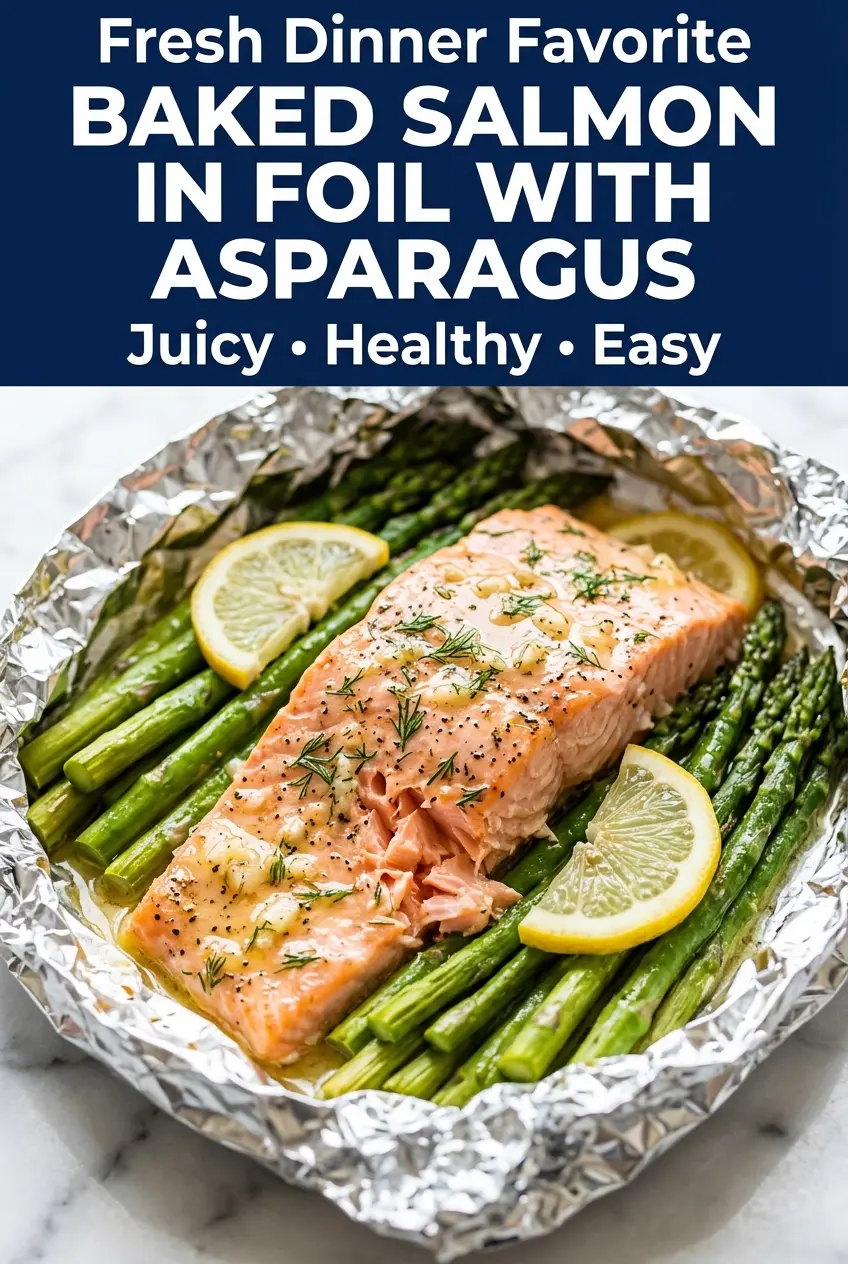
Baked Salmon in Foil with Asparagus
Ingredients
Equipment
Method
- Preheat the oven to 400°F and set a sheet pan inside to warm while you prep the foil. Cut four large sheets of heavy-duty aluminum foil.
- Divide the asparagus evenly among the foil sheets, forming a bed in the center of each piece. Drizzle with 1 tbsp olive oil and season lightly with kosher salt and black pepper.
- Place 1 salmon fillet over each bed of asparagus. Keep the fillets centered so the steam stays in the packet.
- Whisk together the remaining 1 tbsp olive oil, melted unsalted butter, minced garlic, fresh lemon juice, lemon zest, Italian seasoning, paprika, kosher salt, and black pepper until smooth. The mixture should look glossy and pourable.
- Spoon the garlic butter mixture evenly over the salmon. Top each fillet with lemon slices.
- Fold the foil tightly to seal each packet, leaving a small gap for steam to circulate. Place packets on the hot sheet pan for even cooking.
- Bake at 400°F for 15–18 minutes until the salmon flakes easily with a fork and reaches 145°F internally. The asparagus should be tender but still slightly crisp, not mushy.
- Carefully open the foil packets, allowing steam to escape away from you. Garnish with chopped fresh parsley and serve immediately with the buttery pan juices.