
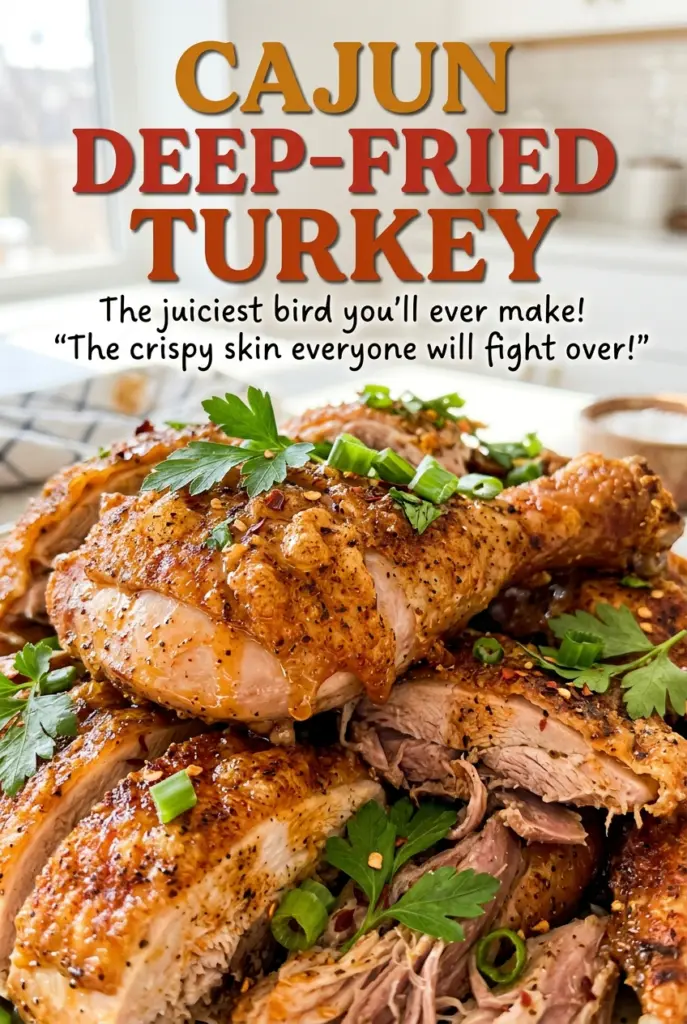
Cajun Deep Fried Turkey
When a whole turkey settles into hot oil, the level rises faster than you might expect. Guessing how much oil to add is one of the few parts of Cajun…

By Ava
•
•
Reading time: 10 min
Tip: save now, make later.
When a whole turkey settles into hot oil, the level rises faster than you might expect. Guessing how much oil to add is one of the few parts of Cajun Deep Fried Turkey that can turn risky before the cooking even starts.
I inject the turkey with seasoned broth and butter, then rub Cajun seasoning under the breast skin and over the outside. That puts flavor inside the meat as well as on the surface, where the hot oil can crisp the skin.
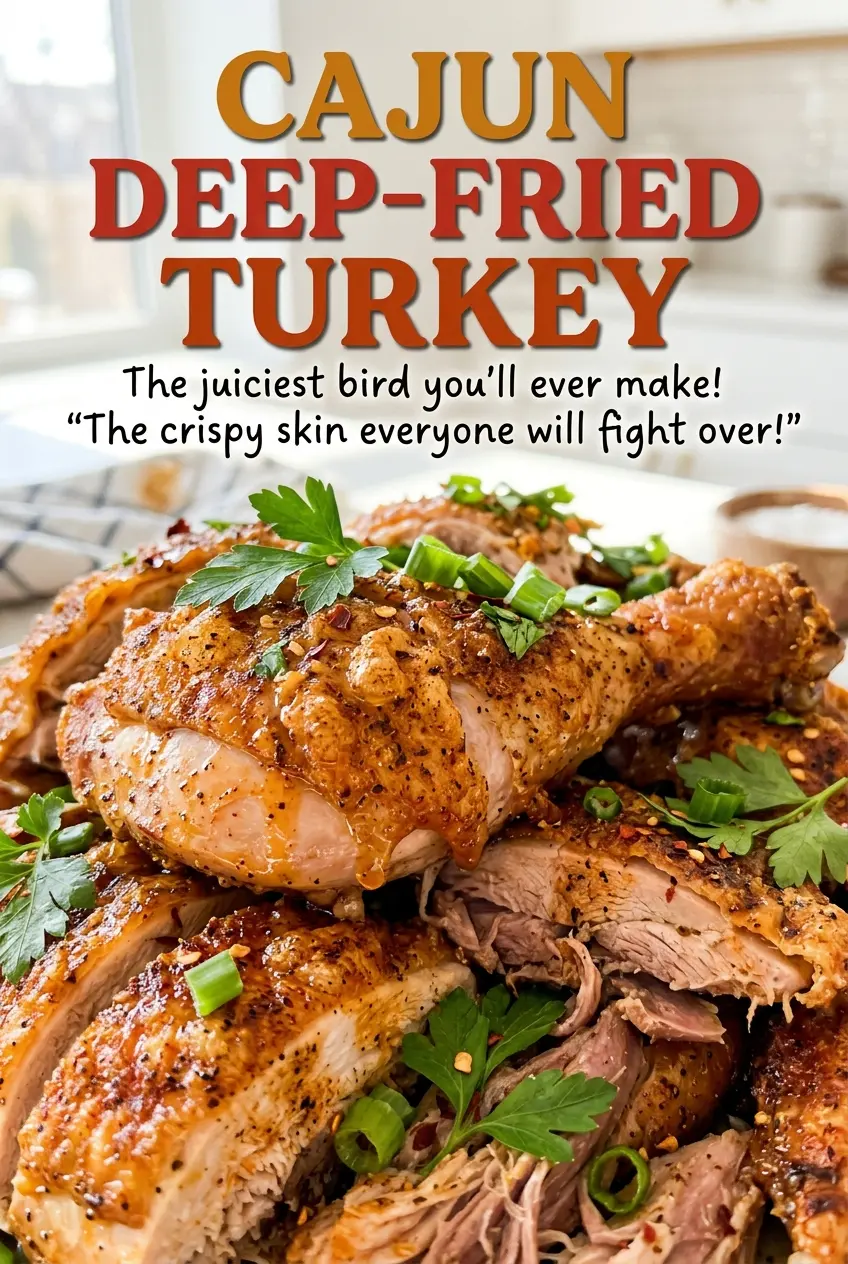
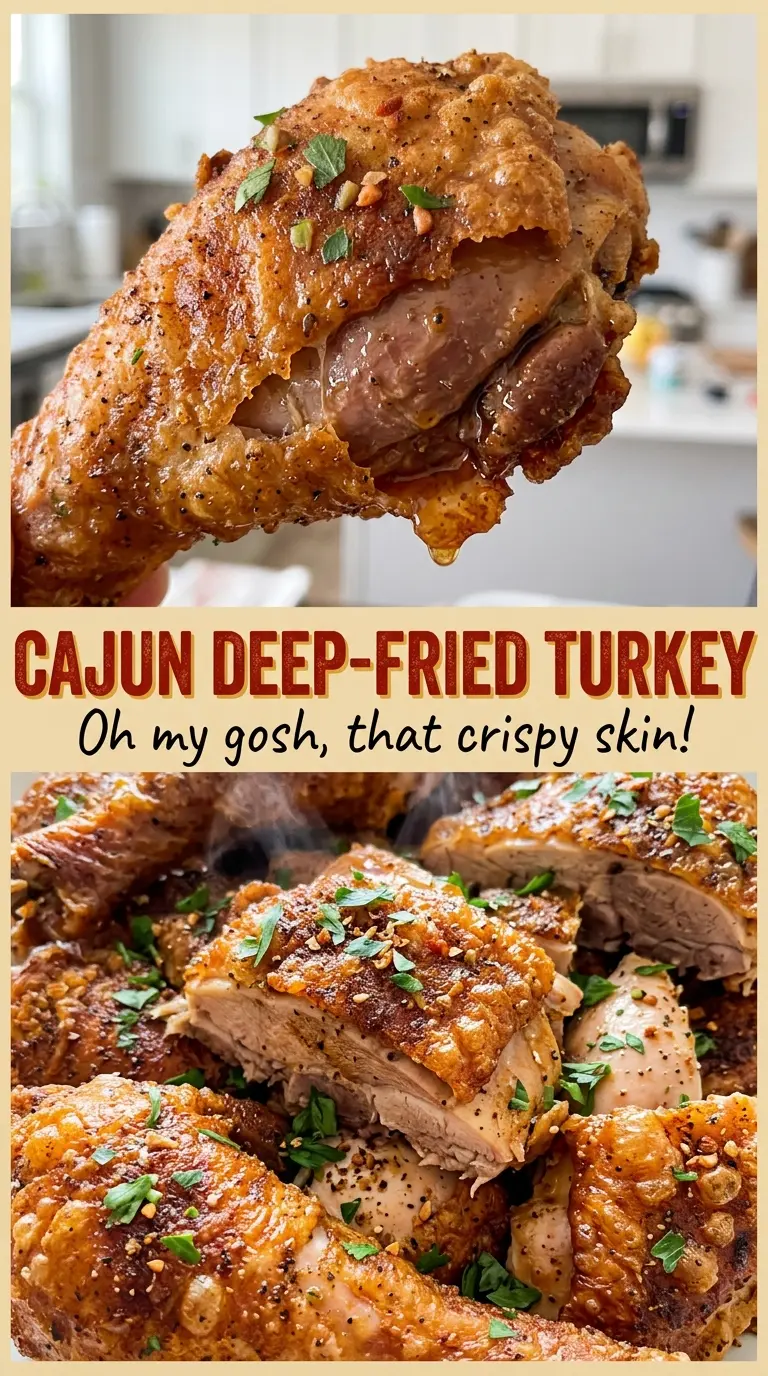
With the oil held between 325°F and 350°F, the turkey cooks quickly and the skin turns deeply golden. Let it rest before carving, and the slices come away juicy with Cajun seasoning in every bite.
Kitchen Note
Give the turkey its full 20-minute rest before carving. Cutting into it right away lets the hot juices run across the board instead of settling back into the meat.
Save this Cajun Deep Fried Turkey for a crisp-skinned centerpiece with Cajun seasoning tucked under the skin and injected through the meat.
Why Guessing the Oil Level Is a Dangerous Shortcut
The turkey displaces oil as it goes into the pot, so the right amount depends on the bird and the fryer—not on a fixed number of gallons. The water-line test measures that displacement before you heat anything. It also shows whether the turkey and oil will stay below the fryer’s maximum-fill line once the bird is submerged.
Use a 30-quart outdoor turkey fryer on flat, level, noncombustible ground, at least 10 feet from buildings, decks, trees, and other structures. Never fry indoors or under a roof. If the water level needed to cover the turkey sits above the fryer’s maximum-fill line, don’t try to make the turkey fit by adding less oil and hoping for the best. Use a smaller turkey or a larger fryer, then repeat the water test with that setup.
This quick check also prevents overfilling a pot with oil that looks reasonable while it’s empty. It’s a practical measurement, not a step to skip when you’re in a hurry.
What the Cajun Injection and Rub Each Bring to the Turkey
- Whole turkey — Choose a completely thawed bird in the size range for this recipe, with the giblets and neck removed. A fully thawed turkey is easier to inject evenly and avoids dangerous splattering from hidden ice or excess water.
- Chicken broth and unsalted butter — Low-sodium broth keeps the injection from becoming too salty, while melted butter gives it richness. Unsalted butter lets the Cajun seasoning and kosher salt in the rub do their jobs without adding another source of salt.
- Cajun seasoning — The blend supplies the characteristic savory, peppery flavor in both the injection and rub. Brands vary in salt and heat, so pick one you already enjoy; there isn’t a single substitute that recreates a Cajun blend’s balance.
- Hot sauce, garlic powder, paprika, and cayenne — These seasonings build on the Cajun blend rather than replacing it. Paprika colors the exterior, and cayenne adds a sharper heat; choose a hot sauce whose flavor you like, since it goes into the meat.
- Peanut oil — This is the frying oil for the recipe. Use enough to reach the water mark, while staying below the fryer’s maximum-fill line; the measured fill level matters more than pouring in every drop of a set quantity.
How to Season, Lower, and Fry the Turkey Without a Guess
Set the fill line and dry everything completely
Put the turkey in the empty fryer pot and add water just until it’s covered. Lift out the bird, mark the water level, then discard the water. Wash and thoroughly dry the pot and basket, and pat the turkey completely dry; moisture on the bird or equipment can make hot oil spit. If the marked level is too high, switch to a smaller turkey or a larger fryer before proceeding.
Inject first, then work the rub under the skin
Whisk the chicken broth, melted butter, Cajun seasoning, hot sauce, and garlic powder until combined. Use a meat injector to distribute the mixture in small amounts throughout the breast, thighs, and drumsticks rather than leaving it in one spot. Mix the rub ingredients, then work the seasoning under the breast skin and over the exterior and inside the cavity. Refrigerate the turkey uncovered for 30 to 60 minutes.
Bring the oil up, then lower the bird slowly
Add peanut oil to the marked level in the dry pot, never above the fryer’s maximum-fill line. Heat it to 350°F, checking with the fryer’s thermometer. Turn off the burner before lowering the turkey slowly into the oil with the basket; relight the burner only once the turkey is submerged and the oil has settled. Keep the oil between 325°F and 350°F as it fries.
Check the center, drain, and let the turkey rest
Plan on about 3 1/2 minutes per pound, or 42 to 49 minutes for a 12- to 14-pound turkey, and begin checking near the end of that estimate. If the thickest part of the breast or the innermost thigh hasn’t reached 165°F, without touching bone, continue frying and check again. Lift the basket and let the turkey drain over the pot for 1 to 2 minutes. Transfer it to a large rimmed baking sheet and leave it to rest before carving.
Three Ways to Tune the Cajun Heat and Seasoning
A gentler Cajun crust
Leave the cayenne out of the rub and choose a milder Cajun seasoning and hot sauce. You’ll keep the garlic and paprika notes, with less lingering heat; the injection will still carry some spice.
A hotter, pepper-forward finish
Add more cayenne to the rub if you want a sharper bite on the skin. The increase changes the heat more than the savory seasoning, so keep the Cajun blend in place rather than replacing it with cayenne.
A gluten-free version
Choose gluten-free-labeled chicken broth, Cajun seasoning, and hot sauce. These product swaps keep the same injection and rub approach, though the exact salt and spice level may differ by brand.
Storage and Reheating
- Refrigerator: Carve and refrigerate leftovers in shallow, covered containers within 2 hours. Use them within 3 to 4 days; the skin will soften in storage.
- Freezer: Freeze carved portions in airtight freezer-safe packaging for up to 2 to 6 months for best quality. The meat may be a little less juicy after thawing.
- Reheating: Warm slices in a covered oven-safe dish at 325°F until steaming hot throughout, using the same safe internal temperature given above as your target. Reheat portions rather than the whole bird so they warm more evenly.
Questions That Come Up Before Frying a Whole Turkey
Cajun Deep Fried Turkey
Ingredients
Equipment
Method
- Set up a 30-quart outdoor turkey fryer on flat, level, noncombustible ground at least 10 feet from buildings, decks, trees, and other structures; never fry indoors or under a roof.
- Put the turkey in the empty fryer pot and add water just to cover it.
- Remove the turkey and mark the water level, making sure it is below the fryer’s maximum-fill line.
- Discard the water, then wash and thoroughly dry the pot and basket.
- Pat the turkey completely dry; use a larger fryer or smaller turkey if the marked level is too high.
- Whisk the chicken broth, melted butter, Cajun seasoning, hot sauce, and garlic powder together until combined.
- Using a meat injector, distribute all the injection mixture in small amounts throughout the breast, thighs, and drumsticks.
- Mix the Cajun seasoning, kosher salt, paprika, garlic powder, and cayenne pepper.
- Rub the mixture under the breast skin, over the turkey’s exterior, and inside the cavity.
- Refrigerate the turkey uncovered for 30 to 60 minutes.
- Add peanut oil to the marked level in the dry pot, never exceeding the fryer’s maximum-fill line.
- Heat the oil to 350°F using the fryer’s thermometer.
- Turn off the burner and lower the turkey slowly into the oil with the fryer basket.
- Relight the burner once the turkey is submerged and the oil has settled; maintain the oil between 325°F and 350°F.
- Fry for about 3 1/2 minutes per pound, or 42 to 49 minutes for a 12- to 14-pound turkey, keeping the oil between 325°F and 350°F.
- Begin checking near the end of the estimated time and continue frying as needed until the thickest part of the breast and the innermost thigh reach 165°F, without touching bone.
- Lift the basket and let the turkey drain over the pot for 1 to 2 minutes.
- Transfer the turkey to a large rimmed baking sheet and rest for 20 minutes before carving.