
Best Sausage Stuffing
The sausage browns in little savory crumbles, and the onion and celery soften in the butter left behind. By the time everything is tossed together, the kitchen smells of sage…

By Ava
•
•
Reading time: 9 min
Tip: save now, make later.
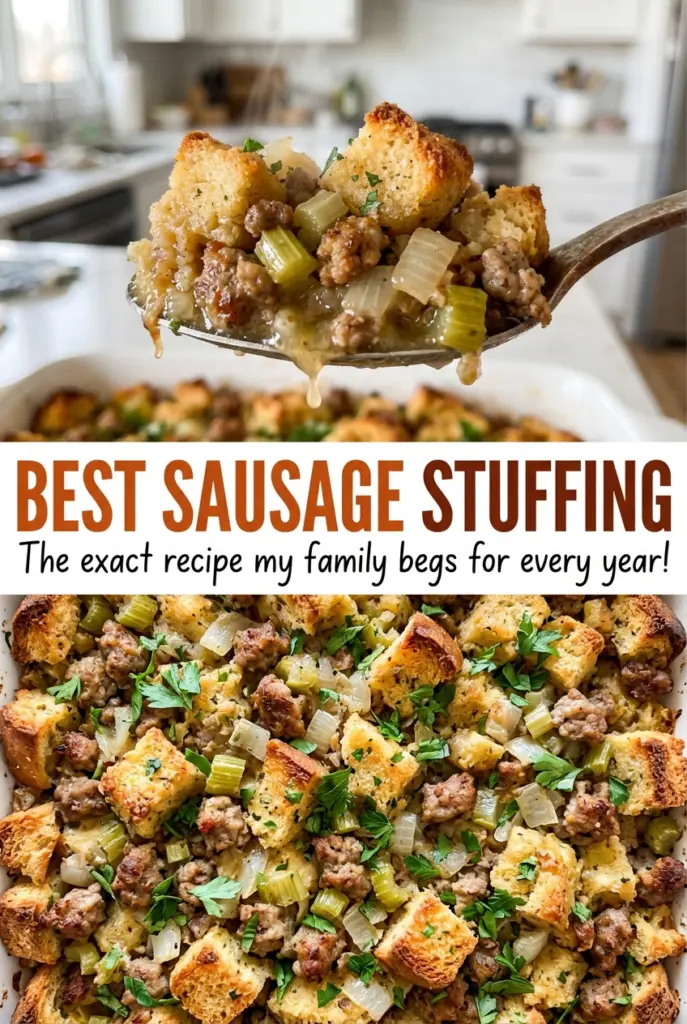
The sausage browns in little savory crumbles, and the onion and celery soften in the butter left behind. By the time everything is tossed together, the kitchen smells of sage and breakfast sausage, and the bread is ready to soak up all that flavor. That’s the kind of pan I want for Best Sausage Stuffing: golden on top, tender underneath, and hearty enough to earn a place beside the main dish.
I use bulk pork breakfast sausage because it brings its own seasoning and breaks into small pieces that spread through every serving. Fresh sage gives the stuffing its woodsy aroma, while parsley keeps the flavor from feeling too heavy. The result is familiar and savory without needing a long list of extras, and each forkful gets a little bread, sausage, and softened vegetables.
Kitchen Note
Give the stuffing its full 10-minute rest before serving. That short pause helps it settle, so the center holds together when you scoop it instead of falling apart in the dish.
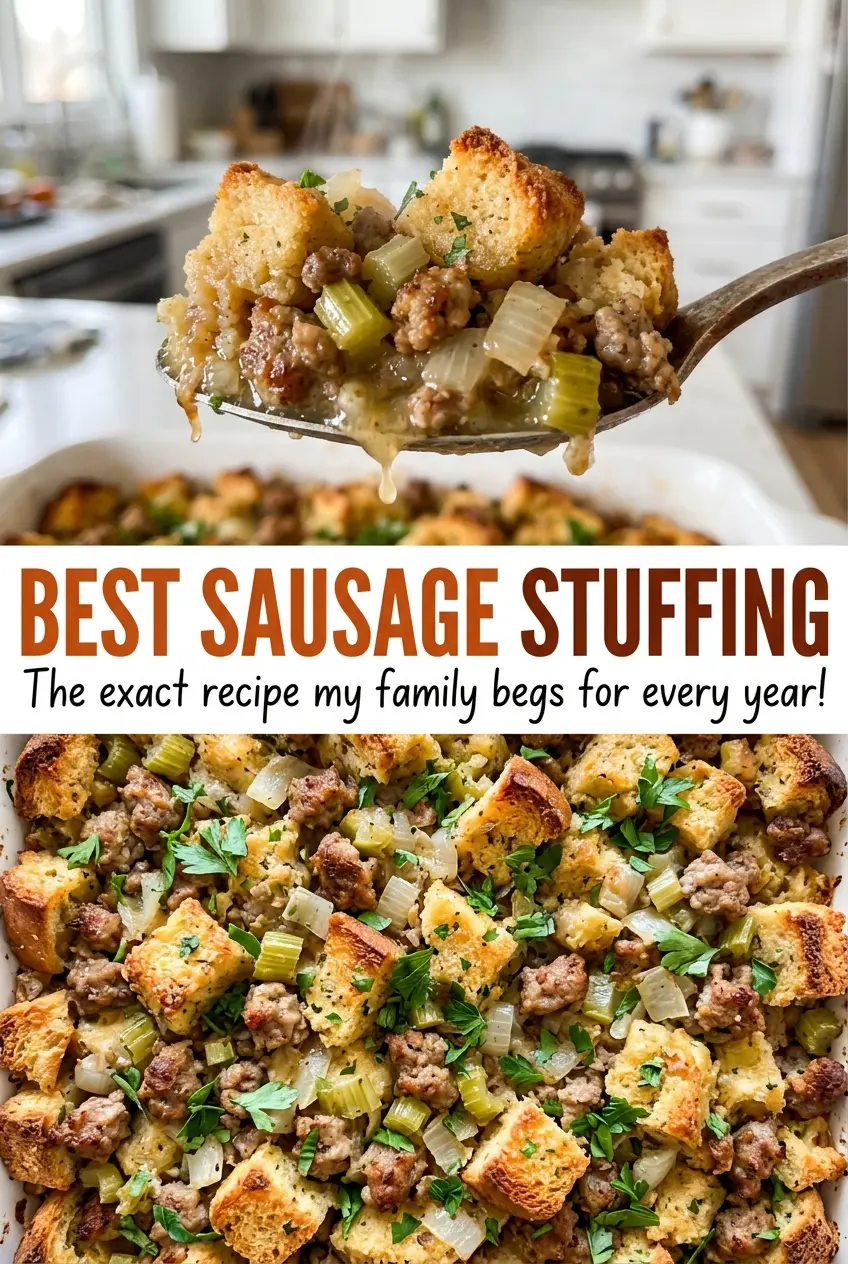
Save Best Sausage Stuffing for a meal worth sharing: browned breakfast sausage, soft bread, and a crisp golden top.
Why Toasted Bread Keeps Sausage Stuffing From Turning Heavy
Bread that’s still soft in the middle can turn a pan of stuffing dense and pasty. Drying the cubes first gives them room to take in the broth and egg mixture without collapsing as soon as they’re tossed. You’re looking for bread that feels dry and lightly crisp, not browned like toast. That dry surface is what lets the finished stuffing stay tender while still holding its shape.
Cube size matters, too. Keeping the pieces close to 3/4 inch means they dry at a similar rate and fit neatly into a forkful. A pile of uneven cubes leaves you with a mix of hard, dry corners and soft, damp centers. Spread them across two rimmed baking sheets rather than crowding them together, then stir once while they bake so the cubes dry evenly. It’s a small bit of attention up front that makes the texture far more dependable after the broth goes in.
The Bread, Sausage, and Herbs That Build the Flavor

- Day-old white bread — A plain white loaf has a mild taste that lets the sausage and herbs come through. Day-old bread is convenient because it has already lost some moisture; cut it into even cubes so it dries consistently. For a gluten-free version, use gluten-free white bread in the same volume and cube size.
- Bulk pork breakfast sausage — Its seasoning is already built in, and bulk sausage breaks into small crumbles that distribute through the pan. If you only have links, remove the casings and crumble the sausage before cooking. Turkey breakfast sausage also works in the same amount, though the stuffing will have a lighter, less rich sausage flavor.
- Unsalted butter — It gives the onion and celery a rich base while letting you control the salt. If salted butter is what you have, use it and leave out the added kosher salt; the sausage brings seasoning of its own.
- Yellow onion and celery — These are the savory, gently sweet base that keeps the bread from tasting one-note. Chop both finely so they soften throughout rather than leaving crunchy pieces. White onion can replace yellow onion in the same amount, with a slightly sharper taste.
- Fresh sage, dried thyme, and parsley — Fresh sage has a fragrant, rounded aroma that’s especially good with pork, while dried thyme brings an earthy note. If you need to replace the fresh sage, use 1 teaspoon dried sage for the tablespoon of chopped fresh sage. Parsley adds a fresh finish; fresh leaves are worth using here, though the stuffing will still hold together if you leave them out.
- Low-sodium chicken broth and eggs — Low-sodium broth lets the sausage and the measured salt stay in balance. The eggs help bind the moistened bread so the casserole serves in cohesive scoops; they aren’t just an extra bit of richness.
How to Get the Bread Moist, the Sausage Brown, and the Top Golden
Dry the Cubes Before the Broth Goes In
Heat the oven to 250°F and spread the bread cubes over two rimmed baking sheets. Bake for 45 to 60 minutes, stirring once halfway through, until the pieces feel dry and lightly crisp. Keep an eye on the color: they should dry without turning deeply golden. Once they’re ready, increase the oven temperature to 350°F for baking the assembled stuffing.
Brown the Sausage in Small Crumbles
Set a 12-inch skillet over medium heat and cook the bulk sausage for 8 to 10 minutes, breaking it into small pieces as it cooks. The goal is browned crumbles rather than large clumps, so keep separating them with your spoon. Check that the sausage reaches 160°F, then transfer it to a large bowl. Leave the browned bits and fat in the skillet; they’ll carry flavor into the vegetables.
Soften the Vegetables in the Same Skillet
Melt the butter in the sausage skillet, then add the finely chopped onion and celery. Cook for 7 to 9 minutes, stirring, until both vegetables have softened; if they still feel firm, give them another moment rather than rushing the next step. Stir in the sage, thyme, salt, and pepper. The herbs will be fragrant, and the onion and celery should look glossy rather than browned.
Coat the Bread Before Adding the Egg Mixture
Add the bread cubes, skillet mixture, and parsley to the bowl with the sausage, then toss until the ingredients are distributed. In a medium bowl, whisk the broth and eggs together and pour them over the bread mixture. Toss until the bread is evenly moistened; dry pockets usually mean the mixture needs another gentle turn, not a longer soak. Transfer it to a 9×13-inch baking dish coated with nonstick cooking spray.
Cover First, Then Let the Top Brown
Cover the dish with foil and bake at 350°F for 30 minutes. Remove the foil and bake for 20 to 25 minutes more, until the top is golden and the center reaches 160°F. The foil protects the surface while the middle heats through; uncovering gives the top time to turn crisp and golden. Let the dish rest before serving.
Three Easy Swaps for a Different Sausage Stuffing
Make It Gluten-Free With White Bread
Use gluten-free white bread in place of the white bread, keeping the same cube size and volume. Gluten-free loaves can be more fragile, so toss the mixture gently; the flavor stays savory and familiar, though the finished cubes may have a softer texture.
Use Sourdough for a Gentle Tang
Replace the white bread with the same volume of day-old sourdough cubes. Its mild tang cuts through the richness of the sausage and butter, while the sturdy crumb makes a pleasantly substantial stuffing. Keep the cubes the same size and dry them until lightly crisp.
Choose Turkey Breakfast Sausage for a Lighter Bite
Swap in bulk turkey breakfast sausage for the pork sausage. It keeps the breakfast-sausage seasoning and crumbly texture, but tastes lighter and less rich. Brown it in the same skillet and use the same doneness cue.
Storage and Reheating
- Refrigerator: Refrigerate leftovers within 2 hours in a covered container and use them within 3 to 4 days. The top softens as it sits.
- Freezer: Freeze cooled portions in an airtight freezer container for up to 3 months for best quality. Thaw in the refrigerator before reheating.
- Reheating: Cover and warm in a 350°F oven until the center reaches 165°F, then uncover briefly to refresh the top. Avoid reheating uncovered the whole time, which can dry the edges before the middle is hot.
Questions About Making Best Sausage Stuffing
Best Sausage Stuffing
Ingredients
Equipment
Method
- Heat the oven to 250°F and spread the bread cubes over two rimmed baking sheets. Bake for 45 to 60 minutes, stirring once halfway through, until dry and lightly crisp; increase the oven temperature to 350°F.
- Cook the sausage in a 12-inch skillet over medium heat for 8 to 10 minutes, breaking it into small pieces, until browned and it reaches 160°F; transfer it to a large bowl.
- Melt the butter in the same skillet, add the onion and celery, and cook for 7 to 9 minutes until softened. Stir in the sage, thyme, salt, and pepper.
- Add the bread cubes, skillet mixture, and parsley to the bowl with the sausage and toss to combine.
- Whisk the broth and eggs in a medium bowl, pour over the bread mixture, and toss until evenly moistened.
- Coat a 9x13-inch baking dish with nonstick cooking spray and transfer the stuffing to the dish. Cover with foil and bake at 350°F for 30 minutes, then uncover and bake for 20 to 25 minutes, until the center reaches 160°F and the top is golden.
- Let the stuffing rest for 10 minutes before serving.