

Brown Butter Parmesan Mashed Parsnips with Crispy Sage
When the parsnips come out of the pot, steam curls up from the colander and their sweet, earthy smell is hard to miss. I cut them into even chunks so…

By Ava
•
•
Reading time: 8 min
Tip: save now, make later.
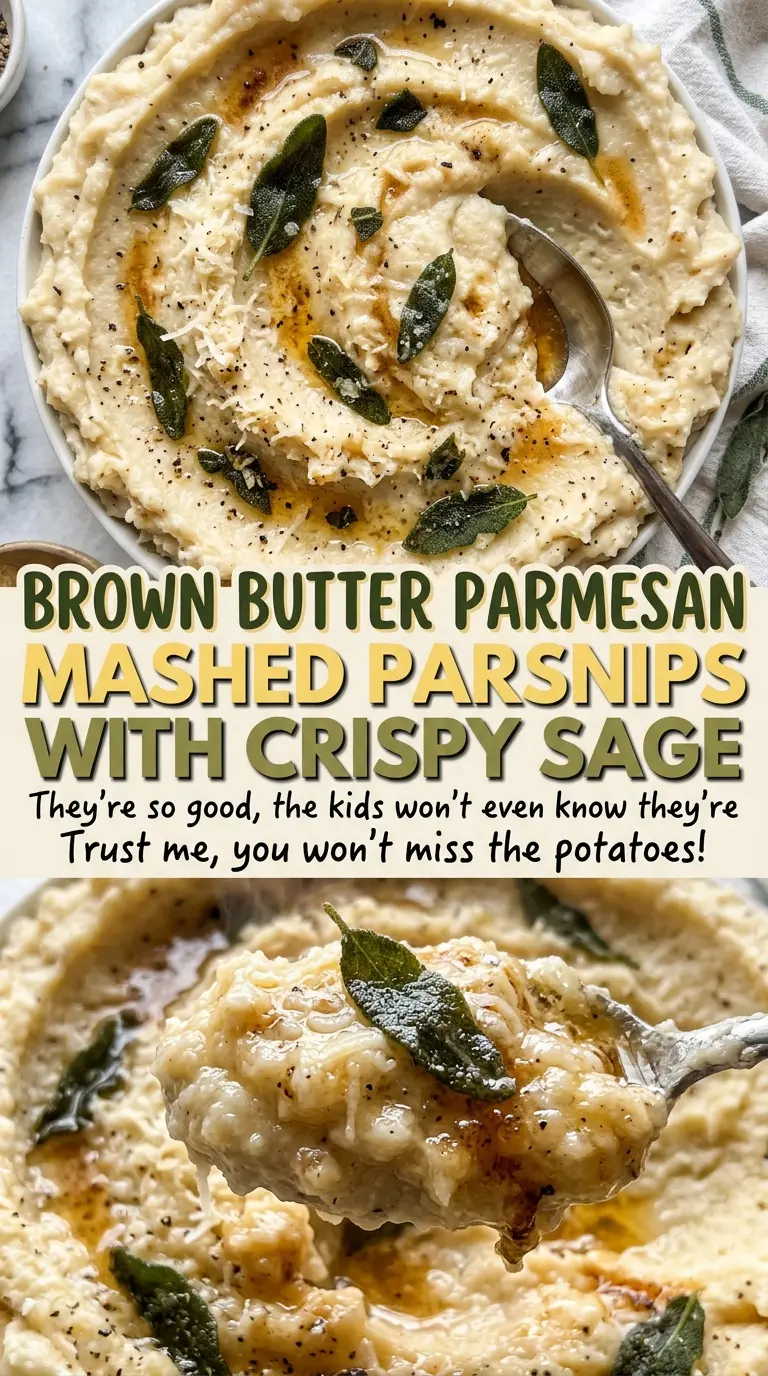
When the parsnips come out of the pot, steam curls up from the colander and their sweet, earthy smell is hard to miss. I cut them into even chunks so they soften at the same pace, then mash them with cream, Parmesan, and just enough butter to make a smooth, savory base. These brown butter Parmesan mashed parsnips with crispy sage feel familiar at the table, but their flavor is a little deeper than ordinary mashed potatoes.
I keep most of the butter out of the mash and brown it separately instead. That gives the parsnips a creamy texture underneath and a nutty, fragrant finish over the top, rather than making every bite taste equally rich. The Parmesan brings a salty edge to the parsnips’ natural sweetness, while the crisp sage adds a delicate herbal bite. Serve them hot, with the golden butter still fragrant over the soft mash.

Kitchen Note
The sage leaves finish cooking before the butter does. Lift them out after their quick fry, then give the butter its own minute or two; leaving the leaves in while it browns can take them past crisp.
Save these brown butter Parmesan mashed parsnips for a savory, creamy side with crisp sage and a nutty butter finish.
Why the Butter Goes on Top Instead of All Into the Mash
Parsnips have a sweet, mellow flavor, so the butter’s job here is more than making the mash rich. A small portion goes into the warm parsnips; the rest turns into a fragrant topping. Browning that larger portion separately adds toasted, nutty notes that cut through the sweetness instead of burying it under a uniformly buttery mash.
That split also gives you two different textures in one spoonful: soft parsnips underneath and a silky butter finish over the top. The sage gets its quick turn in the skillet first, then the butter keeps cooking on its own. It’s a small order-of-operations detail, but it keeps the leaves crisp while the butter develops its golden color. Spoon the butter over the mash just before serving, rather than stirring it through, and you’ll keep that contrast from the first serving to the last.
What Makes the Parsnips, Parmesan, and Sage Work Together
- Parsnips — Choose firm roots without soft spots. Peeling and cutting them into even 1-inch chunks helps them cook through together; very large pieces take longer to soften, while tiny pieces can turn waterlogged before the rest are ready.
- Unsalted butter — It lets you control the seasoning while still giving the topping a rich, nutty base. A standard supermarket butter works well; the important part is using unsalted so the Parmesan and measured salt don’t make the mash too salty.
- Heavy cream — Its richness softens the parsnips’ earthy sweetness and helps the mash come together. Keep it to the amount in the recipe; a thinner dairy product won’t give quite the same creamy texture.
- Finely grated Parmesan — Fine shreds distribute through the mash without leaving large chewy pockets. A block grated just before cooking melts smoothly, though finely grated packaged Parmesan is convenient here too.
- Fresh sage leaves — Whole fresh leaves fry into the crisp garnish that gives this side its name. Dried sage won’t make the same crisp leaves, so it isn’t a direct replacement for this finish.
From Fork-Tender Parsnips to a Fragrant Butter Finish
Simmer the Parsnips Until a Fork Slides In Easily
Bring the water and 1 teaspoon of the kosher salt to a boil in a 5-quart pot over high heat. Add the peeled, 1-inch parsnip chunks and bring the water back to a boil, then lower the heat to a simmer. Cook for 15 to 20 minutes, until a fork passes through the thickest piece without resistance. If the centers are still firm, keep simmering until they’re fork-tender rather than mashing them while undercooked.
Let the Steam Escape Before You Mash
Drain the parsnips well, then return them to the pot over low heat and stir for 1 minute to evaporate excess moisture. Add the heavy cream, 2 tablespoons of butter, the remaining 1/2 teaspoon kosher salt, and the black pepper. Mash until mostly smooth, leaving a little texture rather than chasing a perfectly airy puree. Stir in the finely grated Parmesan so it’s spread through the warm mash.
Fry the Sage, Then Brown the Butter
Melt the remaining 4 tablespoons butter in a 10-inch skillet over medium heat. Add the sage leaves and fry for 20 to 30 seconds, turning once, then transfer them to a paper towel-lined plate. Keep cooking the butter for 1 to 2 minutes, swirling the skillet, until it turns golden brown and smells nutty. Spoon it over the mashed parsnips, arrange the crisp leaves on top, and serve hot.
Simple Ways to Change the Texture or Finish
Leave the Mash a Little Rustic
Mash by hand and stop while a few small pieces remain instead of working toward an even, mostly smooth texture. The result has more bite and feels heartier, though the cream and Parmesan won’t coat every piece as evenly.
Put Some Parmesan on the Surface
Use the same 1/2 cup of finely grated Parmesan, but reserve a little to scatter over the finished mash instead of stirring all of it in. You’ll get more distinct savory bites on top and a slightly less uniform cheese flavor underneath.
Keep the Brown Butter, Skip the Sage
Leave out the sage leaves and brown the butter on its own, swirling the skillet until it’s golden and nutty-smelling. The topping keeps its toasted richness but loses the crisp herbal garnish, making a simpler finish with the ingredients already in the dish.
Storage and Reheating
- Refrigerator: Store in an airtight container for 3 to 4 days. The mash firms up as it chills, and the sage leaves lose their crispness.
- Freezer: Freeze the mash in an airtight freezer-safe container for up to 1 month. The cream-based texture may be a little less smooth after thawing; freeze the mash without the sage garnish and add freshly fried leaves when serving.
- Reheating: Warm gently in a covered saucepan over low heat, stirring often, or use short microwave intervals and stir between them. Reheat leftovers to 165°F; high heat can scorch the bottom before the center is warm.
Questions That Come Up When Making Parsnip Mash
Brown Butter Parmesan Mashed Parsnips with Crispy Sage
Ingredients
Equipment
Method
- Bring the water and 1 teaspoon of the salt to a boil in a 5-quart pot over high heat.
- Add the parsnips and return the water to a boil, then reduce the heat and simmer for 15 to 20 minutes, until the parsnips are fork-tender.
- Drain the parsnips well and return them to the pot over low heat.
- Stir for 1 minute to evaporate excess moisture.
- Add the cream, 2 tablespoons of the butter, the remaining 1/2 teaspoon salt, and the pepper, then mash until mostly smooth.
- Stir in the Parmesan cheese.
- Melt the remaining 4 tablespoons butter in a 10-inch skillet over medium heat.
- Add the sage leaves and fry for 20 to 30 seconds, turning once, until crisp.
- Transfer the sage leaves to a paper towel-lined plate.
- Continue cooking the butter for 1 to 2 minutes, swirling the skillet, until golden brown and nutty-smelling.
- Spoon the brown butter over the mashed parsnips.
- Arrange the crispy sage on top and serve hot.