
Baileys Cheesecake
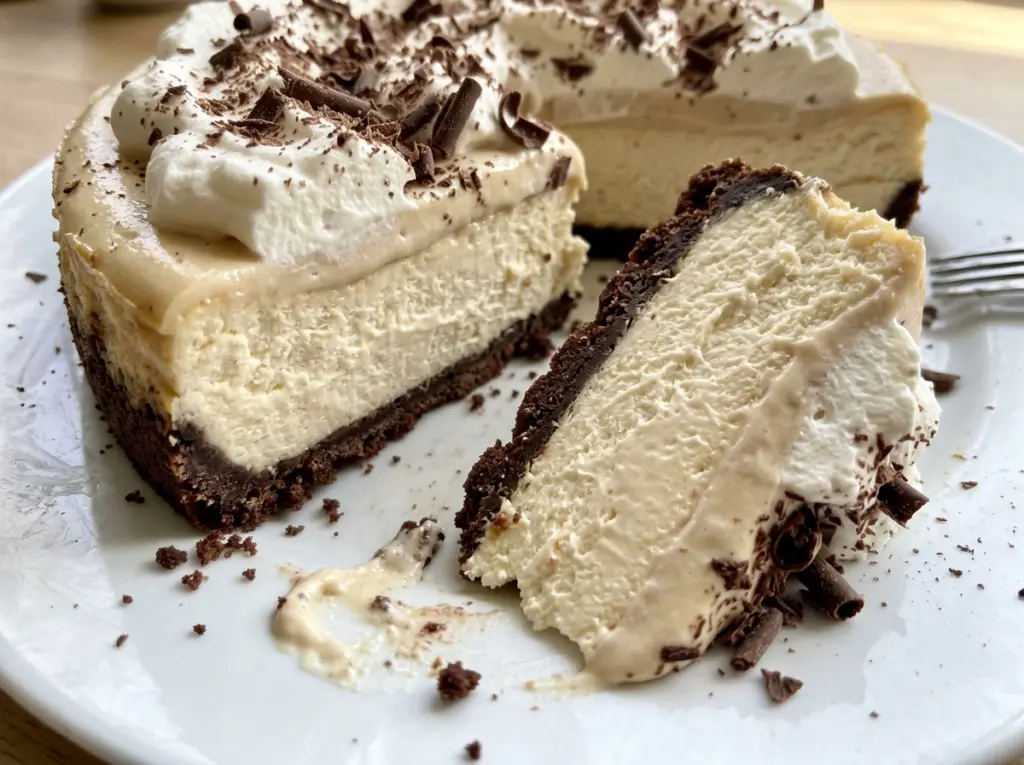
When I cut into a fully chilled cheesecake, I want the knife to pass through a smooth, creamy center without dragging the graham crust along with it. Baileys Cheesecake brings…

By Ava
•
•
Reading time: 10 min
Tip: save now, make later.
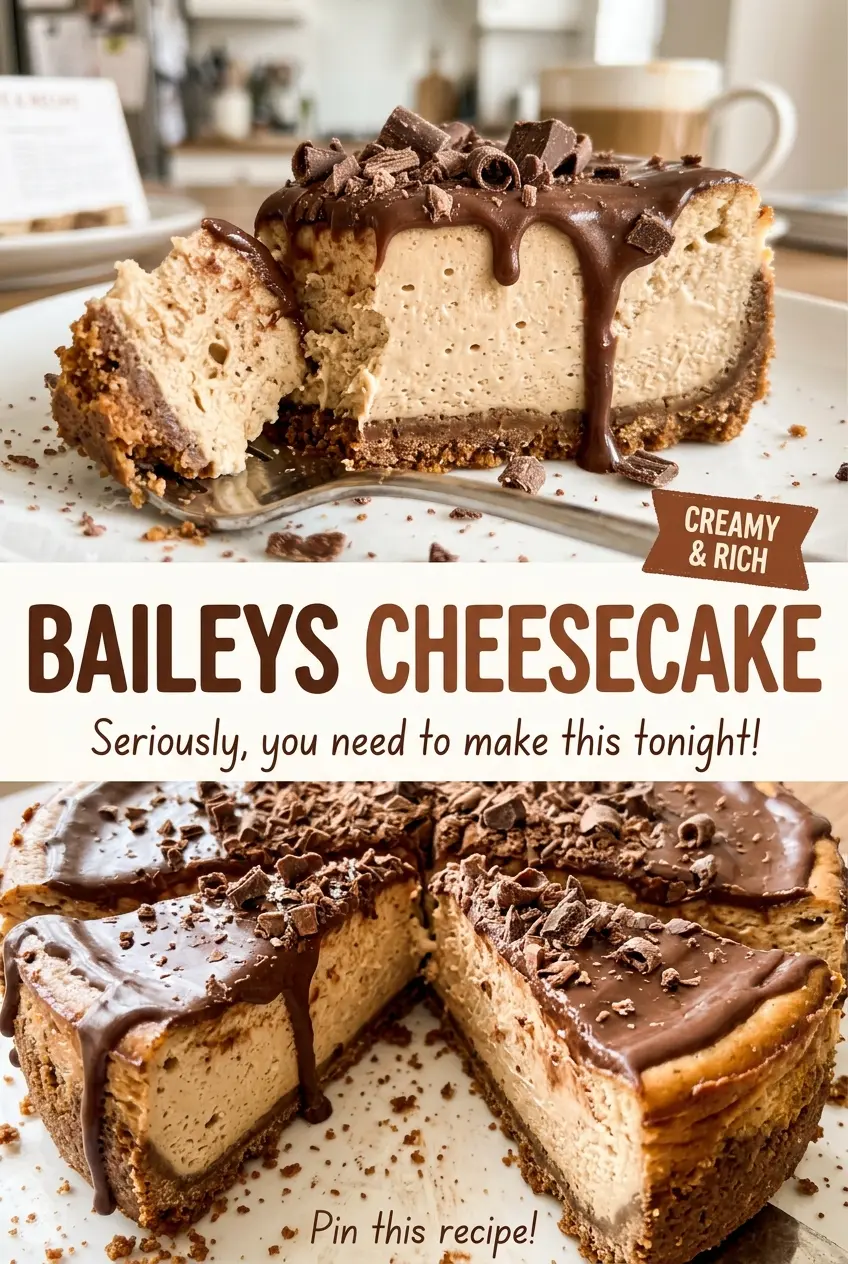
When I cut into a fully chilled cheesecake, I want the knife to pass through a smooth, creamy center without dragging the graham crust along with it. Baileys Cheesecake brings a gentle Irish cream flavor to that classic texture, with a buttery crumb base underneath.
The filling comes together without complicated steps, but it rewards a light touch. I mix the cream cheese, sugar, and flour until smooth, then add the eggs on low speed and stop as soon as they’re incorporated. That keeps the batter from getting foamy and helps the finished cheesecake stay dense and silky.
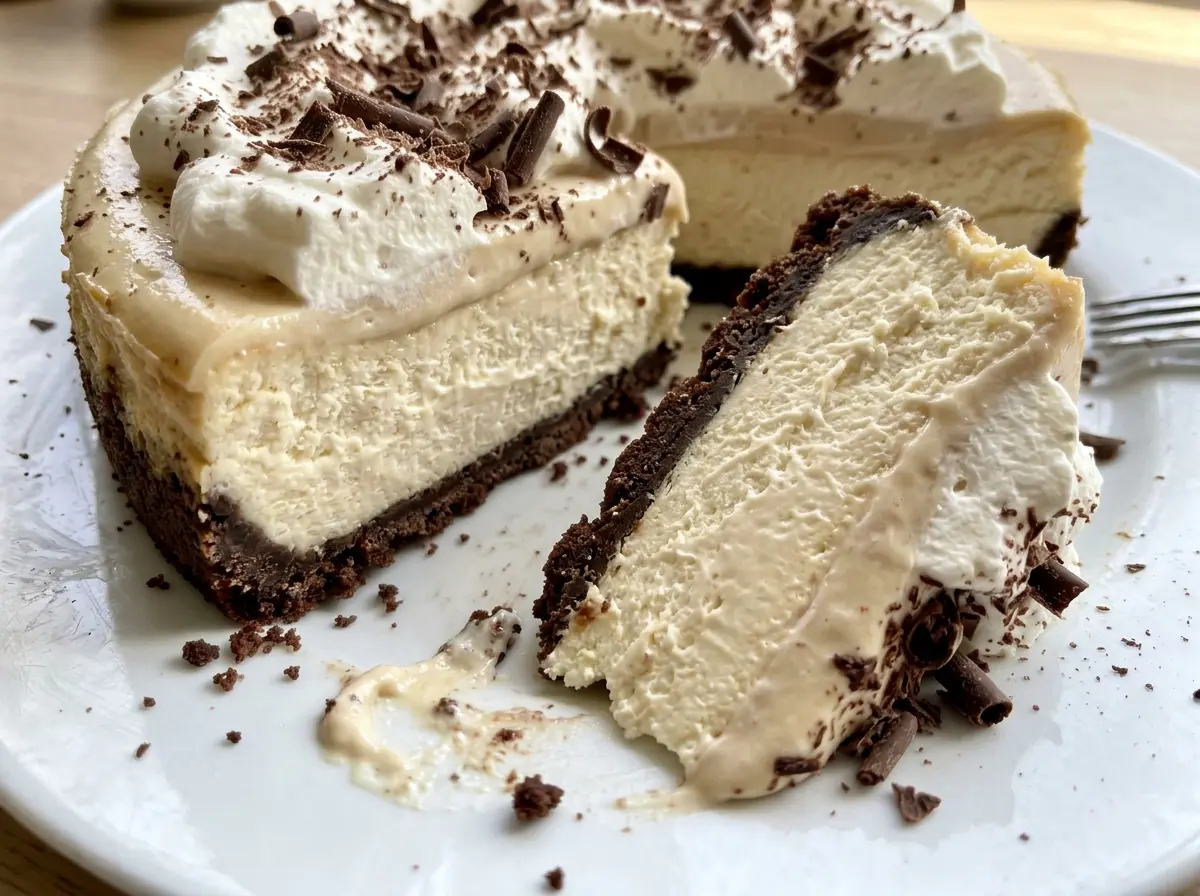
A water bath and a slow cool help the center set without turning the edges dry. After its long chill, each slice has a creamy middle, a tidy edge, and just enough Baileys flavor to make this cheesecake feel a little different from the usual.
Kitchen Note
Keep the mixer speed low once the eggs go in, and stop as soon as each one disappears into the batter. Beating longer adds air that can puff up in the oven and leave the filling less even.
Save this Baileys Cheesecake for a creamy, Irish-cream-flavored dessert with a buttery graham cracker crust.
Why the Water Bath Matters More Than a Perfectly Smooth Top
Cheesecake is thick enough that its edges and center don’t bake at the same pace. Direct oven heat can set the outside while the middle is still moving, and that difference can leave the edges dry or the surface cracked. A roasting pan filled with hot water surrounds the springform pan with gentle, even heat, giving the filling more time to set from edge to center.
The bath is only part of the reason the texture stays soft. After baking, the cheesecake rests in the switched-off oven with the door propped open, then cools on a rack before it goes into the refrigerator. That gradual temperature change is gentler than moving a hot cheesecake straight into a cooler room. The center should still have a slight jiggle when the bake ends; the long, unhurried cooling and chilling finish the job without baking the middle until it’s firm and dry.
Foil matters here because a springform pan has a removable base and isn’t watertight. Wrapping the cooled pan in three layers of heavy-duty foil helps keep the bath from seeping into the crust. It’s a small bit of insurance for a base that should stay crisp and buttery.
What the Baileys and the Other Ingredients Bring to the Filling
- Cream cheese — It gives the filling its body and tang. Block-style cream cheese blends more evenly than whipped or spreadable cream cheese; let it soften so you don’t have to beat out lumps. A store brand works well.
- Baileys Irish Cream — This supplies the signature flavor as well as liquid for the batter. Another Irish cream liqueur can stand in at the same volume, though its sweetness and flavor notes will change the result. Choose one you enjoy drinking; there’s no need to seek out a special vintage or premium bottle.
- Eggs and sour cream — The eggs help the filling set, while sour cream brings a gentle tang and keeps the texture plush. Room-temperature eggs and sour cream blend in more readily than cold ones. I wouldn’t leave out the eggs; they’re doing more than adding richness.
- Graham cracker crumbs — The crumbs form a lightly sweet, crisp contrast to the creamy filling. Packaged crumbs are convenient, and store-brand crumbs are fine. Chocolate graham crumbs work as a direct swap if you want a deeper cocoa note.
- All-purpose flour — A little flour gives the filling extra structure. For a gluten-free cheesecake, replace it with a cup-for-cup gluten-free flour blend and use gluten-free graham-style crumbs for the crust.
- Unsalted butter — Melted butter binds the crumbs so they press into a cohesive base. If salted butter is what you have, use it and leave out the kosher salt in the crust.
Building the Crust and Baking the Filling Gently
Press and prebake the graham crust
Heat the oven to 325°F and grease the bottom and sides of a 9-inch springform pan. Stir the graham cracker crumbs with the sugar and kosher salt, then mix in the melted butter until the crumbs look evenly moistened. Press the mixture firmly across the bottom of the pan so it holds together when sliced. Bake the crust for 10 minutes, then set the pan on a wire rack to cool while you make the filling.
Mix a smooth cream cheese base
Beat the softened cream cheese with the sugar and flour in a large bowl using an electric mixer on medium-low speed. Stop to scrape down the bowl as needed; cream cheese clinging to the sides won’t blend itself into the middle. Keep mixing only until the base looks smooth, with no visible lumps. Starting with a smooth base means you won’t need to chase lumps by overworking the eggs later.
Finish the filling without whipping it
Add the room-temperature eggs one at a time, mixing on low just until each is incorporated before adding the next. Then mix in the room-temperature sour cream, Baileys, and vanilla. The batter should look cohesive and creamy, not airy or foamy. If you can still see streaks of sour cream or egg, mix briefly on low rather than turning up the speed.
Set up the water bath and bake
Wrap the cooled springform pan in three layers of heavy-duty foil, then pour in the filling and place the pan in a large roasting pan. Add hot water to the roasting pan until it reaches about 1 inch up the sides of the springform pan. Bake at 325°F for 65 to 75 minutes, until the edges are set and the center still jiggles slightly. Don’t wait for the middle to look completely firm in the oven; that can leave the finished filling overbaked.
Cool slowly, then chill until sliceable
Turn off the oven, prop the door open, and leave the cheesecake inside for 1 hour. Carefully lift the springform pan out of the water bath, discard the foil, and cool the cheesecake on a wire rack for 1 hour. Cover it and refrigerate for at least 6 hours before releasing the springform sides and slicing. Cutting before that chill is complete makes the soft filling harder to portion neatly.
Easy Ways to Change the Crust or Make It Gluten-Free
Make the crust gluten-free
Use gluten-free graham-style crumbs in place of the regular crumbs, and a cup-for-cup gluten-free flour blend in place of the all-purpose flour. Keep the quantities and method the same; the crust may have a slightly different crumb, but the filling still sets with the flour swap.
Use chocolate graham crumbs
Swap chocolate graham cracker crumbs for the regular crumbs in the crust. The method stays the same, but the base tastes a little more cocoa-forward and pairs naturally with the Irish cream in the filling.
Try a different Irish cream
Replace the Baileys with the same volume of another Irish cream liqueur. The cheesecake keeps its creamy consistency, while the exact coffee, cocoa, and sweetness notes shift with the brand.
Storage and Reheating
- Refrigerator: Keep the covered cheesecake refrigerated at 40°F or colder and enjoy it within 3 to 4 days. The crust gradually softens as it sits.
- Freezer: It freezes well. Once fully chilled, wrap the whole cheesecake or individual slices tightly, place them in an airtight container, and freeze for up to 1 month for best quality. Thaw covered in the refrigerator.
- Reheating: Don’t reheat this dessert; serve it chilled. Heat softens the filling and can make the texture unpleasantly loose.
Questions I Get Asked About Baileys Cheesecake
Baileys Cheesecake
Ingredients
Equipment
Method
- Heat the oven to 325°F.
- Grease the bottom and sides of a 9-inch springform pan.
- Stir the graham cracker crumbs, granulated sugar, and kosher salt together.
- Mix in the melted unsalted butter until evenly moistened.
- Press the crust mixture firmly over the bottom of the pan.
- Bake the crust for 10 minutes.
- Set the pan on a wire rack to cool while you make the filling.
- Beat the softened cream cheese, granulated sugar, and all-purpose flour in a large bowl with an electric mixer on medium-low speed until smooth, scraping down the bowl as needed.
- Add the large eggs at room temperature one at a time, mixing on low just until each is incorporated.
- Mix in the sour cream at room temperature, Baileys Irish Cream, and vanilla extract.
- Wrap the cooled springform pan in 3 layers of heavy-duty foil.
- Pour the filling over the crust.
- Place the pan in a large roasting pan.
- Pour hot water into the roasting pan until it reaches about 1 inch up the sides of the springform pan.
- Bake at 325°F for 65 to 75 minutes, until the edges are set and the center still jiggles slightly.
- Turn off the oven.
- Prop the oven door open.
- Leave the cheesecake inside for 1 hour.
- Carefully remove the springform pan from the water bath.
- Discard the foil.
- Cool the cheesecake on a wire rack for 1 hour.
- Cover and refrigerate for at least 6 hours.
- Release the springform sides and slice.