
Apple Cinnamon Crumb Cake with Thick Crumb Topping
The first slice tells you whether the crumb topping did its job: the knife should pass through a tender cake and a thick, craggy layer without turning the top into…

By Ava
•
•
Reading time: 9 min
Tip: save now, make later.
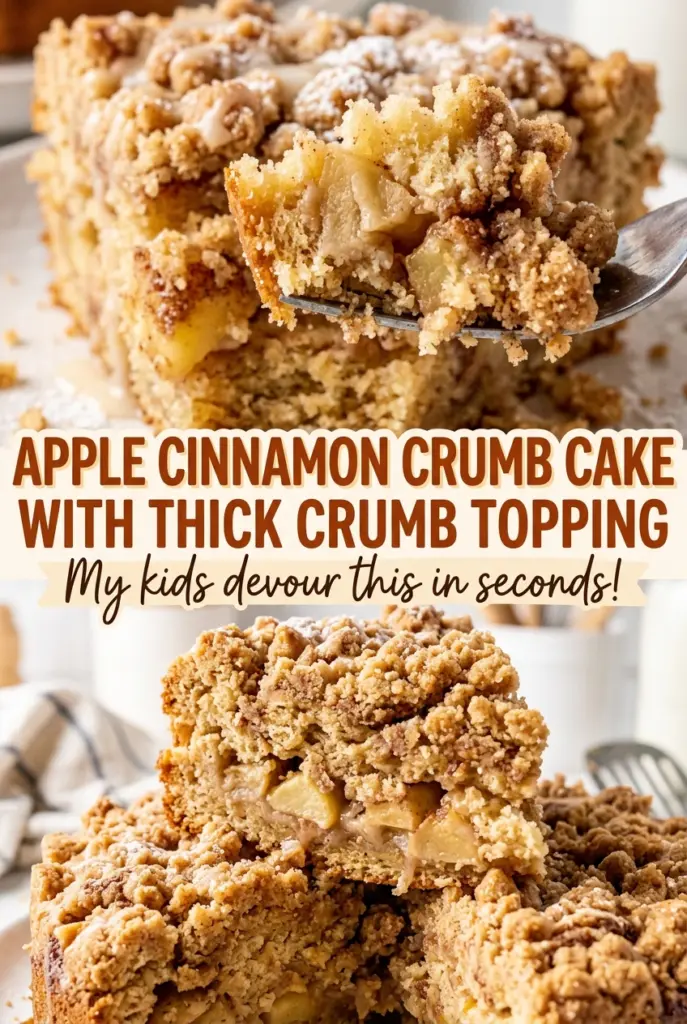
The first slice tells you whether the crumb topping did its job: the knife should pass through a tender cake and a thick, craggy layer without turning the top into dust. I like this Apple Cinnamon Crumb Cake with Thick Crumb Topping when I want a proper coffee-cake slice, not a thin scatter of crumbs that disappears into the batter. The apples bring little soft, cinnamon-scented pockets through the middle, and the topping gives each piece a generous finish.
Sour cream makes the cake moist and tender, while the diced apples keep the crumb from feeling plain. Cutting the apples into even half-inch pieces helps them soften without disappearing into the batter. Once the topping bakes golden, let the cake settle before slicing; you’ll get neat pieces with the crumb layer still sitting right where it belongs.
Kitchen Note
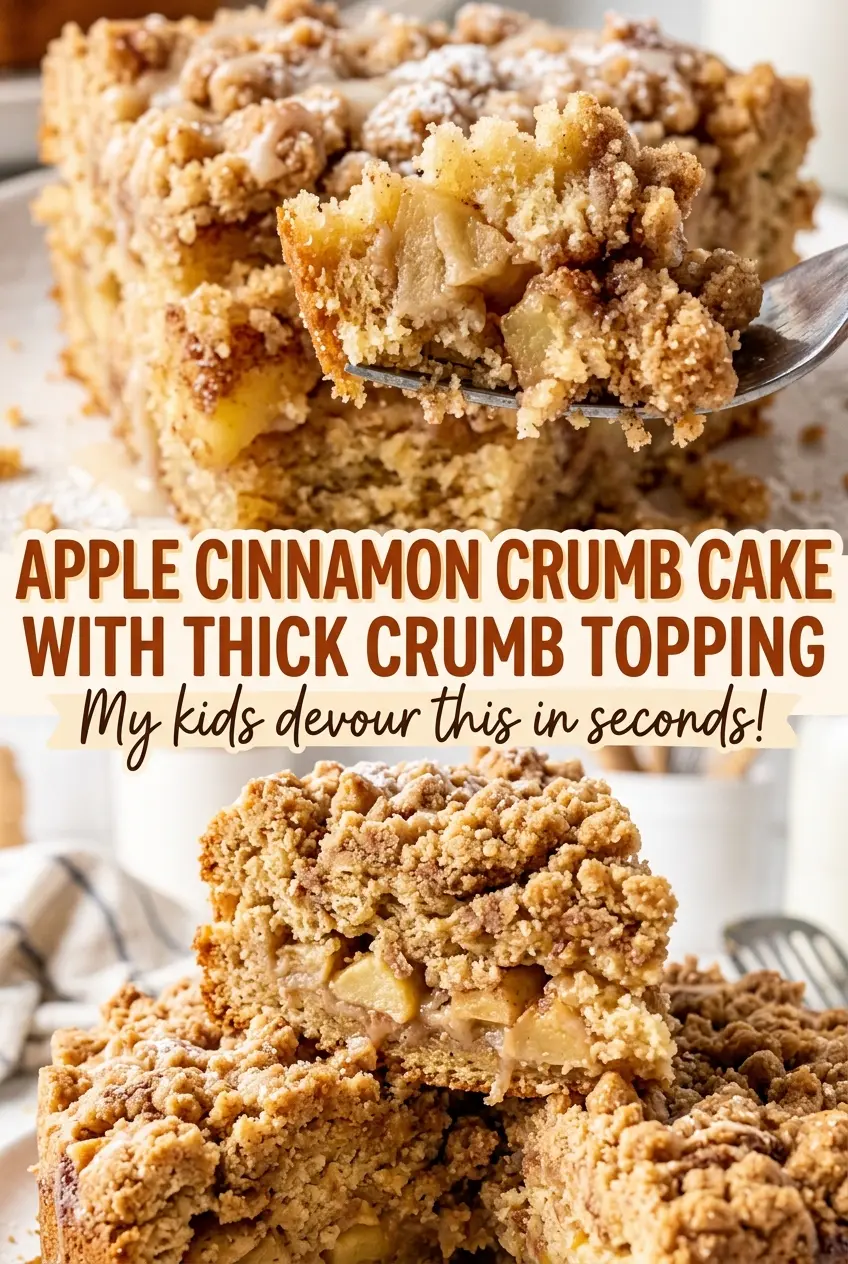
I get the cleanest slices after the full 30-minute rest. The topping is still tender then, but the cake has had time to settle instead of dragging crumbs through the cut.
Save this apple cinnamon crumb cake for its tender apple-studded middle and thick, golden topping.
Why a Thick Crumb Needs Bigger Clumps Than You Think
A thick topping should have more than one texture. Small, even crumbs make a fine blanket, but larger clumps bake into distinct bites that stay noticeable against the soft cake. The goal isn’t to turn every bit of topping into a big lump; a mix of smaller crumbs and a few generous pieces gives you that layered, craggy top.
Melted butter helps the flour and sugars come together quickly, but the mixture can look misleading at first. It should feel moist and hold together when pressed, not sit as loose, dry flour. When you gently squeeze some of it into larger clumps, you’re creating pieces that can keep their shape as the cake bakes. Spread the topping across the batter rather than pressing it down into the surface; the batter supports the crumb as it sets.
That contrast is what makes this cake worth cutting into: the center stays tender around the apples, while the top bakes into a substantial layer with crisp edges and soft, buttery crumbs underneath.
The Sour Cream and Apples Set the Cake’s Texture
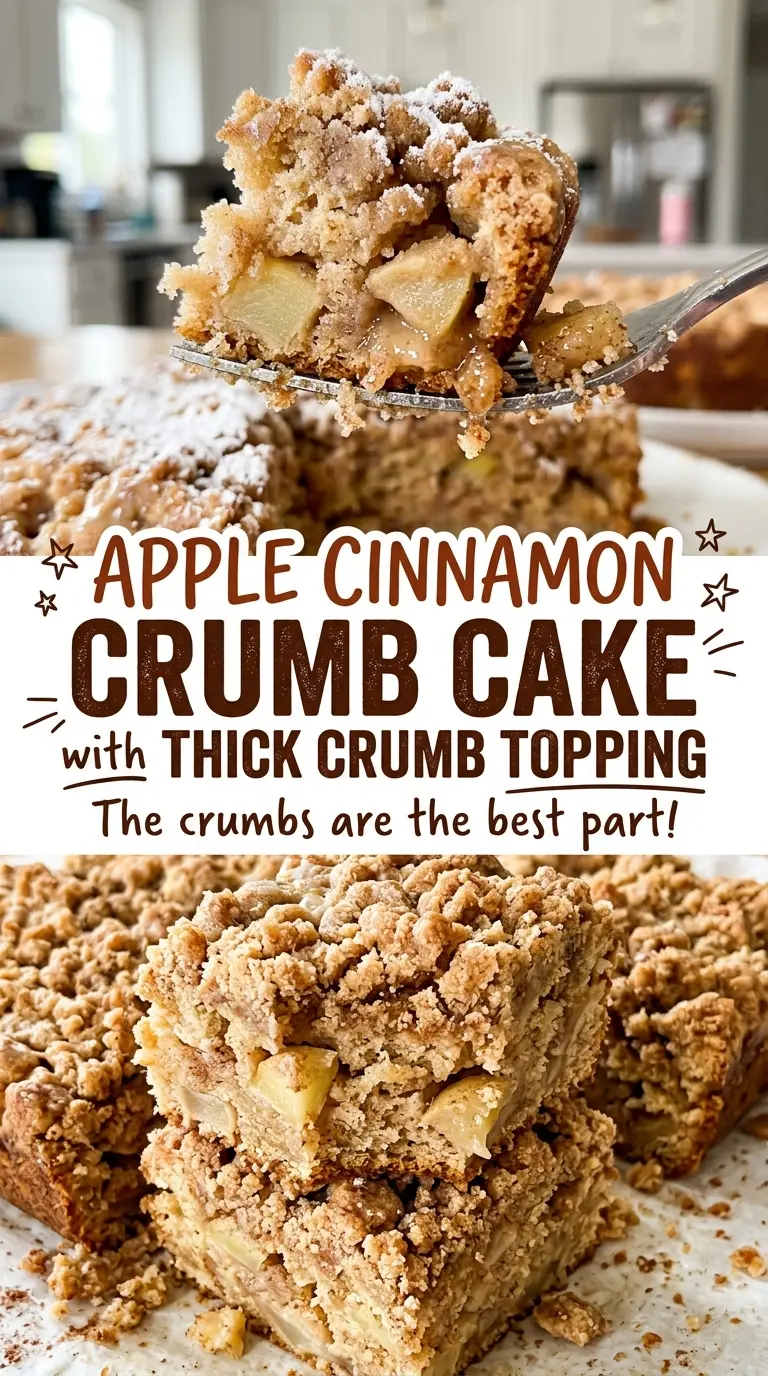
- Sour cream — Its tang balances the sweet crumb topping, and its moisture helps keep the cake tender. Full-fat plain Greek yogurt is the closest practical swap; use it in place of the sour cream, knowing the cake may be a little less rich.
- Apples — Choose firm apples that hold their shape as they bake. A tart variety gives the cake a brighter contrast to the sweet topping; a sweeter apple makes the whole slice milder. Peel and core them before dicing so the soft cake doesn’t have chewy pieces of skin.
- Unsalted butter — Softened butter creams with the sugar for the cake, while melted butter binds the crumb topping. Unsalted butter keeps the salt level predictable in both layers, and it’s worth using fresh butter here because its flavor carries through the topping.
- Cinnamon — Ground cinnamon seasons both the batter and the crumbs, so freshness matters more than buying an expensive brand. If the jar smells faint when you open it, the cake’s spice will taste muted too.
- Eggs — Room-temperature eggs blend more evenly into the creamed butter and sugar. Set them out while you gather the other ingredients; cold eggs can make the butter mixture look slightly curdled, though it will still come together as the remaining ingredients are mixed in.
Mixing a Tender Apple Cake Without Overworking It
Build the Batter in Two Batches
Heat the oven to 350°F and grease a 9×13-inch baking dish with the tablespoon of softened butter. Whisk the flour, baking powder, baking soda, salt, and cinnamon together in a medium bowl so the leaveners are spread through the flour. In a large bowl, beat the remaining softened butter with the granulated sugar until light and fluffy, about 2 minutes. Beat in the eggs one at a time, then mix in the sour cream and vanilla until smooth.
Stop Mixing When the Flour Disappears
Add the flour mixture to the wet ingredients and mix on low just until no dry streaks remain. A few extra seconds of beating can make a cake tougher, so stop as soon as the flour is incorporated. The batter will be thick rather than pourable. That consistency helps support the apples and the generous crumb layer.
Fold in the Apples Gently
Fold the peeled, cored apples, cut into half-inch dice, into the batter with a spatula. Use broad turns and scrape along the bottom of the bowl so the pieces are distributed without mashing them. Spread the batter evenly in the prepared baking dish, nudging it into the corners. An even layer gives the cake a consistent depth beneath the topping.
Top, Bake, and Check the Center
Whisk the topping flour, brown sugar, granulated sugar, cinnamon, and salt in a medium bowl, then stir in the melted butter until moist clumps form. Scatter the mixture over the batter and gently squeeze some into larger pieces. Bake for 45 to 55 minutes, until the top is golden and a toothpick inserted into the cake comes out with a few moist crumbs. Cool the cake in the dish on a wire rack for at least 30 minutes before cutting.
Easy Changes That Keep the Cake’s Crumb Structure
Use a Tart, Firm Apple
Choose a firm tart apple instead of a sweeter variety for a sharper contrast with the brown sugar topping. Keep the apples peeled and cut to the same half-inch dice so they soften evenly; very soft apples can turn mushy in the cake.
Swap in Firm Pears
Replace the apples with peeled, cored firm pears, cut into the same size pieces. Pears bring a softer, sweeter fruit note, so choose ones that are ripe but still hold their shape; very ripe pears release more moisture and can leave the cake heavier.
Make It Gluten-Free
Use a measure-for-measure gluten-free flour blend in both the cake and the crumb topping. Pick a blend formulated to replace all-purpose flour in baking; the cake may have a slightly more delicate crumb, so let it cool fully before slicing for the neatest pieces.
Storage and Reheating
- Refrigerator: Store covered in an airtight container for up to 4 days. The crumb topping softens a little in the refrigerator.
- Freezer: Freeze fully cooled individual slices, wrapped tightly and placed in a freezer-safe container, for up to 2 months. Thaw in the refrigerator before warming.
- Reheating: Warm an individual slice in the microwave just until warm, about 10 to 15 seconds. Longer heating can dry the cake and soften the topping further.
Questions That Come Up When Baking This Apple Crumb Cake
Apple Cinnamon Crumb Cake with Thick Crumb Topping
Ingredients
Equipment
Method
- Heat the oven to 350°F.
- Grease a 9x13-inch baking dish with 1 tablespoon of the softened butter.
- In a medium bowl, whisk together the flour, baking powder, baking soda, salt, and cinnamon.
- In a large bowl, beat the remaining 8 tablespoons of softened butter with the granulated sugar until light and fluffy, about 2 minutes.
- Beat in the eggs one at a time.
- Mix in the sour cream and vanilla until smooth.
- Add the flour mixture and mix on low just until no dry streaks remain.
- Fold the diced apples into the batter.
- Spread the batter evenly in the prepared dish.
- In a medium bowl, whisk together the flour, brown sugar, granulated sugar, cinnamon, and salt.
- Stir in the melted butter until moist clumps form.
- Scatter the crumb mixture evenly over the batter, gently squeezing some of it into larger clumps.
- Bake at 350°F for 45 to 55 minutes, until the topping is golden and a toothpick inserted into the cake comes out with a few moist crumbs.
- Cool the cake in the dish on a wire rack for at least 30 minutes before cutting.