
White Christmas Charlotte Cake
The cranberries start out firm and glossy, then begin popping in the saucepan as the sugar and water cook down around them. I watch for the mixture to thicken before…

By Ava
•
•
Reading time: 10 min
Tip: save now, make later.
The cranberries start out firm and glossy, then begin popping in the saucepan as the sugar and water cook down around them. I watch for the mixture to thicken before adding the orange, because that tart, bright center needs to hold its shape between the mousse layers. That contrast is what makes this White Christmas Charlotte Cake more than a ring of ladyfingers with a pretty top.
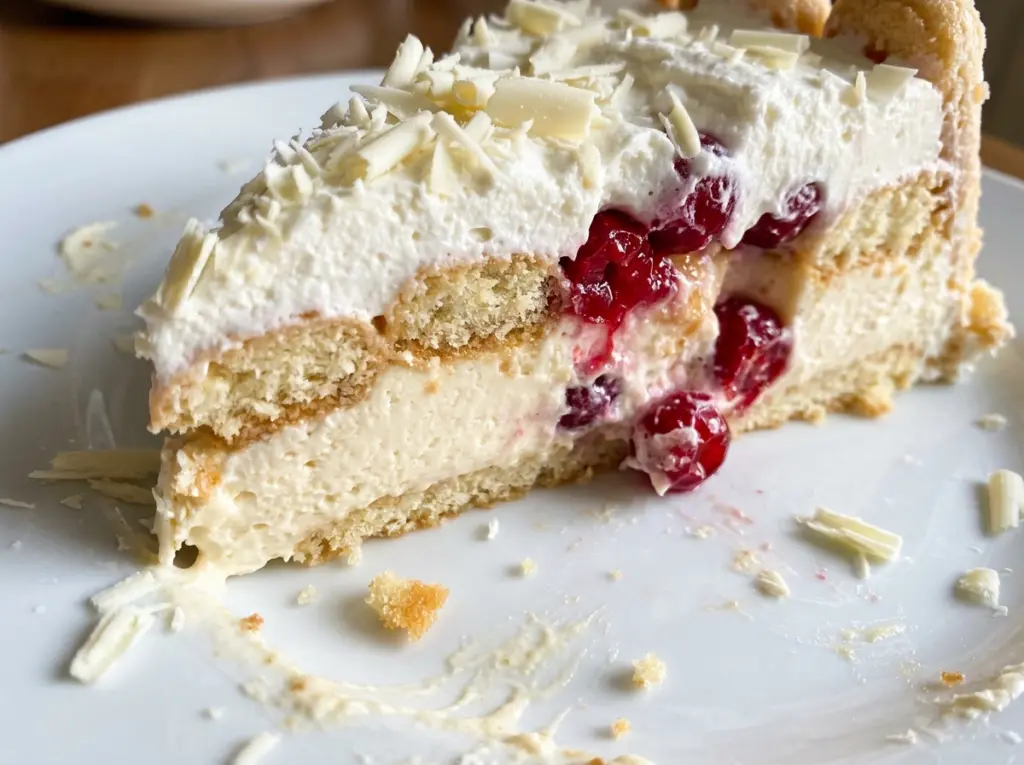
The mousse takes a little patience, but the steps are straightforward: warm cream melts the finely chopped white chocolate, gelatin helps it set, and whipped cream keeps it light. I cool the chocolate base until it’s still fluid but no longer hot before folding, so the whipped cream stays airy instead of melting into it. Once the ladyfingers are snug in the pan and the layers are in place, the refrigerator does the work. The finished cake is softly set, with a clean cranberry stripe and a delicate white chocolate finish.
Kitchen Note
I wait until the white chocolate base is just warm and still fluid before folding in the whipped cream. If it’s hot, it can melt the cream’s lift; if it cools until firm, it won’t fold in smoothly.
Save this White Christmas Charlotte Cake for its tart cranberry center, airy white chocolate mousse, and ladyfinger sides.
Why the Cranberry Filling Needs a Border Around the Edge
The cranberry layer shouldn’t reach all the way to the ladyfingers. Leaving a narrow border keeps the filling tucked inside the mousse instead of pressed against the outside wall, where it could interrupt the clean look of the cake when the springform ring comes off. It also gives the top layer of mousse a little room to meet the bottom layer around the filling.
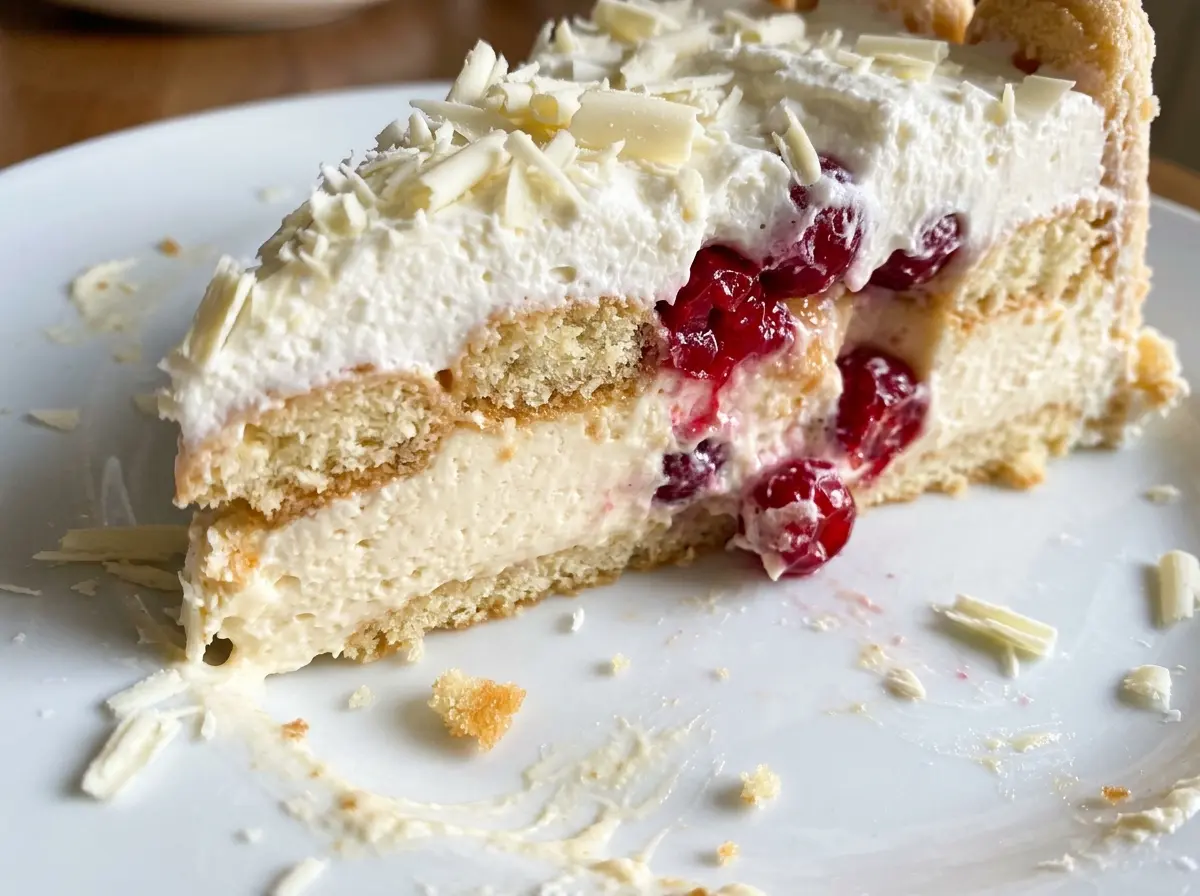
That small gap is easy to lose when spooning the cranberries over the first mousse layer, especially if the filling is soft. Use the back of a spoon to guide it inward and leave the border visible all the way around. The filling should be cold before it goes into the pan; warm fruit can loosen the mousse beneath it and make the layers harder to keep distinct. When you cut a slice, the ladyfinger base, mousse, cranberry center, and top layer stay easy to see rather than blending into one soft middle.
The springform ring supports the ladyfingers while the cake chills, so they don’t need to be forced into a tight curve. Set them snugly side by side and let the pan hold them in place. The sugar-coated sides face out, giving the finished charlotte its familiar decorative edge.
What Makes the Mousse Set and the Ladyfingers Hold

- Cranberries and orange — Fresh or frozen cranberries both work. The berries supply the tart center and thicken as they cook with sugar and water; orange juice and finely grated zest brighten that fruit without taking over. Frozen cranberries can go straight into the saucepan.
- White chocolate — Finely chopped chocolate melts more evenly when the hot cream is poured over it. Choose white chocolate you like the taste of, since it carries most of the mousse’s sweetness. Chocolate chips are a less reliable swap because they may not melt as smoothly into a pourable base.
- Heavy cream and gelatin — Heavy cream is what gives this mousse its body and whipped texture, while unflavored gelatin helps the chilled cake hold its shape. Milk or a lower-fat cream won’t whip into the same structure, and gelatin doesn’t have a direct one-for-one replacement in this method.
- Dry ladyfingers — Savoiardi are sturdy enough to line the pan and form the base. Their dry texture helps them keep their shape as the cake chills; soft sponge cake won’t make the same supported sides or base.
- Pistachios and confectioners’ sugar — The pistachios add a crisp finish, while a light dusting of sugar gives the top a snowy look. Use shelled, unsalted pistachios so the garnish stays crunchy without adding a salty note.
The Four Stages That Build a Clean, Sliceable Charlotte
Cook the Cranberries Until They Thicken
Combine the cranberries, granulated sugar, and water in a medium saucepan over medium heat. Stir often for 10 to 12 minutes, until the berries burst and the mixture thickens; keep stirring as it cooks so the fruit doesn’t catch on the bottom. Take the pan off the heat, stir in the orange juice and zest, then transfer the filling to a bowl. Let it cool completely, about 1 hour, and refrigerate it until cold before assembling.
Turn Hot Cream and Chocolate Into a Smooth Base
Sprinkle the gelatin over the cold water in a small bowl and let it stand for 5 minutes to soften. Heat 1 cup of the heavy cream in a small saucepan over medium heat until steaming, about 3 to 4 minutes, then remove it from the heat and stir in the softened gelatin until dissolved. Pour the hot cream over the finely chopped white chocolate and let it stand for 2 minutes before whisking until smooth. Stir in the vanilla extract.
Fold the Mousse Without Knocking Out Its Air
Stir the chocolate mixture occasionally as it cools until it’s just warm and still fluid, about 85 to 90°F; this takes about 15 to 20 minutes. Whip the remaining cold cream in a large bowl with a mixer on medium-high speed until it reaches medium peaks, about 2 to 4 minutes. Fold one-third of the whipped cream into the chocolate base to lighten it, then gently fold in the rest. Stop when no streaks remain so the mousse stays airy.
Line, Layer, and Chill the Cake
Lightly grease the sides of a 9-inch springform pan and line the bottom with a parchment round. Stand the ladyfingers snugly around the inside edge with their sugar-coated sides facing out, then arrange the remaining ladyfingers across the bottom, breaking pieces to fill gaps. Spread half of the mousse over the base, spoon the cold cranberry filling over it while leaving a 1/2-inch border, and cover it with the remaining mousse. Smooth the top, cover the pan loosely, and refrigerate for at least 8 hours, until firm; just before serving, run a thin knife around the inside edge, remove the ring, and finish with pistachios and confectioners’ sugar.
Ways to Change the Center or Finish Without Losing the Shape
Use Frozen Cranberries When Fresh Aren’t Available
Frozen cranberries work in the filling without thawing first. They keep the same tart, bright contrast with the white chocolate mousse, so the finished cake doesn’t lose its defining center.
Leave Off the Pistachio Garnish
Omit the pistachios and finish with the confectioners’ sugar alone for a simpler top. This removes pistachios from the garnish, but it isn’t a guarantee that the dessert is safe for someone with a nut allergy; packaged ladyfingers and white chocolate can have cross-contact.
Make a Plain White Chocolate Charlotte
Leave out the cranberry filling for a simple white chocolate version. The mousse and ladyfinger structure remain, but you’ll lose the sharp fruit contrast and the distinct cranberry layer.
Make-Ahead and Serving
- Refrigerator: Keep the cake covered and chilled for up to 3 days. The ladyfingers soften as it sits, but the cake remains sliceable.
- Freezer: Freezing isn’t my choice for this dessert; thawed mousse and ladyfingers can lose their delicate texture.
- Serving: Make it ahead so it has the full chilling time, and add the pistachios and confectioners’ sugar just before serving. Serve it cold rather than letting the mousse sit out for an extended time.
Questions That Come Up Before Unmolding a Charlotte
White Christmas Charlotte Cake
Ingredients
Equipment
Method
- Combine the cranberries, granulated sugar, and water in a medium saucepan.
- Cook over medium heat for 10-12 minutes, stirring often, until the berries burst and the mixture thickens.
- Stir in the orange juice and zest.
- Transfer the cranberry mixture to a bowl and cool completely, about 1 hour.
- Refrigerate the cranberry filling until cold.
- Sprinkle the gelatin over the cold water in a small bowl and let stand for 5 minutes to soften.
- Heat 1 cup of the heavy cream in a small saucepan over medium heat until steaming, about 3-4 minutes.
- Remove the cream from the heat and stir in the softened gelatin until dissolved.
- Pour the hot cream over the white chocolate and let stand for 2 minutes.
- Whisk the mixture until smooth.
- Stir in the vanilla.
- Cool the chocolate mixture, stirring occasionally, until just warm and still fluid, about 85-90°F, 15-20 minutes.
- In a large bowl, whip the remaining 2 cups cold heavy cream with a mixer on medium-high speed to medium peaks, about 2-4 minutes.
- Fold one-third of the whipped cream into the chocolate mixture to lighten it.
- Gently fold in the remaining cream until no streaks remain.
- Lightly grease the sides of a 9-inch springform pan and line the bottom with a parchment round.
- Stand ladyfingers snugly around the inside edge of the pan, sugar-coated sides facing out.
- Arrange the remaining ladyfingers over the bottom, breaking pieces to fill gaps.
- Spread half of the mousse over the ladyfinger base.
- Spoon the cold cranberry filling over the mousse, leaving a 1/2-inch border.
- Cover the cranberry filling with the remaining mousse.
- Smooth the top and cover the pan loosely.
- Refrigerate for at least 8 hours, until the mousse is firm.
- Run a thin knife around the inside edge of the pan and remove the springform ring.
- Sprinkle the pistachios and confectioners' sugar over the top just before serving.