
Watermelon Quinoa Kale Salad
Watermelon quinoa kale salad hits that rare sweet spot between crisp, juicy, and satisfying. The watermelon brings the brightness, the quinoa gives it enough substance to count as lunch, and…

By Ava
•
•
Reading time: 10 min
Tip: save now, make later.
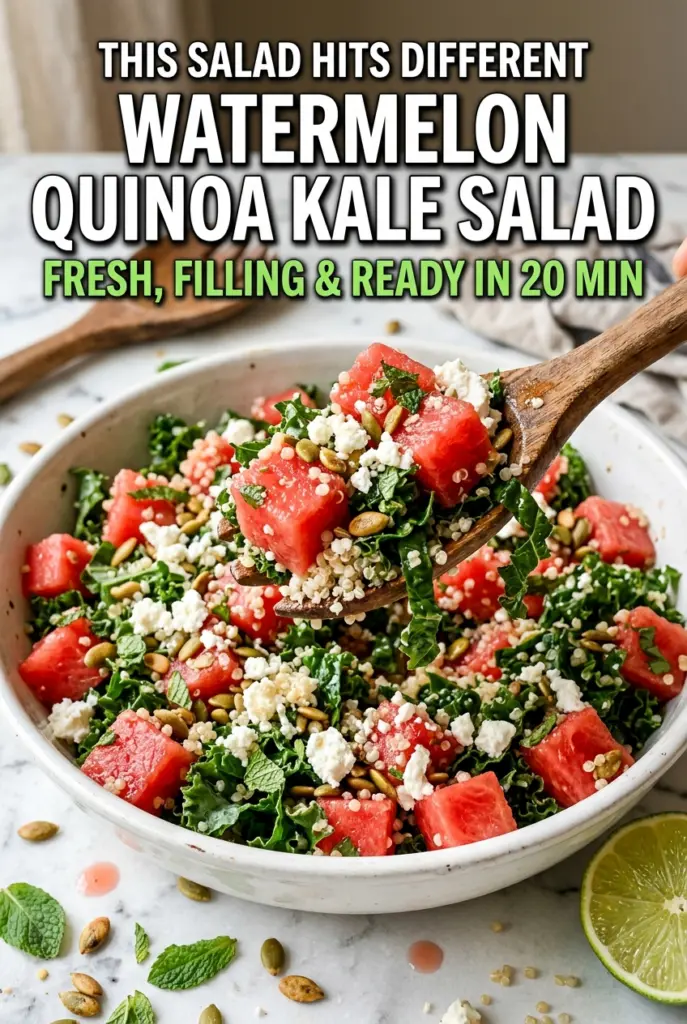
Watermelon quinoa kale salad hits that rare sweet spot between crisp, juicy, and satisfying. The watermelon brings the brightness, the quinoa gives it enough substance to count as lunch, and the massaged kale keeps everything from turning flimsy after the dressing goes on. What makes this version stand out is the balance: nothing is muddled, and every bite still tastes distinct.
The trick is treating each component differently. The kale gets salted and massaged so it softens instead of fighting you, the quinoa has to cool completely so it doesn’t steam the greens, and the watermelon gets folded in gently at the end so it keeps its shape. The lime-honey dressing pulls all of it together without burying the mint, basil, or feta.
Below, I’ve included the part that matters most: how to keep the salad from getting watery, which swaps still work, and what to do if you want to make it ahead for a cookout or lunch box.
The kale stayed tender without getting soggy, and the watermelon held up even after chilling for a half hour. The lime dressing was bright without being sharp, and the feta + pepitas gave it just enough salt and crunch.
Save this watermelon quinoa kale salad for the days you want something crisp, colorful, and hearty enough to stand on its own.
The Reason This Salad Stays Fresh Instead of Turning Watery
The biggest mistake with fruit-and-grain salads is combining everything too early. Watermelon starts releasing juice the moment it’s cut, and warm quinoa adds even more moisture if it goes straight into the bowl. That’s how a salad goes from crisp and lively to soupy and flat.
Massaging the kale changes the texture in a way that matters here. Raw curly kale can be tough and papery, but a little oil and salt soften the leaves and help them catch the dressing. The result is a sturdier base that can handle juicy watermelon without collapsing.
The other thing that keeps this salad balanced is restraint. The feta brings salt, the pepitas bring crunch, and the herbs keep the sweetness from taking over. If you add more of any one thing, the salad starts to lose the contrast that makes it work.
What Each Ingredient Is Actually Doing in This Salad
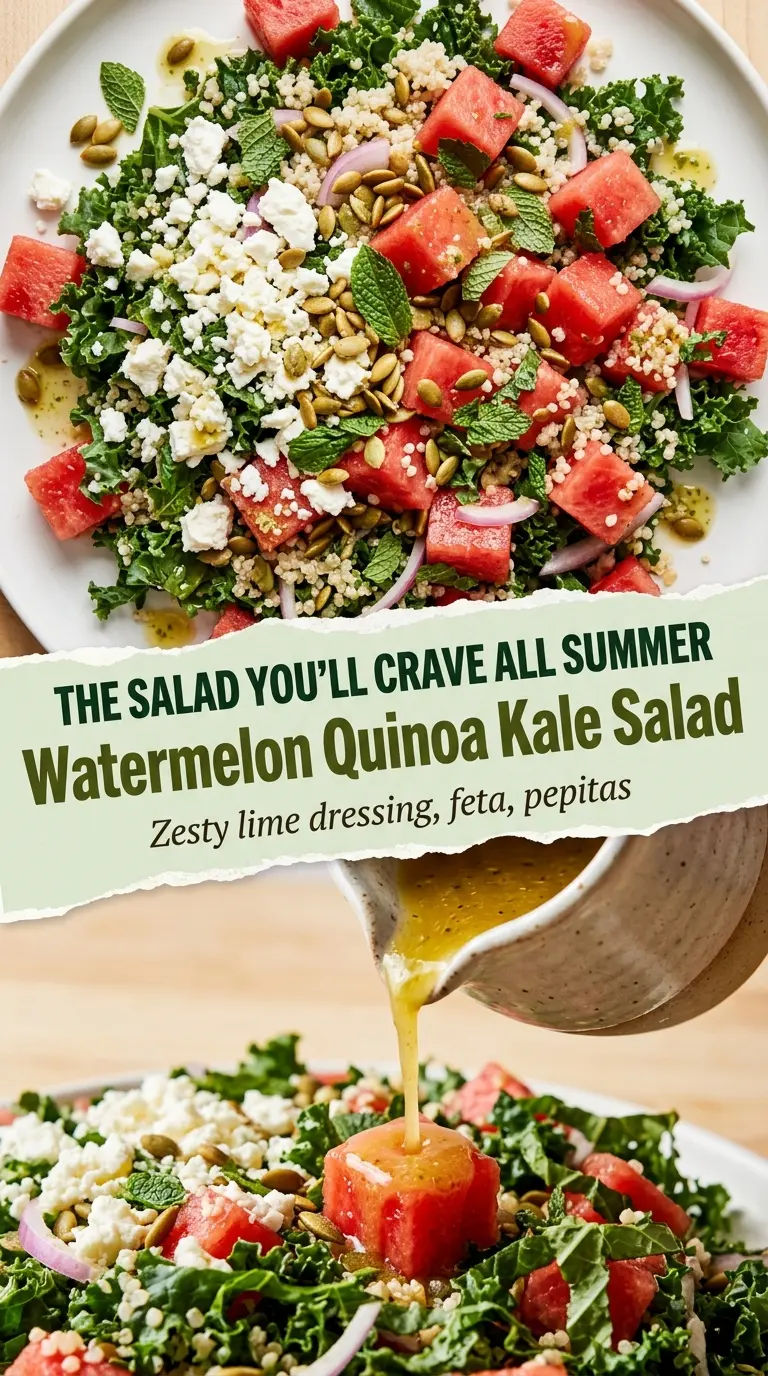
- Curly kale — This is the backbone of the salad. It holds up better than tender greens and won’t wilt the second the dressing hits it, but it does need that quick massage to turn from tough to pleasant.
- Cooked quinoa — Quinoa makes the salad feel complete instead of side-dish small. It should be fully cooled before it goes in; warm quinoa will soften the kale too much and thin out the overall texture.
- Seedless watermelon — Use a ripe melon that tastes sweet on its own. A bland watermelon makes the salad taste unfinished, and overcutting it into tiny pieces will make it break down faster.
- Feta — Feta gives the salad its salty edge. Block feta crumbled by hand usually tastes better and stays a little creamier than pre-crumbled, but either works in a pinch.
- Pepitas — These add the crunch you need right before serving. Toast them lightly so they smell nutty and turn deeper green; raw pepitas are fine, but they won’t give the same payoff.
- Mint and basil — These herbs are not decoration here. Mint sharpens the melon, and basil adds a green, almost peppery note that keeps the salad from tasting one-note.
- Lime juice and zest — The juice brightens the whole bowl, and the zest carries the citrus aroma in a way juice alone can’t. Fresh limes matter here because bottled juice tastes dull and loses the clean edge the dressing needs.
- Honey and Dijon — Honey rounds out the tart lime, while Dijon helps the dressing emulsify so it clings instead of separating. If you skip the mustard, the dressing still tastes good, but it won’t coat the greens as evenly.
Building the Bowl So the Watermelon Stays Intact
Cook and cool the quinoa first
Cook the quinoa according to the package, then spread it out on a plate so steam escapes fast. If you leave it piled in a bowl, it keeps cooking and stays damp on the surface, which makes the salad heavier. Cool it all the way to room temperature before it touches the kale.
Massage the kale until it softens
Put the chopped kale in a large bowl with a little olive oil and salt, then rub it between your fingers for a minute or two. You’re looking for leaves that darken slightly, shrink a bit, and lose that rough, squeaky texture. If you skip this, the kale stays stubborn and the salad eats like a pile of raw greens with fruit on top.
Whisk a dressing that clings
Combine the lime juice, oil, honey, Dijon, zest, salt, and pepper until the dressing looks glossy and lightly thickened. Dijon is what keeps the oil and lime from separating too quickly. If it looks broken, whisk again for another few seconds before you add it to the bowl.
Fold in the fragile ingredients at the end
Add the cooled quinoa to the kale first so it gets evenly distributed. Then fold in the watermelon, onion, mint, and basil with a light hand. The goal is to coat, not crush; hard stirring will bruise the herbs and turn the melon into juice.
Finish with the cheese and seeds right before serving
Top the salad with feta and toasted pepitas at the very end so the cheese stays distinct and the seeds stay crisp. That last-minute finish is what gives each bite contrast. If you add them too early, the pepitas soften and the feta disappears into the dressing.
Three Ways to Change This Without Losing the Point
Dairy-Free Version
Skip the feta and add a few extra pepitas plus a pinch more salt. The salad loses that creamy-salty bite, so a small spoonful of avocado or a few chopped olives can help replace some richness if you want a fuller finish.
No Quinoa, No Problem
Cooked farro or couscous can step in if that’s what you have, but both change the texture. Farro makes the salad nuttier and chewier, while couscous turns it softer and a little more delicate.
Make It a Bigger Meal
Add chickpeas, grilled chicken, or shrimp if you want more protein. Chickpeas keep it vegetarian and add a nutty chew, while grilled chicken turns the salad into a full lunch without changing the dressing at all.
Storage and Reheating
- Refrigerator: Store the dressed salad for up to 1 day, though the watermelon will release more juice as it sits and the herbs will soften.
- Freezer: Don’t freeze this salad. The watermelon and kale both lose their texture completely once thawed.
- Reheating: No reheating needed. If you’re making it ahead, keep the dressing separate and toss everything together just before serving so the salad stays crisp.
Questions I Get Asked About This Recipe
Watermelon Quinoa Kale Salad
Ingredients
Equipment
Method
- Cook the quinoa according to package directions (about 15 minutes), then spread it on a plate and let it cool completely to room temperature.
- Keep the quinoa at room temperature before using so it won’t wilt the kale.
- Place the chopped kale in a large bowl and drizzle with 1 teaspoon olive oil plus a pinch of salt.
- Massage the kale with your hands for 1–2 minutes until it softens and turns bright green.
- Whisk the lime juice, extra virgin olive oil, honey, Dijon mustard, lime zest, sea salt, and black pepper in a small bowl until smooth and emulsified.
- Add the cooled quinoa to the massaged kale and toss to combine.
- Gently fold in the watermelon cubes, red onion, mint, and basil, being careful not to crush the watermelon.
- Drizzle the dressing over the salad and toss lightly to coat everything evenly.
- Top with crumbled feta and toasted pepitas right before serving so they stay crisp.
- Taste and adjust with extra lime juice or a touch of honey as needed, then serve immediately or refrigerate up to 30 minutes.