
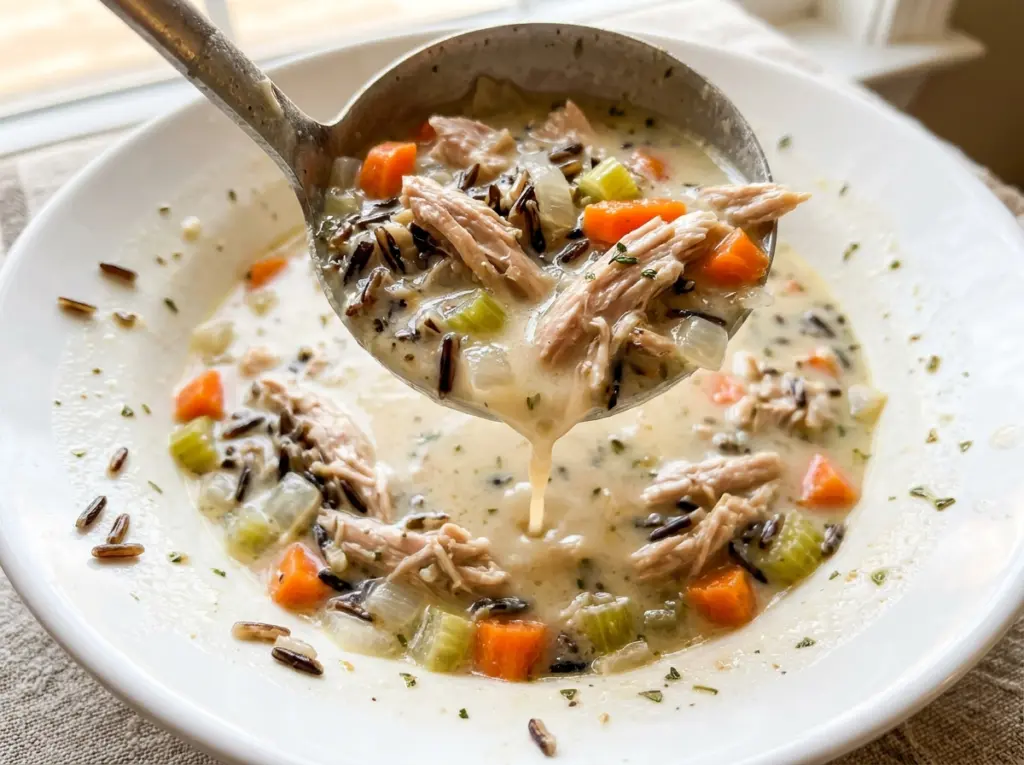
Turkey Wild Rice Soup
The butter starts bubbling around the diced vegetables, and the kitchen smells like the beginning of a good pot of soup. I like this Turkey Wild Rice Soup when there’s…

By Ava
•
•
Reading time: 9 min
Tip: save now, make later.
The butter starts bubbling around the diced vegetables, and the kitchen smells like the beginning of a good pot of soup. I like this Turkey Wild Rice Soup when there’s cooked turkey to use up, but it isn’t just a way to clear out leftovers: wild rice gives the broth a pleasantly chewy texture, while a little flour and cream make it feel substantial without turning it into a heavy stew.
Wild rice needs time to soften, so I let it simmer in the broth before adding the turkey and cream. That order matters: the rice gets its full cooking time, and the cooked turkey stays tender instead of simmering away while the grains catch up. Once the rice is tender and many grains have split open, the soup is ready for its gentle, creamy finish.
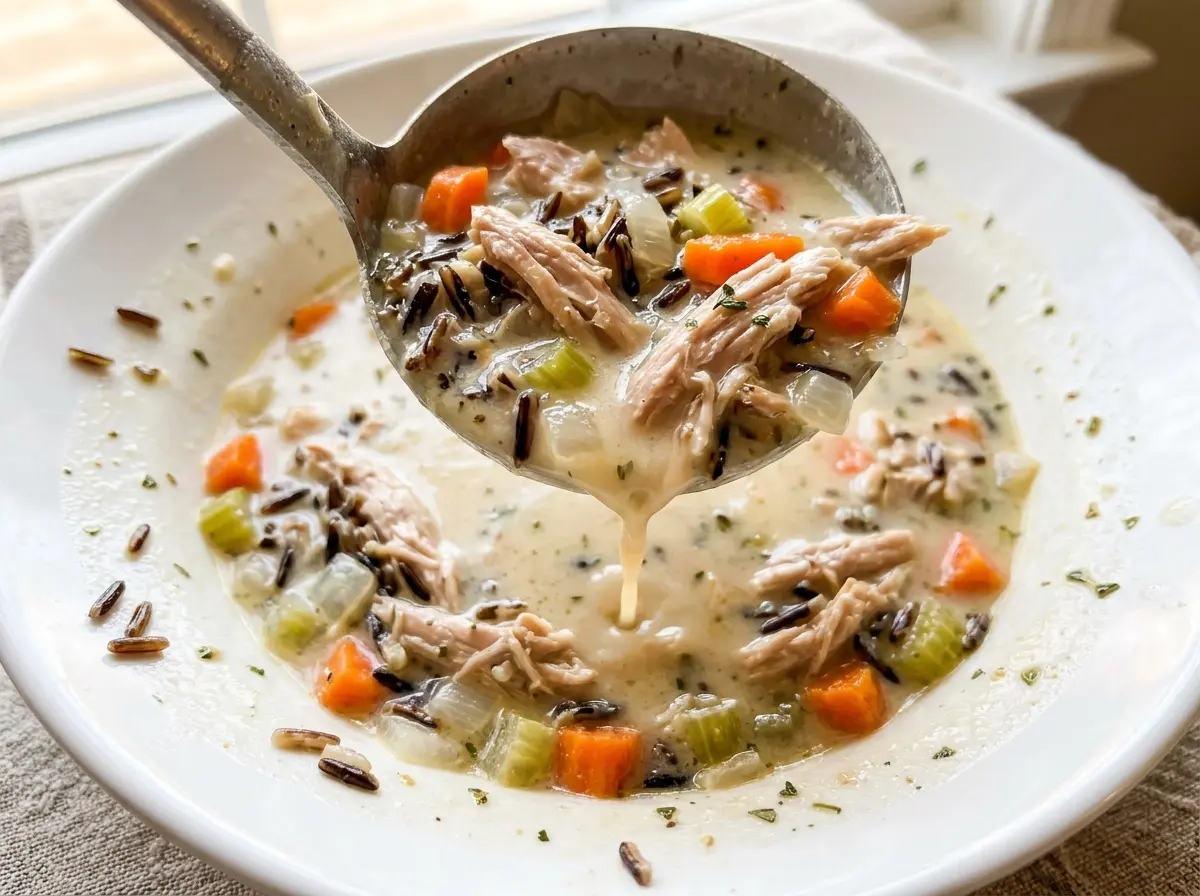
Kitchen Note
Don’t wait for every wild rice grain to split. The useful cue is tender rice with many grains opened up; waiting for all of them can leave the rest softer than you want.
Save this Turkey Wild Rice Soup for a cozy pot with tender turkey, creamy broth, and wild rice that stays pleasantly chewy.
Why the Flour Goes in Before the Broth
The soup’s creamy body starts before any cream goes into the pot. After the vegetables soften, the flour cooks briefly in the butter, coating the vegetables and taking away its raw taste. Whisking the broth in gradually gives that flour a chance to disperse smoothly instead of gathering into little lumps. It’s a simple base, but it gives the finished soup enough body to hold the rice and turkey together.
Heavy cream adds richness at the end; it isn’t responsible for thickening the whole pot. That distinction is helpful if you’re used to adding cream early and simmering until a soup feels substantial. Here, the flour-built broth does the structural work, and the cream rounds it out. Keep the burner gentle once the cream is in. A hard boil can make a cream-based soup look less smooth, and there’s no need for one after the rice is cooked.
The result should be spoonable rather than gluey, with broth still visible between the vegetables, rice, and turkey. If the soup tightens after standing, the rice has absorbed some of the liquid; a splash of broth while reheating brings it back toward a looser consistency.
What the Wild Rice and Cream Bring to the Pot

- Wild rice — Rinsing removes loose surface debris before the rice goes into the soup. Pure wild rice has a firm, pleasantly chewy bite and takes longer to cook than many rice blends. Use uncooked wild rice rather than a quick-cooking blend if you want the timing and texture here; blends can soften at different rates.
- Butter and flour — Butter carries the flavor of the softened vegetables, while all-purpose flour thickens the broth. Fresh flour matters more than an expensive brand. If you need a dairy-free pot, olive oil can replace the butter, though the base will taste less buttery; use the flour in the same way.
- Broth — Low-sodium turkey or chicken broth keeps the soup savory without locking in too much salt before it reduces. Either works well, so choose the one you have. A good-quality broth makes a noticeable difference because it forms most of the soup’s liquid.
- Cooked turkey — Shredded pieces tuck into the spoon, while diced turkey gives you more distinct bites. Leftover roasted turkey is a natural fit, and cooked chicken can take its place in the same form if that’s what’s available.
- Heavy cream — Heavy cream gives the finish a fuller, silkier feel than a lower-fat dairy choice. Half-and-half can stand in for it if you prefer a lighter soup, though the broth will be less rich. Add either at the end rather than simmering it with the rice.
- Thyme, bay leaf, and parsley — Dried thyme and the bay leaf season the broth during the long simmer; fresh parsley goes in after the bay leaf is removed, so its fresh, green taste stays distinct. Use a whole bay leaf that’s easy to spot and lift out before serving.
Build the Broth First, Then Give the Rice Its Time
Soften the vegetables in butter
Melt the butter in a 6-quart Dutch oven over medium heat, then add the diced onion, carrots, and celery. Cook for 6 to 8 minutes, stirring occasionally, until the vegetables have softened. They should look glossy and lose their raw, firm edges without browning heavily. Keep the heat at medium so the butter and vegetables don’t scorch before the base is ready.
Cook the garlic and flour
Add the minced garlic and cook for 30 seconds, just until fragrant. Stir in the flour and cook for 1 minute; the mixture will look thick and coat the vegetables. Don’t let the garlic darken, since it can turn bitter. This brief cook also gives the flour time to lose its raw taste before liquid is added.
Whisk in broth and simmer the wild rice
Gradually whisk in the broth until the mixture is smooth, then stir in the rinsed wild rice, dried thyme, bay leaf, salt, and pepper. Bring the soup to a boil, reduce the heat to low, cover, and simmer for 45 to 60 minutes, stirring occasionally. Keep the simmer low and steady, not vigorous. The rice is ready when it’s tender and many grains have split open; the exact time depends on the rice.
Finish gently with turkey and cream
Stir in the cooked turkey and heavy cream, then simmer gently for 3 to 5 minutes, until the soup reaches 165°F. Don’t let it boil. The turkey only needs to warm through, and a gentle simmer keeps the cream from taking a rough, separated-looking turn. Remove the bay leaf, stir in the chopped parsley, and serve.
Easy Ways to Adapt Turkey Wild Rice Soup
Make it dairy-free and broth-forward
Use olive oil instead of butter and leave out the heavy cream. The flour still gives the broth some body, but the soup will taste lighter and less silky than the creamy version. Keep the same staged cooking method, adding the turkey at the end.
Turn it into chicken wild rice soup
Swap the cooked turkey for cooked chicken, shredded or diced. The chicken has a milder flavor, but the rice, thyme, and creamy broth still make a balanced pot; add it at the same point so it warms without overcooking.
Storage and Reheating
- Refrigerator: Keep leftovers in a covered container for 3 to 4 days. The wild rice will absorb broth as it sits, so the soup will be thicker the next day.
- Freezer: Freeze in airtight containers for up to 2 months. Cream-based soup can separate a little after thawing, but stirring as it warms helps bring it back together.
- Reheating: Warm it slowly in a saucepan over low to medium-low heat, stirring now and then. Avoid bringing it to a rolling boil, which can make the creamy broth less smooth.
Questions That Come Up When Cooking This Soup
Turkey Wild Rice Soup
Ingredients
Equipment
Method
- Melt the butter in a 6-quart Dutch oven over medium heat.
- Add the onion, carrots, and celery and cook for 6 to 8 minutes, stirring occasionally, until softened.
- Add the garlic and cook for 30 seconds.
- Stir in the flour and cook for 1 minute.
- Gradually whisk in the broth until smooth.
- Stir in the wild rice, thyme, bay leaf, salt, and pepper.
- Bring the soup to a boil, then reduce the heat to low and cover.
- Simmer for 45 to 60 minutes, stirring occasionally, until the rice is tender and many grains have split open.
- Stir in the turkey and heavy cream and simmer gently for 3 to 5 minutes, until the soup reaches 165°F; do not let it boil.
- Remove the bay leaf.
- Stir in the parsley and serve.