
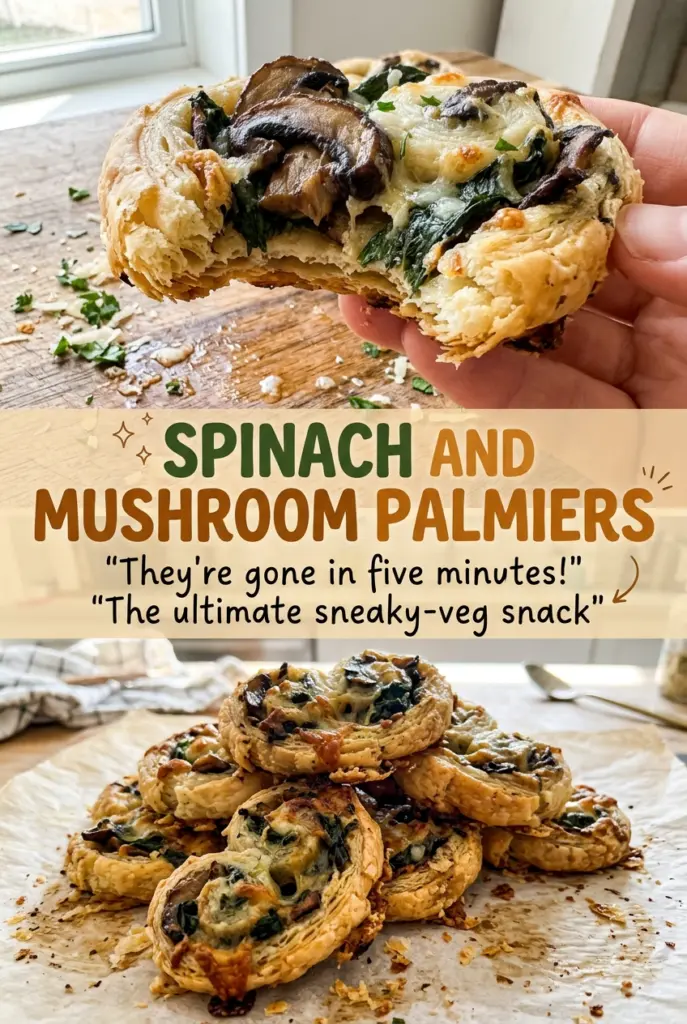
Spinach and Mushroom Palmiers
The mushrooms give off more liquid than you’d expect at first, and the spinach adds another splash as it wilts. I let both cook until the skillet looks dry before…

By Ava
•
•
Reading time: 9 min
Tip: save now, make later.
The mushrooms give off more liquid than you’d expect at first, and the spinach adds another splash as it wilts. I let both cook until the skillet looks dry before anything goes near the pastry; that’s what keeps the centers savory instead of damp. These spinach and mushroom palmiers have crisp, buttery layers around a filling with just enough Parmesan to bring it together.
I spread the filling only after it has cooled completely, then fold the pastry into its familiar double-scroll shape and chill the log before slicing. That short rest makes the layers easier to cut cleanly, so the palmiers puff into tidy spirals instead of opening up on the baking sheet. Dijon underneath gives each bite a gentle tang, while the browned mushrooms keep the filling rich and earthy.
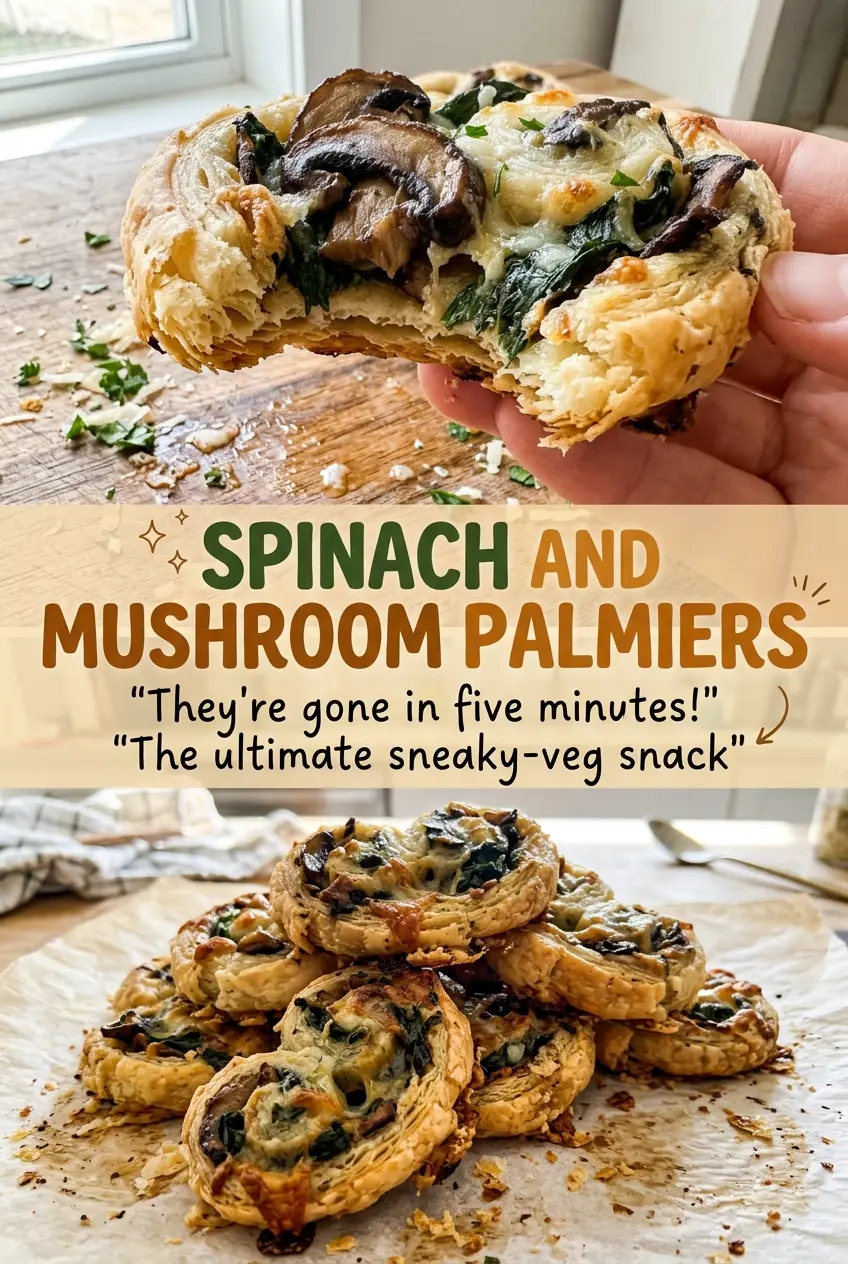
Kitchen Note
Keep the pastry cold while you work, and give the folded log its full 20 minutes in the refrigerator before slicing. That chill firms the butter and helps the cut spirals hold their shape when they go into the oven.
Save these spinach and mushroom palmiers for a savory party bite, with browned mushrooms, tender spinach, and crisp puff pastry in every spiral.
Why a Wet Mushroom Filling Makes Palmiers Go Soft
Puff pastry can’t turn crisp if the filling is still releasing water beneath it. Cremini mushrooms shrink as they cook, and spinach gives up its own liquid when it wilts. If either one goes onto the pastry while wet, the bottom layers steam instead of baking into crisp, distinct flakes.
Cook the mushrooms and shallot until the skillet is dry, not just until the mushrooms look smaller. After the spinach goes in, keep cooking until the visible liquid has evaporated too. The pan gives you a useful visual check: when you stir the filling aside, you shouldn’t see liquid pooling in the space you’ve cleared. Let the mixture cool completely before spreading it, so it doesn’t soften the cold pastry as you assemble.
This isn’t about cooking the vegetables until they’re lifeless. The mushrooms should be browned, and the spinach should be wilted; you’re just driving off the moisture that would otherwise get trapped inside the pastry. A dry, cooled filling gives you a savory center and helps the pastry layers rise around it, rather than turning heavy at the base.
What the Mushroom, Spinach, and Parmesan Each Bring
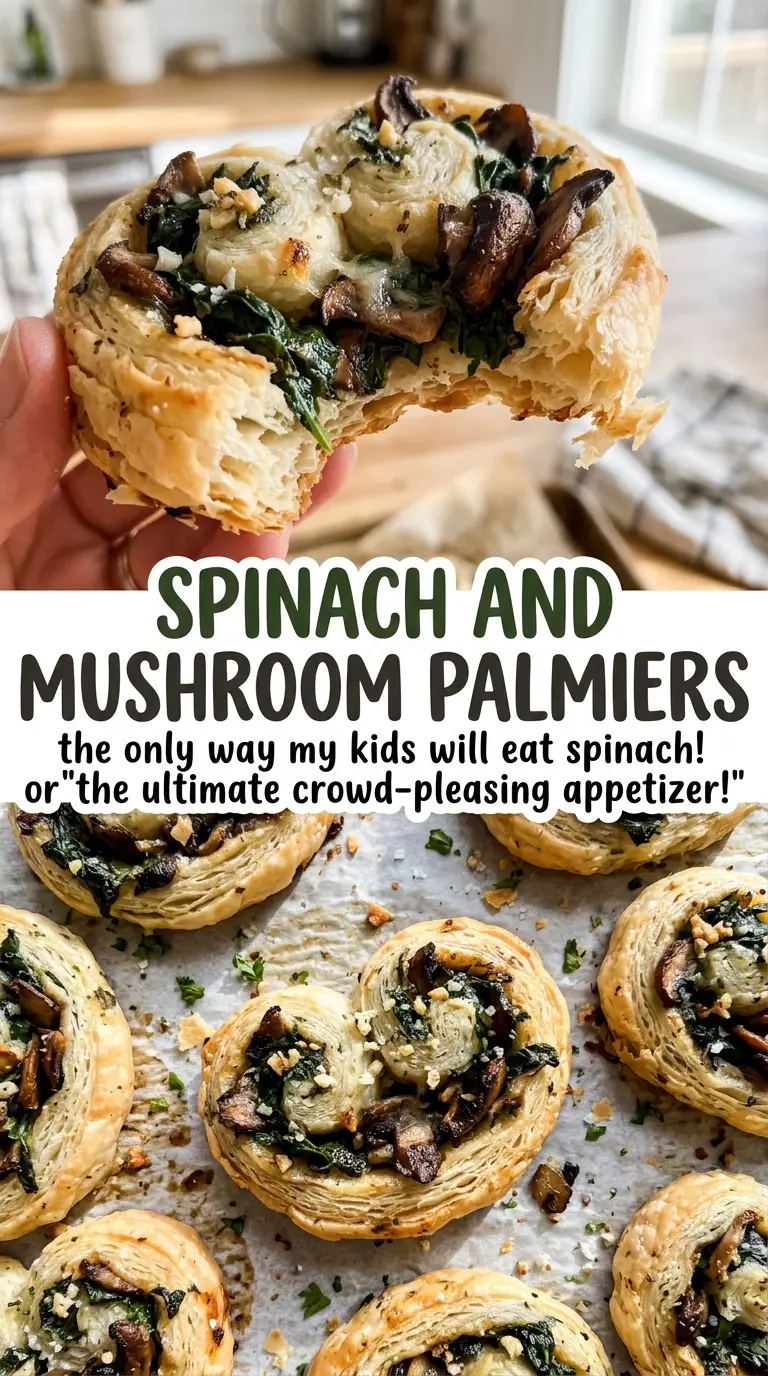
- Cremini mushrooms — Their savory, woodsy flavor holds up against buttery pastry, and chopping them finely helps the filling spread in an even layer. Choose firm mushrooms without slick or shriveled spots. White button mushrooms work as a one-for-one swap by weight, though their flavor is a little milder.
- Baby spinach — It wilts quickly and gives the filling a tender, leafy texture without large pieces pushing through the pastry. Fresh spinach is convenient here because you can add it in handfuls straight to the skillet. If using frozen spinach, thaw it and squeeze it very dry first; excess water is the main thing to avoid.
- Parmesan — Finely grated Parmesan adds salty, nutty flavor and blends into the cooled vegetables instead of leaving large chunks. A wedge grated at home gives the best texture, but packaged finely grated Parmesan is convenient and works here. Finely grated Gruyère is a good swap if you want a softer, rounder cheese flavor.
- Puff pastry — Frozen puff pastry supplies the crisp, layered structure that makes a palmier. Thaw it until it unfolds without cracking, but keep it cold; warm pastry gets sticky and is harder to fold neatly. If you use gluten-free puff pastry, follow the package’s thawing guidance and roll it to the same 10-inch square.
- Dijon mustard — A thin layer seasons the pastry with a sharp, tangy note that cuts through the rich filling. Use a smooth Dijon you enjoy eating; there’s no need to reach for a specialty brand. Whole-grain mustard can stand in, though its seeds make the layer less smooth.
Build the Filling First, Then Fold and Bake
Brown the mushrooms and soften the aromatics
Heat the olive oil in a 10-inch skillet over medium heat, then add the finely chopped mushrooms and minced shallot. Cook for 8 to 10 minutes, stirring often, until the mushrooms are browned and the skillet is dry. If the pan still has liquid, keep cooking rather than moving on; that moisture needs to evaporate. Stir in the garlic and cook for 30 seconds.
Wilt the spinach and cool the mixture
Add the roughly chopped spinach in handfuls, stirring as each batch wilts before adding more. Cook for 2 to 4 minutes, until the spinach has wilted and any liquid has evaporated, then season with the kosher salt and black pepper. Transfer the mixture to a plate and cool it completely. Stir in the finely grated Parmesan only after it has cooled.
Spread and fold the pastry into a log
Heat the oven to 400°F and line two baking sheets with parchment paper. Lightly flour the work surface and roll the thawed-but-cold pastry into a 10-inch square. Spread Dijon in a thin layer, leaving a 1/2-inch border, then spread the cooled filling evenly over it. Fold two opposite sides to meet at the center, fold each side inward again to meet in the middle, then fold one half over the other.
Slice the spirals and bake until deeply golden
Chill the log for 20 minutes, then cut it crosswise into 1/2-inch slices and arrange them cut side up, 10 per baking sheet. Beat the egg with the water and brush the tops lightly; a thin coat gives the pastry color without pooling between the layers. Bake both sheets for 16 to 20 minutes, switching their oven positions and rotating them halfway through. Look for puffed pastry with a deep golden color, then let the palmiers cool on the sheets for 5 minutes before serving.
Three Easy Swaps for a Different Batch
Use Gruyère for a milder, creamier center
Replace the Parmesan with the same amount of finely grated Gruyère. It gives the filling a gentler, more buttery cheese flavor while still mixing easily into the cooled vegetables.
Choose white button mushrooms for a lighter taste
Swap in the same weight of finely chopped white button mushrooms for the cremini. The filling will be a little less earthy, but the shape and method stay the same; cook them until browned and the skillet is dry.
Make a gluten-free version with gluten-free pastry
Use a sheet of gluten-free puff pastry and gluten-free flour for the work surface. The pastry may be more delicate to fold, so handle it while cold and use the package’s thawing instructions; the filling itself contains no wheat.
Storage and Reheating
- Refrigerator: Store cooled palmiers in an airtight container for up to 3 days. The pastry will soften as it sits.
- Freezer: Freeze baked, cooled palmiers in a single layer until firm, then transfer them to an airtight freezer container for up to 1 month. Thaw in the refrigerator before reheating.
- Reheating: Warm them in the oven until hot and crisp again. Skip the microwave, which softens the pastry rather than restoring its flaky texture.
Questions That Come Up When Making Spinach and Mushroom Palmiers
Spinach and Mushroom Palmiers
Ingredients
Equipment
Method
- Heat the olive oil in a 10-inch skillet over medium heat, then add the mushrooms and shallot and cook for 8 to 10 minutes, stirring often, until the mushrooms are browned and the skillet is dry.
- Stir in the garlic and cook for 30 seconds.
- Add the spinach in handfuls and cook for 2 to 4 minutes, until wilted and any liquid has evaporated; season with the salt and pepper.
- Transfer the mixture to a plate and cool completely, then stir in the Parmesan.
- Heat the oven to 400°F and line two baking sheets with parchment paper.
- Lightly flour the work surface and roll the puff pastry into a 10-inch square.
- Spread the Dijon over the pastry in a thin layer, leaving a 1/2-inch border, then spread the cooled filling evenly on top.
- Fold two opposite sides inward to meet at the center, then fold each side inward again to meet in the middle and fold one half over the other.
- Chill the log for 20 minutes.
- Cut the log crosswise into 1/2-inch slices and arrange them cut side up, 10 per baking sheet.
- Beat the egg with the water and brush the tops lightly.
- Bake both sheets for 16 to 20 minutes, switching their oven positions and rotating them halfway through, until the palmiers are puffed and deep golden.
- Cool on the sheets for 5 minutes before serving.