
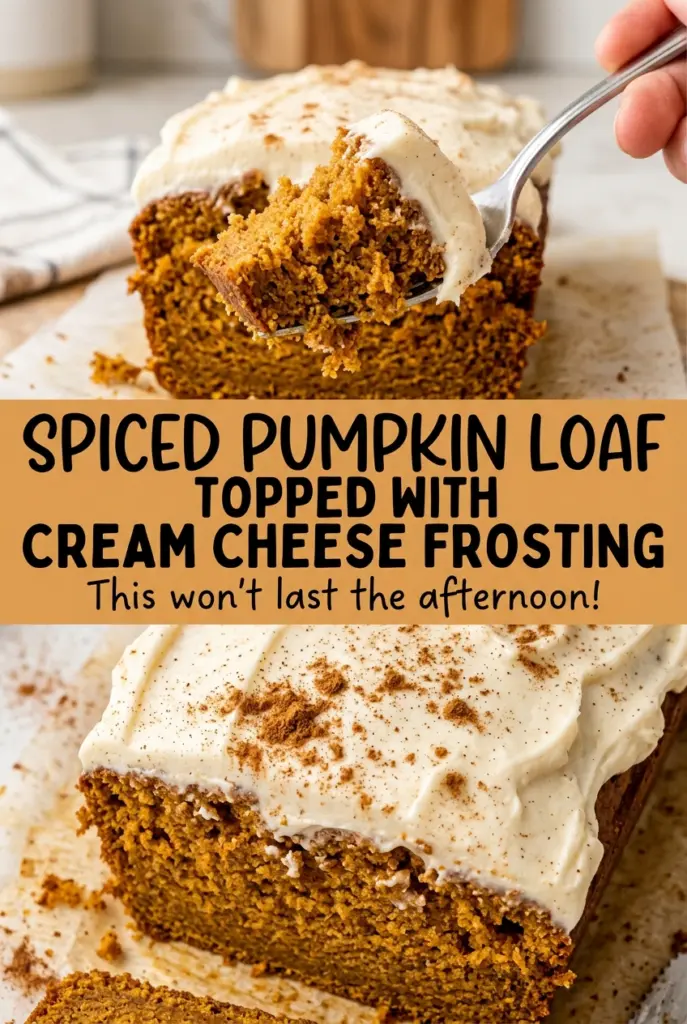
Spiced Pumpkin Loaf Topped with Cream Cheese Frosting
The whisk leaves a smooth orange ribbon when the pumpkin, oil, sugar, eggs, and vanilla come together. Then the cinnamon, ginger, nutmeg, and cloves give the batter that warm, familiar…

By Ava
•
•
Reading time: 8 min
Tip: save now, make later.
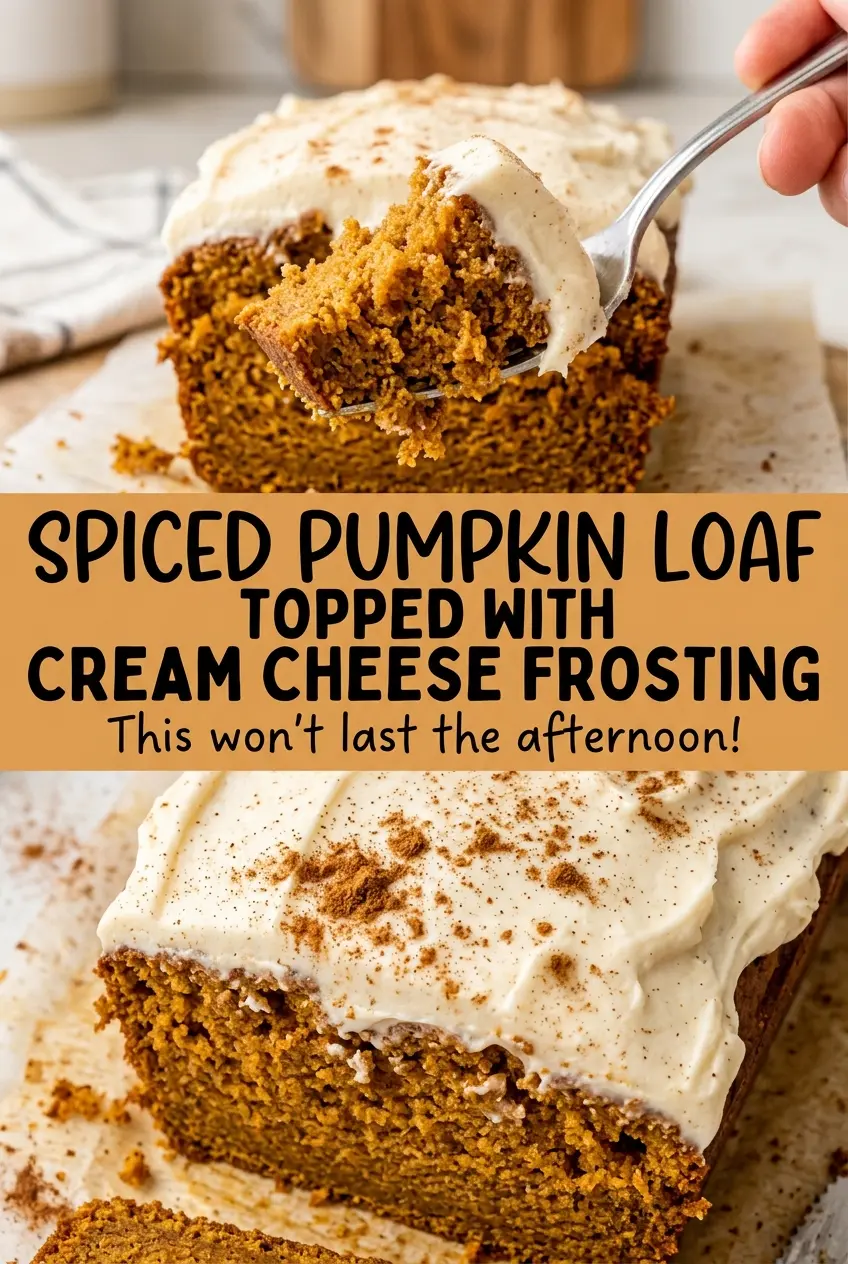
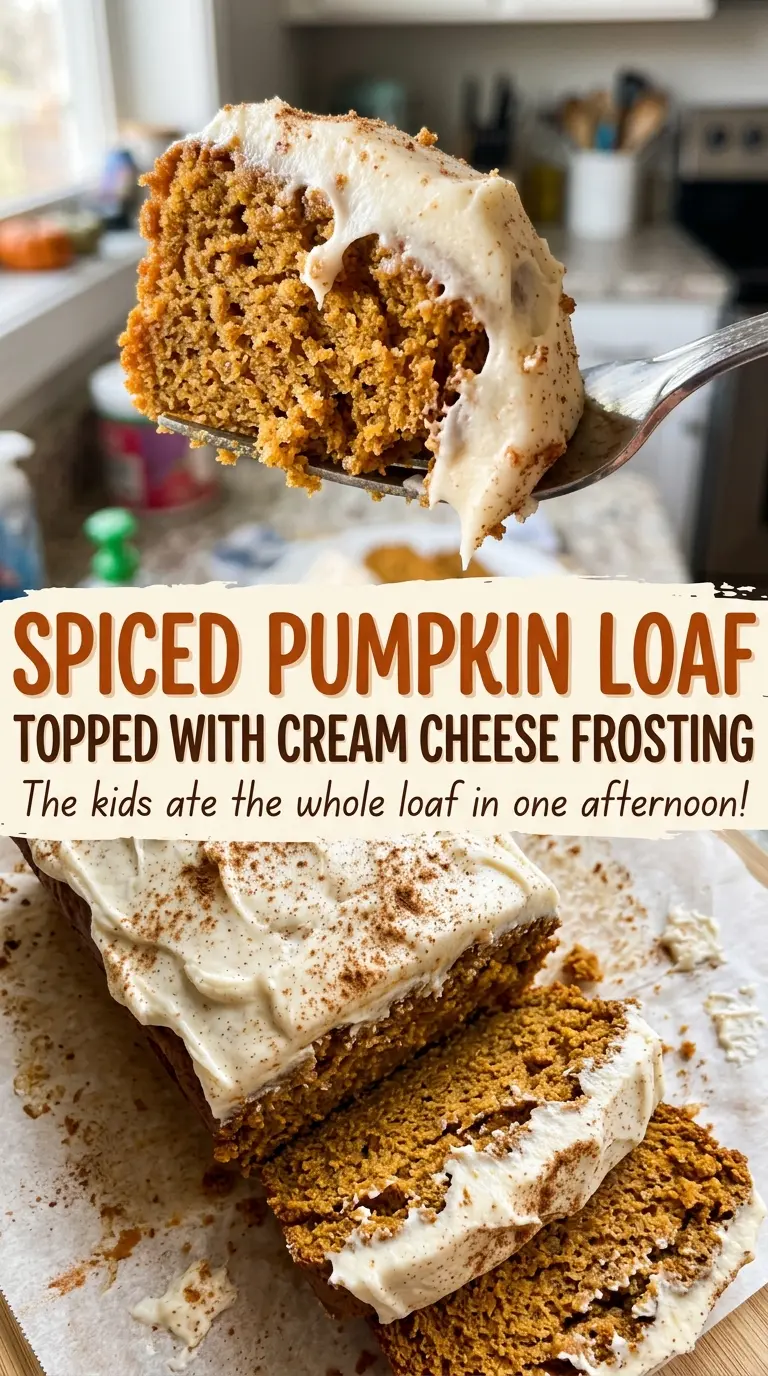
The whisk leaves a smooth orange ribbon when the pumpkin, oil, sugar, eggs, and vanilla come together. Then the cinnamon, ginger, nutmeg, and cloves give the batter that warm, familiar smell before it even reaches the oven. This spiced pumpkin loaf topped with cream cheese frosting has a tender crumb and a cool, tangy layer that keeps each bite from feeling too sweet.
I use oil in the batter and mix the wet ingredients before adding the flour. That order keeps the mixing simple: once the dry ingredients go in, stir only until the last streaks of flour disappear. The loaf bakes up moist without needing a mixer, and the frosting comes together separately while the loaf cools. A soft pumpkin crumb under a smooth cream cheese topping is a good reason to let this one cool completely before slicing.
Kitchen Note
Let the cream cheese and butter soften until they give easily when pressed, but don’t let them melt. Cold pieces can leave little lumps in the frosting, even after beating.
Save this spiced pumpkin loaf topped with cream cheese frosting for its tender pumpkin crumb, warm spice, and smooth tangy finish.
Why This Pumpkin Loaf Uses Both Baking Soda and Baking Powder
Seeing baking soda and baking powder in the same loaf batter can look redundant, but they do different jobs. Baking soda reacts with acidic ingredients in the batter, while baking powder brings its own acid-base reaction and contributes lift. Pumpkin adds moisture and density, so using both leaveners helps this loaf rise without relying on one to do everything.
They aren’t interchangeable, and adding more of one doesn’t recreate the balance of the other. Too much baking soda can leave a harsh, unpleasant taste; leaving out the baking powder can change the loaf’s lift and texture. I whisk both thoroughly into the flour so they’re spread through the batter rather than concentrated in one spot. Keep the amounts in balance and let the pumpkin and spices—not a strong aftertaste—come through in each slice.
What Each Ingredient Brings to This Pumpkin Loaf
- All-purpose flour — It gives the loaf the structure to hold the pumpkin puree and frosting without turning gummy. A standard store-brand flour works well; for a gluten-free version, use a cup-for-cup baking blend made for cakes and quick breads.
- Canned pumpkin puree — Use plain puree, not pumpkin pie filling, which is already sweetened and spiced. Canned puree is consistent from can to can, so there’s no need to drain it or adjust the wet ingredients.
- Neutral oil — Canola keeps the crumb moist without adding a strong flavor. Another neutral oil, such as vegetable oil, works in the same way; strongly flavored oils would compete with the spices.
- Ground spices — Cinnamon, ginger, nutmeg, and cloves build warmth without taking over the pumpkin. Fresh, fragrant jars give the clearest flavor, but ordinary grocery-store spices are fine if they still smell lively.
- Large eggs — They bind the wet batter and help the loaf hold together. Use large eggs for the intended balance; smaller eggs can leave the batter short on structure and moisture.
- Cream cheese — Plain block cream cheese gives the frosting a tangy taste and a sturdy, spreadable texture. Avoid whipped cream cheese spread, which is aerated and can make the topping softer.
- Unsalted butter and powdered sugar — Unsalted butter lets you control the frosting’s saltiness, while powdered sugar gives it body and a smooth finish. Granulated sugar won’t dissolve into the same creamy frosting.
Mixing and Baking the Loaf Without Losing Its Tender Crumb
Whisk the Dry Ingredients Evenly
Heat the oven to 350°F and grease a 9×5-inch loaf pan. In a medium bowl, whisk together the flour, baking soda, baking powder, salt, cinnamon, ginger, nutmeg, and cloves until the mixture looks uniform. Break up any small clumps of flour or spice as you whisk. An even mixture makes it easier to combine everything without prolonged stirring later.
Build the Pumpkin Batter
In a large bowl, whisk the oil and granulated sugar, then whisk in the eggs, pumpkin puree, and vanilla until smooth. Add the flour mixture and stir just until no dry streaks remain. Stop when the last visible patches of flour disappear; don’t keep stirring to make the batter look perfectly sleek. Scrape the batter into the prepared pan and level it gently.
Bake Until the Center Is Set
Bake for 55 to 70 minutes. The top should look set, and a toothpick inserted in the center should come out with a few moist crumbs rather than wet batter. The center should feel set when lightly pressed; if it still feels loose, it needs more time in the oven. Check toward the earlier end of the baking window, since loaf pans and ovens can vary.
Cool Completely Before Frosting
Let the loaf cool in the pan for 15 minutes, then turn it out onto a wire rack. Leave it there until it has cooled completely; frosting a warm loaf can make the topping soften and slide. In a medium bowl, beat the cream cheese and butter with an electric mixer until smooth. Beat in the powdered sugar, vanilla, and salt until creamy, then spread the frosting over the cooled loaf.
Three Simple Ways to Change the Loaf
Make It Gluten-Free With a Cup-for-Cup Blend
Replace the all-purpose flour with the same volume of a gluten-free baking blend designed for cakes or quick breads. The crumb may be a little more delicate than the wheat-flour version, so let the loaf cool completely before slicing it.
Leave Off the Cream Cheese Frosting
Skip the frosting for a less sweet, portable pumpkin loaf with the same cinnamon-and-ginger warmth. The top will be plain rather than creamy and tangy, and the loaf is ready to slice once it has cooled.
Make the Spice Milder by Omitting Cloves
Leave out the ground cloves and keep the other spices unchanged. The loaf will have a gentler, less sharp finish, with cinnamon and ginger more noticeable.
Storage and Reheating
- Refrigerator: Keep the frosted loaf covered in the refrigerator for up to 4 days. The crumb firms when cold, so let a slice sit briefly before serving.
- Freezer: The unfrosted loaf freezes best. Wrap it tightly once completely cool, freeze for up to 3 months, and thaw before frosting.
- Reheating: This loaf is best cool or at room temperature. Skip the microwave for frosted slices, since it melts the topping and can make the crumb gummy.
Questions That Come Up With Pumpkin Loaf and Cream Cheese Frosting
Spiced Pumpkin Loaf Topped with Cream Cheese Frosting
Ingredients
Equipment
Method
- Heat the oven to 350°F.
- Grease a 9x5-inch loaf pan.
- In a medium bowl, whisk together the flour, baking soda, baking powder, salt, cinnamon, ginger, nutmeg, and cloves.
- In a large bowl, whisk the oil and granulated sugar.
- Whisk in the eggs, pumpkin puree, and vanilla until smooth.
- Add the flour mixture and stir just until no dry streaks remain.
- Scrape the batter into the prepared pan.
- Bake for 55 to 70 minutes, until a toothpick inserted in the center comes out with a few moist crumbs and the center feels set.
- Cool the loaf in the pan for 15 minutes.
- Turn it out onto a wire rack and cool completely before frosting.
- In a medium bowl, beat the cream cheese and butter with an electric mixer until smooth.
- Beat in the powdered sugar, vanilla, and salt until creamy.
- Spread the frosting over the cooled loaf.