
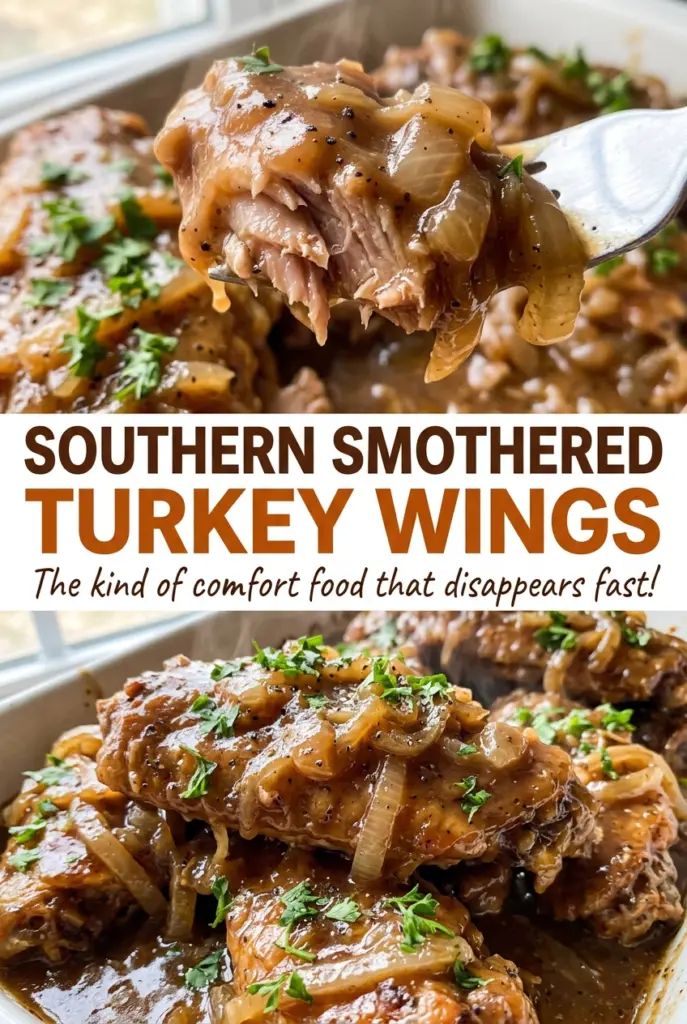
Southern Smothered Turkey Wings
The wings start to smell different as soon as their seasoned skin hits the hot Dutch oven: first a quiet sizzle, then those browned bits that make the gravy taste…

By Ava
•
•
Reading time: 9 min
Tip: save now, make later.
The wings start to smell different as soon as their seasoned skin hits the hot Dutch oven: first a quiet sizzle, then those browned bits that make the gravy taste like it belongs with the turkey. I brown them in batches so they get color instead of steaming against one another. That’s the first step toward Southern smothered turkey wings with tender meat and plenty of onion gravy.
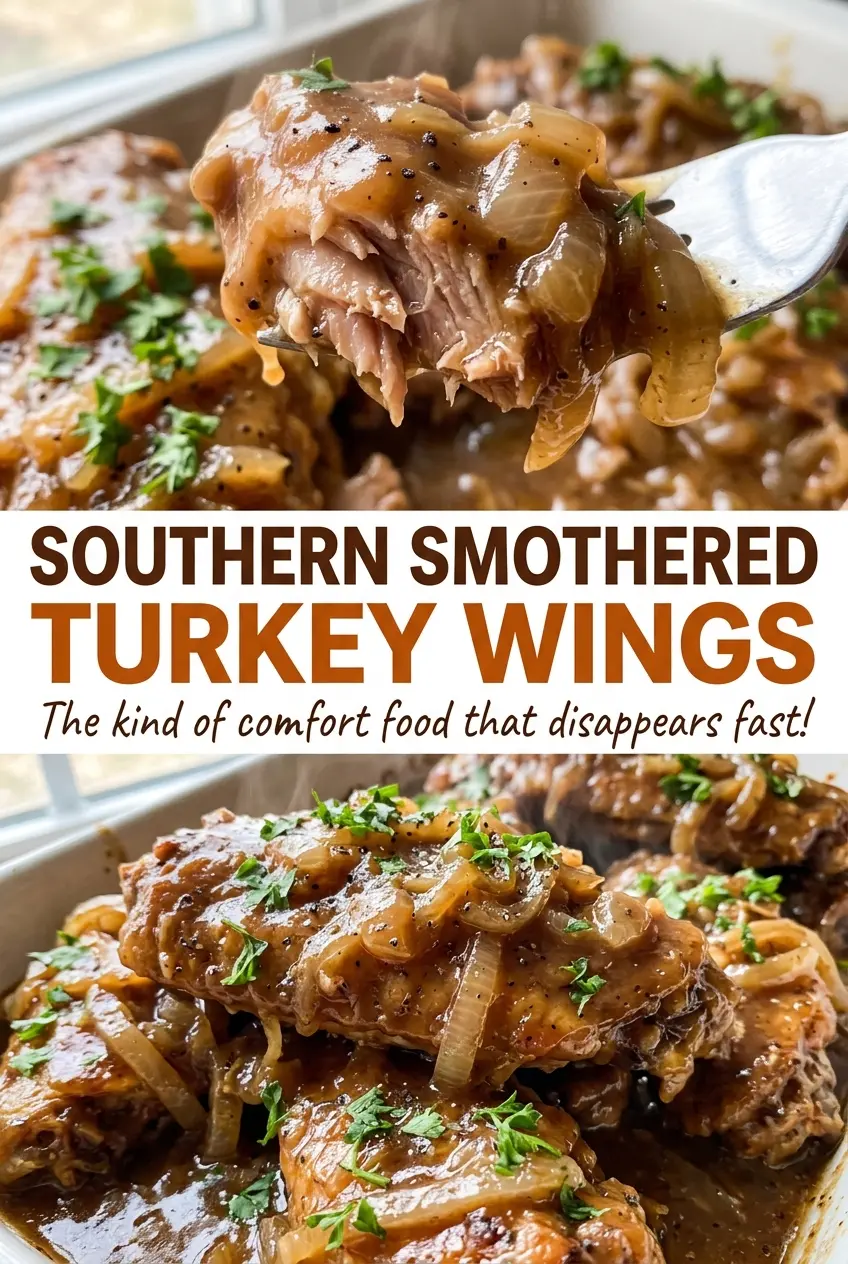
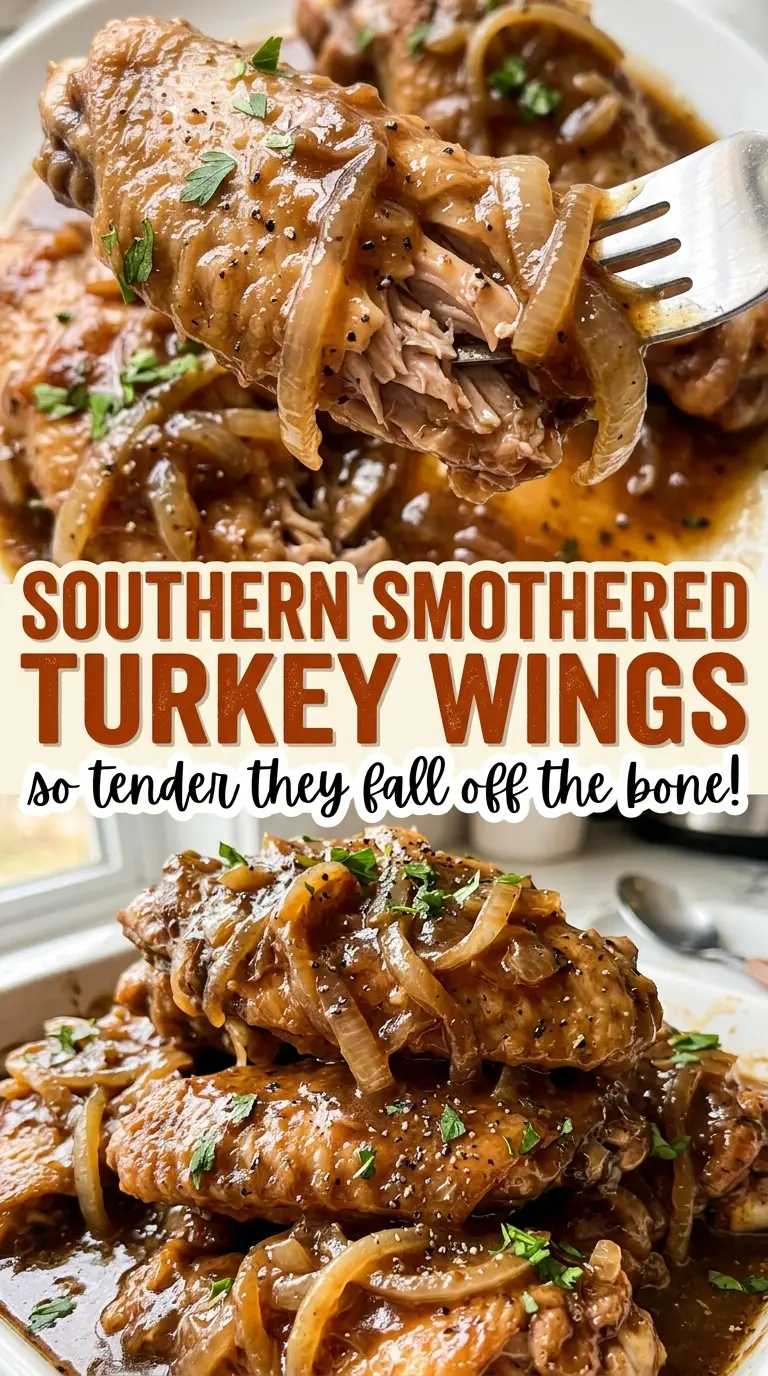
After the wings are browned, the gravy comes together in the same pot, so the onions cook in the drippings and the broth picks up all that savory flavor. Then the lid goes on and the oven does the slow work. The wings won’t have crisp skin after their covered bake, but they’ll be soft enough to pull from the bone, tucked into a smooth, thyme-scented gravy.
Kitchen Note
Check the thickest meaty part of each wing with the thermometer, angling the tip so it doesn’t touch bone. A bone-hit reading can mislead you, so take a second reading if you’re unsure.
Save these Southern smothered turkey wings for a slow-baked supper with tender meat and savory onion gravy.
Why Turkey Wings Need a Slow, Covered Bake to Turn Tender
Turkey wings have plenty of flavor, but the joints and connective tissue mean they need more time than a quick roast gives them. Browning builds savory flavor on the outside; it doesn’t make the meat tender all the way through. The covered bake gives the wings time to soften while the broth and onion gravy keep the pot moist.
That’s also why this dish isn’t trying to preserve crisp skin. Once the lid is on, steam gathers inside the pot and the skin softens as the wings cook. In return, the meat becomes spoon-tender and the liquid around it turns into a proper gravy rather than a thin pan sauce. The goal is a fork-tender wing with gravy clinging to it, not a crunchy exterior. Giving the oven time to do its work is what makes the difference between a wing that’s technically cooked and one that feels fully smothered.
What Builds the Deep Flavor in the Onion Gravy
- Turkey wings — Choose pieces separated into drumettes and flats so they fit more easily in the pot and cook in manageable portions. Fresh or frozen wings work; frozen ones need to be thawed before you dry and season them. The wings are the star here, so there’s no need for an expensive brand.
- The dry seasonings — Paprika gives the browned skin its warm color, while garlic powder, onion powder, salt, and black pepper season the meat directly. Use fresh, fragrant spices from an ordinary pantry; old spices lose their punch and won’t add as much flavor.
- Yellow onion — Diced onion softens in the turkey drippings and becomes part of the gravy base. Cut it into small, even pieces so it softens at the same pace instead of leaving large crunchy bits.
- All-purpose flour — Cooking the flour briefly with the softened onion helps it blend into the broth and gives the gravy body. Stir it around the pot rather than leaving it in a mound, where it can clump when the liquid goes in.
- Low-sodium chicken broth — Low-sodium broth lets the turkey drippings and seasonings come through without the gravy getting too salty as it cooks. A standard grocery-store broth is fine; a specialty stock isn’t necessary for this deeply flavored pot.
- Dried thyme and bay leaf — Thyme brings a gentle earthy note, and the bay leaf quietly perfumes the gravy as it bakes. The bay leaf is there for steeping, not eating, so take it out before serving.
How to Brown the Wings Before They Go Under Gravy
Season the wings while the oven heats
Heat the oven to 350°F. Pat the turkey wings dry, then season them all over with the salt, black pepper, paprika, garlic powder, and onion powder. Dry skin browns more readily than damp skin, so take an extra moment with the paper towels. Keep the pieces close by while you heat the oil in a 6-quart Dutch oven over medium-high heat.
Brown in batches for real color
Set the wings skin side down first and brown them for 3 to 4 minutes per side. Give each piece room in the pot; if you crowd the wings, they’ll release moisture and steam instead of developing a browned surface. Move the browned wings to a plate and repeat with the next batch. Don’t scrape away the browned bits left in the pot; they’ll season the gravy.
Soften the onion and bring the gravy to a simmer
Add the diced onion to the Dutch oven and cook over medium heat, stirring, for about 5 minutes, until softened. Stir in the flour and cook for 1 minute so it’s no longer raw. Gradually whisk in the chicken broth until the mixture is smooth, then add the thyme and bay leaf. Bring the gravy to a simmer before adding the wings back.
Cover and bake until the meat is tender
Return the wings and any juices collected on the plate to the pot, turning them to coat with gravy, then cover with the lid. Bake for 2 to 2 1/2 hours, until the meat is very tender and the thickest part of each wing reaches at least 165°F without the thermometer touching bone. Let the wings rest in the gravy for 10 minutes after they come out of the oven. Remove the bay leaf before serving.
Two Useful Ways to Adapt These Smothered Wings
Make the gravy gluten-free with cornstarch
Replace the all-purpose flour with 2 tablespoons cornstarch and use gluten-free chicken broth. Skip cooking the flour with the onion. Instead, whisk the cornstarch with a small portion of the cold broth until smooth, bring the remaining broth and softened onion to a simmer, then whisk in the slurry and simmer until thickened. The gravy will be glossy and a little less rich than the flour-thickened version.
Scale it down for a smaller table
Halve every ingredient and use a smaller covered, oven-safe pot that holds the wings and gravy comfortably. Keep the oven setting the same, and don’t assume the wings will need half the baking time; check for tender meat and the required internal temperature rather than relying on the batch size alone.
Storage and Reheating
- Refrigerator: Keep the wings covered in their gravy for 3 to 4 days. The gravy will thicken as it chills.
- Freezer: Freeze the wings with the gravy in an airtight container for up to 3 months. Thaw in the refrigerator before reheating.
- Reheating: Warm them gently, covered, in a saucepan over low heat, spooning gravy over the wings as it loosens. Avoid a hard boil, which can make the meat less tender and reduce the gravy too much.
Questions That Come Up While Cooking Turkey Wings
Southern Smothered Turkey Wings
Ingredients
Equipment
Method
- Heat the oven to 350°F.
- Pat the turkey wings dry and season them all over with the kosher salt, black pepper, paprika, garlic powder, and onion powder.
- Heat the vegetable oil in a 6-quart Dutch oven over medium-high heat.
- Brown the wings in batches, skin side down first, for 3 to 4 minutes per side, then transfer them to a plate.
- Add the yellow onion to the Dutch oven and cook over medium heat, stirring, until softened, about 5 minutes.
- Stir in the all-purpose flour and cook for 1 minute.
- Gradually whisk in the chicken broth until smooth, then add the dried thyme and bay leaf and bring the gravy to a simmer.
- Return the turkey wings and any accumulated juices to the Dutch oven, turning them to coat with gravy, and cover with the lid.
- Bake for 2 to 2 1/2 hours, until the meat is very tender and the thickest part of each wing reaches at least 165°F without the thermometer touching bone.
- Let the wings rest in the gravy for 10 minutes.
- Remove the bay leaf and serve.