

Southern Salmon Patties
Southern salmon patties hit that sweet spot between crisp edges and a tender middle, with enough old-school comfort to feel like a meal your grandmother might have pulled together from…

By Ava
•
•
Reading time: 8 min
Tip: save now, make later.
Southern salmon patties hit that sweet spot between crisp edges and a tender middle, with enough old-school comfort to feel like a meal your grandmother might have pulled together from the pantry. The outside goes deeply golden in the skillet while the inside stays flaky and seasoned, not dry or bready. When they’re done right, they hold together cleanly, brown fast, and taste like more than the sum of a few simple ingredients.
The trick is in the balance. Too much cracker and the patties turn pasty; too little and they fall apart before the crust has a chance to set. Mayonnaise brings a little richness and helps the mixture stay moist, while Dijon and Old Bay keep the salmon from tasting flat. I also like to let the patties rest for a few minutes before they hit the pan so they firm up enough to turn without drama.
Below, I’ll walk through the part that matters most: how to shape salmon patties that actually stay together in the skillet, plus a few smart swaps and storage tips for when you want to make them ahead.
The patties held together beautifully and got that crisp crust without falling apart when I flipped them. The Old Bay and Dijon gave them just enough kick, and my husband asked for them again the next night.
Save these crispy Southern salmon patties for the nights when you want a budget-friendly dinner with a golden crust and pantry ingredients.

The Part That Keeps Salmon Patties From Falling Apart
Most salmon patties fail for one of two reasons: the mixture is too wet, or it’s handled before the crust has time to form. Canned salmon brings its own moisture, and if you pack in too much mayonnaise or onion, the patties can slump in the skillet instead of setting. The answer isn’t more binder every time. It’s using just enough cracker to absorb the excess and letting the formed patties sit long enough to hold their shape.
The skillet matters too. Medium heat gives the outside time to brown before the inside overcooks. If the oil is smoking, the crust will darken before the center firms up. If the pan is too cool, the patties soak up oil and turn greasy instead of crisp.
- Salmon: Canned pink salmon is the right place to save money here. It flakes well and has enough flavor to stand up to the seasonings. Remove the larger bones if you want a smoother texture, but they’re edible and soft.
- Saltine crackers: These do more than bulk up the mixture. They absorb moisture and create that tender interior. If you swap in breadcrumbs, use a little less at first because they can dry the patties out faster.
- Mayonnaise: This adds richness and helps bind the mixture without making it stiff. Plain yogurt works in a pinch, but the patties won’t brown quite the same and the flavor will be tangier.
- Old Bay and Dijon: These keep the salmon from tasting one-note. Old Bay gives the familiar seafood seasoning base, while Dijon adds a little sharpness that wakes up the whole batch.
How to Build a Crisp Crust Without Drying Out the Center
Mix the Base Gently
Flake the salmon first so the eggs and seasonings distribute evenly without you overworking the mixture. Once the crackers go in, stir just until everything looks combined and the mix holds together when pressed. If you beat it into a paste, the patties lose that flaky texture that makes them worth serving.
Shape and Rest the Patties
Form the mixture into eight patties with lightly damp hands so the surface stays smooth and the mixture doesn’t stick to you. Press them together firmly enough that they hold, but don’t compact them into hard little disks. A short rest on the counter helps the crackers absorb moisture and gives the patties a better chance of staying intact when they hit the skillet.
Fry Until the Edges Set
Heat the oil over medium heat until it shimmers, then lay the patties in without crowding the pan. Leave them alone until the bottom is deep golden and the edges look set; if you try to move them too early, they’ll tear. Flip once and cook the second side until crisp and hot through, then drain on paper towels so the crust stays snappy instead of soggy.
Three Practical Ways to Adjust These Salmon Patties
Gluten-Free Version
Use crushed gluten-free crackers or fine gluten-free breadcrumbs in place of the saltines. Start with the same amount, then add a spoonful more only if the mixture still feels loose. The texture will stay crisp, though the flavor will be a little less salty and a little more neutral.
Dairy-Free Adjustment
This recipe is already dairy-free as written, so you don’t need to change anything. If you’re serving them with a sauce, use a dairy-free tartar sauce or a lemony mayo-based dip made with plant-based mayonnaise.
Bake Instead of Fry
If you want to skip the stovetop, brush the patties with oil and bake them on a parchment-lined sheet at 425°F until the tops are browned and the centers are hot. You won’t get the same shatteringly crisp crust, but you’ll get a cleaner, lighter result with less hands-on time.
Storage and Reheating
- Refrigerator: Store cooked patties in an airtight container for up to 3 days. They’ll soften a bit as they sit, but the flavor holds up well.
- Freezer: These freeze well. Cool completely, wrap individually, and freeze in a single layer before moving to a bag or container for up to 2 months.
- Reheating: Reheat in a skillet over medium-low heat or in a 375°F oven until hot. The common mistake is microwaving them until they steam, which wipes out the crust you worked to build.
Answers to the Questions Worth Asking
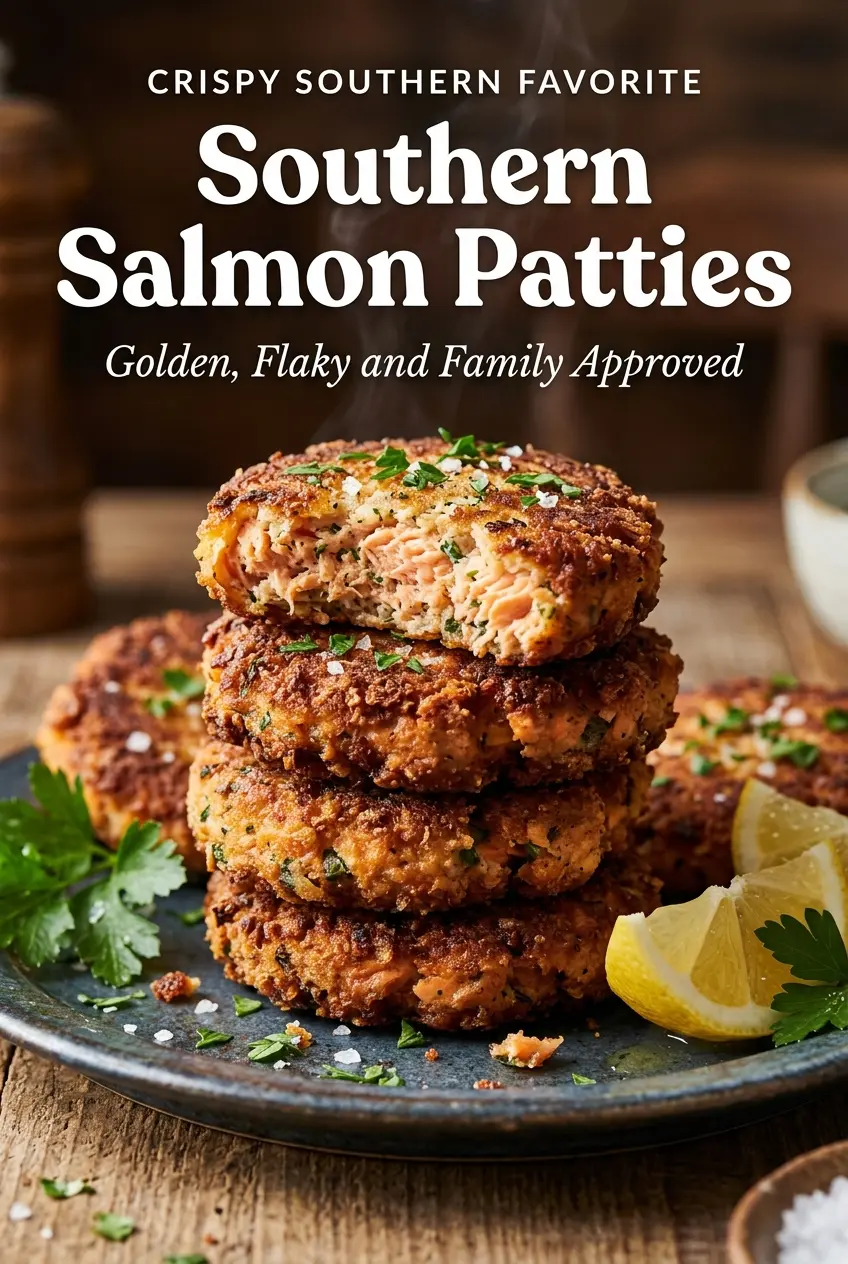
Southern Salmon Patties
Ingredients
Equipment
Method
- Drain the pink salmon and remove any large bones if desired.
- Place the pink salmon in a large bowl and flake with a fork.
- Add eggs, saltine crackers, onion, mayonnaise, Dijon mustard, Old Bay seasoning, garlic powder, black pepper, and parsley to the bowl.
- Mix until fully combined, with no dry cracker bits remaining.
- Form the mixture into 8 equal patties and set them on a plate.
- Heat the vegetable oil in a large cast iron skillet over medium heat until shimmering.
- Cook the patties for 4–5 minutes per side until golden brown and crispy.
- Transfer the patties to a paper towel-lined plate to drain excess oil.
- Serve warm with tartar sauce, lemon wedges, or coleslaw.