
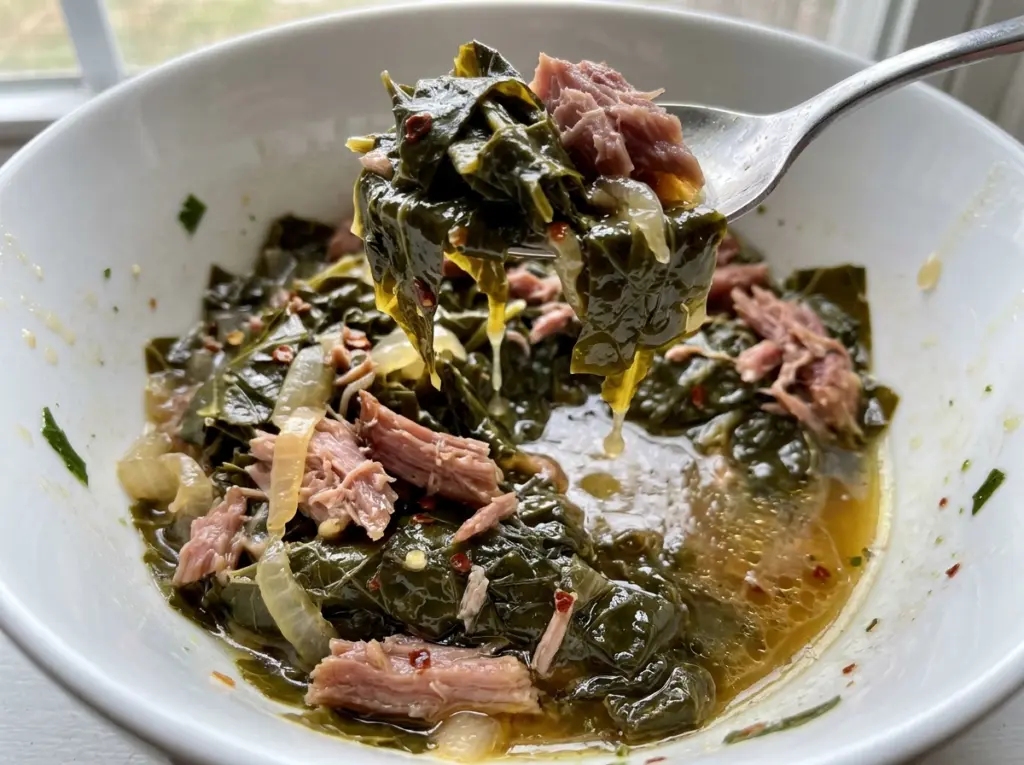
Southern Collard Greens
When collard leaves hit the pot, they look like far too much for one meal. Give them a few minutes of stirring in batches and they wilt down into the…

By Ava
•
•
Reading time: 8 min
Tip: save now, make later.
When collard leaves hit the pot, they look like far too much for one meal. Give them a few minutes of stirring in batches and they wilt down into the cooking broth, turning glossy and dark green. That slow change is part of what makes Southern collard greens worth tending on the stove.
The ham hock simmers with onion and garlic before the greens go in, so the broth has time to pick up its smoky, savory flavor. I keep the finish simple: black pepper and crushed red pepper flakes for warmth, then salt and apple cider vinegar stirred in after the meat goes back into the pot.
Once the leaves are tender enough to give easily to a spoon, serve them with some of their broth and the pulled ham. The finished pot is soft, savory, and just bright enough at the end.
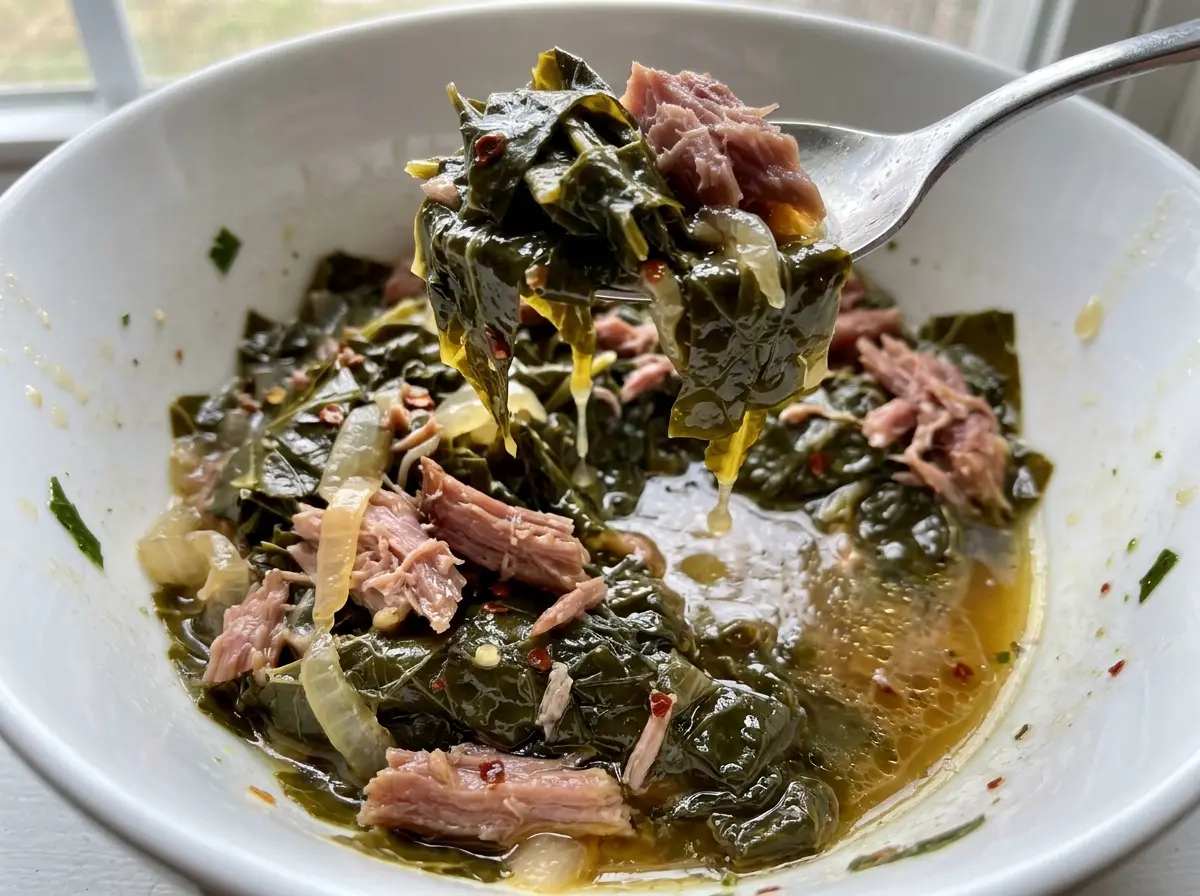
Kitchen Note
Add the collards in batches and stir each addition until it wilts before adding more. It’s easier to keep the leaves moving that way, and the pot becomes much less crowded as you go.
Save these Southern collard greens for a slow-simmered pot with smoky ham, tender leaves, and a bright vinegar finish.
Why the Ham Hock Goes In Before the Collards
The ham hock needs a head start because the broth is doing more than keeping the greens wet. While the hock simmers with onion and garlic, its smoky flavor works into the water and the meat softens enough to pull from the bone later. If the greens went into the pot at the beginning, they’d be left cooking through that long stretch too, which is more time than they need to become tender.
Think of the first simmer as building the base of the dish, not as cooking the greens. The water starts out plain, but the hock and aromatics give it depth before the collards arrive. Then the leaves cook in that seasoned broth and take on some of its flavor as they soften.
That order also makes the final seasoning easier to judge. The ham contributes salt as it cooks, so I wait until the meat has been pulled and returned before adding kosher salt. A final taste then tells you what the broth actually needs, rather than asking you to guess while the hock is still simmering.
What the Ham Hock and Collards Bring to the Pot
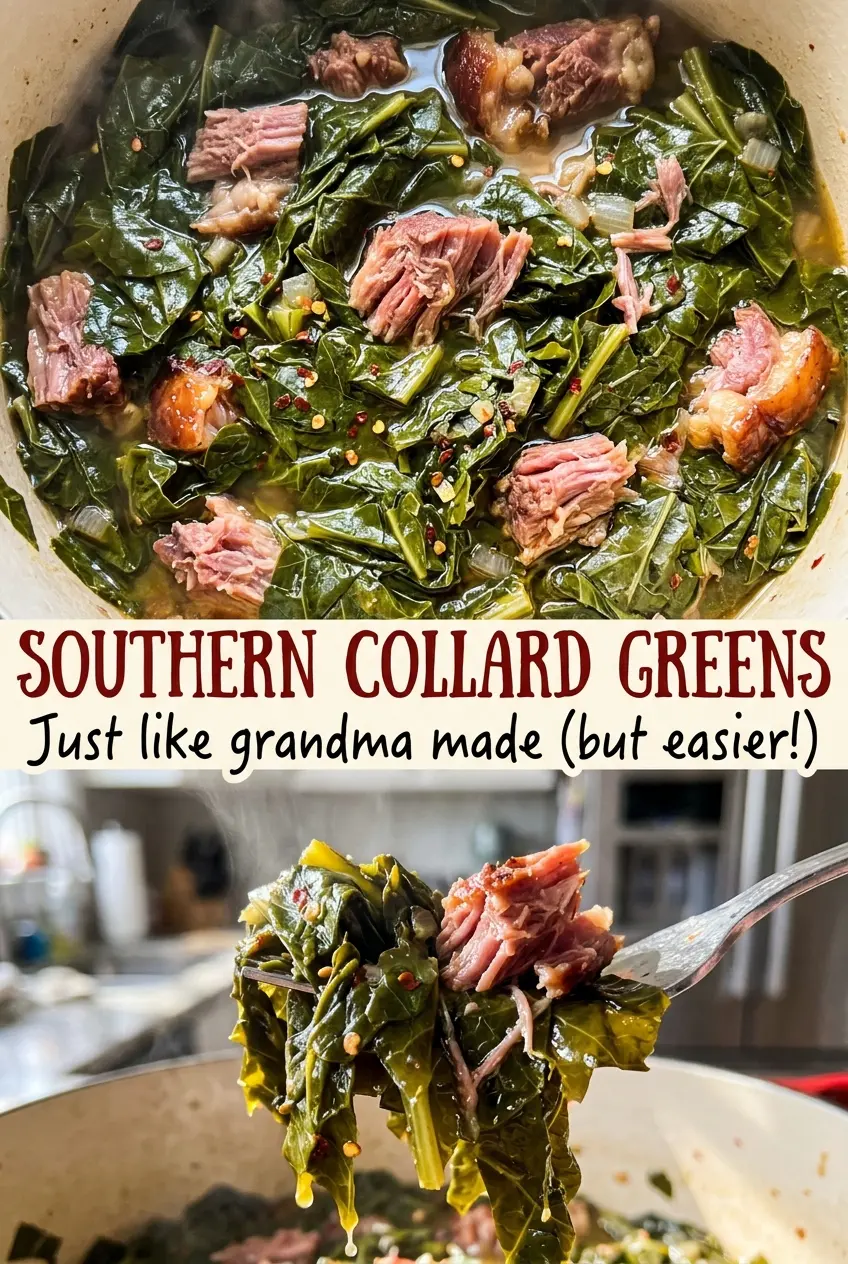
- Collard greens — Their sturdy leaves hold up to a long simmer and become tender without disappearing into the broth. Remove the stems and chop the leaves so they cook evenly. Choose leaves that look fresh and firm; the greens are the main event, so wilted leaves won’t give the same texture.
- Smoked ham hock — It contributes the defining smoky, savory quality and gives the pot meat to return after simmering. A meaty hock means more pulled meat in the finished greens, while the amount of smoke can vary by hock. There isn’t a like-for-like swap that gives the same broth and meat.
- Yellow onion and garlic — These build a savory base during the long simmer. Fresh garlic gives the broth a clean, rounded flavor, and the onion softens as it cooks. Chop the onion and mince the garlic before they go into the pot so they’re ready for the initial boil.
- Crushed red pepper flakes and black pepper — Together they season the broth with warmth rather than changing its smoky character. The crushed flakes bring the more noticeable heat; omitting them makes a milder pot, while black pepper still adds its own gentle bite.
- Apple cider vinegar — Stirring it in at the finish gives the savory broth a bright edge. It’s worth keeping in the recipe because that tang helps the rich, long-cooked flavors taste balanced. Add it after the meat and salt, when you can taste the broth as a whole.
Build the Broth First, Then Let the Leaves Turn Tender
Start the Ham Hock Broth
Combine the water, ham hock, chopped onion, and minced garlic in a 6-quart pot, then bring everything to a boil over high heat. Once it boils, reduce the heat to low and cover the pot. Simmer for 1 1/2 hours, until the ham hock is tender. Keep the heat low enough for a gentle simmer rather than a hard, rolling boil.
Wilt the Collards in Batches
Add the chopped collards a batch at a time, stirring each batch as it wilts before adding the next. The raw leaves take up a lot of space at first, but they settle into the broth as they soften. When all the greens are in, stir in the crushed red pepper flakes and black pepper. Take a moment to distribute the seasonings through the pot rather than leaving them in one spot.
Simmer Until the Leaves Give Easily
Cover the pot again and simmer the greens over low heat for 45 to 60 minutes. They should be very tender, not just wilted, with no stiff or leathery bite in the thicker pieces. If they still feel tough, keep simmering until they soften; the clock is a guide, but the texture tells you when they’re ready. Keep the heat low so the greens have time to cook gently in the broth.
Pull the Meat and Finish the Broth
Lift out the ham hock and pull the meat from the bone. Discard the bone and skin, then return the meat to the pot. Stir in the kosher salt and apple cider vinegar, taste the broth, and adjust the salt as needed. The finished greens should taste savory first, with the vinegar bringing a light brightness at the end.
Two Simple Ways to Adapt This Pot of Collards
A plant-based pot without the ham hock
Leave out the ham hock and cook the onion, garlic, and collards in the water with the pepper seasonings. The greens will still become tender, but the broth won’t have the hock’s smoky richness or pulled meat. Finish with the salt and vinegar, tasting as you go.
A milder pot with no pepper-flake heat
Omit the crushed red pepper flakes and keep the black pepper. You’ll still have the savory ham hock broth, but without the distinct heat from the flakes. This is a straightforward adjustment that doesn’t change the simmering method.
Storage and Reheating
- Refrigerator: Store the greens and broth in a covered container for 3 to 4 days. The leaves soften further as they sit, but they hold their shape.
- Freezer: Freeze the collards with their broth in an airtight container for up to 3 months. Leave a little room at the top for the liquid to expand.
- Reheating: Warm them gently in a covered pot over low heat, stirring now and then, until hot throughout. Avoid high heat, which can cook the greens down further and leave less broth in the pot.
Questions That Come Up With Southern Collard Greens
Southern Collard Greens
Ingredients
Method
- In a 6-quart pot, combine the water, ham hock, onion, and garlic.
- Bring the mixture to a boil over high heat.
- Reduce the heat to low, cover, and simmer for 1 1/2 hours, until the ham hock is tender.
- Add the collard greens in batches, stirring as each batch wilts.
- Stir in the red pepper flakes and black pepper.
- Cover and simmer over low heat for 45 to 60 minutes, until the greens are very tender.
- Remove the ham hock and pull the meat from the bone.
- Discard the bone and skin, then return the meat to the pot.
- Stir in the salt and vinegar.
- Taste the broth and adjust the salt as needed before serving.