
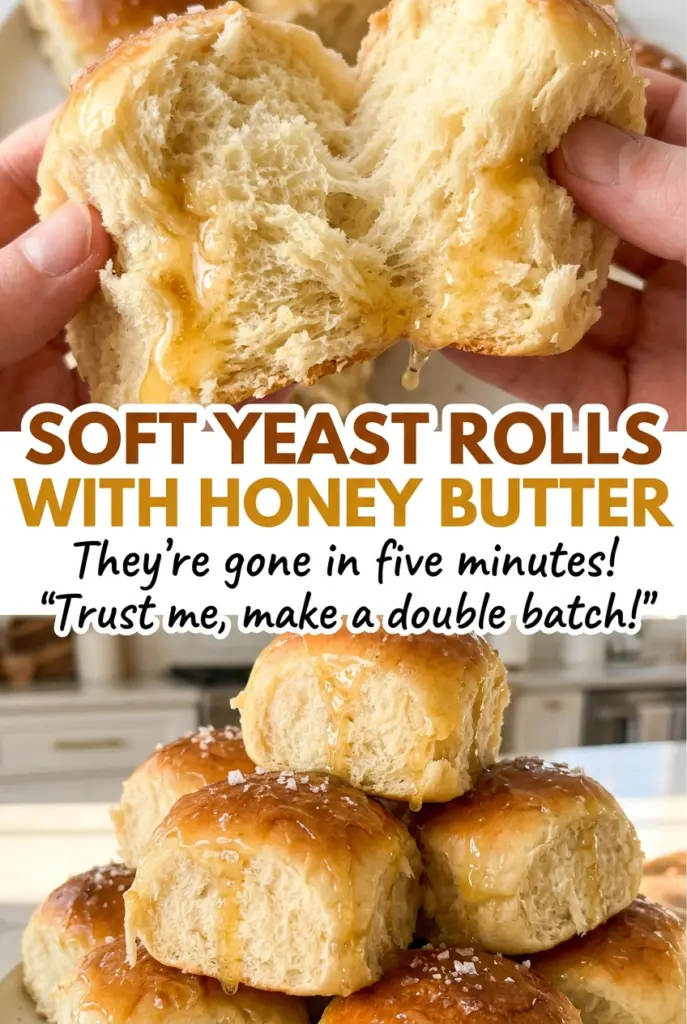
Soft Yeast Rolls with Honey Butter
The dough looks shaggy and a little stubborn when the flour first goes in. I used to add more flour right away, but that turns soft rolls dense before they…

By Ava
•
•
Reading time: 10 min
Tip: save now, make later.
The dough looks shaggy and a little stubborn when the flour first goes in. I used to add more flour right away, but that turns soft rolls dense before they even reach the oven. For these soft yeast rolls with honey butter, the dough should feel manageable, not dry.
Warm milk gives the active dry yeast a comfortable place to wake up, and the egg and melted butter make the finished crumb tender. After kneading, the dough gets two rises: first until it doubles, then again in the pan until the rolls look puffy. That second rise is what gives them room to bake up tall without crowding into tight, heavy centers.
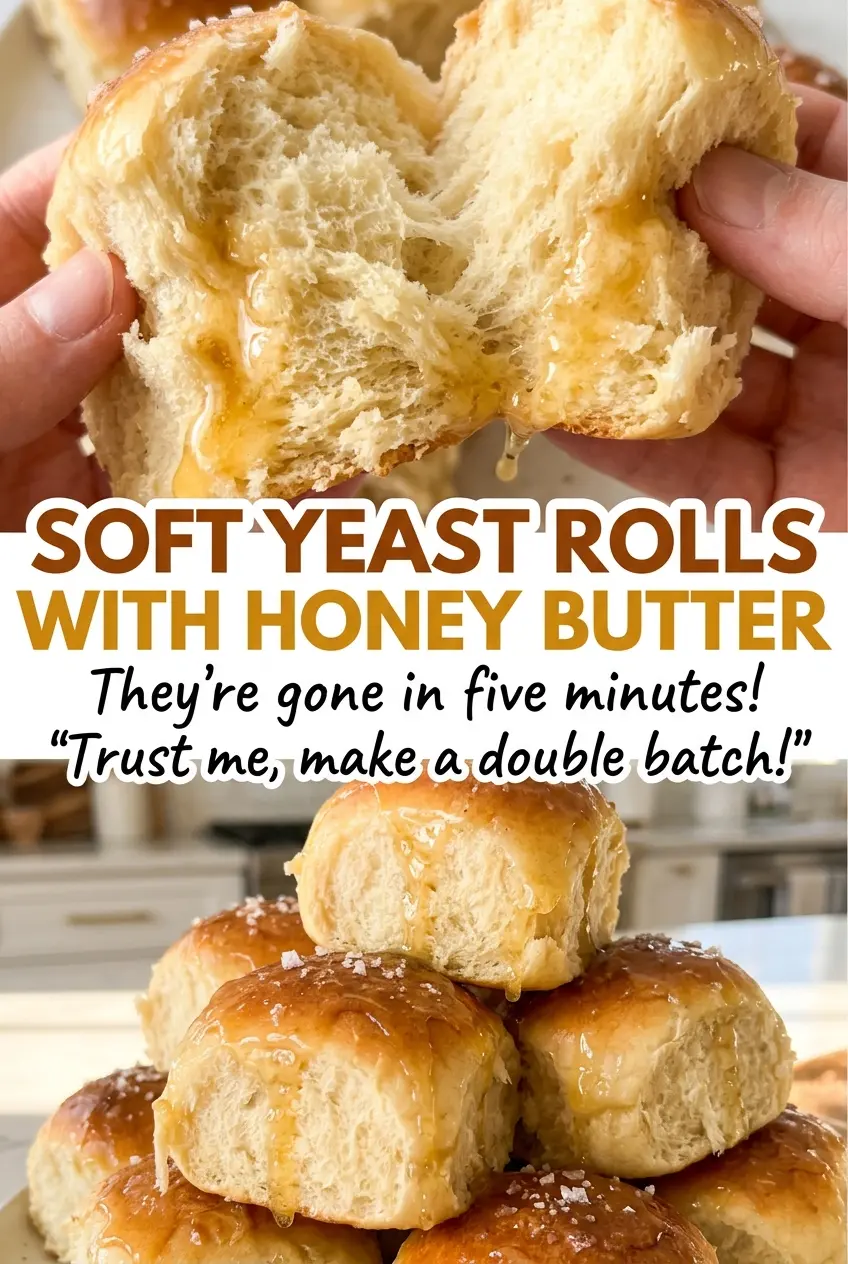
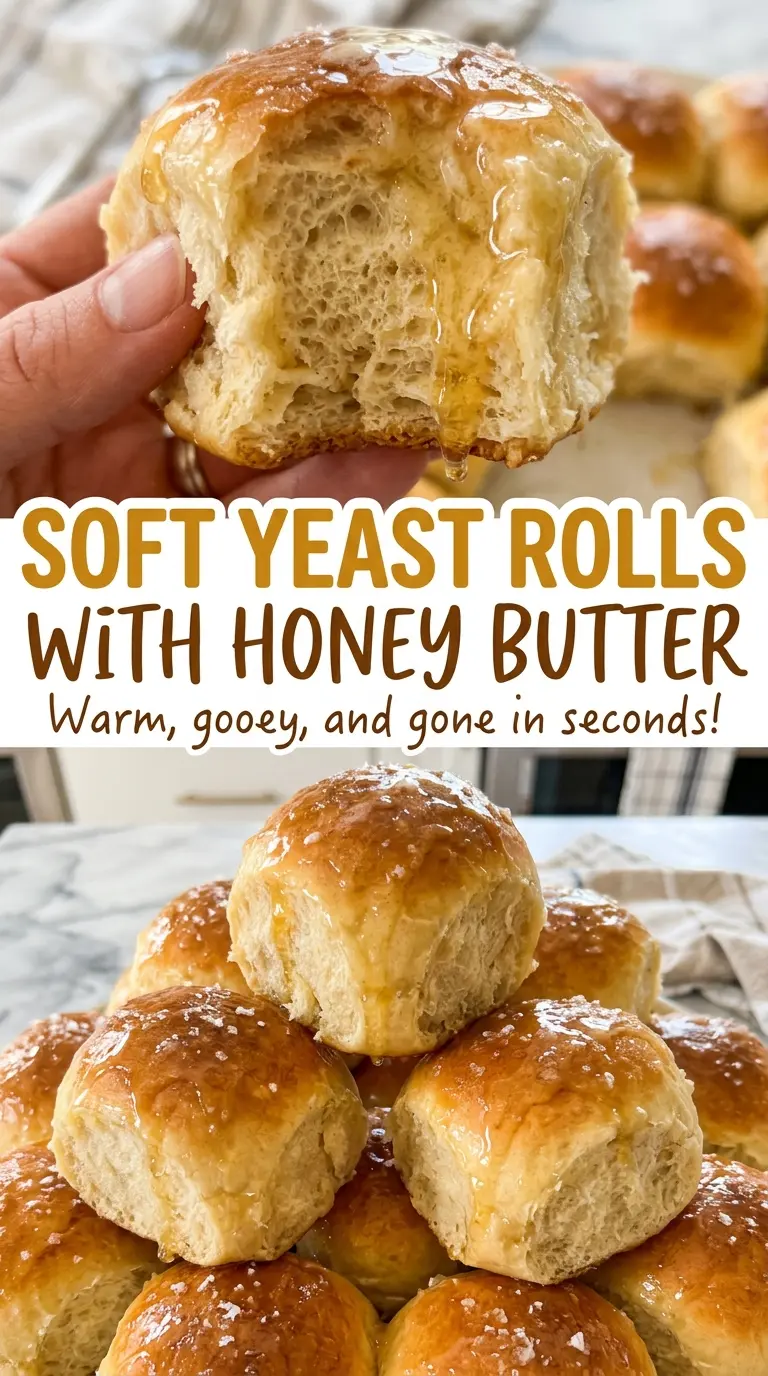
I brush the honey butter over the rolls while they’re still warm, so it softens and sinks into the golden tops. Set the dish on the table and pull the rolls apart while the centers are still tender.
Kitchen Note
Let the yeast mixture sit for the full 5–10 minutes, even if you see a little foam early. A foamy top is a much clearer sign that the active dry yeast has woken up than a few bubbles around the edge.
Save these soft yeast rolls with honey butter for a dinner that needs a tender, pull-apart bread on the table.
Why Adding Flour Until the Dough Feels Dry Makes These Rolls Tough
Freshly mixed yeast dough can look rough and sticky, especially before the flour has had time to absorb the liquid. That doesn’t mean it needs another handful of flour. The dough should come together enough to knead on a lightly floured surface, but it can still feel soft and slightly tacky.
That softness matters because flour keeps absorbing moisture as you knead. Adding a lot at the start can leave you with a stiff dough that’s harder to stretch and shape, and the baked rolls will have a tighter crumb. Use just enough flour on the work surface to keep the dough from sticking badly; add more only if it’s too wet to handle.
As you knead, the rough mass becomes smoother and more elastic. That change is your cue to stop adding flour, not an invitation to keep dusting the surface until the dough feels dry. A soft dough may cling lightly to your fingers, but it shouldn’t smear across the counter or break apart when you stretch it.
What Milk, Yeast, and Butter Each Bring to These Rolls
- Whole milk — It gives the dough moisture and richness, which help make the crumb tender. Whole milk is a good everyday choice; there’s no need for a premium brand. Two-percent milk works in the same volume, though the rolls will be a little less rich.
- Active dry yeast — This is what lifts the dough during both rises, so check that it foams in the warm milk before you mix in the other ingredients. Instant yeast can replace it in the same amount; stir the instant yeast into the flour instead, then combine it with the milk and sugar mixture.
- Egg — A large egg at room temperature blends more evenly into the milk and melted butter than a cold one. It also contributes to the rolls’ soft, rich texture. There isn’t a direct egg-free swap that keeps this same dough texture, so I wouldn’t replace it with water or extra milk.
- Unsalted butter — Melted butter enriches the dough, while softened butter makes a smooth honey butter for the finish. Let the melted butter cool before mixing it in so it doesn’t heat the dough mixture. If you only have salted butter, the rolls will taste saltier because brands vary in how much salt they contain.
- All-purpose flour — It gives these rolls a soft, familiar crumb and is inexpensive pantry flour; there’s no need to buy a specialty brand. Bread flour works in the same volume if you want a chewier roll, but the dough may feel a bit firmer as you knead.
- Honey — Honey gives the finishing butter its floral sweetness and helps it coat the warm rolls. Use a honey whose taste you enjoy, but an everyday squeeze-bottle honey works well. Maple syrup can replace it in the same amount for a deeper, woodsy sweetness and a slightly looser butter.
From Foamy Yeast to Golden, Honey-Butter Tops
Wake Up the Yeast Before Mixing
Stir the warm milk and granulated sugar together in a large bowl, then sprinkle the active dry yeast over the surface. The milk should be 105–110°F; hotter milk can damage the yeast, while cooler milk takes longer to activate it. Give the mixture 5–10 minutes, until a foamy layer forms. If it stays flat, check the milk temperature and the freshness of the yeast before continuing.
Knead Until the Dough Turns Elastic
Whisk the egg and cooled melted butter into the yeast mixture, then stir in the kosher salt and flour until you have a shaggy dough. Turn it onto a lightly floured surface and knead for 8–10 minutes, using only enough extra flour to keep it manageable. The dough should become smooth and elastic rather than rough and lumpy. If it feels sticky, dust the surface lightly instead of pouring flour directly over the dough.
Give the Dough Time to Rise, Then Shape
Put the dough in a lightly greased bowl, cover it, and leave it in a warm spot for 1–1 1/2 hours, until doubled in size. Grease a 9×13-inch baking dish, divide the dough into 12 equal pieces, and shape each piece into a smooth ball. Arrange the balls evenly in the dish, cover, and let them rise for 30–45 minutes, until puffy. Start heating the oven to 350°F while the rolls rise in the pan.
Bake to Golden and Finish While Warm
Bake the rolls for 20–25 minutes, until their tops are golden brown. If they still look pale at 20 minutes, give them the remaining time and watch for that even golden color rather than pulling them early. Let them cool in the dish for 5 minutes; while they rest, stir the softened butter, honey, and kosher salt until smooth. Spread all of the honey butter over the warm rolls before serving.
Easy Swaps That Keep the Rolls Soft
Make the Rolls Dairy-Free
Replace the milk with unsweetened soy milk in the same volume, and use the same amounts of unsalted dairy-free butter for both the dough and the honey butter. The rolls will be a little less rich, but soy milk and plant butter give the dough enough moisture and fat to stay tender. This swap keeps the egg and honey in the recipe.
Use Bread Flour for a Chewier Bite
Swap the all-purpose flour for bread flour in the same volume. The stronger flour gives the rolls a chewier texture rather than the softer, more delicate crumb of the original. Keep the extra kneading flour light, since bread flour can make the dough feel firmer as you work.
Trade the Honey for Maple Syrup
Use maple syrup in place of the honey in the butter, keeping the amount the same. It changes the finish from floral and honeyed to deeper and more maple-forward, and the mixture will be a little looser. Stir it with the softened butter and salt as usual.
Storage and Reheating
- Refrigerator: Keep leftover buttered rolls in an airtight container for up to 3 days. Chilling firms the bread, so let it warm slightly before reheating.
- Freezer: Freeze the cooled rolls in a tightly sealed freezer bag for up to 2 months. Thaw them overnight in the refrigerator before reheating.
- Reheating: Arrange the rolls in an oven-safe dish, cover with foil, and warm at 300°F for about 8–10 minutes. Leaving them uncovered can dry the tops before the centers are warm.
Questions That Come Up While Baking These Rolls
Soft Yeast Rolls with Honey Butter
Ingredients
Equipment
Method
- Stir the warm milk and sugar together in a large bowl.
- Sprinkle the yeast over the top and let stand for 5–10 minutes until foamy.
- Whisk in the egg and melted butter.
- Stir in the salt and flour until a shaggy dough forms.
- Knead the dough on a lightly floured surface for 8–10 minutes, adding only enough flour to keep it manageable, until smooth and elastic.
- Place the dough in a lightly greased bowl, cover, and let rise in a warm spot for 1–1 1/2 hours, until doubled in size.
- Grease a 9x13-inch baking dish.
- Divide the dough into 12 equal pieces.
- Shape the pieces into smooth balls and arrange them evenly in the dish.
- Cover and let rise for 30–45 minutes, until puffy.
- Meanwhile, heat the oven to 350°F.
- Bake for 20–25 minutes, until the tops are golden brown.
- Let the rolls cool in the dish for 5 minutes.
- Stir the softened butter, honey, and salt together until smooth.
- Spread all of the honey butter over the warm rolls before serving.